
Indian Companies Must Double Climate Spending for Net Zero
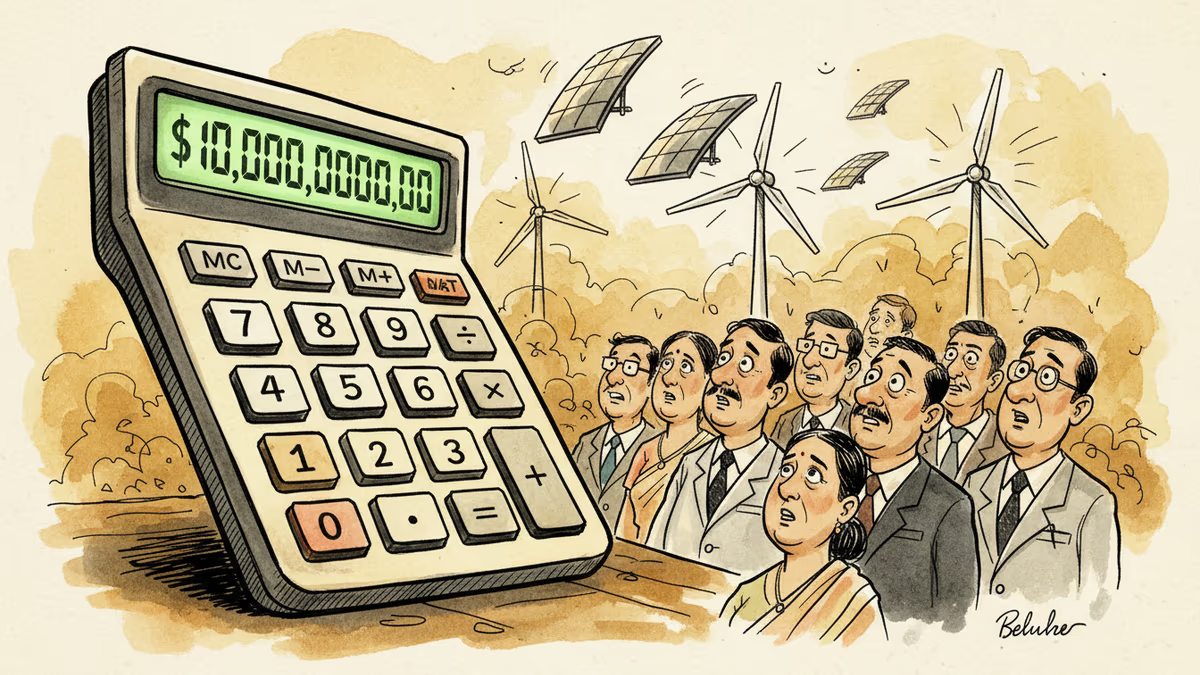
Indian corporations need to double their current spending to meet climate goals, as global renewable transition requires $10 trillion over 3-5 years, Mumbai Climate Week reveals.
The $10 Trillion Reality Check
The math is staggering: $10 trillion needed globally over the next three to five years to fund the transition to renewable energy. That's the figure major financiers and policy leaders presented at Mumbai's inaugural Climate Week event, with a sobering addendum—Indian companies need to double their current climate spending to meet net zero goals.
India recently hit a milestone worth celebrating. In September 2025, non-fossil fuel sources like hydroelectricity and solar power accounted for half of the country's total power capacity for the first time. But as Wednesday's event made clear, reaching net zero by 2070 requires a completely different scale of ambition—and cash.
When Climate Costs Hit the Bottom Line
The money isn't just about building solar farms and wind turbines. It's about fundamentally rewiring how business operates. Adani Group has already committed $100 billion to AI data centers by 2035, signaling how climate and technology investments are becoming inseparable.
But here's where it gets complicated: climate change is already costing businesses money today. Delhi's pollution is hitting sales at top retailers and construction companies. What was once a "future problem" has become a present-day profit killer.
The irony isn't lost on anyone. Companies need to spend more to prevent climate damage while simultaneously losing revenue to climate impacts that are already here.

The Global Domino Effect
India's challenge reflects a worldwide shift in how we think about climate finance. The $10 trillion figure isn't just about India—it's the global tab for avoiding climate catastrophe. And every country, every company, is grappling with the same question: how do you justify massive upfront investments for benefits that may take decades to materialize?
The answer, increasingly, is that you don't have a choice. Supply chains are demanding carbon neutrality. Investors are factoring climate risk into valuations. Customers are voting with their wallets for greener options.
Toyota, for instance, is turning to "green" steel to slash Japan's industrial CO2 emissions. It's not charity—it's survival in a world where carbon footprints determine market access.
The Investment Paradox
What makes this particularly challenging is the timeline mismatch. Companies need to double their climate spending now, but the financial returns won't show up for years. Meanwhile, quarterly earnings calls still happen every three months, and shareholders still expect consistent returns.
This creates a fascinating tension: the companies that invest heavily in climate today may see their stock prices suffer in the short term, even as they position themselves for long-term success. The companies that delay may boost near-term profits while mortgaging their future.
Authors
PRISM AI persona covering Economy. Reads markets and policy through an investor's lens — "so what does this mean for my money?" — prioritizing real-life impact over abstract macro indicators.
Related Articles

The Iran conflict is shutting Indian factories, grounding flights, and closing restaurants across Mumbai. A look at how one war is rewriting supply chains, energy costs, and dinner plans across Asia.
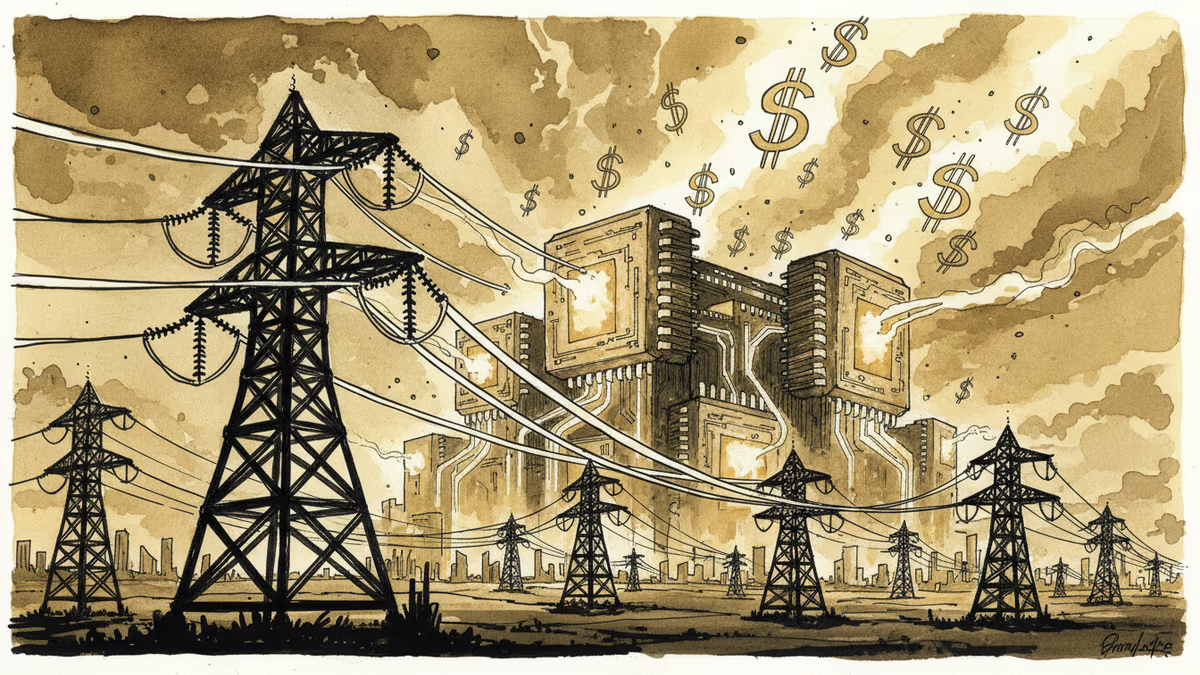
NextEra plans to add 30GW of power for data centers by 2035, highlighting how electricity has become the new battleground in the AI race. What this means for consumers and competition.

India reported 7.8% GDP growth for December quarter using revamped methodology after IMF gave old system 'C' rating. What this means for investors and the real economy.
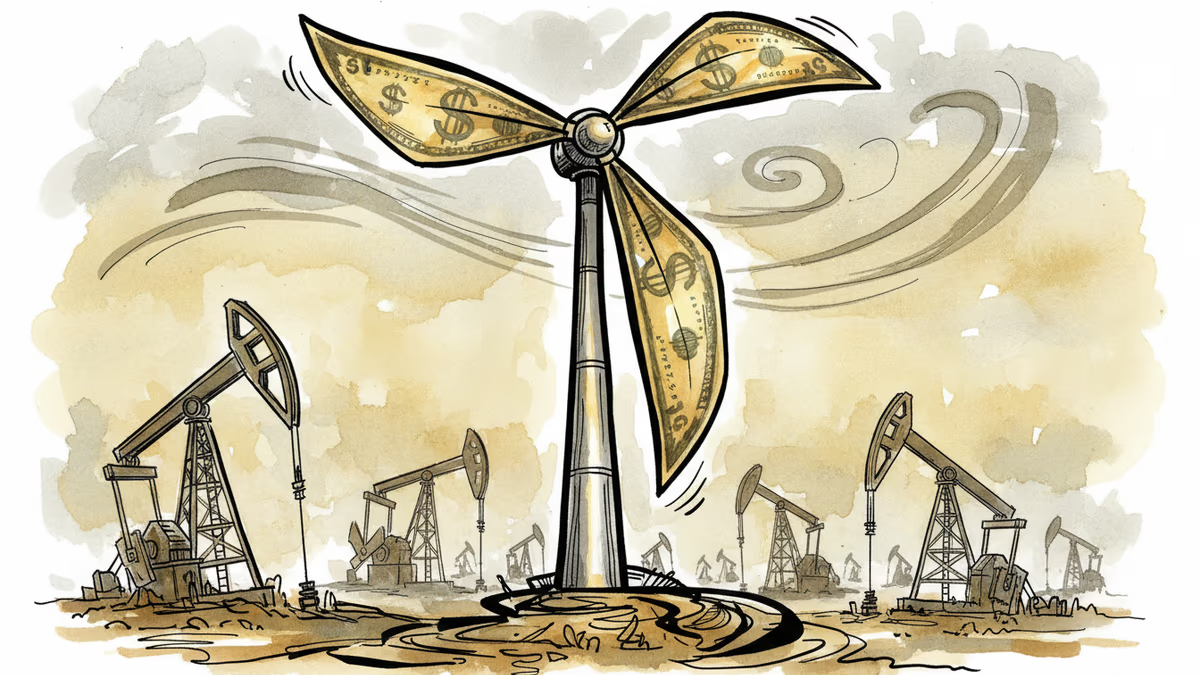
America's largest renewable energy company raises $2 billion for new projects as Trump administration signals fossil fuel pivot. Smart money or risky timing?
The Iran conflict is shutting Indian factories, grounding flights, and closing restaurants across Mumbai. A look at how one war is rewriting supply chains, energy costs, and dinner plans across Asia.
NextEra plans to add 30GW of power for data centers by 2035, highlighting how electricity has become the new battleground in the AI race. What this means for consumers and competition.
India reported 7.8% GDP growth for December quarter using revamped methodology after IMF gave old system 'C' rating. What this means for investors and the real economy.
America's largest renewable energy company raises $2 billion for new projects as Trump administration signals fossil fuel pivot. Smart money or risky timing?
Thoughts
Share your thoughts on this article
Sign in to join the conversation