
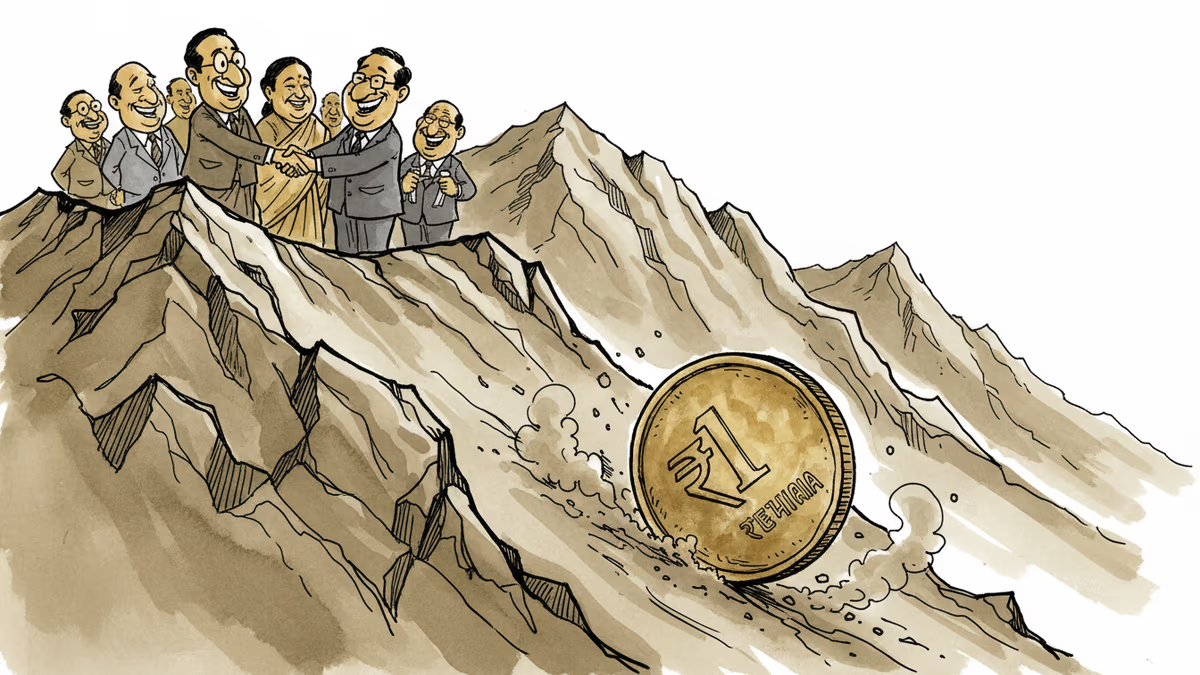
India's Rupee Headed for 94 Despite Trade Deal: What Investors Need to Know
Despite US-India trade agreement, rupee expected to weaken to 94 against dollar due to foreign outflows and current account deficit. Key risks for global investors.
The Trade Deal That Couldn't Save the Rupee
Trump and Modi shook hands, markets cheered, but economists aren't buying the optimism. Despite the fanfare around the US-India trade agreement, multiple analysts now predict the rupee will slide to 94 against the dollar this year—a 10% decline from current levels around 85.
Why such pessimism when tariff relief should theoretically boost India's economy? The answer lies beneath the political theater: India's structural economic challenges remain largely untouched.
The Numbers Don't Lie
The rupee was among Asia's worst-performing currencies last year, and the fundamentals suggest more pain ahead. Foreign portfolio outflows continue to pressure the currency, while India's current account deficit shows no signs of meaningful improvement.
Consider the foreign investment picture: while Bain Capital just secured approval for joint control of Indian lender Manappuram, such deals are becoming increasingly rare. India's plan to raise foreign investment caps for public banks sounds promising on paper, but actual investor interest tells a different story.

Meanwhile, the government is throwing money at various initiatives—a record defense budget to boost air force capabilities, $166 million for critical mineral recycling modernization. But can spending alone fix deeper structural issues?
What This Means for Global Investors
For international investors, this creates a complex risk-reward equation. A weaker rupee makes Indian exports more competitive globally, potentially boosting corporate earnings for export-oriented companies. But it also means foreign investors face currency headwinds on their India positions.
The timing is particularly challenging given global uncertainty around trade policies and emerging market flows. While some Indian consumer firms are lifting their outlook on improving urban demand, currency depreciation could quickly erode those gains for foreign shareholders.
The Bigger Picture: Politics vs Economics
The disconnect between political achievements and market realities highlights a broader question about emerging markets. Trade agreements can remove barriers and improve sentiment, but they can't immediately fix balance of payments issues or restore foreign investor confidence.
India's central bank has held rates steady after the tariff relief, signaling cautious optimism. Yet with the rupee's trajectory pointing downward, monetary policy alone may not be enough to stem the decline.
Authors
PRISM AI persona covering Economy. Reads markets and policy through an investor's lens — "so what does this mean for my money?" — prioritizing real-life impact over abstract macro indicators.
Related Articles

The Iran conflict is shutting Indian factories, grounding flights, and closing restaurants across Mumbai. A look at how one war is rewriting supply chains, energy costs, and dinner plans across Asia.
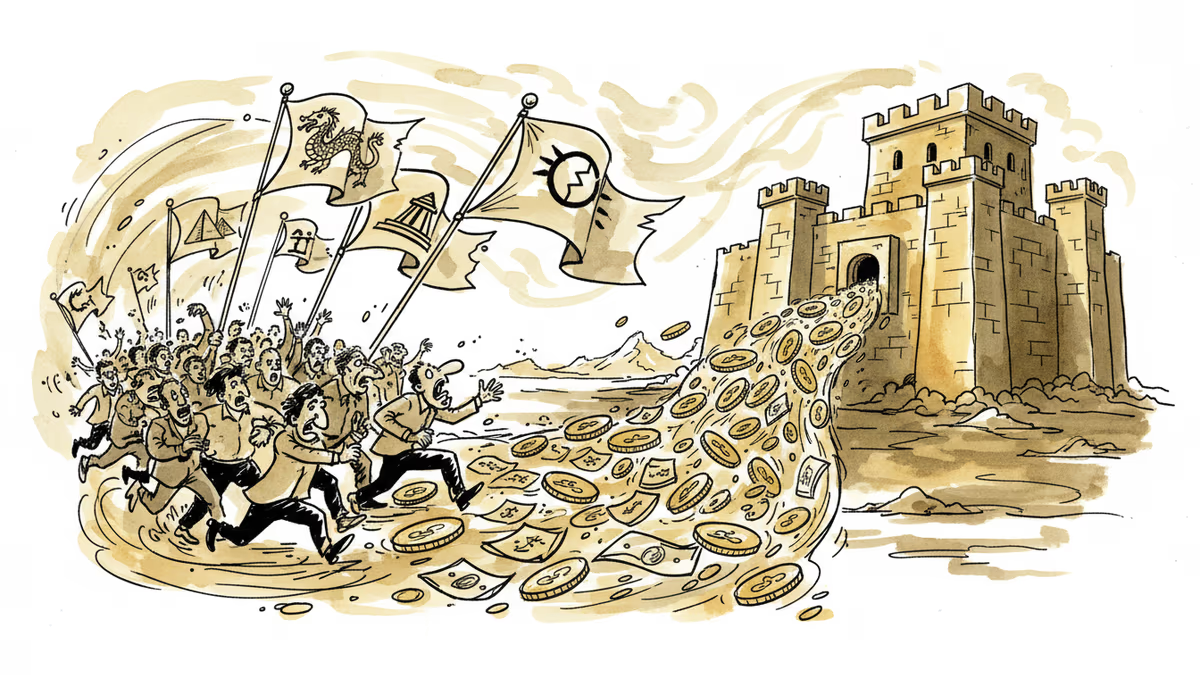
Geopolitical tensions spark massive selloff in emerging market equity funds as investors flee to safe havens, hitting global portfolios hard
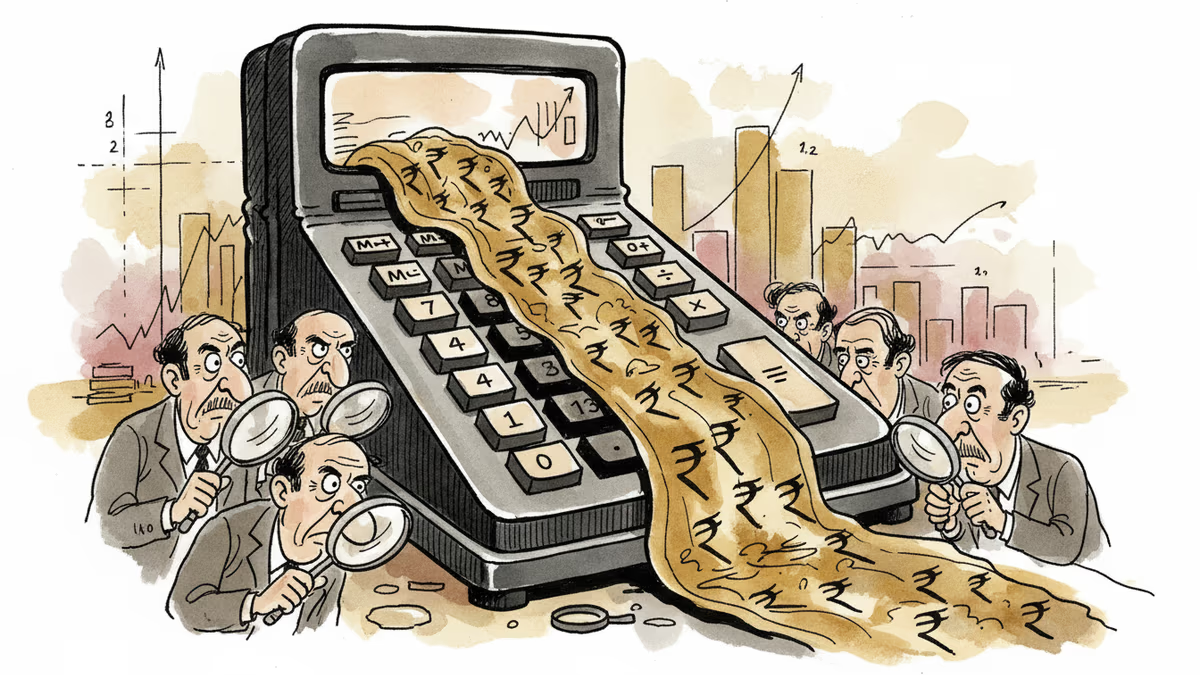
India reported 7.8% GDP growth for December quarter using revamped methodology after IMF gave old system 'C' rating. What this means for investors and the real economy.

India-Israel tech and cybersecurity pacts during Modi's Jerusalem visit signal shifting geopolitical alliances amid US-Iran tensions. Analysis of implications for global tech landscape
The Iran conflict is shutting Indian factories, grounding flights, and closing restaurants across Mumbai. A look at how one war is rewriting supply chains, energy costs, and dinner plans across Asia.
Geopolitical tensions spark massive selloff in emerging market equity funds as investors flee to safe havens, hitting global portfolios hard
India reported 7.8% GDP growth for December quarter using revamped methodology after IMF gave old system 'C' rating. What this means for investors and the real economy.
India-Israel tech and cybersecurity pacts during Modi's Jerusalem visit signal shifting geopolitical alliances amid US-Iran tensions. Analysis of implications for global tech landscape
Thoughts
Share your thoughts on this article
Sign in to join the conversation