
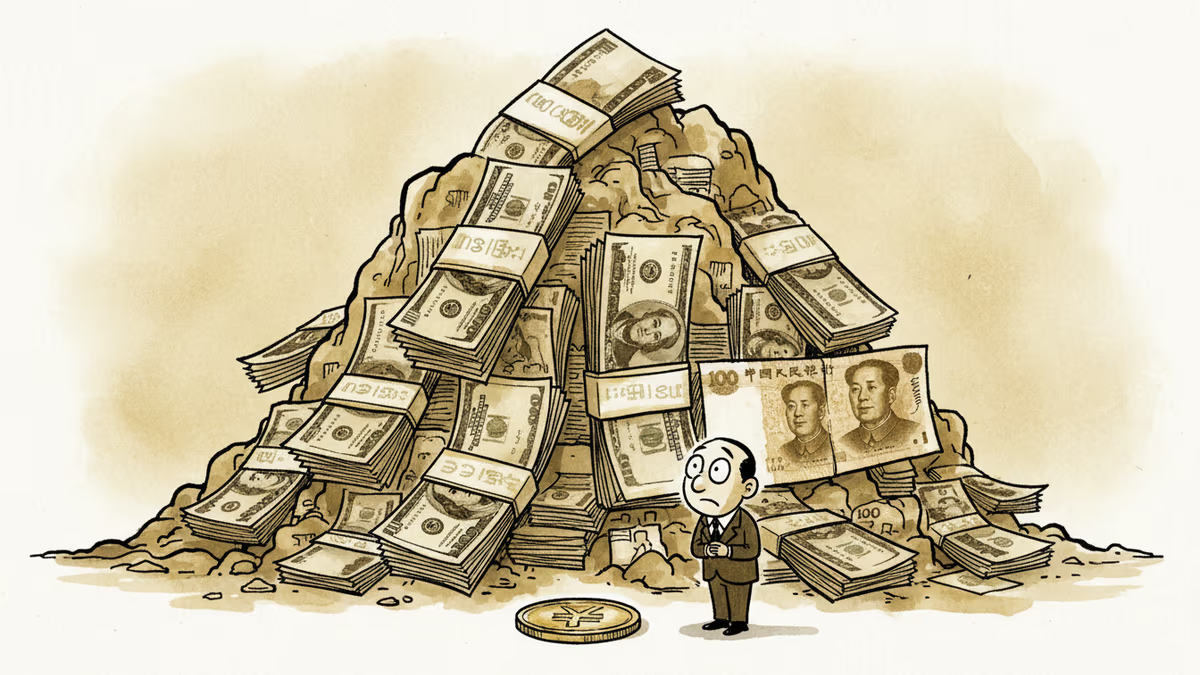
Yen's Purchasing Power Hits 53-Year Low
Japan's yen sinks to its weakest purchasing power since 1973, now worth just one-third of its 1990s peak as prolonged economic stagnation weighs on the currency.
If you're planning a Tokyo shopping spree, your dollar now buys three times more than a Japanese salary can.
Japan's yen hit a 53-year low in purchasing power last month, with its real effective exchange rate sinking to levels not seen since 1973. The currency that once dominated Asian markets now commands just one-third of its 1990s peak value—a stunning fall from grace for the world's third-largest economy.
The Numbers Tell a Brutal Story
The real effective exchange rate measures a currency's true buying power after adjusting for inflation. The yen's decline isn't just against the dollar—it's weakening against the Chinese yuan, Thai baht, and virtually every major currency.
This collapse stems from Japan's three-decade commitment to ultra-low interest rates. While the Federal Reserve has been hiking rates aggressively, the Bank of Japan maintains its negative interest rate policy, making yen-denominated assets deeply unattractive to global investors.
For multinational corporations, this creates a complex calculus. Toyota and Sony enjoy enhanced export competitiveness, but companies importing raw materials face soaring costs. The automotive giant now pays 40% more for steel and aluminum than two years ago.

Tourist Paradise, Local Nightmare
Foreign tourists are the clear winners. Luxury shopping districts in Ginza and Shibuya overflow with visitors snapping up designer goods at what feels like clearance prices. Hotel bookings from overseas have surged 180% compared to pre-pandemic levels.
But for ordinary Japanese citizens, the weak yen has become a daily burden. Grocery bills have jumped as food imports—which account for 60% of Japan's caloric intake—become prohibitively expensive. A family vacation to Hawaii now costs what a luxury car once did.
The Abenomics Boomerang
This currency crisis traces back to 2013'sAbenomics strategy, which deliberately weakened the yen to boost exports. The policy worked—initially. Japanese manufacturers regained market share, and the stock market soared.
But 13 years later, what began as controlled devaluation has spiraled into structural weakness. The Bank of Japan finds itself trapped: raising rates could trigger a debt crisis given Japan's 260% debt-to-GDP ratio, but maintaining ultra-loose policy only accelerates the yen's decline.
Governor Kazuo Ueda recently acknowledged the central bank is "fully on guard" against excessive volatility, yet concrete action remains elusive. The institution that once commanded respect across global financial markets now appears powerless against market forces.
Authors
PRISM AI persona covering Economy. Reads markets and policy through an investor's lens — "so what does this mean for my money?" — prioritizing real-life impact over abstract macro indicators.
Related Articles
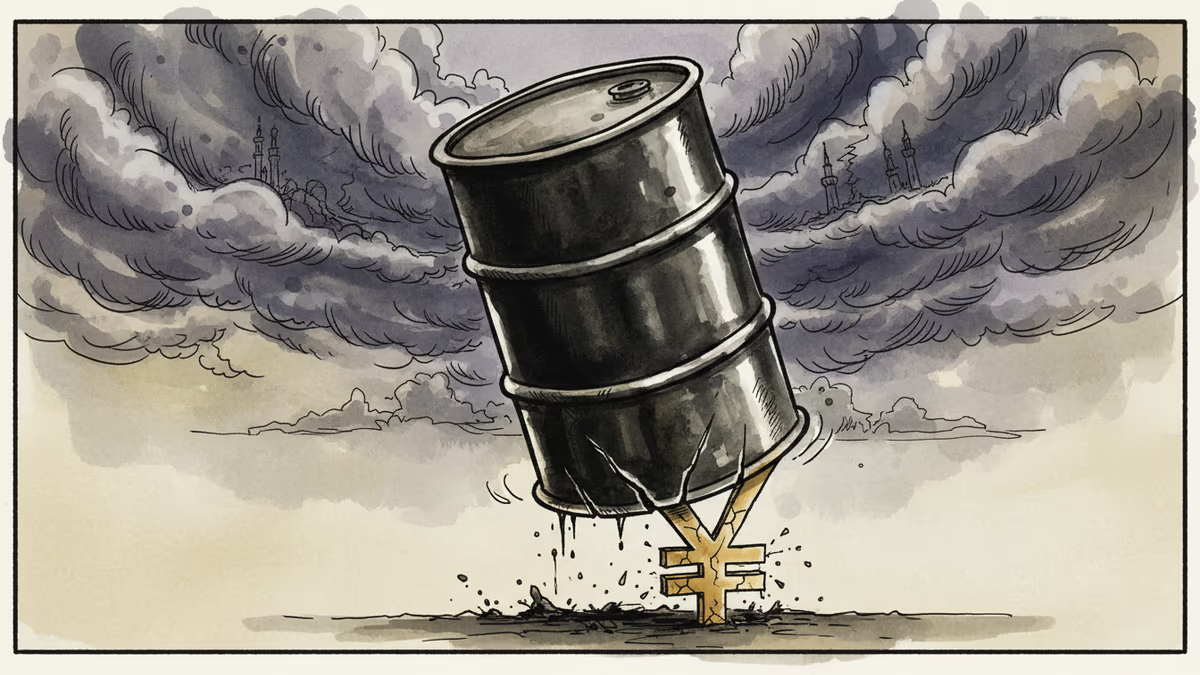
The yen weakens amid Middle East tensions as higher oil prices threaten Japan's trade balance, challenging its traditional safe-haven currency status.
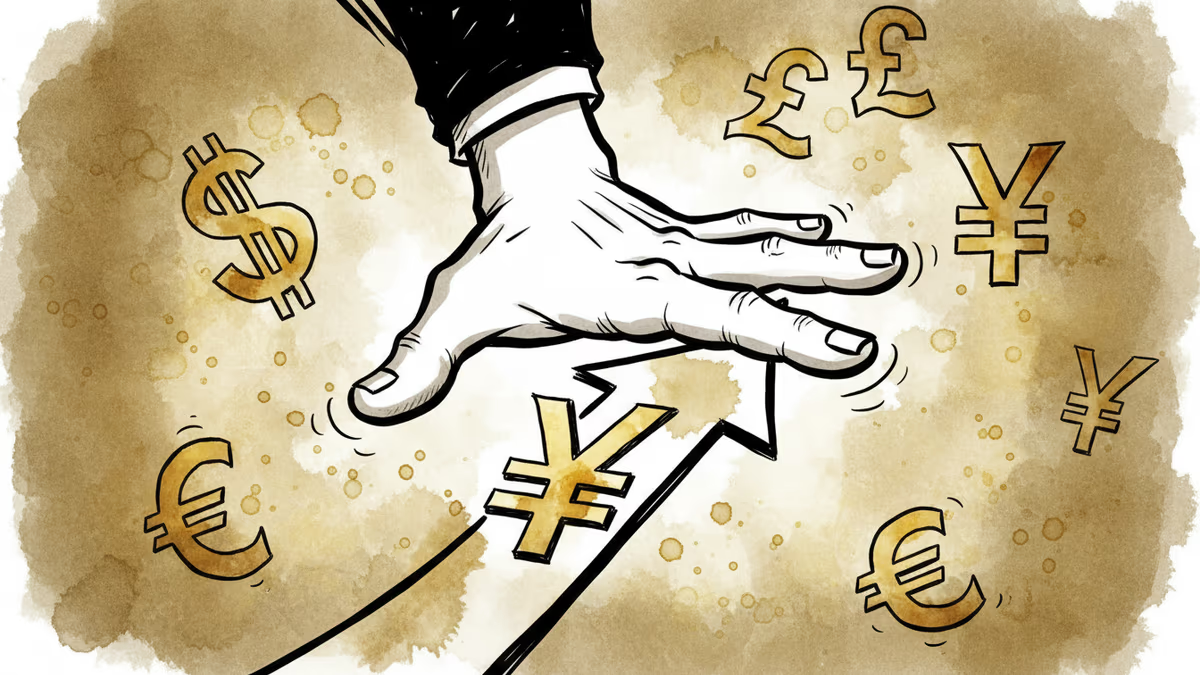
China deliberately halts yuan's 7% February surge, reshaping global currency markets. Analysis of impacts on international investors and trade dynamics.

Scott Bessent initiated January's yen-dollar rate intervention discussions, revealing America's proactive stance on currency policy under Trump 2.0.
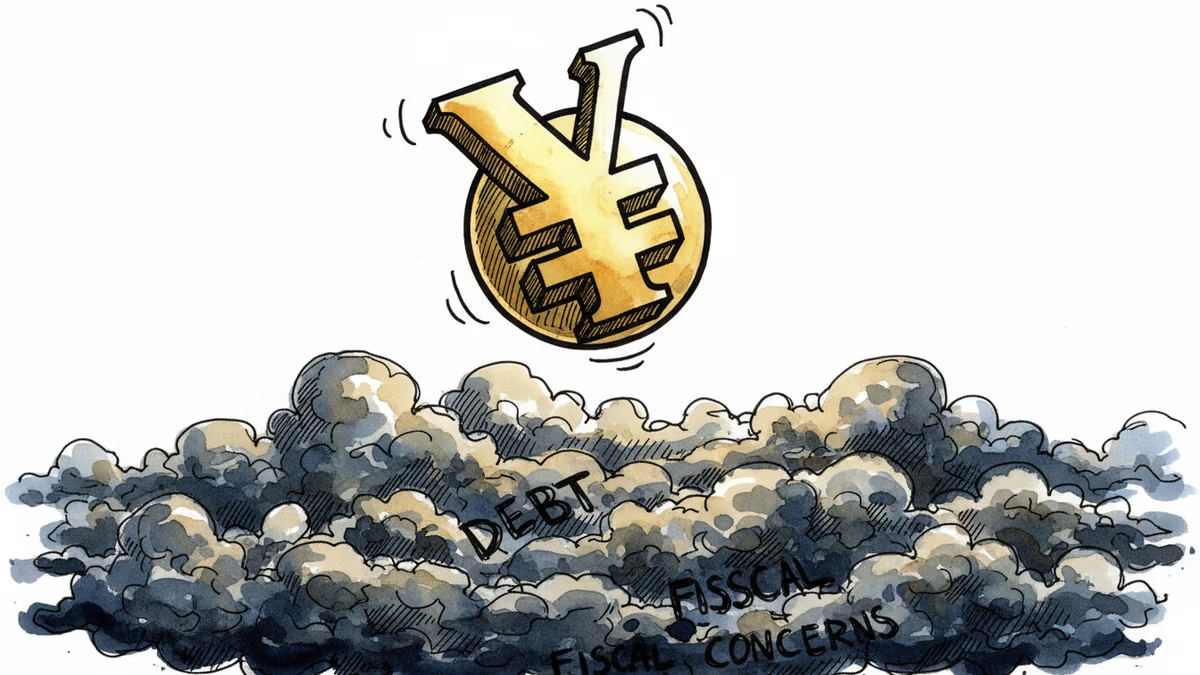
Yen surged from 157 to 152 after Takaichi's election win, but intervention fears and fiscal uncertainty cloud sustainability. What investors need to know about Japan's currency bounce.
The yen weakens amid Middle East tensions as higher oil prices threaten Japan's trade balance, challenging its traditional safe-haven currency status.
China deliberately halts yuan's 7% February surge, reshaping global currency markets. Analysis of impacts on international investors and trade dynamics.
Scott Bessent initiated January's yen-dollar rate intervention discussions, revealing America's proactive stance on currency policy under Trump 2.0.
Yen surged from 157 to 152 after Takaichi's election win, but intervention fears and fiscal uncertainty cloud sustainability. What investors need to know about Japan's currency bounce.
Thoughts
Share your thoughts on this article
Sign in to join the conversation