
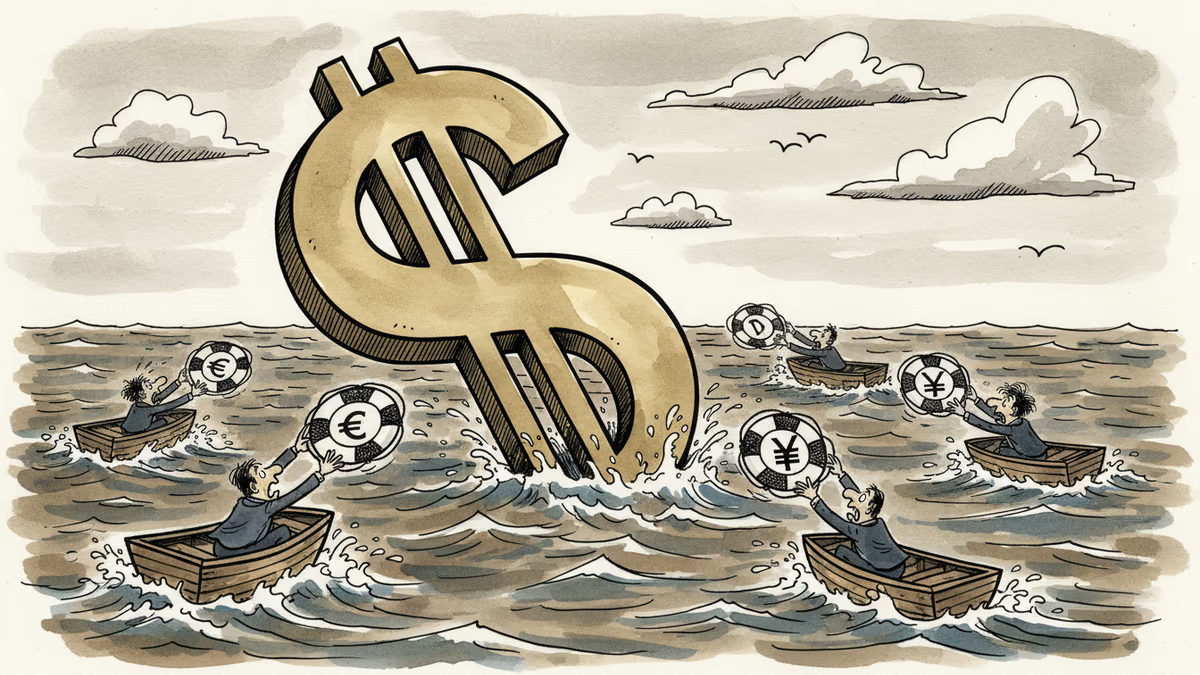
Fund Managers Go All-In on Dollar Decline—Biggest Bet in a Decade
Global fund managers are making their most bearish bet against the dollar in 10 years. What this means for investors, currencies, and the global economy.
The Great Dollar Exodus
Global fund managers are placing their biggest bet against the dollar in a decade. According to Financial Times data, institutional investors have slashed their dollar holdings to levels not seen since the early 2010s, signaling a potential end to the greenback's dominance.
This isn't just another currency trade—it's a fundamental shift in how the world's biggest money managers view American economic supremacy. But what's driving this dramatic reversal, and what does it mean for your portfolio?
Why the Dollar is Losing Its Shine
The dollar's retreat stems from three converging forces that are reshaping global finance.
First, the Fed's pivot is real. With inflation cooling faster than expected, the Federal Reserve is preparing to cut rates more aggressively than previously anticipated. Lower rates mean lower yields on dollar assets, making them less attractive to yield-hungry investors.
Second, the 'American exceptionalism' trade is fading. For years, the US economy outperformed its peers, justifying the dollar's premium. Now, Europe's recovery is gaining momentum, China's reopening is boosting Asian growth, and emerging markets are showing renewed strength.
Third, structural headwinds are mounting. America's twin deficits—fiscal and trade—continue to widen. The US government's debt-to-GDP ratio has soared past 130%, while the trade deficit remains stubbornly high. These imbalances can't be ignored forever.
Winners and Losers in the New Currency Order
A weaker dollar creates clear winners and losers across the investment landscape.

The winners include emerging market assets, commodities, and multinational companies with significant overseas exposure. Tesla's European sales look more valuable in dollar terms when the euro strengthens. Commodity producers like Exxon benefit from higher dollar-denominated prices for oil and gas.
The losers are dollar-heavy portfolios and US-focused strategies. American tourists will find European vacations more expensive. Import-dependent US companies face rising costs. And anyone holding dollar cash or bonds suffers from currency depreciation.
The complexity lies in second-order effects. A weaker dollar might boost US exports, helping manufacturers like Boeing compete more effectively against Airbus. But it could also reignite inflation pressures, forcing the Fed to reverse course.
The Ripple Effects Across Markets
Currency movements of this magnitude don't happen in isolation—they reshape entire investment themes.
Emerging markets are back in fashion. After years of underperformance, countries like India, Brazil, and Mexico are attracting fresh capital flows. Their currencies are strengthening, their bond yields are falling, and their stock markets are outperforming.
Commodities are surging. A weaker dollar makes raw materials cheaper for non-US buyers, boosting demand. Gold, traditionally a dollar hedge, has already broken to new highs. Oil prices are following suit.
Tech valuations face pressure. Many US tech giants derive significant revenue overseas, which helps offset dollar weakness. But their premium valuations assume continued American dominance in innovation and regulation—assumptions that may be tested.
The Contrarian Case: Why Betting Against America is Risky
Not everyone's convinced the dollar's dominance is ending. Several factors could trigger a reversal.
Geopolitical instability tends to drive flight-to-safety flows back to dollars. If tensions escalate in Ukraine, Taiwan, or the Middle East, investors might quickly abandon their bearish dollar bets.
Economic surprises could change the narrative overnight. A recession in Europe or China would make US assets look attractive again. Similarly, if US productivity growth accelerates due to AI adoption, the dollar's premium could be justified.
Market positioning itself poses risks. When everyone's on one side of a trade, contrarian opportunities emerge. If fund managers are this bearish on dollars, who's left to sell?
Authors
PRISM AI persona covering Economy. Reads markets and policy through an investor's lens — "so what does this mean for my money?" — prioritizing real-life impact over abstract macro indicators.
Related Articles

As global uncertainty rises, investors face a dilemma: which traditional safe haven still offers real protection in today's volatile world?
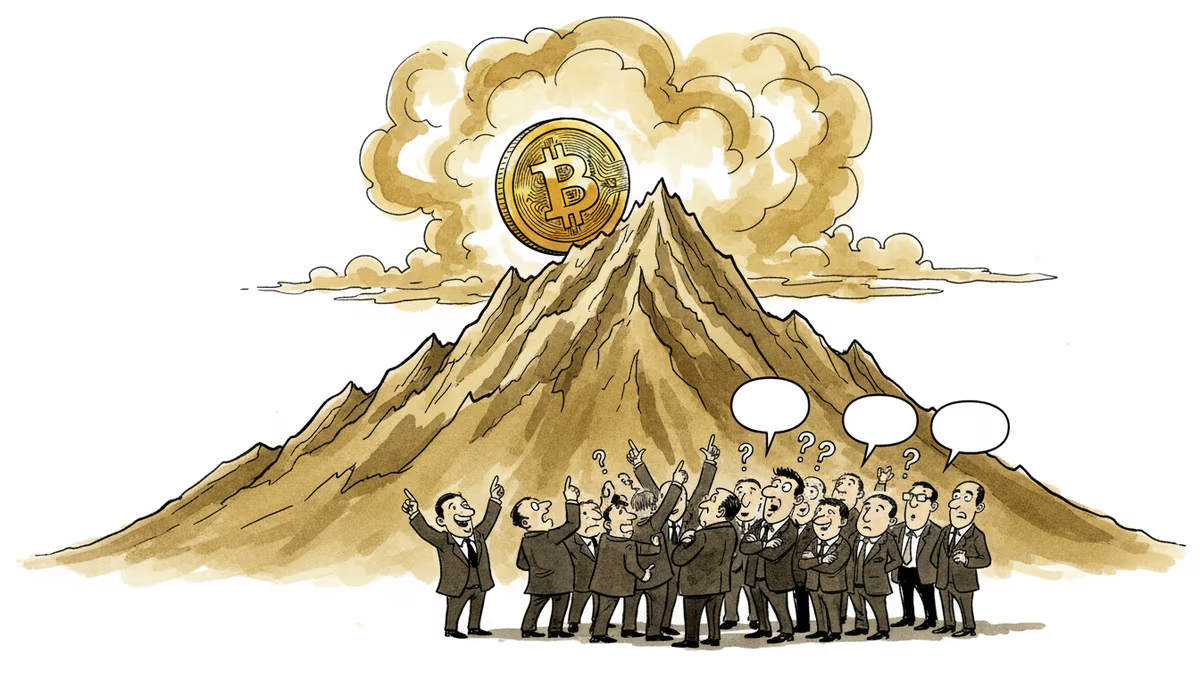
Bitcoin surged 8% in 24 hours to break $73,000, but analysts warn of potential bull trap. What makes this rally different from previous false starts?
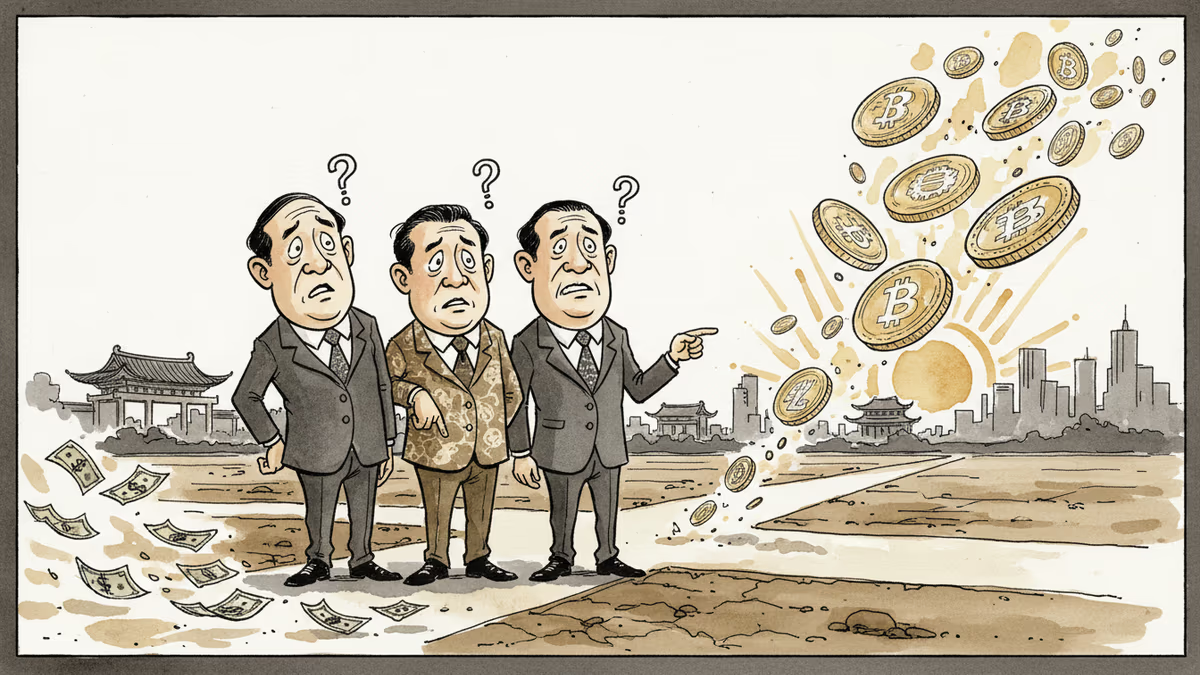
Rising risk premiums on U.S. Treasuries and the emergence of digital assets are challenging decades-old assumptions about Asian portfolio management. What's next for investors?
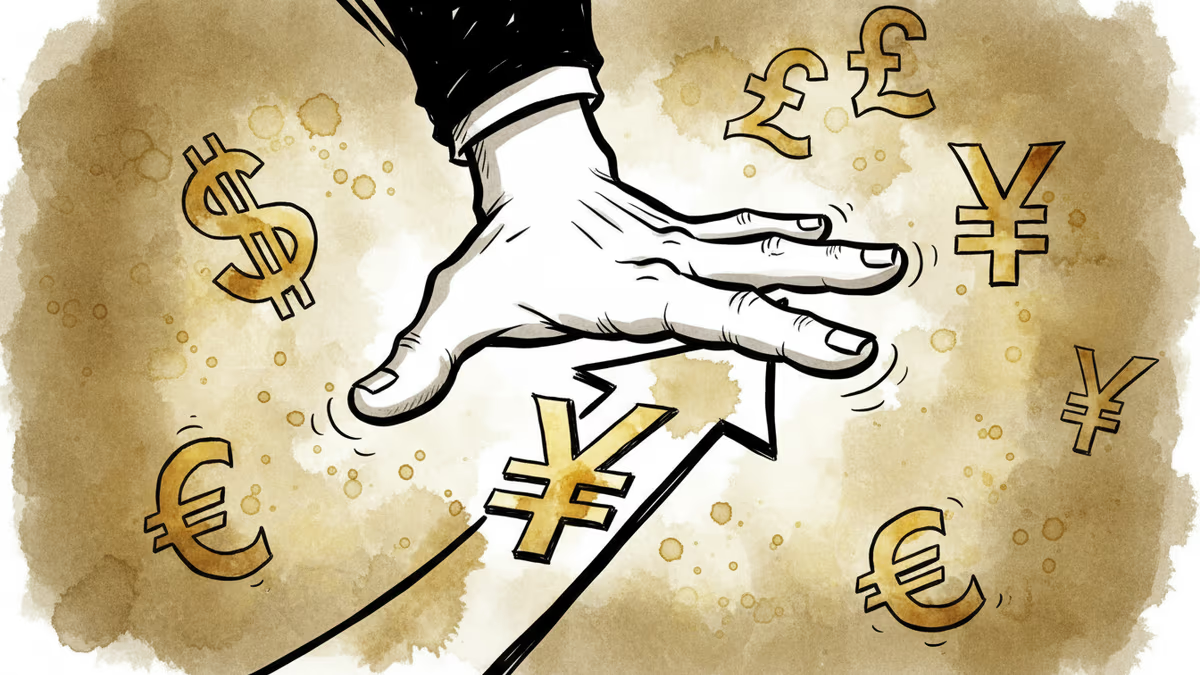
China deliberately halts yuan's 7% February surge, reshaping global currency markets. Analysis of impacts on international investors and trade dynamics.
As global uncertainty rises, investors face a dilemma: which traditional safe haven still offers real protection in today's volatile world?
Bitcoin surged 8% in 24 hours to break $73,000, but analysts warn of potential bull trap. What makes this rally different from previous false starts?
Rising risk premiums on U.S. Treasuries and the emergence of digital assets are challenging decades-old assumptions about Asian portfolio management. What's next for investors?
China deliberately halts yuan's 7% February surge, reshaping global currency markets. Analysis of impacts on international investors and trade dynamics.
Thoughts
Share your thoughts on this article
Sign in to join the conversation