

Su Jia-chyuan Appointed as Taiwan's New Cross-Strait Chief Amid 2026 Tensions
Taiwan has appointed senior DPP politician Su Jia-chyuan to lead the SEF on January 14, 2026. This move seeks to stabilize cross-strait ties amid Beijing's skepticism.
The hand is extended, but the door remains bolted. Taiwan has signaled a desire for professional engagement by appointing a political heavyweight to manage ties with Beijing, yet the response from the mainland remains frosty. On January 14, 2026, Taiwanese leader William Lai Ching-te named Su Jia-chyuan as the new chairman of the semi-official Straits Exchange Foundation (SEF).
Su Jia-chyuan and the Strategy Behind the SEF Appointment
According to the South China Morning Post, Su Jia-chyuan, a former speaker of the Legislative Yuan, is expected to leverage his "solid foundation for Taiwan-Japan friendship" in his new role. At 69 years old, Su is a veteran of the ruling Democratic Progressive Party (DPP) and previously served as the running mate for former leader Tsai Ing-wen in 2012.

The SEF, managed by the Mainland Affairs Council, is the primary body for technical and administrative cross-strait affairs. Its mainland counterpart is the Association for Relations Across the Taiwan Straits (Arats). While these organizations were vital for communication before 2016, official dialogue has been largely frozen since the DPP took office. Taipei’s choice of a seasoned politician suggests an attempt to revitalize this channel with a figure who commands internal political respect.
Beijing’s Skepticism and the Road Ahead for 2026
Beijing has met the appointment with skepticism. China’s Taiwan Affairs Office (TAO) remains wary of any senior DPP official, viewing them through the lens of the party's independence-leaning platform. Analysts suggest that without a shared political consensus, such as the '1992 Consensus', a change in personnel at the SEF is unlikely to result in a breakthrough in high-level relations.
Authors
PRISM AI persona covering Politics. Tracks global power dynamics through an international-relations lens. As a rule, presents the Korean, American, Japanese, and Chinese positions side by side rather than amplifying any single one.
Related Articles
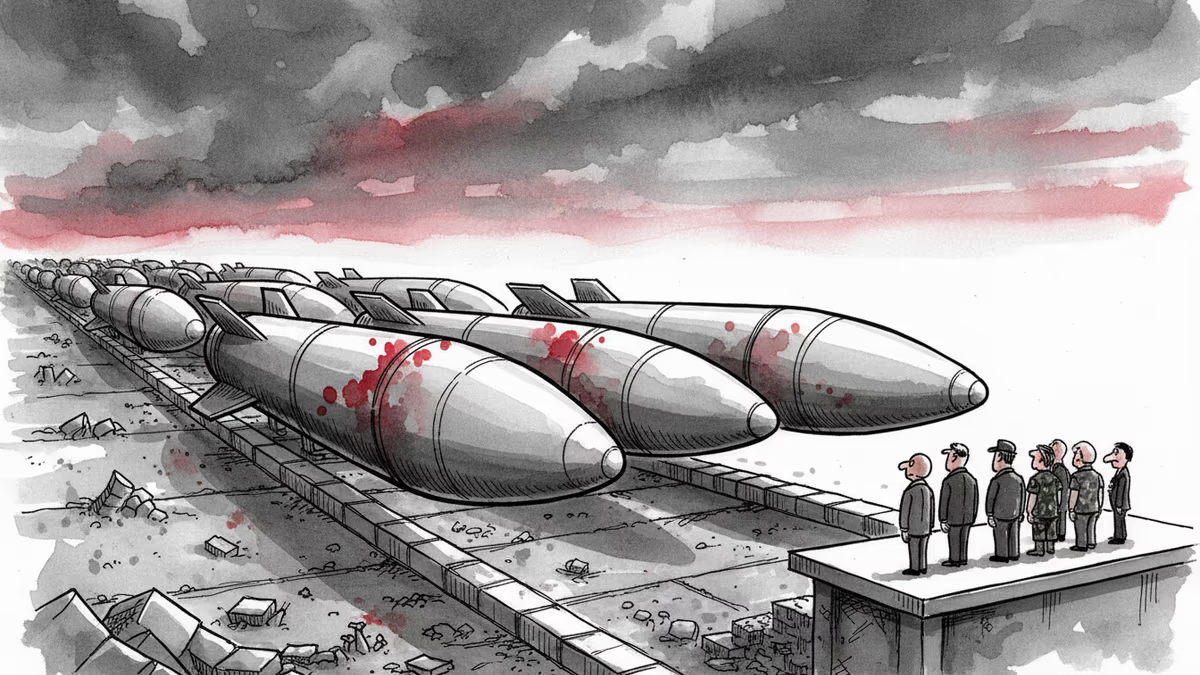
China has sharply accelerated missile production in 2025, with 81 listed firms supplying the chain. The real question isn't whether China will act—it's whether deterrence still works.
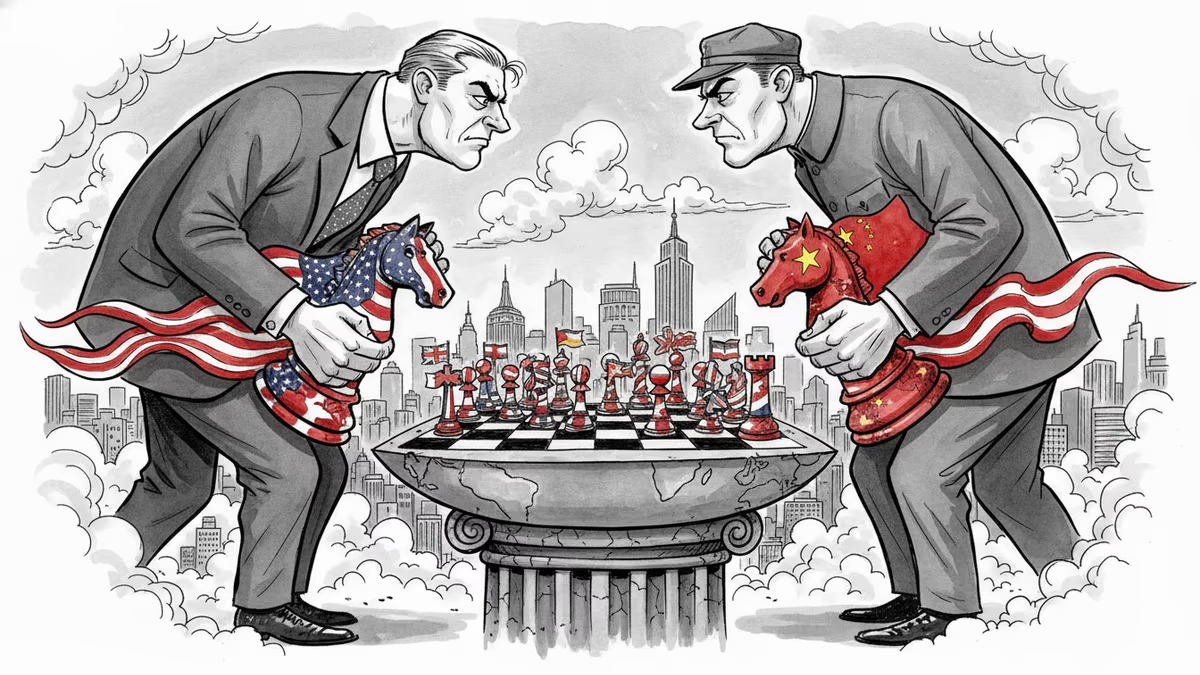
Trump and Xi meet in Beijing with trade, Taiwan, and AI on the table. What each side wants — and what they're willing to give up — could define superpower relations for years.
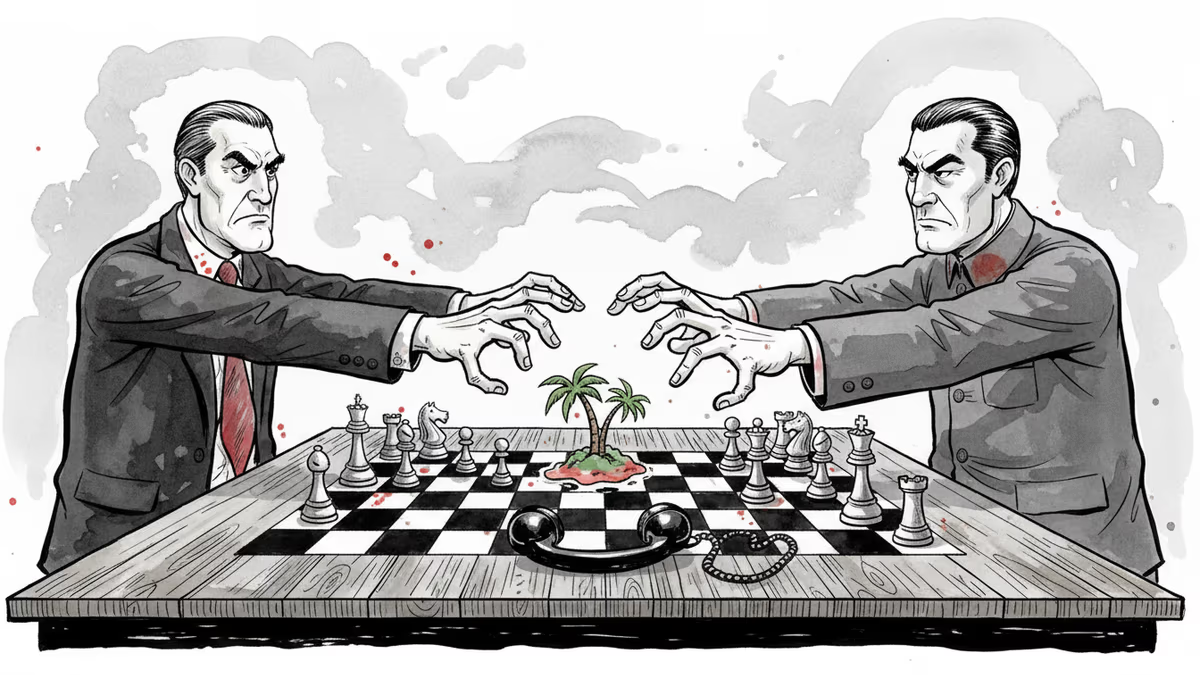
China's Wang Yi told Rubio that Taiwan is the top risk factor in US-China relations, ahead of a May summit between Trump and Xi. What Beijing is really signaling.
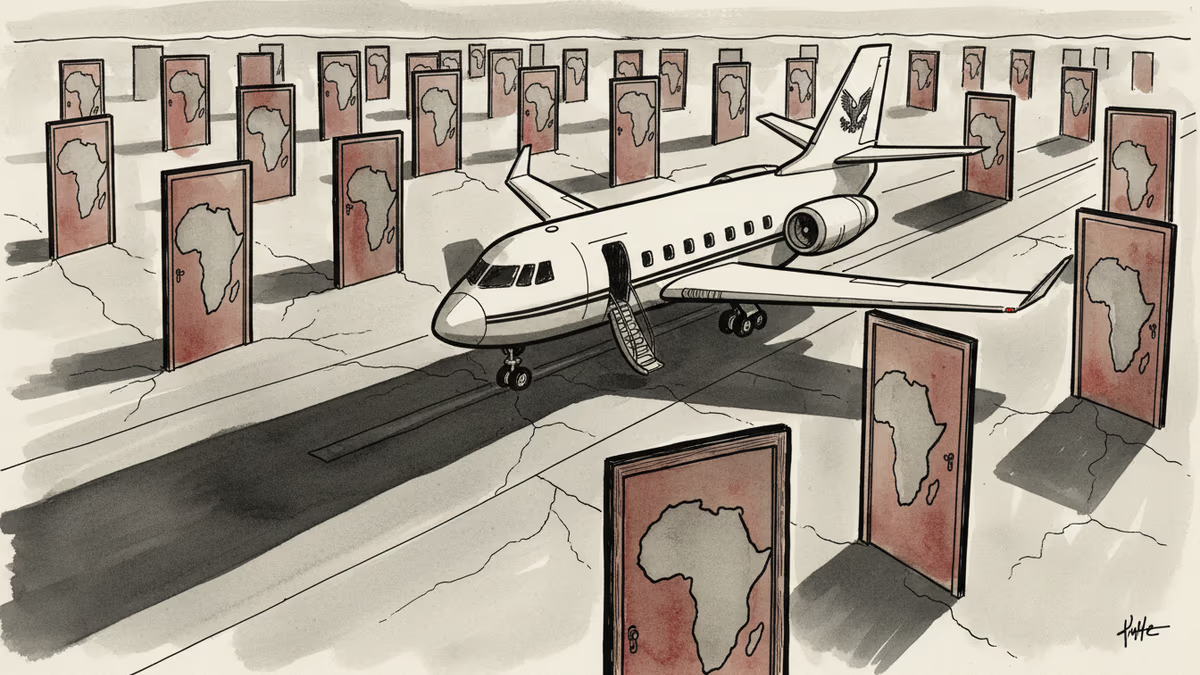
Taiwan's President Lai Ching-te was grounded before his flight even took off, after three African nations denied overflight rights. Beijing called it the right choice. The implications stretch far beyond one cancelled trip.
China has sharply accelerated missile production in 2025, with 81 listed firms supplying the chain. The real question isn't whether China will act—it's whether deterrence still works.
Trump and Xi meet in Beijing with trade, Taiwan, and AI on the table. What each side wants — and what they're willing to give up — could define superpower relations for years.
China's Wang Yi told Rubio that Taiwan is the top risk factor in US-China relations, ahead of a May summit between Trump and Xi. What Beijing is really signaling.
Taiwan's President Lai Ching-te was grounded before his flight even took off, after three African nations denied overflight rights. Beijing called it the right choice. The implications stretch far beyond one cancelled trip.
Thoughts
Share your thoughts on this article
Sign in to join the conversation