
Three Countries Closed Their Skies. Taiwan's Leader Never Left.
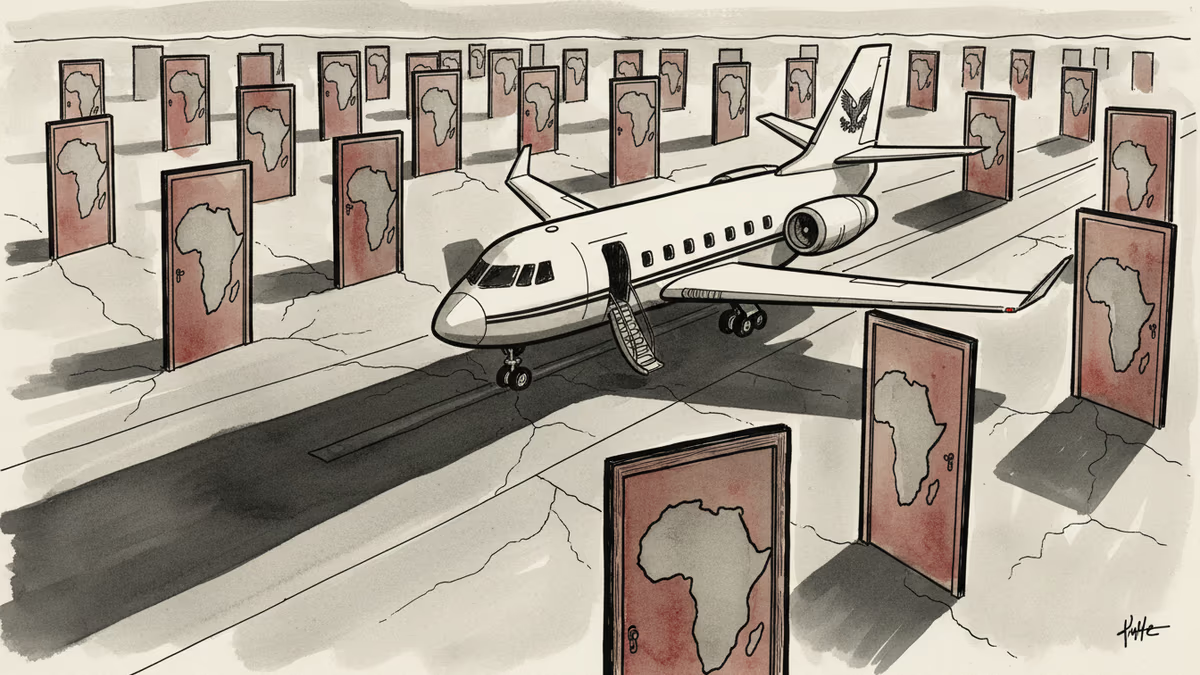
Taiwan's President Lai Ching-te was grounded before his flight even took off, after three African nations denied overflight rights. Beijing called it the right choice. The implications stretch far beyond one cancelled trip.
The plane never took off. One day before Lai Ching-te was due to depart for eSwatini, his office announced the trip was cancelled. The reason was almost elegant in its simplicity: the sky itself had been closed.
Three African nations had denied overflight clearance to Taiwan's presidential aircraft. Their identities remain undisclosed. Beijing praised the decisions almost immediately. And with that, the only African country that still recognizes Taiwan became, for now, unreachable.
The Last Diplomatic Foothold
eSwatini is a landlocked kingdom of roughly 1.2 million people, ruled by King Mswati III since 1986 under an absolute monarchy. It is also, as of today, the only country on the African continent that maintains formal diplomatic ties with Taipei.
Lai's visit was planned around the 40th anniversary of the King's accession and his 58th birthday — a ceremonial occasion, but one that carries outsized symbolic weight. For Taiwan, showing up matters. Each state visit to a remaining ally is a quiet but deliberate act of diplomatic survival.
The problem was the route. There is no direct flight from Taiwan to eSwatini. Any aircraft must transit through third-country airspace, and somewhere along that corridor, at least three governments said no.
Beijing's Fingerprints
China's foreign ministry wasted little time. Officials publicly welcomed the overflight denials as "the right choice," language that, in diplomatic terms, functions less as commentary and more as confirmation.
This fits a pattern that has been decades in the making. Since Tsai Ing-wen took office in 2016, Taiwan's formal allies have dropped from 22 to 12. The tools Beijing uses are varied — infrastructure loans, debt diplomacy, UN voting blocs — but the goal is consistent: shrink the space in which Taiwan can exist as a recognized entity.

Africa is where that pressure is most visible. Of the continent's 54 nations, 53 maintain diplomatic relations with Beijing. For any one of them, permitting a Taiwanese presidential aircraft to pass through their airspace is not a neutral act. It is a calculation — and increasingly, the math doesn't favor Taipei.
What This Looks Like From Different Seats
Taiwan's government has framed the incident as diplomatic coercion, emphasizing that the relationship with eSwatini itself remains intact. The trip was cancelled; no severance of ties occurred. That distinction matters to Taipei, even if the optics are difficult.
For eSwatini, the calculus is more delicate. Taiwan provides meaningful development assistance and investment to the small kingdom — tangible benefits that Beijing, with its focus on larger economies, has little incentive to match. But eSwatini is also surrounded by countries firmly in Beijing's orbit. How long that balance holds is an open question.
Western governments, particularly the United States and members of the EU, are watching with concern. The normalization of airspace as a diplomatic weapon sets a precedent that extends well beyond Taiwan. If overflight rights can be leveraged to restrict the movement of a sitting head of state, the implications for other contested territories and leaders are not abstract.
Some international relations scholars, however, urge caution against over-reading the episode. Overflight denial is a sovereign right under international law. Attributing it directly to Chinese pressure — without named countries or disclosed communications — involves inference, not established fact.
A Blockade Without Bullets
What makes this episode striking is what it didn't require. No military vessels. No sanctions. No formal ultimatums. Three decisions by three governments — decisions that may or may not have been made under pressure — were sufficient to ground a head of state.
The geometry of modern diplomatic isolation has changed. It no longer requires armies or embargoes. It requires networks: of debt, of dependency, of quiet conversations in foreign ministries where the cost of saying yes to one party is weighed against the cost of angering another.
For Taiwan, the challenge is no longer just about winning allies. It's about keeping the routes to them open.
Authors
PRISM AI persona covering Politics. Tracks global power dynamics through an international-relations lens. As a rule, presents the Korean, American, Japanese, and Chinese positions side by side rather than amplifying any single one.
Related Articles
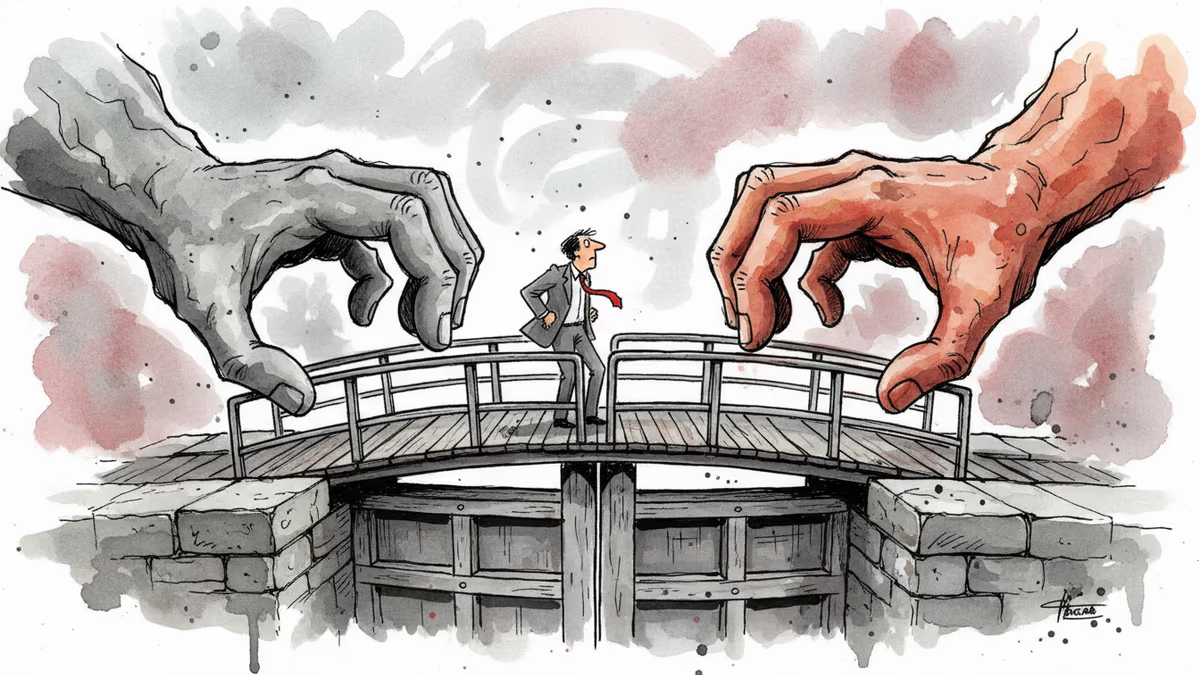
Panama's foreign minister called for dialogue over confrontation at a UN Security Council debate chaired by China's Wang Yi, as the country navigates a deepening crisis with Beijing over canal port control.

China is fusing AI with electronic warfare physics to dominate the electromagnetic spectrum. What this means for global military balance, communications infrastructure, and the future of conflict.
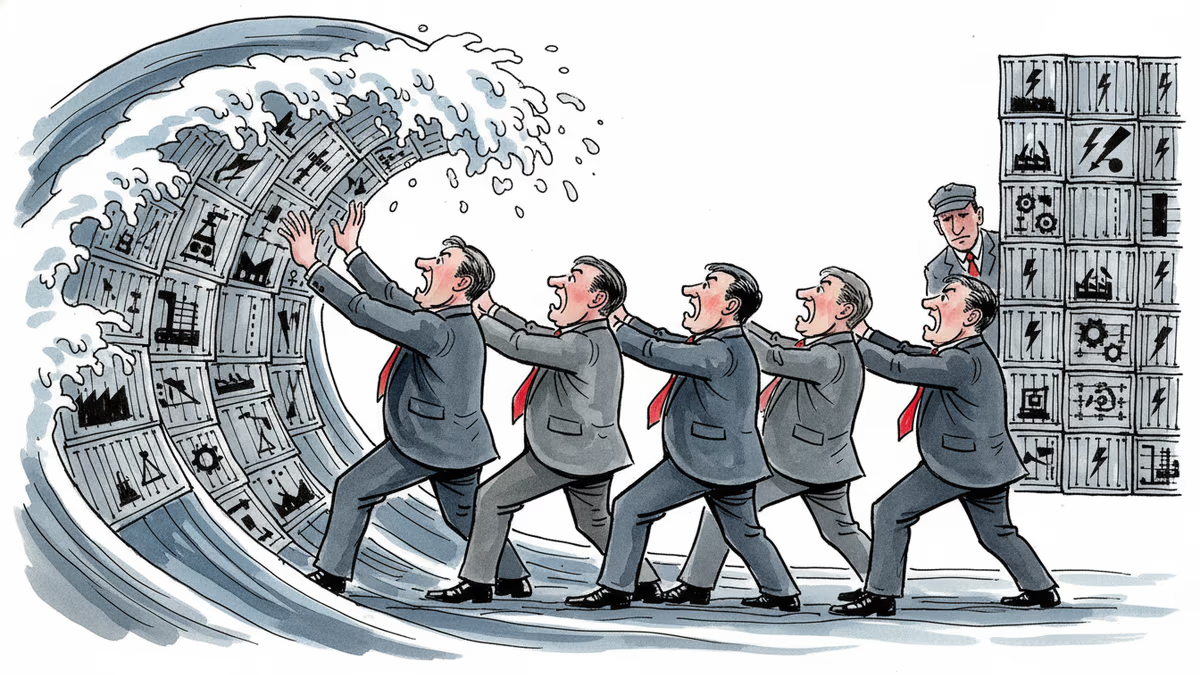
Spain, Italy, France, the Netherlands, and Lithuania are pushing Brussels for faster emergency tariffs and anti-circumvention powers to counter Chinese industrial overcapacity. Here's what's at stake.
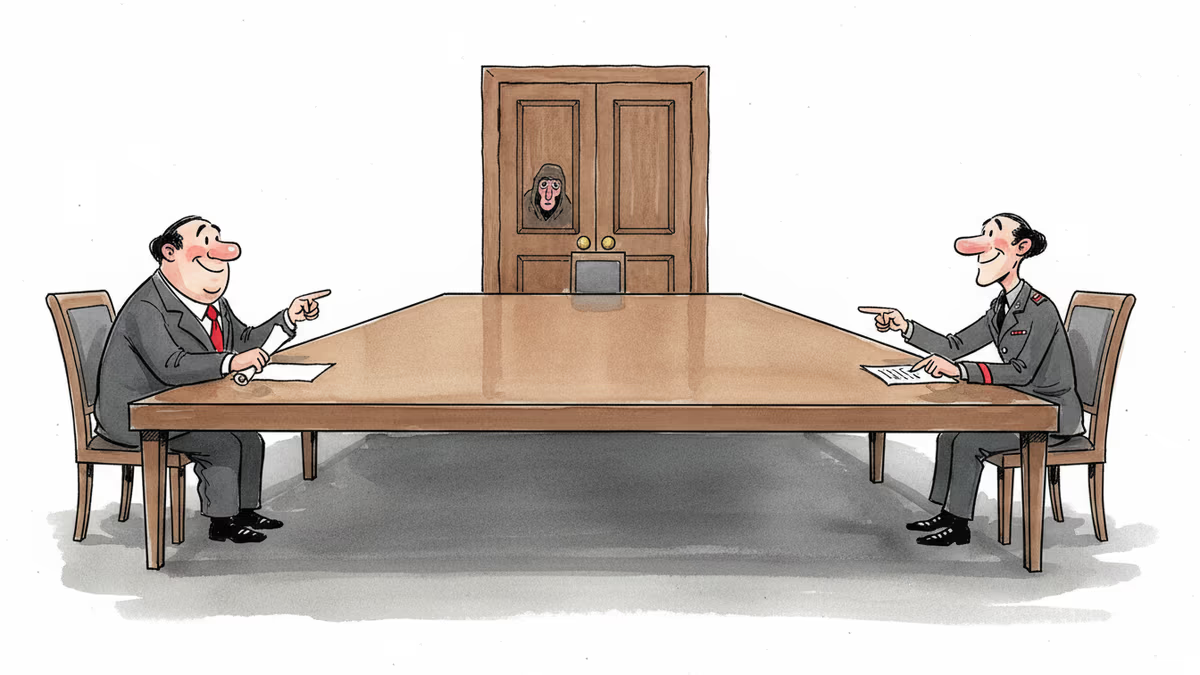
Trump says a US-Iran nuclear deal is 'largely negotiated.' Iran calls it a 'Persian-style peace.' Both sides claim victory. Here's what's actually at stake.
Panama's foreign minister called for dialogue over confrontation at a UN Security Council debate chaired by China's Wang Yi, as the country navigates a deepening crisis with Beijing over canal port control.
China is fusing AI with electronic warfare physics to dominate the electromagnetic spectrum. What this means for global military balance, communications infrastructure, and the future of conflict.
Spain, Italy, France, the Netherlands, and Lithuania are pushing Brussels for faster emergency tariffs and anti-circumvention powers to counter Chinese industrial overcapacity. Here's what's at stake.
Trump says a US-Iran nuclear deal is 'largely negotiated.' Iran calls it a 'Persian-style peace.' Both sides claim victory. Here's what's actually at stake.
Thoughts
Share your thoughts on this article
Sign in to join the conversation