

Panama Stood Before China and Asked for Dialogue
Panama's foreign minister called for dialogue over confrontation at a UN Security Council debate chaired by China's Wang Yi, as the country navigates a deepening crisis with Beijing over canal port control.
Panama's foreign minister walked into a room chaired by China's top diplomat and asked for peace. That sentence alone tells you something has gone badly wrong.
The Scene That Says Everything
On Tuesday, China held the rotating presidency of the UN Security Council—a role it holds for just one month a year. Foreign Minister Wang Yi sat at the head of the table for a high-level open debate. Into that room walked Panama's foreign minister, who told the assembly that his country was "born to connect oceans, continents, cultures and economies," and called for dialogue over confrontation.
The speech was diplomatic in tone. The subtext was urgent.
Panama and China are in the worst bilateral crisis since the two countries established ties in 2017. The rupture traces back to relentless pressure from the Trump administration, which has repeatedly demanded that Chinese influence be removed from the Panama Canal. The specific flashpoint: Hutchison Ports, a Hong Kong-based company that operates ports at both ends of the canal. Washington pushed hard for Hutchison to sell those assets to a consortium led by BlackRock. Panama's government agreed to facilitate the process. Beijing was furious.
So Panama, caught between its most powerful neighbor and its largest infrastructure investor, sent its foreign minister to stand before China's top diplomat and ask, essentially, if they could still talk.
Why This Moment Matters
The timing is not incidental. China's Security Council presidency gave Panama a rare, high-profile venue to send a signal directly to Beijing—with the world watching. It's the kind of move small states make when back-channel diplomacy isn't enough but direct confrontation is too dangerous.

Panama's structural problem is stark. Canal toll revenues are central to the national budget. China is among the heaviest users of the waterway. If Beijing decides to reduce traffic through the canal—or accelerates investment in alternative routes like a potential Nicaragua canal—Panama pays an economic price for choices it was effectively pressured into making. The country didn't pick this fight. It got caught inside one.
At the same time, defying Washington isn't a real option either. The United States built the canal, held sovereignty over it until 1999, and remains Panama's dominant trade partner and security guarantor. When Trump officials suggest the US wants to "take back" the canal, Panama has very little leverage to push back openly.
Three Actors, Three Different Calculations
Washington frames this as a security issue: a Chinese-linked company operating strategic chokepoints on both sides of the canal is an unacceptable risk. The Trump administration has turned the canal into a symbol of its broader campaign to roll back Chinese commercial presence in the Western Hemisphere. Whether the security threat is real or overstated, the political utility of the narrative is obvious.
Beijing sees the Hutchison situation as a commercial matter being weaponized. Hutchison Ports is a port operator, not a military installation. From China's perspective, the forced divestiture is economic coercion dressed up in security language—and a precedent that could be applied to Chinese investments anywhere. Wang Yi's decision to chair the Security Council debate on the same day Panama made its appeal was almost certainly not a coincidence. China is watching, and it wants Panama to know that.
Panama's citizens are caught in a bind that cuts deeper than economics. The 1999 handover of canal sovereignty from the United States was one of the defining moments of modern Panamanian nationhood. Now, a quarter-century later, the US is asserting influence over the canal again, and China is fighting to maintain its commercial foothold there. For ordinary Panamanians, both great powers appear to view the canal primarily as a piece in their own strategic game.
The Hutchison Deal Isn't Done Yet
The sale of Hutchison's port assets to the BlackRock-led consortium has not been finalized. Chinese government pushback and legal challenges have kept the deal in limbo. That uncertainty gives Panama's government a narrow window to manage both relationships simultaneously—but it also means the pressure isn't going away.
The broader pattern here is one playing out across the developing world. Countries that built economic ties with China over the past two decades are now facing American demands to choose sides. "Strategic ambiguity"—maintaining workable relationships with both powers—is becoming harder to sustain. Panama's appeal for dialogue at the Security Council is, in part, a plea for that space to still exist.
For international businesses and supply chain planners, the canal situation is a reminder that the world's most critical infrastructure corridors are no longer purely commercial. The 40-mile stretch of water that handles roughly 5% of global trade is now a live geopolitical variable.
This content is AI-generated based on source articles. While we strive for accuracy, errors may occur. We recommend verifying with the original source.
Related Articles

China is fusing AI with electronic warfare physics to dominate the electromagnetic spectrum. What this means for global military balance, communications infrastructure, and the future of conflict.
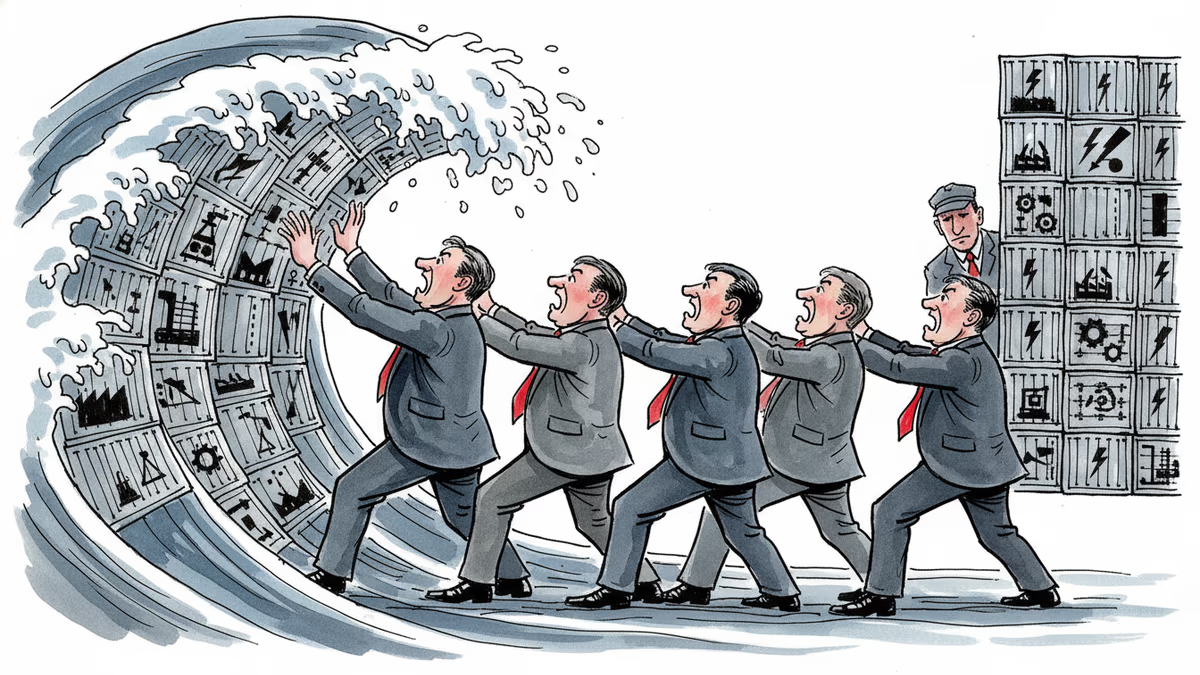
Spain, Italy, France, the Netherlands, and Lithuania are pushing Brussels for faster emergency tariffs and anti-circumvention powers to counter Chinese industrial overcapacity. Here's what's at stake.
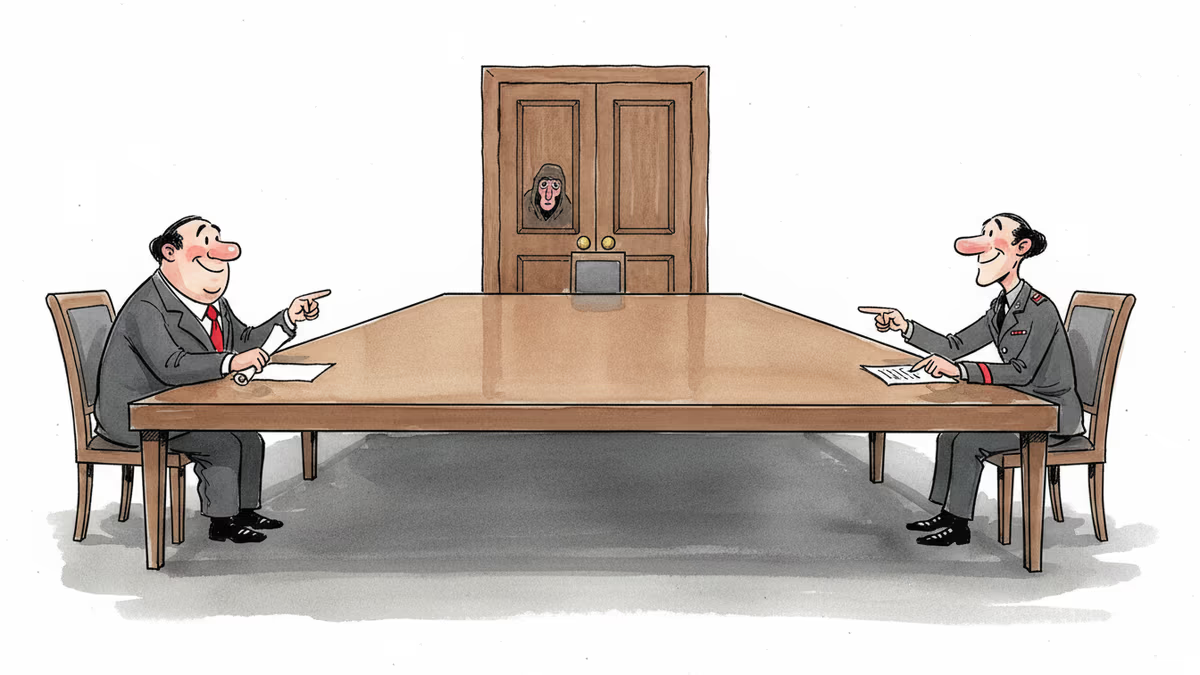
Trump says a US-Iran nuclear deal is 'largely negotiated.' Iran calls it a 'Persian-style peace.' Both sides claim victory. Here's what's actually at stake.
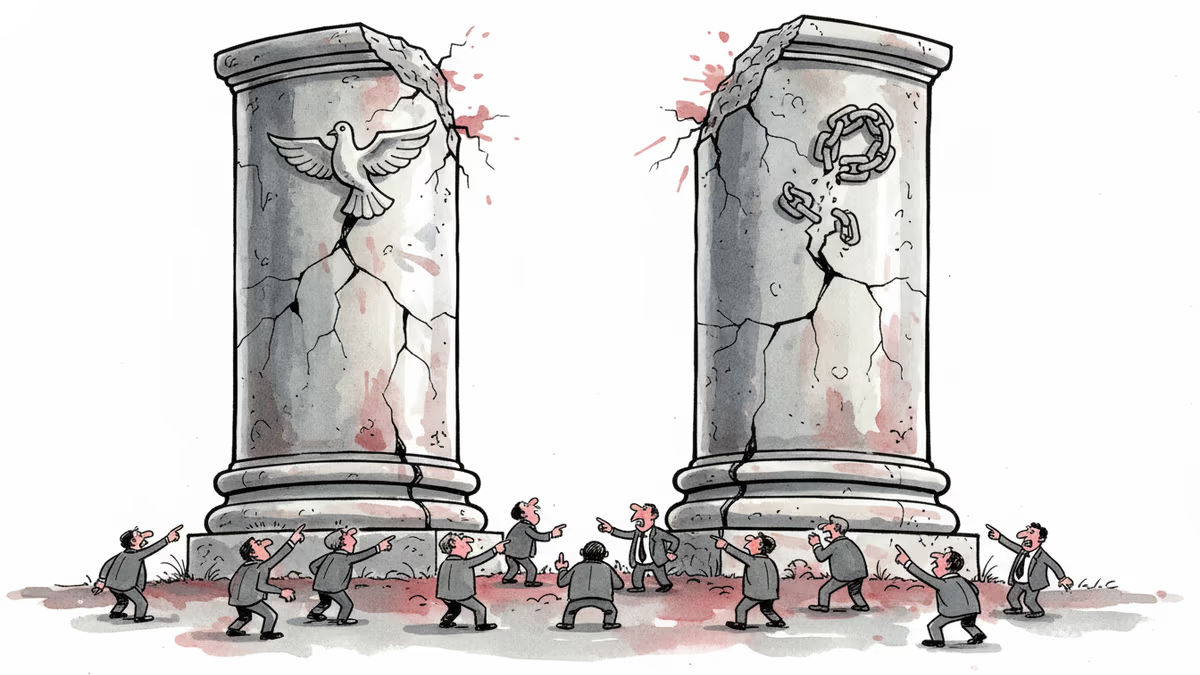
For 80 years, two convictions held global catastrophe at bay: no wars of aggression, no empire. Both are eroding simultaneously. What happened to the peace the UN was built to protect?
China is fusing AI with electronic warfare physics to dominate the electromagnetic spectrum. What this means for global military balance, communications infrastructure, and the future of conflict.
Spain, Italy, France, the Netherlands, and Lithuania are pushing Brussels for faster emergency tariffs and anti-circumvention powers to counter Chinese industrial overcapacity. Here's what's at stake.
Trump says a US-Iran nuclear deal is 'largely negotiated.' Iran calls it a 'Persian-style peace.' Both sides claim victory. Here's what's actually at stake.
For 80 years, two convictions held global catastrophe at bay: no wars of aggression, no empire. Both are eroding simultaneously. What happened to the peace the UN was built to protect?
Thoughts
Share your thoughts on this article
Sign in to join the conversation