
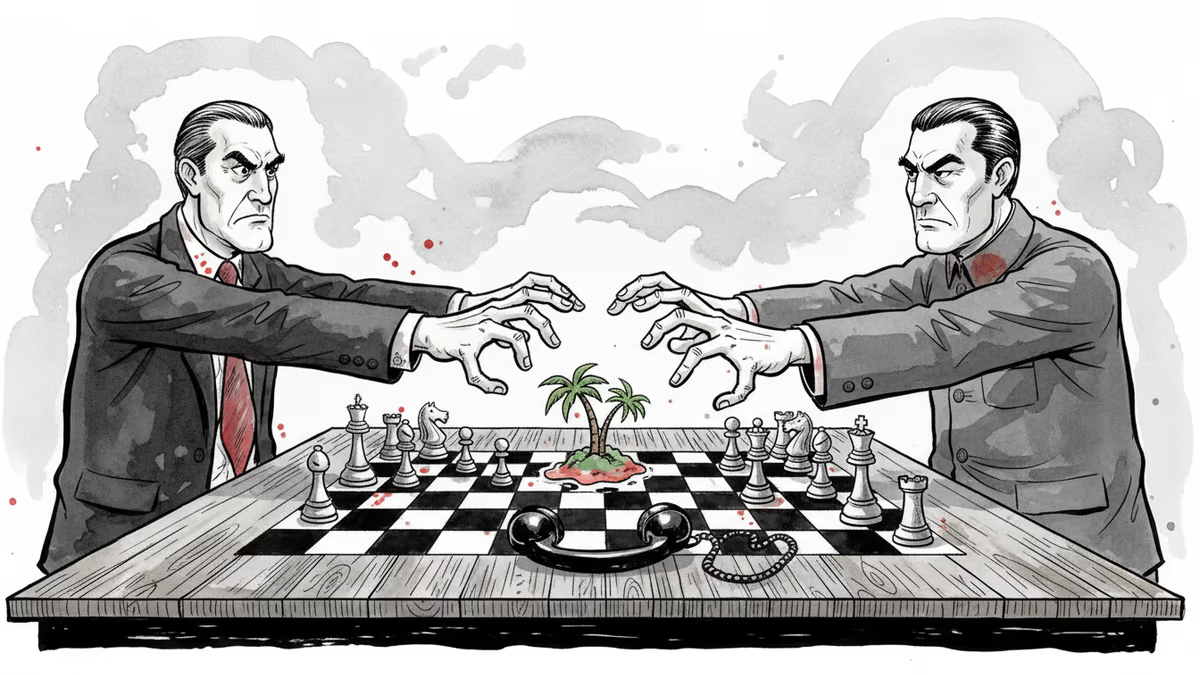
Taiwan Is 'The Biggest Risk'—Beijing Sets the Stage
China's Wang Yi told Rubio that Taiwan is the top risk factor in US-China relations, ahead of a May summit between Trump and Xi. What Beijing is really signaling.
Before the summit even has a date confirmed, Beijing has already named its price.
On Thursday, Chinese Foreign Minister Wang Yi told US Secretary of State Marco Rubio that Taiwan is "the biggest risk factor in China-US relations." The call, reported by state broadcaster CCTV, was framed as preparatory groundwork for a highly anticipated summit between President Donald Trump and President Xi Jinping, expected in Beijing in mid-May. But the headline message was unmistakable: China intends to put Taiwan at the center of whatever conversation comes next.
What Happened—and What Was Left Unsaid
The call itself was diplomatic in tone. Wang said both sides "must safeguard the hard-won stability" and make thorough preparations for the leaders' meeting. On its face, that's standard pre-summit language—a signal that back-channel coordination is underway and that neither side wants the meeting to fail.
But the explicit labeling of Taiwan as a "risk factor" was anything but routine. It's a public, on-the-record statement designed to reach multiple audiences at once: the Trump administration, the US Congress, Taiwan's government, and markets watching for any sign of where US-China relations are headed.
The timing sharpens the message considerably. The two countries are currently locked in a punishing trade standoff. The Trump administration has imposed tariffs of 145% on Chinese imports; Beijing has retaliated with 125% duties on American goods. Both economies are absorbing real costs. A summit offers a potential off-ramp—but Beijing appears to be signaling that any economic deal will need to account for its core political demands, Taiwan chief among them.
Why This Framing, Why Now

China's insistence on Taiwan as a precondition isn't new, but the bluntness of Thursday's statement reflects a specific strategic moment. The Trump administration has sent mixed signals on Taiwan throughout its second term—hinting at transactional flexibility on one hand while continuing arms sales and naval transits on the other. Beijing may be trying to force clarity before sitting down at the table.
There's also a domestic dimension. Xi Jinping cannot be seen entering a summit with Washington without having staked out China's position on what Beijing considers a non-negotiable sovereignty issue. The "risk factor" framing serves that purpose: it's a warning, not a concession.
From Washington's perspective, the challenge is structural. The Trump administration wants a trade deal. It also wants to maintain credibility as Taiwan's security guarantor. Those two goals are not easily reconciled when Beijing insists on linking them.
How Different Stakeholders Read This
For Taiwan, the most uncomfortable aspect of this dynamic isn't the threat itself—Taipei has lived under that threat for decades—it's the possibility that its fate gets quietly negotiated between two great powers focused on their own economic interests. The island's government has repeatedly asked to be treated as an actor, not a subject, in these conversations. That ask rarely gets a satisfying answer.
For investors and multinationals, the summit's outcome matters in a narrow but consequential way: any reduction in trade friction means more supply chain predictability. Whether Taiwan's status is discussed or deferred is largely irrelevant to quarterly earnings—unless it isn't, and tensions escalate into something markets can't price.
For US allies in the Indo-Pacific—Japan, South Korea, Australia, the Philippines—the summit is a stress test of American reliability. A deal that visibly trades Taiwan's security posture for tariff relief would send a signal that alliance commitments are negotiable. None of those governments would say so publicly. All of them are watching closely.
For China hawks in the US Congress, the concern is the opposite: that a Trump-Xi summit produces a feel-good communiqué that papers over structural disagreements while giving Beijing diplomatic cover to continue its military buildup around Taiwan.
This content is AI-generated based on source articles. While we strive for accuracy, errors may occur. We recommend verifying with the original source.
Related Articles
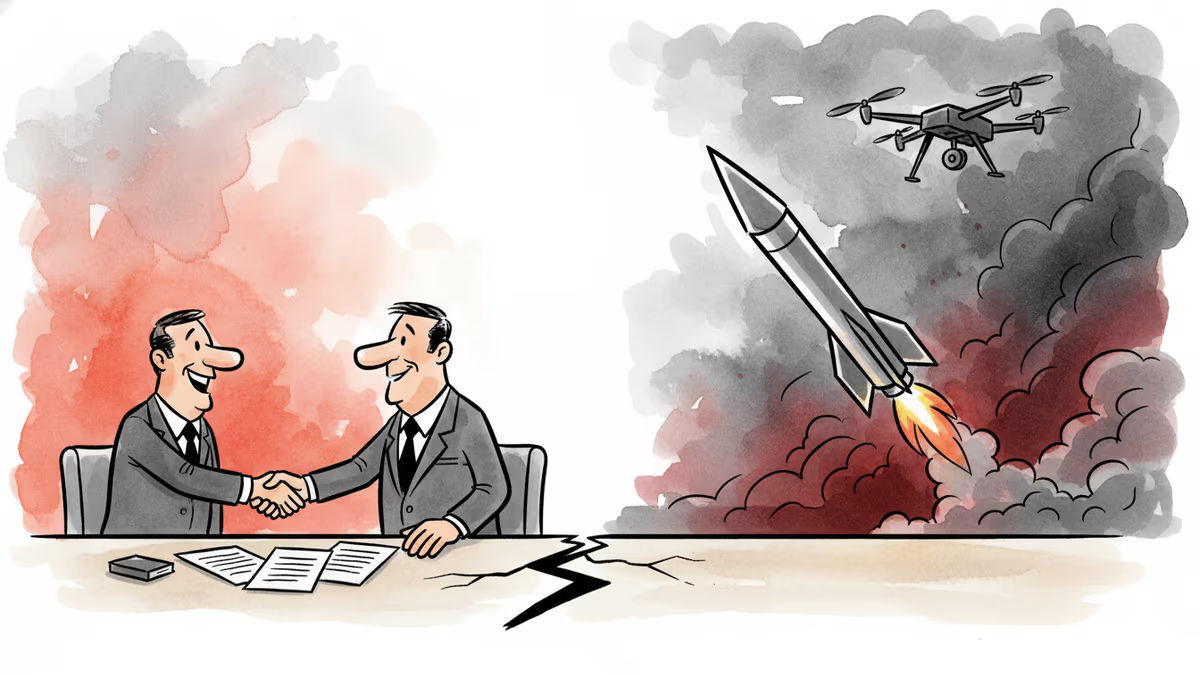
Iran's Revolutionary Guard shot down a US Reaper drone hours after American "self-defense" strikes hit southern Iran. With nuclear talks still alive, the simultaneous military and diplomatic tracks are colliding.

Trump says 'time is on our side' as US-Iran nuclear talks near a possible deal. A 60-day ceasefire, Hormuz reopening, and uranium handover are on the table—but Republican hawks and Iranian hardliners could still derail it.
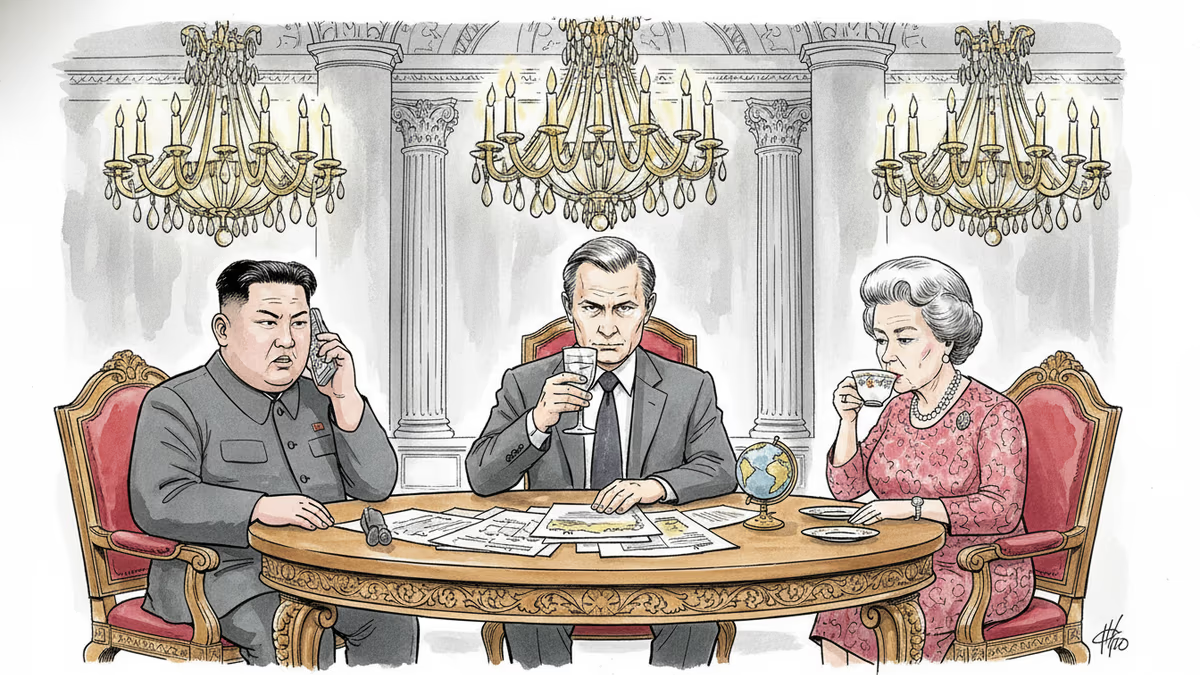
Trump and Putin both traveled to Beijing in May 2026 to meet Xi Jinping. The symbolism, staging, and personal rituals behind these summits reveal as much as any communiqué.
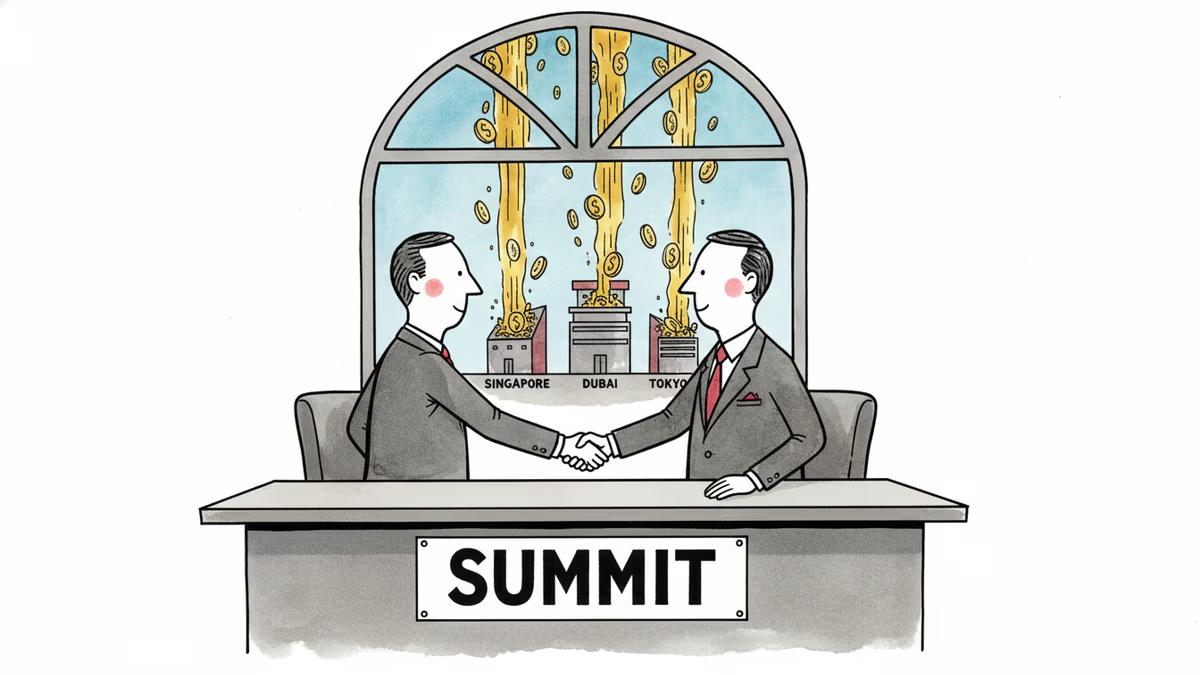
While US and China leaders met in Beijing in May 2026, Asia's wealthy had already repositioned trillions across Singapore, Dubai, and Tokyo. The biggest capital shift in two decades went unreported.
Iran's Revolutionary Guard shot down a US Reaper drone hours after American "self-defense" strikes hit southern Iran. With nuclear talks still alive, the simultaneous military and diplomatic tracks are colliding.
Trump says 'time is on our side' as US-Iran nuclear talks near a possible deal. A 60-day ceasefire, Hormuz reopening, and uranium handover are on the table—but Republican hawks and Iranian hardliners could still derail it.
Trump and Putin both traveled to Beijing in May 2026 to meet Xi Jinping. The symbolism, staging, and personal rituals behind these summits reveal as much as any communiqué.
While US and China leaders met in Beijing in May 2026, Asia's wealthy had already repositioned trillions across Singapore, Dubai, and Tokyo. The biggest capital shift in two decades went unreported.
Thoughts
Share your thoughts on this article
Sign in to join the conversation