
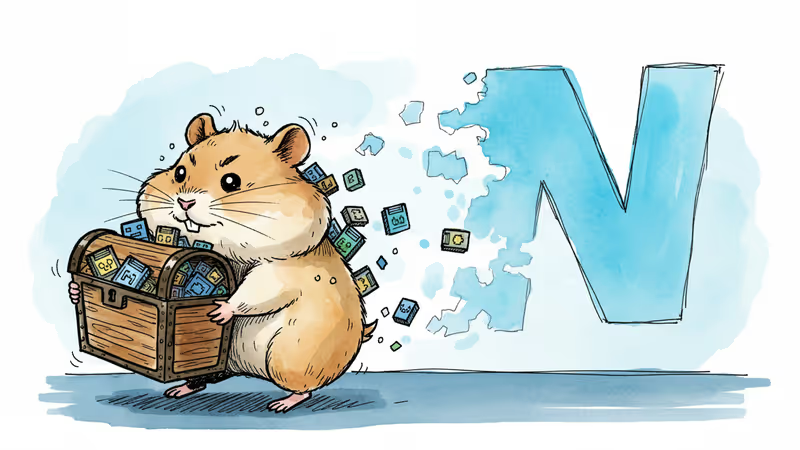
Nintendo Abandoned Retro Games. Hamster Corporation Picked Them Up
While Nintendo moved to subscription-only classic games, Hamster Corporation launches individual retro game purchases on Switch 2. A new solution for game preservation?
2018 marked the end of an era for retro gaming enthusiasts. Nintendo officially shuttered its Virtual Console service—a beloved platform that let gamers purchase and permanently own classic titles on Wii and Wii U. In its place came Nintendo Switch Online, a subscription service offering time-limited access to a rotating selection of games. The message was clear: ownership was out, rental was in.
Now, Hamster Corporation is doing what Nintendo won't—bringing back individual game purchases for retro console titles on modern hardware.
The Console Archives Revolution
Announced during today's Nintendo Direct Partner Showcase, Hamster's new Console Archives line launches today on Switch 2 and next week on PlayStation 5. The initial lineup is modest: Cool Boarders from the original PlayStation for $12 and the NES classic Ninja Gaiden II: The Dark Sword of Chaos for $8.
But Hamster promises more obscure gems ahead, including Doraemon and Sonic Wings Special—titles that even Nintendo never brought to its official Virtual Console.
This isn't Hamster's first rodeo. Since 2014, the company has been quietly building the Arcade Archives series, which hit its 500th release in December. That collection includes classic arcade games from major publishers, even some Nintendo titles that the company itself never officially re-released.
Subscription Fatigue Meets Ownership Nostalgia

Hamster's approach taps into growing subscription fatigue among consumers. While $12 for a decades-old snowboarding game might seem steep, it offers something Nintendo Switch Online doesn't: permanent ownership. No monthly fees, no content rotation, no service discontinuation fears.
This model particularly resonates with collectors and preservation advocates who've watched countless games disappear into licensing limbo. When companies pivot to subscription models, older titles often get left behind—too niche for mass appeal but too beloved to truly forget.
The platform choice is telling too. By launching on Switch 2 and PlayStation 5 while skipping Xbox and the original Switch, Hamster seems to be betting on specific audiences: Nintendo's portable gaming crowd and Sony's preservation-minded PlayStation fans.
The Bigger Picture: Who Controls Gaming History?
Hamster's move raises fundamental questions about digital game preservation. As major publishers embrace subscription models and cloud gaming, who becomes responsible for maintaining access to gaming's cultural heritage?
Smaller companies like Hamster are filling gaps that industry giants have abandoned, but this piecemeal approach has limitations. Not every classic game will find a champion, and licensing complexities mean some titles may remain permanently inaccessible.
The success of Console Archives could signal whether there's still room for ownership-based models in an increasingly subscription-driven industry. It's a test case for whether consumers will pay premium prices for permanent access to gaming history.
Authors
Related Articles
Pokémon Champions launched on Switch with bugs breaking core battle mechanics. But the deeper issue isn't the bugs — it's whether a game trying to please all players can satisfy any of them.
Nine months after a record-breaking launch, Nintendo is cutting Switch 2 production from 6 million to 4 million units per quarter. What went wrong, and what does it signal for the console market?
Nintendo Switch 2 requires expensive microSD Express cards instead of regular microSD. 4.4x faster speeds come with 2x higher prices - what this means for gamers and the industry.
Nintendo joins 1,000+ companies suing the US government for tariff refunds after Supreme Court ruling. The legal battle reveals deeper tensions over presidential trade powers.
Pokémon Champions launched on Switch with bugs breaking core battle mechanics. But the deeper issue isn't the bugs — it's whether a game trying to please all players can satisfy any of them.
Nine months after a record-breaking launch, Nintendo is cutting Switch 2 production from 6 million to 4 million units per quarter. What went wrong, and what does it signal for the console market?
Nintendo Switch 2 requires expensive microSD Express cards instead of regular microSD. 4.4x faster speeds come with 2x higher prices - what this means for gamers and the industry.
Nintendo joins 1,000+ companies suing the US government for tariff refunds after Supreme Court ruling. The legal battle reveals deeper tensions over presidential trade powers.
Thoughts
Share your thoughts on this article
Sign in to join the conversation