
Nintendo Switch Becomes Second Best-Selling Console Ever
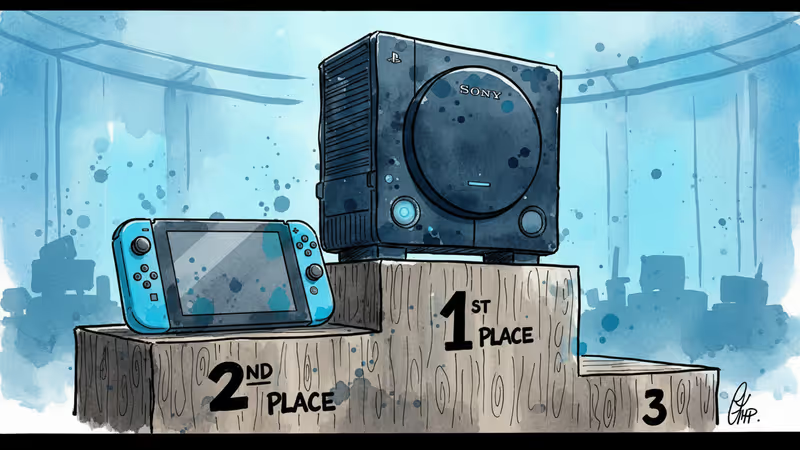
Nintendo Switch surpasses 155 million units sold, overtaking the DS to become Nintendo's best-selling hardware and second-bestselling console in gaming history.
Nine years after launch, the Nintendo Switch has quietly achieved something remarkable: 155.37 million units sold worldwide, making it the second best-selling game console in history. This milestone, revealed in Nintendo's latest quarterly results, means the aging handheld-console hybrid has now outsold every Nintendo system that came before it, including the beloved DS.
The Numbers Behind Nintendo's Success
The Switch's journey to this historic milestone tells a fascinating story of sustained momentum. Despite the Switch 2 launching last year with a hefty $450 price tag, the original console sold 3.25 million units in Nintendo's current fiscal year, including 1.36 million during the holiday season alone.
This continued success comes even after Nintendo raised Switch prices in August 2025, citing "market conditions." The company's strategy of positioning the original Switch as an entry-level option while premium buyers migrate to the Switch 2 appears to be working exactly as planned.
The only console now ahead of the Switch is Sony's PlayStation 2, which sold "over 160 million units" during its legendary run. At current sales projections of roughly 750,000 units per quarter, the Switch could theoretically challenge that record within a couple of years—though momentum will likely slow as the Switch 2 ecosystem matures.
Why the Switch Defied Gaming Industry Logic

The Switch's achievement breaks several unwritten rules of the gaming industry. Most consoles see dramatic sales declines once their successors arrive, yet the Switch continues selling millions of units annually. This dual-generation strategy reflects Nintendo's understanding that not every gamer needs cutting-edge performance—sometimes accessibility and price matter more.
The console's hybrid nature proved perfectly timed for a world increasingly valuing flexibility. Whether docked to a TV or played handheld during commutes, the Switch offered something no competitor could match: true gaming versatility without compromise.
Nintendo's software strategy also played a crucial role. Major titles like Animal Crossing received updates for both Switch generations simultaneously, ensuring the older hardware didn't feel abandoned. This approach kept the Switch ecosystem vibrant even as attention shifted to its successor.
The Broader Gaming Market Implications
The Switch's milestone arrives at a pivotal moment for the gaming industry. While competitors focus on raw processing power and premium experiences, Nintendo proved that innovation in form factor and accessibility could create entirely new market segments.
For investors, the Switch's longevity demonstrates the value of hardware that transcends traditional console generations. Rather than cannibalizing Switch 2 sales, the original system expands Nintendo's addressable market by capturing price-sensitive consumers who might otherwise skip console gaming entirely.
This success also highlights changing consumer priorities. In an era of $70 games and expensive hardware, the Switch's continued appeal suggests many gamers prefer proven libraries and lower entry costs over bleeding-edge technology.
Authors
Related Articles
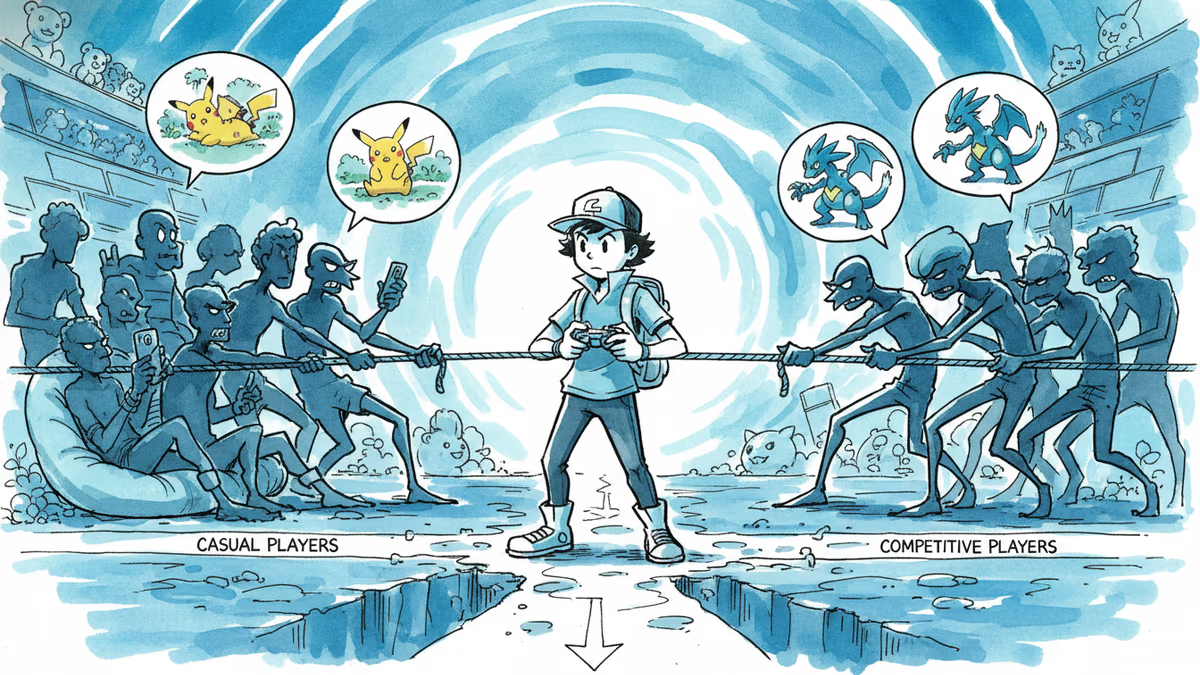
Pokémon Champions launched on Switch with bugs breaking core battle mechanics. But the deeper issue isn't the bugs — it's whether a game trying to please all players can satisfy any of them.
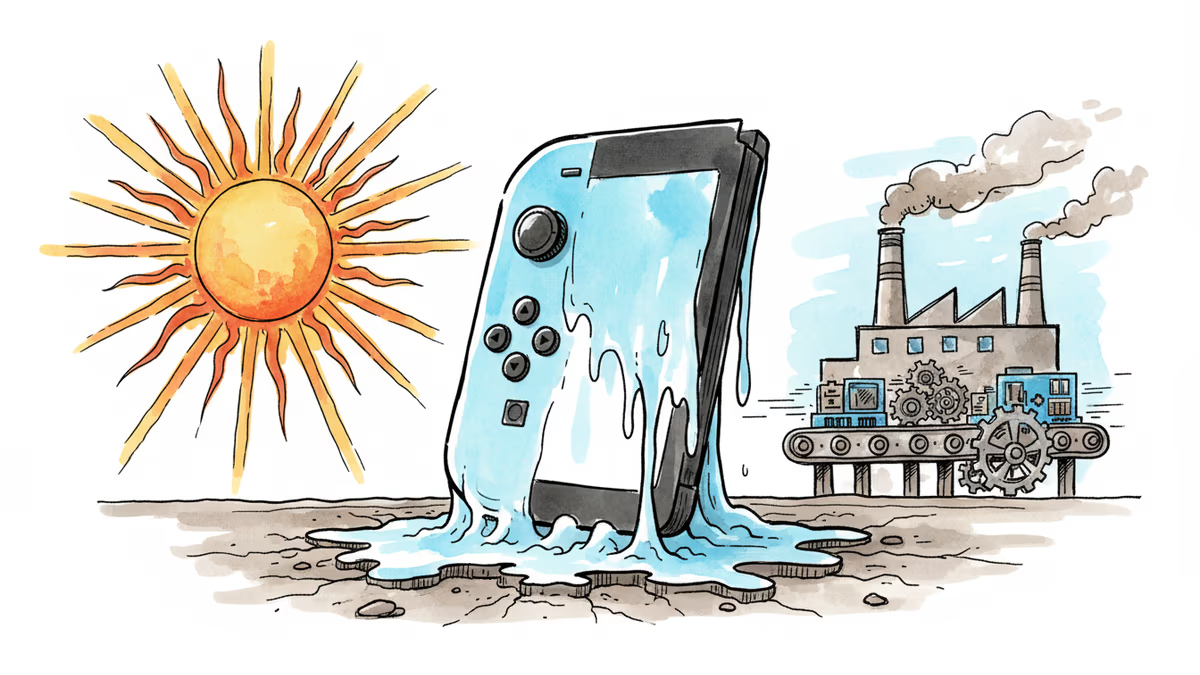
Nine months after a record-breaking launch, Nintendo is cutting Switch 2 production from 6 million to 4 million units per quarter. What went wrong, and what does it signal for the console market?
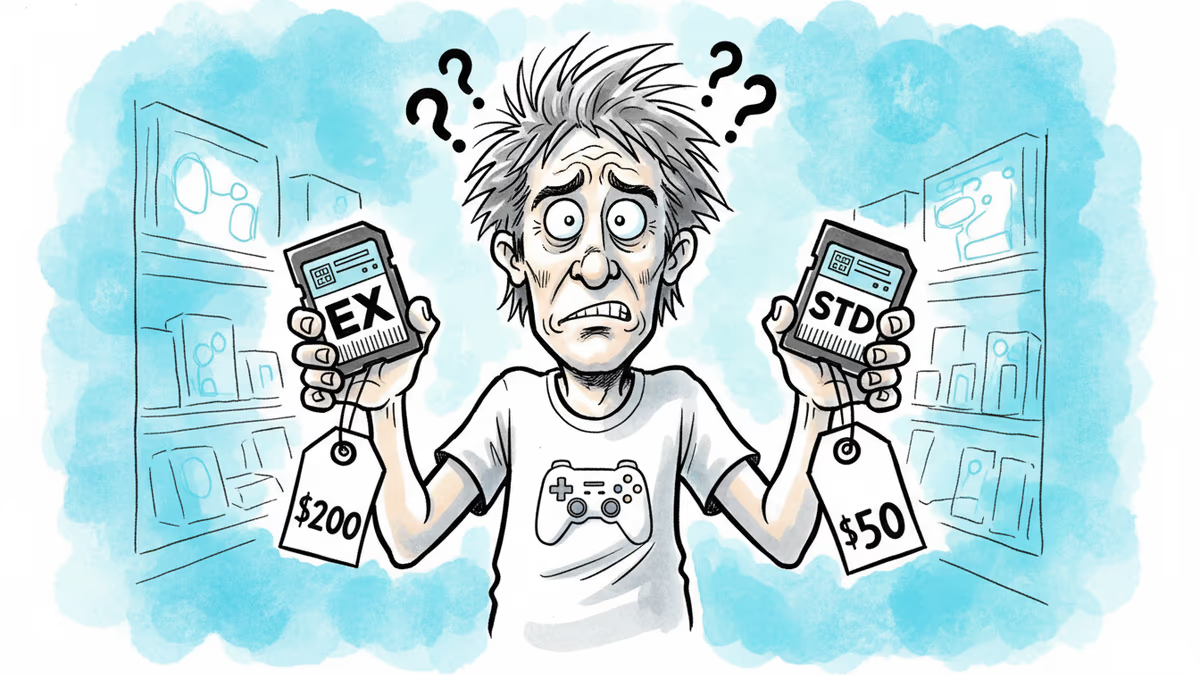
Nintendo Switch 2 requires expensive microSD Express cards instead of regular microSD. 4.4x faster speeds come with 2x higher prices - what this means for gamers and the industry.
Steam Machine, Steam Frame, and Steam Controller face delays as Valve navigates global memory shortage while maintaining 2026 shipping commitment.
Pokémon Champions launched on Switch with bugs breaking core battle mechanics. But the deeper issue isn't the bugs — it's whether a game trying to please all players can satisfy any of them.
Nine months after a record-breaking launch, Nintendo is cutting Switch 2 production from 6 million to 4 million units per quarter. What went wrong, and what does it signal for the console market?
Nintendo Switch 2 requires expensive microSD Express cards instead of regular microSD. 4.4x faster speeds come with 2x higher prices - what this means for gamers and the industry.
Steam Machine, Steam Frame, and Steam Controller face delays as Valve navigates global memory shortage while maintaining 2026 shipping commitment.
Thoughts
1 thoughts
Share your thoughts on this article
Sign in to join the conversation