
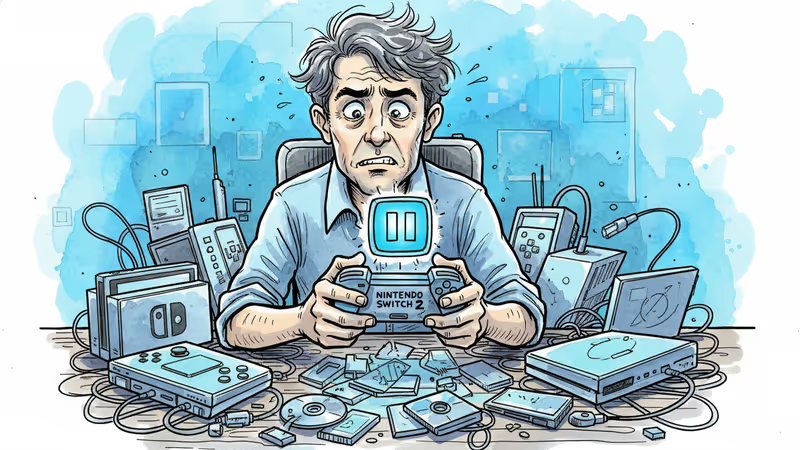
Borderlands 4 Pauses Nintendo Switch 2 Development: What This Means for Gaming
Take-Two halts Borderlands 4 development for Nintendo Switch 2, revealing new realities in next-gen console gaming strategy and resource allocation.
In gaming, "pause" often means "stop." Take-Two Interactive's decision to pause Borderlands 4 development for the Nintendo Switch 2 likely signals something more permanent than the company wants to admit.
The Unexpected Halt
Take-Two spokesperson Alan Lewis told Variety that the company made "the difficult decision to pause development on that SKU." Instead, they're focusing on post-launch content and optimization for existing platforms where Borderlands 4 is already available.
What's telling is Take-Two's emphasis on maintaining their relationship with Nintendo. The company confirmed that PGA Tour 2K25 and WWE 2K26 are still coming to Switch 2, suggesting this isn't about burning bridges—it's about practical limitations.
The Next-Gen Console Reality Check
This decision exposes a harsh reality facing game developers today. Borderlands 4 is a visually demanding, complex game that pushes hardware limits. Without official Switch 2 specifications, developers are working blind, making optimization a costly gamble.

Industry insiders expect the Switch 2 to offer significant improvements over its predecessor, but it'll likely still lag behind the PlayStation 5 and Xbox Series X in raw power. For publishers, supporting every platform means multiplying development costs and timelines—sometimes beyond what makes business sense.
What This Means for Gamers
For Nintendo fans hoping to play Borderlands 4 on the go, this news stings. But it might signal a broader shift toward platform-specific gaming experiences rather than universal ports. Games might be designed from the ground up for specific hardware rather than adapted across all platforms.
This could actually benefit gamers in the long run. Instead of compromised versions trying to run on underpowered hardware, we might see games truly optimized for each platform's strengths. Nintendo's first-party titles already demonstrate this philosophy—games like Breath of the Wild couldn't exist in the same form on other consoles.
The Economics of Choice
Developers now face tough decisions about resource allocation. With development costs soaring—AAA games can cost over $100 million to make—spreading resources thin across multiple platforms might mean mediocre experiences everywhere instead of excellent ones somewhere.
Take-Two's choice to continue with sports games on Switch 2 while pausing Borderlands 4 reveals their strategy: simpler games with broader appeal get the multi-platform treatment, while complex experiences stay on powerful hardware.
Authors
Related Articles
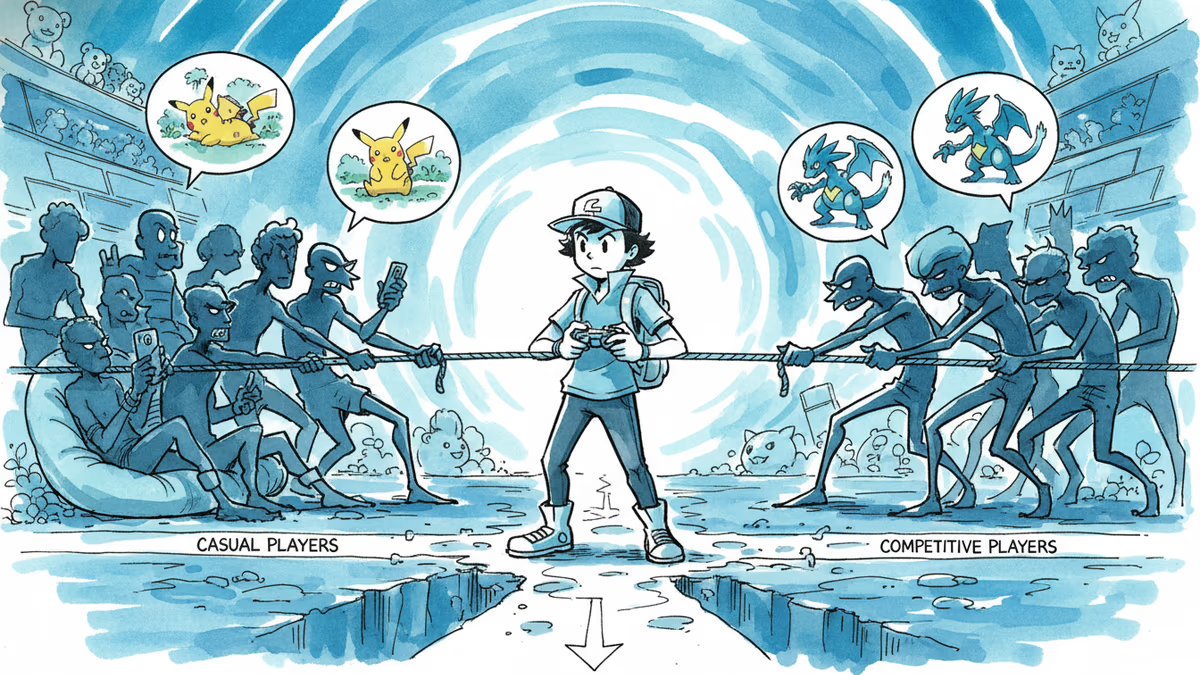
Pokémon Champions launched on Switch with bugs breaking core battle mechanics. But the deeper issue isn't the bugs — it's whether a game trying to please all players can satisfy any of them.
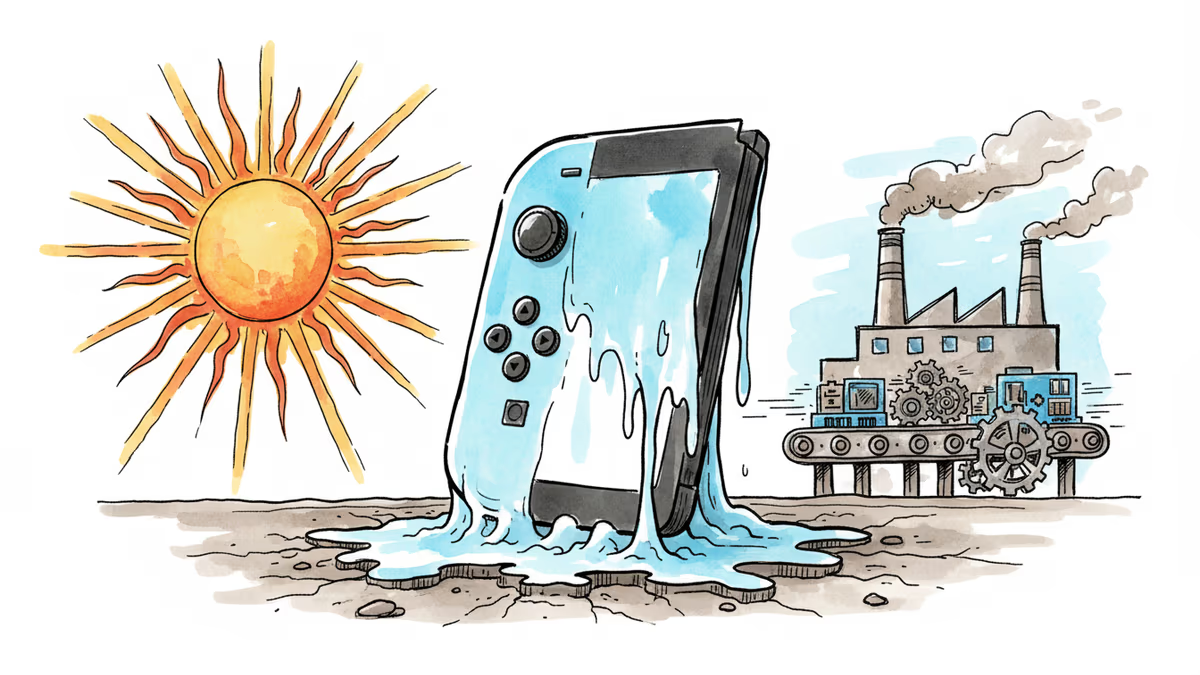
Nine months after a record-breaking launch, Nintendo is cutting Switch 2 production from 6 million to 4 million units per quarter. What went wrong, and what does it signal for the console market?
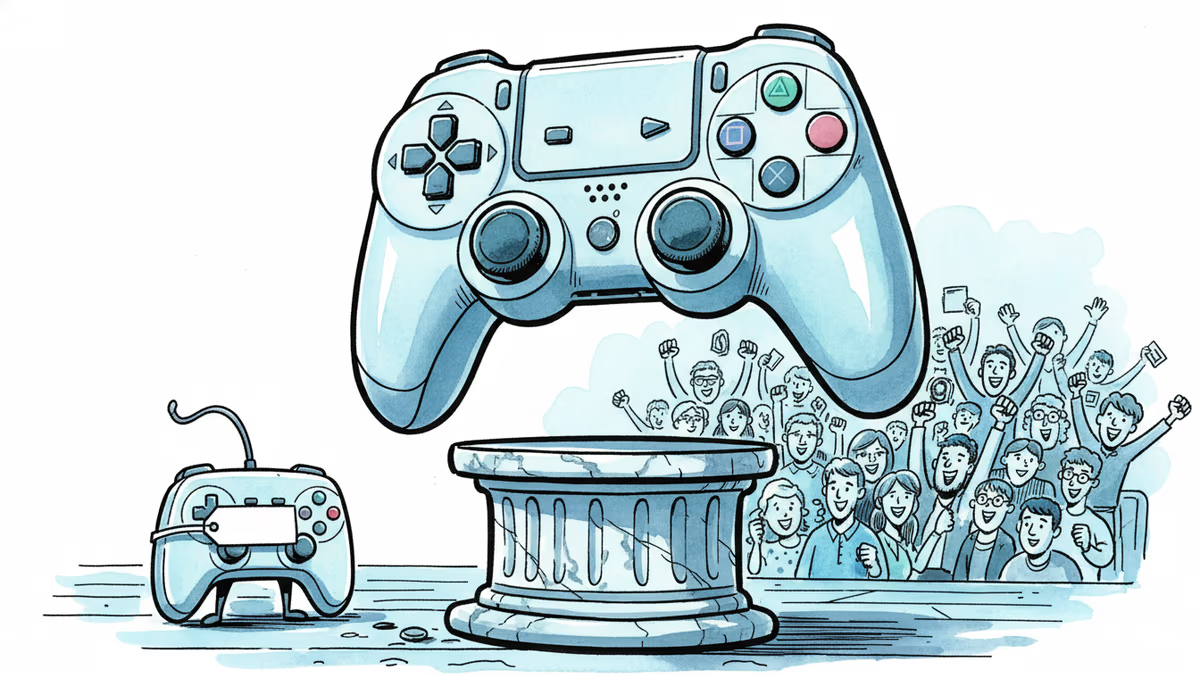
The EasySMX S10 Lite challenges Nintendo's official Switch 2 Pro Controller at less than half the price. What happens when third-party gear outperforms the original?
Nintendo Switch 2 requires expensive microSD Express cards instead of regular microSD. 4.4x faster speeds come with 2x higher prices - what this means for gamers and the industry.
Pokémon Champions launched on Switch with bugs breaking core battle mechanics. But the deeper issue isn't the bugs — it's whether a game trying to please all players can satisfy any of them.
Nine months after a record-breaking launch, Nintendo is cutting Switch 2 production from 6 million to 4 million units per quarter. What went wrong, and what does it signal for the console market?
The EasySMX S10 Lite challenges Nintendo's official Switch 2 Pro Controller at less than half the price. What happens when third-party gear outperforms the original?
Nintendo Switch 2 requires expensive microSD Express cards instead of regular microSD. 4.4x faster speeds come with 2x higher prices - what this means for gamers and the industry.
Thoughts
Share your thoughts on this article
Sign in to join the conversation