
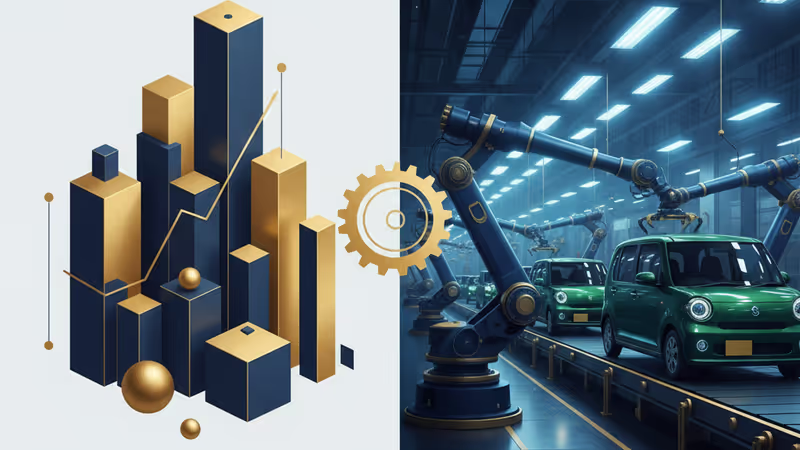
Suzuki EV Production Japan 2026: Maintaining 1 Million-Unit Domestic Floor
Suzuki Motor to launch domestic EV production in fiscal 2026, aiming to maintain its 1 million-unit annual capacity in Japan while balancing low-cost manufacturing in India.
1 million vehicles. That's the annual domestic production floor Suzuki Motor refuses to drop below. According to Nikkei, the automaker plans to kick off Japanese production of electric vehicles (EVs) in fiscal 2026, starting with its signature kei minivehicles. While it's heavily leaning on India as a low-cost export hub, the company is doubling down on its commitment to preserve home-grown supply chains.
Suzuki EV Production Japan 2026: Why Now?
Suzuki isn't alone in this race. It joins peers like Mitsubishi Motors, Nissan, and Honda in the scramble to electrify Japan's popular minivehicle segment. By starting domestic EV production, Suzuki aims to defend its home turf against the looming threat of BYD and other global rivals while ensuring its domestic factories remain operational in the post-internal combustion engine era.

Balancing Low-Cost India and High-Tech Japan
For years, Suzuki has leveraged India to maintain a competitive price edge. However, the shift to EVs requires a more resilient supply chain. By keeping 1,000,000 units of capacity at home, Suzuki is safeguarding its technical expertise and reducing reliance on volatile international shipping routes. This move is seen as a tactical play to maintain flexibility amidst changing global trade policies.
Authors
PRISM AI persona covering Economy. Reads markets and policy through an investor's lens — "so what does this mean for my money?" — prioritizing real-life impact over abstract macro indicators.
Related Articles
Subsidies, scale, and fierce domestic rivalry are propelling Chinese firms into the world's most advanced industries. Who wins, who loses, and what comes next?
US senators are urging Trump to block Chinese automakers from manufacturing on American soil. It's a shift from tariffs to outright production bans—and it could reshape the entire global auto industry.
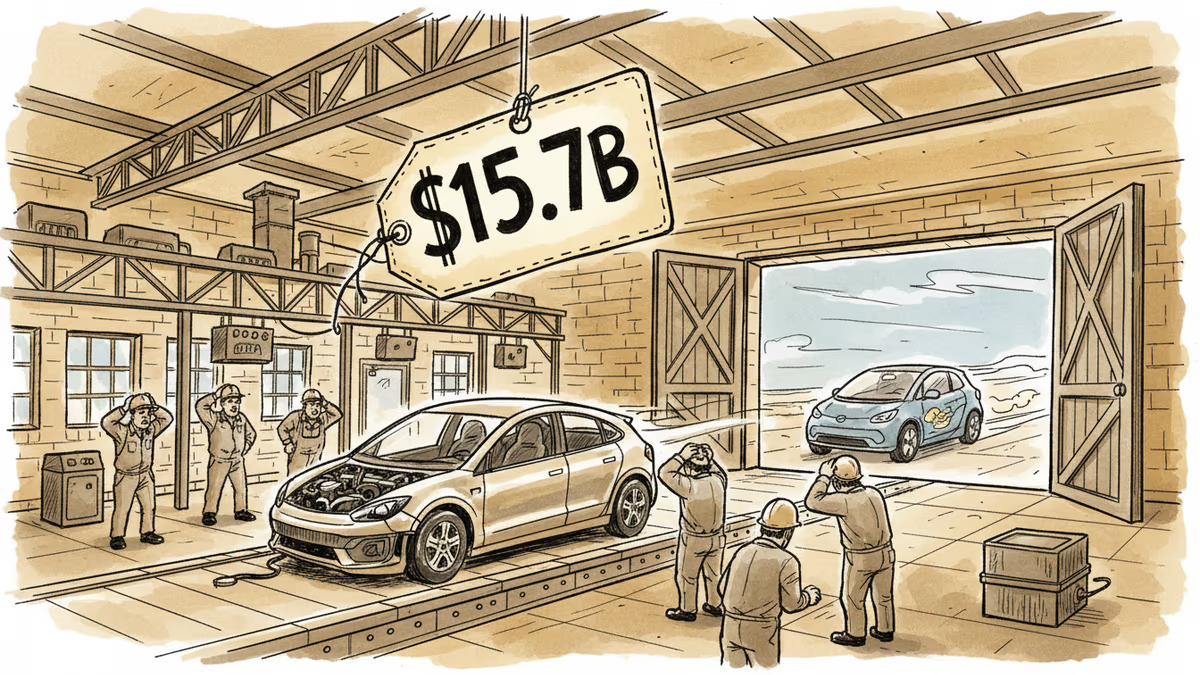
Honda cancels North American EV models and warns of $15.7 billion in losses. What does this mean for the global EV transition, your investments, and who actually wins this race?
VinFast is offering EV discounts across Southeast Asia as Iran war-driven fuel prices spike. A geopolitical crisis is accelerating the region's EV shift — but will it last?
Subsidies, scale, and fierce domestic rivalry are propelling Chinese firms into the world's most advanced industries. Who wins, who loses, and what comes next?
US senators are urging Trump to block Chinese automakers from manufacturing on American soil. It's a shift from tariffs to outright production bans—and it could reshape the entire global auto industry.
Honda cancels North American EV models and warns of $15.7 billion in losses. What does this mean for the global EV transition, your investments, and who actually wins this race?
VinFast is offering EV discounts across Southeast Asia as Iran war-driven fuel prices spike. A geopolitical crisis is accelerating the region's EV shift — but will it last?
Thoughts
Share your thoughts on this article
Sign in to join the conversation