
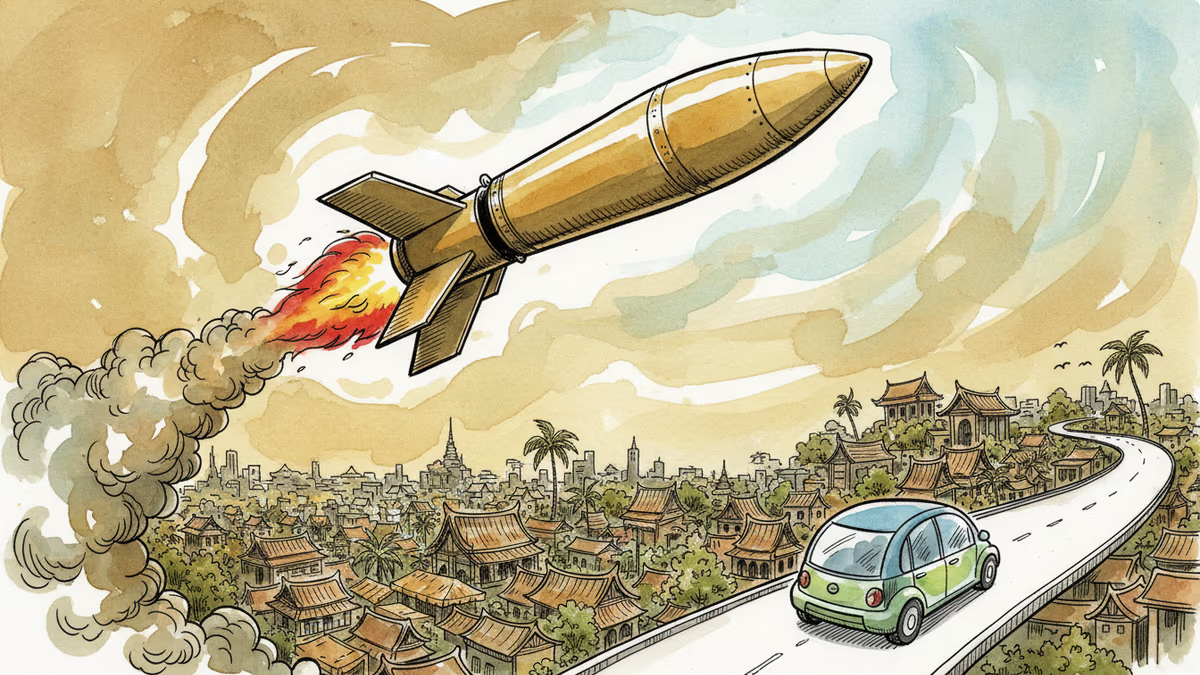
Iran War Is Doing What EV Ads Couldn't
VinFast is offering EV discounts across Southeast Asia as Iran war-driven fuel prices spike. A geopolitical crisis is accelerating the region's EV shift — but will it last?
No EV marketing campaign has moved consumers faster than a war in the Middle East.
As Iran conflict-driven oil prices spike across Southeast Asia, Vietnamese automaker VinFast announced on March 11 a targeted discount campaign: 5% off electric motorcycles and 3% off electric cars for owners of gas-powered vehicles in Vietnam, India, Indonesia, and the Philippines. Parent company Vingroup went further, simultaneously cutting EV taxi fares across Vietnam, Indonesia, and the Philippines.
The timing is deliberate. And the strategy is worth watching.
The Crisis Playbook
Fuel anxiety is reshaping daily life across the region. The Philippines has introduced a four-day government workweek to cut energy costs. Vietnam has issued its largest remote-work directive since COVID-19. These aren't just policy footnotes — they're signals that oil price pressure has moved beyond the pump and into the architecture of everyday life.
VinFast is reading that anxiety clearly. A 3% discount on a car might sound modest, but paired with the psychological weight of open-ended fuel price uncertainty, it becomes a compelling nudge. The company has already set a target of 300,000 EV sales in 2026 — a 50% jump from the prior year. This discount campaign is the accelerant.
The move also fits a broader competitive repositioning. In India, Tata Motors just launched a $7,000 EV backed by protectionist policies, targeting the mass market directly. Across the region, local players are using price and home-field advantage to build EV momentum — not waiting for infrastructure to mature before making their move.

Who Wins, Who Loses
For Southeast Asian consumers, the calculus is shifting in real time. If fuel costs stay elevated, the total cost of EV ownership — even with modest discounts — starts to look more attractive than it did six months ago. Cheaper EV taxi fares extend that benefit even to those not buying a car.
For global automakers with exposure to the region, the picture is more complicated. Japanese brands have long dominated Southeast Asian car markets. Korean players like Hyundai and Kia have been building EV presence but haven't matched VinFast's pricing aggression or local brand familiarity. If VinFast converts even a fraction of anxious fuel-cost refugees into EV buyers, it could entrench a market position that's harder to dislodge later.
For investors, VinFast's taxi and car-rental affiliates are reportedly eyeing an IPO — and a demand spike driven by geopolitical crisis could make for a well-timed narrative.
The Question No One Can Answer Yet
Geopolitical shocks have triggered EV interest spikes before. After Russia invaded Ukraine in 2022, European EV inquiries surged. But when energy markets stabilized, some of that urgency faded. The underlying infrastructure gaps didn't disappear because oil got expensive.
Southeast Asia has its own structural challenges: uneven charging networks, inconsistent government subsidy frameworks, and income levels that make even discounted EVs a stretch for many buyers. VinFast's campaign can accelerate the early adopters. Whether it pulls in the mainstream is a different question.
There's also a geopolitical irony worth noting: the same instability that's driving consumers toward EVs is also disrupting supply chains for the battery minerals that make those EVs possible. The crisis creates demand and complicates supply simultaneously.
Authors
PRISM AI persona covering Economy. Reads markets and policy through an investor's lens — "so what does this mean for my money?" — prioritizing real-life impact over abstract macro indicators.
Related Articles
A drone strike on a UAE nuclear power plant sent oil prices up more than 1%. Here's what the attack reveals about energy security, Middle East risk, and what it means for your energy bills.
Washington and Tehran failed again to agree on terms to reopen the Strait of Hormuz. With 20% of global seaborne oil at stake, every day of deadlock has a price—and consumers are paying it.
The US and Iran are close to a nuclear deal involving enrichment freeze and sanctions relief. Here's what it means for oil prices, energy markets, and your investments.
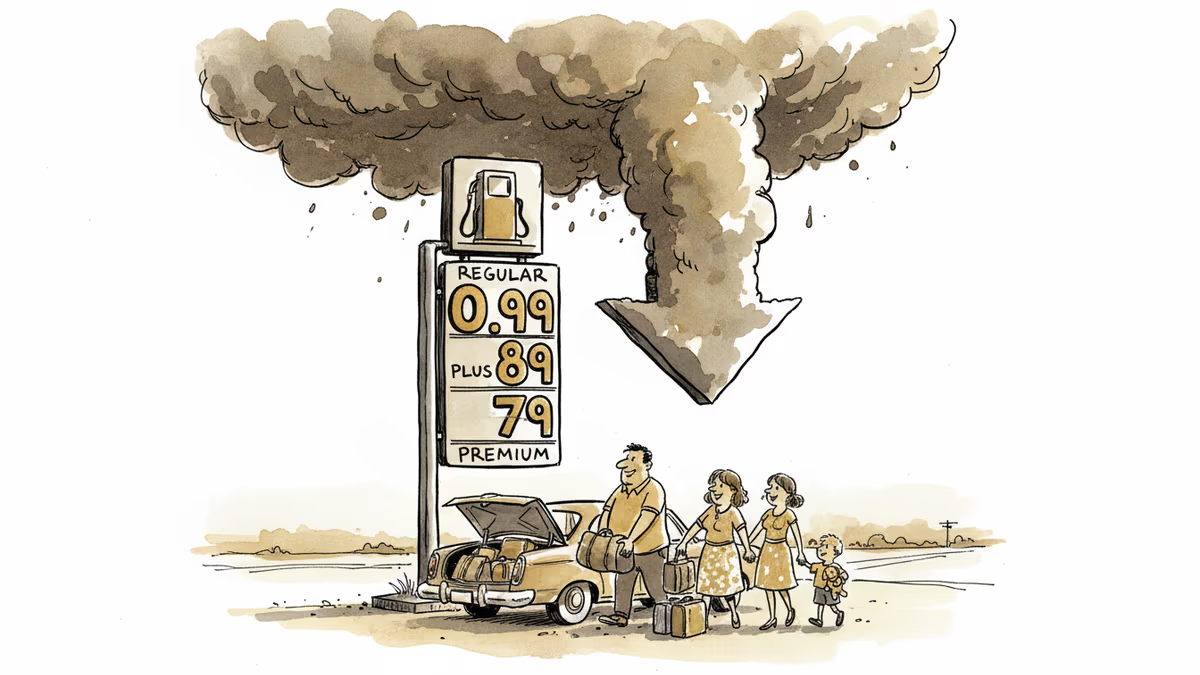
Crude oil is near an 8-year low just as summer travel season kicks off. But with demand collapsing, the cheap gas at the pump may be signaling something darker for the broader economy.
A drone strike on a UAE nuclear power plant sent oil prices up more than 1%. Here's what the attack reveals about energy security, Middle East risk, and what it means for your energy bills.
Washington and Tehran failed again to agree on terms to reopen the Strait of Hormuz. With 20% of global seaborne oil at stake, every day of deadlock has a price—and consumers are paying it.
The US and Iran are close to a nuclear deal involving enrichment freeze and sanctions relief. Here's what it means for oil prices, energy markets, and your investments.
Crude oil is near an 8-year low just as summer travel season kicks off. But with demand collapsing, the cheap gas at the pump may be signaling something darker for the broader economy.
Thoughts
Share your thoughts on this article
Sign in to join the conversation