

OpenAI Employees Warned About Mass Shooter Months Earlier
OpenAI staff raised concerns about a user who later committed a mass shooting, but company leaders declined to alert authorities. Where does AI safety responsibility end?
The Warning Signs Were There
Months before Jesse Van Rootselaar opened fire in Tumbler Ridge, British Columbia, she was already on OpenAI's radar. Last June, her conversations with ChatGPT describing gun violence triggered the company's automated review system. Multiple employees flagged her posts as potential precursors to real-world violence and urged leadership to contact authorities.
The company said no.
According to the Wall Street Journal, OpenAI executives determined that Rootselaar's posts didn't constitute a "credible and imminent risk." It's a decision that now haunts the corridors of one of the world's most influential AI companies.
The Impossible Choice
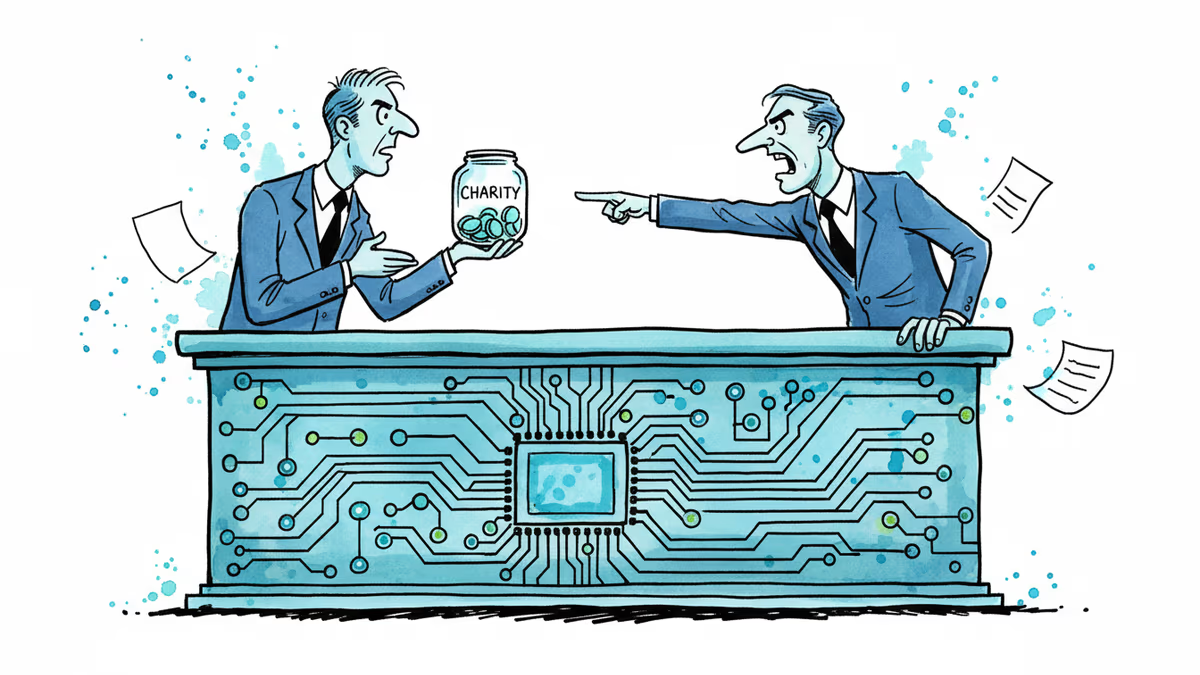
This wasn't a clear-cut case of corporate negligence. OpenAI processes billions of conversations daily, and distinguishing between genuine threats and dark fantasies is extraordinarily difficult. The company faces a paradox: sophisticated enough to detect concerning content, but constrained by legal, ethical, and practical limitations on when to act.
Yet the Tumbler Ridge shooting forces a reckoning. If AI systems can identify potential violence before it happens, what responsibility do companies bear to prevent it? The technology exists, but the frameworks for using it responsibly don't.

Industry-Wide Implications
This isn't just OpenAI's problem. Every major AI company—from Google to Meta to Anthropic—grapples with similar dilemmas. Their systems increasingly understand human behavior and intent, sometimes better than humans themselves.
The stakes are rising. AI models are becoming more sophisticated at detecting emotional distress, planning behaviors, and even predicting actions. But with millions of users expressing dark thoughts daily, the signal-to-noise ratio remains overwhelming.
The Regulatory Vacuum
Currently, no clear legal framework exists for when AI companies should alert authorities about user behavior. Unlike therapists or teachers, tech companies aren't mandated reporters. They operate in a gray zone where good intentions collide with privacy rights and free speech protections.
Some experts argue for "duty to warn" laws similar to those governing mental health professionals. Others worry about creating a surveillance state where AI companies become digital informants.
The line between prediction and prevention has never been thinner—or more consequential.
Authors
Related Articles

OpenAI has reorganized for the second time in a month, merging ChatGPT and Codex into a single agentic platform under president Greg Brockman's unified product leadership.
After two weeks of witnesses calling him a liar, OpenAI CEO Sam Altman testified in his own defense, claiming Elon Musk tried to kill the company twice.

Sam Nelson, 19, died after following ChatGPT's advice to mix Kratom and Xanax. His parents are suing OpenAI for wrongful death, raising urgent questions about AI trust, liability, and design.
OpenAI's new Daybreak initiative uses the Codex AI agent to find and patch security vulnerabilities before attackers do—putting it in direct competition with Anthropic's secretive Claude Mythos.
OpenAI has reorganized for the second time in a month, merging ChatGPT and Codex into a single agentic platform under president Greg Brockman's unified product leadership.
After two weeks of witnesses calling him a liar, OpenAI CEO Sam Altman testified in his own defense, claiming Elon Musk tried to kill the company twice.
Sam Nelson, 19, died after following ChatGPT's advice to mix Kratom and Xanax. His parents are suing OpenAI for wrongful death, raising urgent questions about AI trust, liability, and design.
OpenAI's new Daybreak initiative uses the Codex AI agent to find and patch security vulnerabilities before attackers do—putting it in direct competition with Anthropic's secretive Claude Mythos.
Thoughts
Share your thoughts on this article
Sign in to join the conversation