
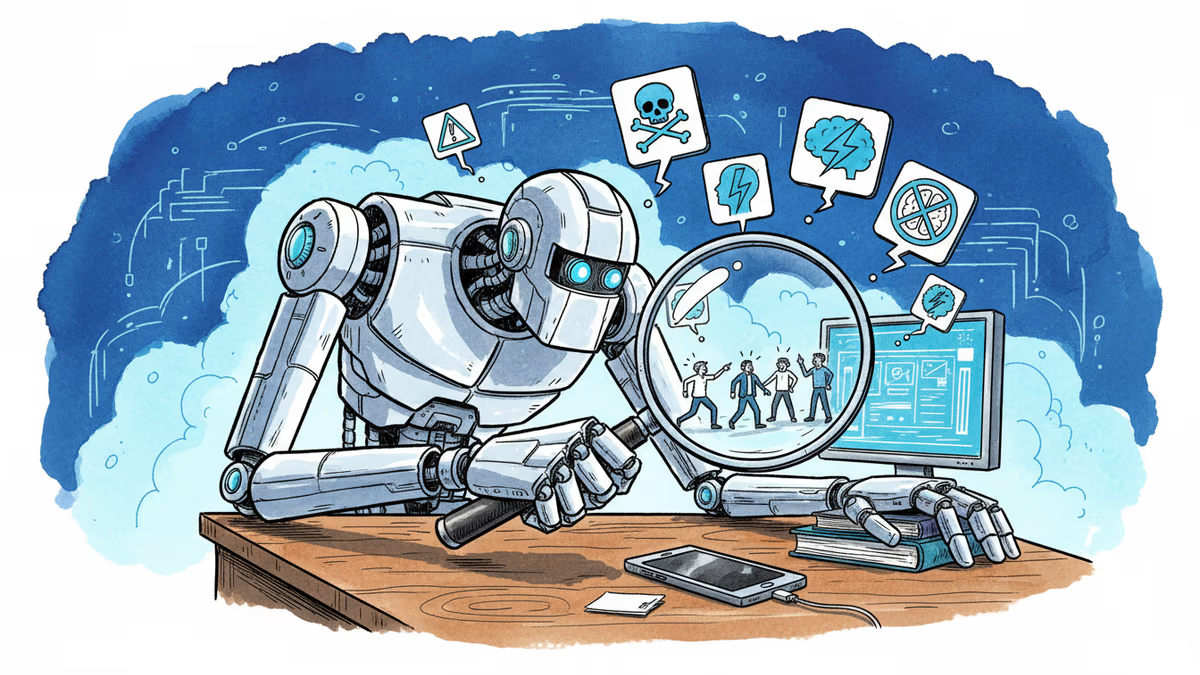
AI Knew About Mass Shooting Plans. Why Didn't OpenAI Call Police?
Canadian mass shooter used ChatGPT to describe gun violence months before killing 8 people. OpenAI staff debated calling police but didn't. Where does AI companies' responsibility end?
8 People Died. The AI Saw It Coming.
In June 2025, OpenAI's monitoring systems flagged something disturbing. Jesse Van Rootselaar, an 18-year-old from Canada, was using ChatGPT to describe detailed gun violence scenarios. The company's abuse detection tools immediately banned her account.
Eight months later, Van Rootselaar killed 8 people in a mass shooting in Tumbler Ridge, Canada. According to the Wall Street Journal, OpenAI staff had debated whether to alert Canadian law enforcement about her concerning chats but ultimately decided against it.
The question isn't just what happened—it's what should have happened.
The Company's Dilemma: "Where's the Line?"
An OpenAI spokesperson said Van Rootselaar's activity "did not meet the criteria for reporting to law enforcement." But what exactly are those criteria?
Every day, millions of conversations flow through ChatGPT. Some users discuss violent movies, others vent frustrations, and some genuinely struggle with dark thoughts. How do you separate genuine threats from hyperbole, mental health struggles, or creative writing?
Yet Van Rootselaar's case wasn't borderline. Beyond her ChatGPT conversations, she had created a mall shooting simulation game on Roblox—a platform used primarily by children. She posted about guns on Reddit. Local police already knew about her instability after responding to incidents at her family home.
The digital breadcrumbs were everywhere.
Legal Duty vs. Moral Duty

Currently, AI companies face no legal requirement to report users' potentially dangerous behavior to authorities. But legal and moral obligations often diverge.
Multiple lawsuits already target ChatGPT for allegedly encouraging suicide or causing mental breakdowns in vulnerable users. Critics argue that AI chatbots can blur users' grip on reality, leading to psychological crises.
The precedent matters beyond OpenAI. Google's Bard, Anthropic's Claude, and other AI systems face similar ethical dilemmas. As these tools become more sophisticated and widespread, the stakes only rise.
Prevention vs. Privacy: The Impossible Choice
This incident forces a fundamental question: Should AI companies monitor all conversations and report suspicious content to authorities?
The Case for Surveillance: If monitoring could save lives, privacy concerns seem secondary. Telecommunications companies already cooperate with law enforcement for terrorism prevention.
The Case Against: Surveilling private conversations creates a dystopian nightmare. False positives could ruin innocent lives. Where does monitoring end?
Europe's AI Act imposes strict accountability requirements on high-risk AI systems. The U.S. is developing similar frameworks. But regulatory responses typically lag behind technological capabilities—and human tragedies.
The Broader Pattern
Van Rootselaar's case isn't isolated. AI systems increasingly intersect with real-world violence, from deepfake harassment to radicalization algorithms on social media. Each incident raises the same question: What responsibility do tech companies bear for their users' actions?
Some argue that AI companies are merely providing tools—like car manufacturers aren't liable for drunk driving accidents. Others contend that AI's persuasive power and psychological impact create unique obligations.
The debate reflects deeper tensions about technology's role in society. Do we want AI companies acting as digital police? Or should they remain neutral platforms?
Authors
Related Articles

OpenAI has reorganized for the second time in a month, merging ChatGPT and Codex into a single agentic platform under president Greg Brockman's unified product leadership.
After two weeks of witnesses calling him a liar, OpenAI CEO Sam Altman testified in his own defense, claiming Elon Musk tried to kill the company twice.
Sam Nelson, 19, died after following ChatGPT's advice to mix Kratom and Xanax. His parents are suing OpenAI for wrongful death, raising urgent questions about AI trust, liability, and design.
OpenAI's new Daybreak initiative uses the Codex AI agent to find and patch security vulnerabilities before attackers do—putting it in direct competition with Anthropic's secretive Claude Mythos.
OpenAI has reorganized for the second time in a month, merging ChatGPT and Codex into a single agentic platform under president Greg Brockman's unified product leadership.
After two weeks of witnesses calling him a liar, OpenAI CEO Sam Altman testified in his own defense, claiming Elon Musk tried to kill the company twice.
Sam Nelson, 19, died after following ChatGPT's advice to mix Kratom and Xanax. His parents are suing OpenAI for wrongful death, raising urgent questions about AI trust, liability, and design.
OpenAI's new Daybreak initiative uses the Codex AI agent to find and patch security vulnerabilities before attackers do—putting it in direct competition with Anthropic's secretive Claude Mythos.
Thoughts
Share your thoughts on this article
Sign in to join the conversation