
Microsoft's $400 Surface Laptop Discount Signals Bigger Shift
Microsoft Surface Laptop 7th gen gets 27% price cut to $1,110. ARM processor adoption and AI features hint at laptop market transformation ahead
$400 off. That's how much Microsoft is slashing from its premium 15-inch Surface Laptop, dropping the price from $1,500 to $1,110. But this isn't just another Black Friday leftover—it's a signal of seismic shifts happening beneath the surface of the laptop market.
The ARM Revolution Comes to Windows
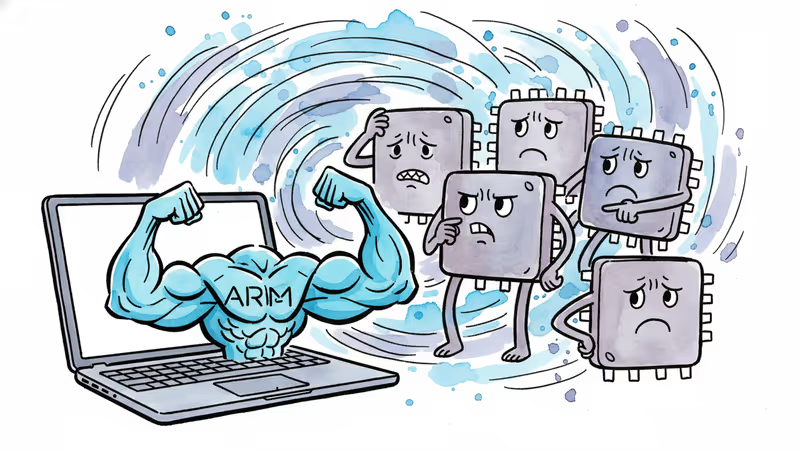
The biggest change in this 7th-generation Surface Laptop isn't what you can see—it's what's powering it. Microsoft ditched Intel chips for Qualcomm'sSnapdragon X Elite, an ARM-based processor that promises to shake up the Windows ecosystem. The results? Battery life that actually delivers on promises, with reviewers reporting over 20% charge remaining after a full workday.
The screen got a makeover too. Thinner bezels mean more real estate without a bigger footprint, while the 120Hz refresh rate makes everyday scrolling feel surprisingly smooth. It's a touchscreen, though Windows still feels awkward under finger control—some things never change.
The discounted model packs 16GB of RAM and 512GB of storage, hitting the sweet spot for this price range. Port selection covers the basics: two USB-C/Thunderbolt 4 ports, one USB-A for legacy devices, a headphone jack, and Microsoft's proprietary Surface Connect charging port.
AI Features Still Feel Half-Baked
The laptop comes loaded with Copilot AI features, but they feel more like tech demos than daily drivers. There's a dedicated key for the chatbot, live video captioning, and AI image generation in Paint. The most intriguing feature, Recall, takes regular screenshots to create a searchable history of your activity—but the privacy implications are enough to make anyone pause.

You can snag this deal at Best Buy in black or platinum. Amazon has it for $910, while Microsoft's own store offers the Snapdragon X Plus variant for $900.
What This Discount Really Means
This price cut isn't just about moving inventory—it's Microsoft testing the waters for ARM adoption on Windows. The company is clearly taking notes from Apple's M-series success, betting that better battery life and thermal management will outweigh x86 compatibility concerns.
For consumers, it's a fascinating inflection point. Traditional Intel-based laptops are dropping prices to stay competitive, while ARM-powered alternatives promise a fundamentally different computing experience. The question isn't whether ARM will gain traction on Windows—it's how quickly software developers will adapt.
The Bigger Picture
This discount reflects broader industry tensions. Intel's decades-long dominance in PC processors faces its most serious challenge yet, not from AMD, but from mobile chip architectures moving upmarket. Meanwhile, Microsoft is hedging its bets, supporting both x86 and ARM while letting the market decide.
For budget-conscious buyers, the timing couldn't be better. Premium laptops with cutting-edge features are becoming more accessible as manufacturers navigate this transition period. But early adopters should consider whether their essential software will play nice with ARM architecture.
Authors
Related Articles

GitHub confirmed hackers stole data from 3,800 internal repositories via a poisoned VS Code extension. Here's why developer tools are now the most dangerous attack surface in tech.
Emails revealed in the Musk v. Altman trial show Microsoft executives were deeply skeptical of OpenAI in 2017–2018. What actually changed their minds?
Xbox hardware revenue dropped 33% in Q1 2026, yet Microsoft posted $82.9B in total revenue. What this tells us about the future of gaming—and who actually loses.

Microsoft is letting Windows users delay updates indefinitely — 35 days at a time, as many times as they want. A long-overdue fix, or a security risk hiding in plain sight?
GitHub confirmed hackers stole data from 3,800 internal repositories via a poisoned VS Code extension. Here's why developer tools are now the most dangerous attack surface in tech.
Emails revealed in the Musk v. Altman trial show Microsoft executives were deeply skeptical of OpenAI in 2017–2018. What actually changed their minds?
Xbox hardware revenue dropped 33% in Q1 2026, yet Microsoft posted $82.9B in total revenue. What this tells us about the future of gaming—and who actually loses.
Microsoft is letting Windows users delay updates indefinitely — 35 days at a time, as many times as they want. A long-overdue fix, or a security risk hiding in plain sight?
Thoughts
Share your thoughts on this article
Sign in to join the conversation