
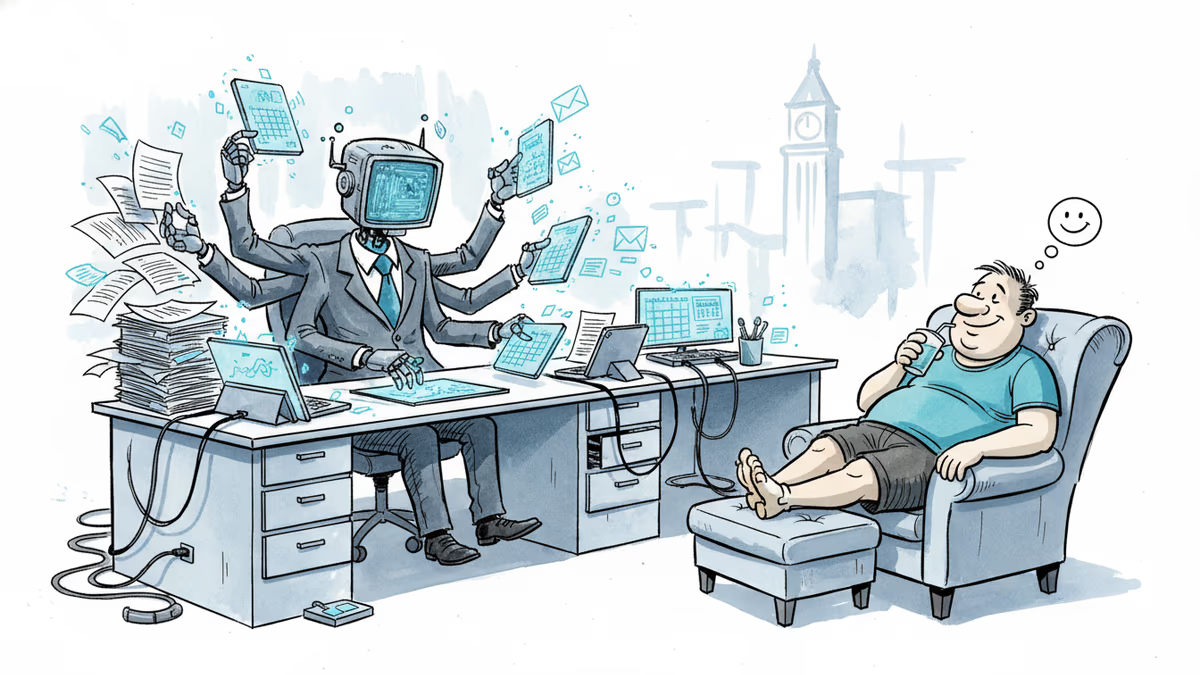
Microsoft's AI Will Do Your Busywork—But Should You Trust It?
Microsoft unveils Copilot Tasks, a cloud-based AI system that handles scheduling, planning, and routine work automatically. But can it deliver on its promises?
Scheduling appointments. Sorting emails. Creating study plans. What if an AI could handle all these tedious tasks while you focus on what actually matters? Microsoft's new Copilot Tasks, announced Thursday, promises exactly that—a cloud-based AI system designed to tackle your busywork in the background.
The concept sounds appealingly simple: tell Copilot Tasks what you need in plain English, and it'll handle the rest. Want recurring team meetings every Tuesday at 2 PM? Done. Need a personalized study schedule for your certification exam? Consider it sorted. The AI works from Microsoft's cloud using its own virtual computer and browser, then delivers a report when the job's complete.
The Background Worker Revolution
What sets Copilot Tasks apart from existing AI assistants isn't just what it does, but how it works. Unlike Siri or Google Assistant, which respond to immediate commands, this system operates more like having a dedicated assistant working behind the scenes.
Microsoft positions this as the next evolution of workplace automation. But here's the thing about automation promises—they rarely unfold as smoothly as the demos suggest.
The Reality Check
Consider Microsoft's track record with automation tools. Power Automate, launched in 2019, made similar promises about eliminating repetitive tasks. Yet many organizations abandoned it due to complex setup requirements and frequent glitches that required more maintenance than the manual processes they replaced.
The challenge isn't technical capability—it's reliability in real-world scenarios. When your AI assistant schedules a meeting for 3 AM because it misunderstood time zones, or books a conference room that's already occupied, who fixes the mess?

Early enterprise users of AI automation report a 40% failure rate for complex, multi-step tasks. The more sophisticated the request, the higher the chance something goes wrong.
The Trust Equation
For consumers, the question isn't whether Copilot Tasks can handle simple scheduling—it's whether they'll trust it with important tasks. Missing a doctor's appointment because your AI assistant made an error isn't just inconvenient; it's a fundamental breach of reliability.
Businesses face an even trickier calculation. While 73% of executives say they're interested in AI automation tools, only 31% currently use them for mission-critical tasks, according to a recent McKinsey survey.
The hesitation makes sense. When automation works, it's invisible and valuable. When it fails, the consequences can be disproportionately disruptive.
The Competitive Landscape
Microsoft isn't alone in this space. Google's working on similar capabilities within Workspace, while startups like Motion and Reclaim.ai already offer AI-powered scheduling and task management.
The real competition, however, might come from a surprising source: human assistants. Virtual assistant services report 85% client satisfaction rates, compared to 62% for AI-powered alternatives. Sometimes the "old-fashioned" approach of human judgment and flexibility still wins.
The question isn't whether AI can do your scheduling—it's whether you're comfortable never knowing exactly how it's being done.
Authors
Related Articles
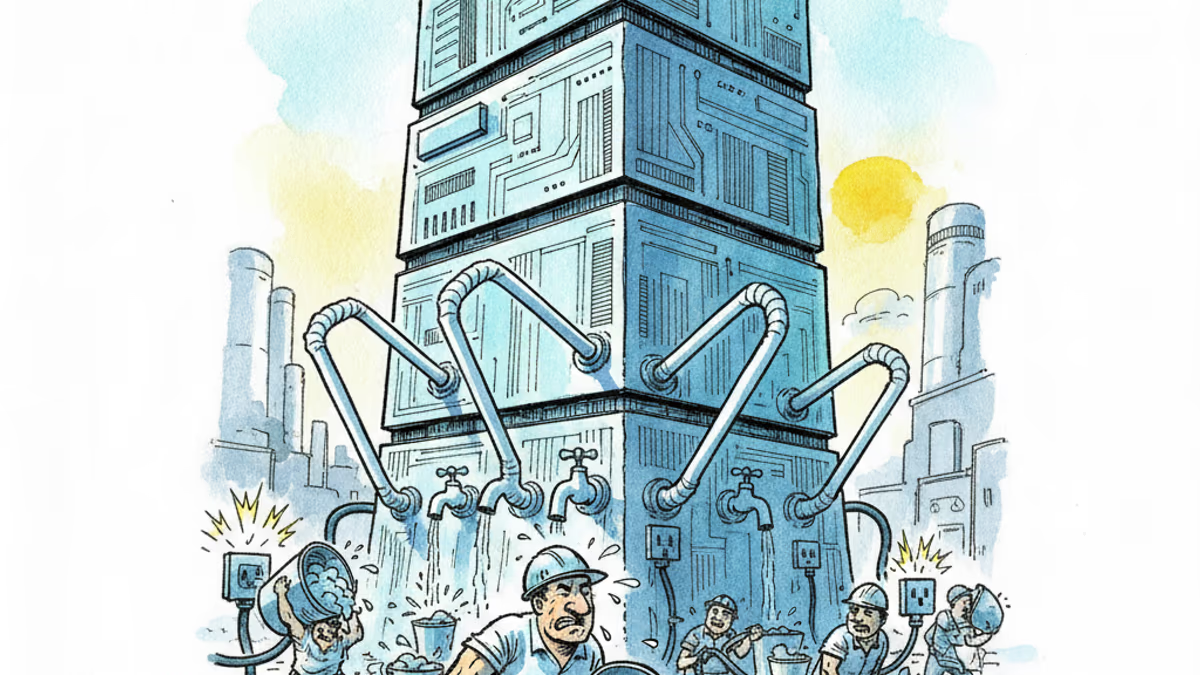
Samsung and SK unveiled a chip and AI investment package worth thousands of trillions of won on June 29. The headline number swings wildly by outlet, but the real contest isn't capital — it's water and power.
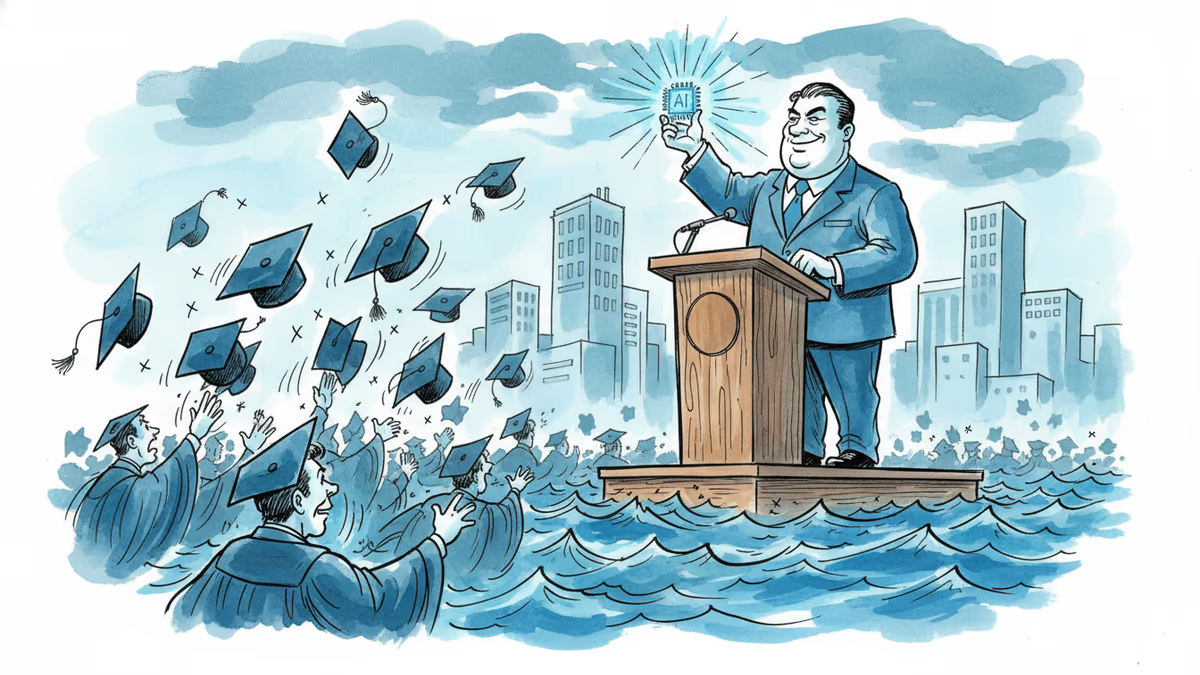
Viral videos show 2026 graduates jeering executives who praise AI at commencement ceremonies. It's not just rudeness — it's a signal about who pays for technological optimism.
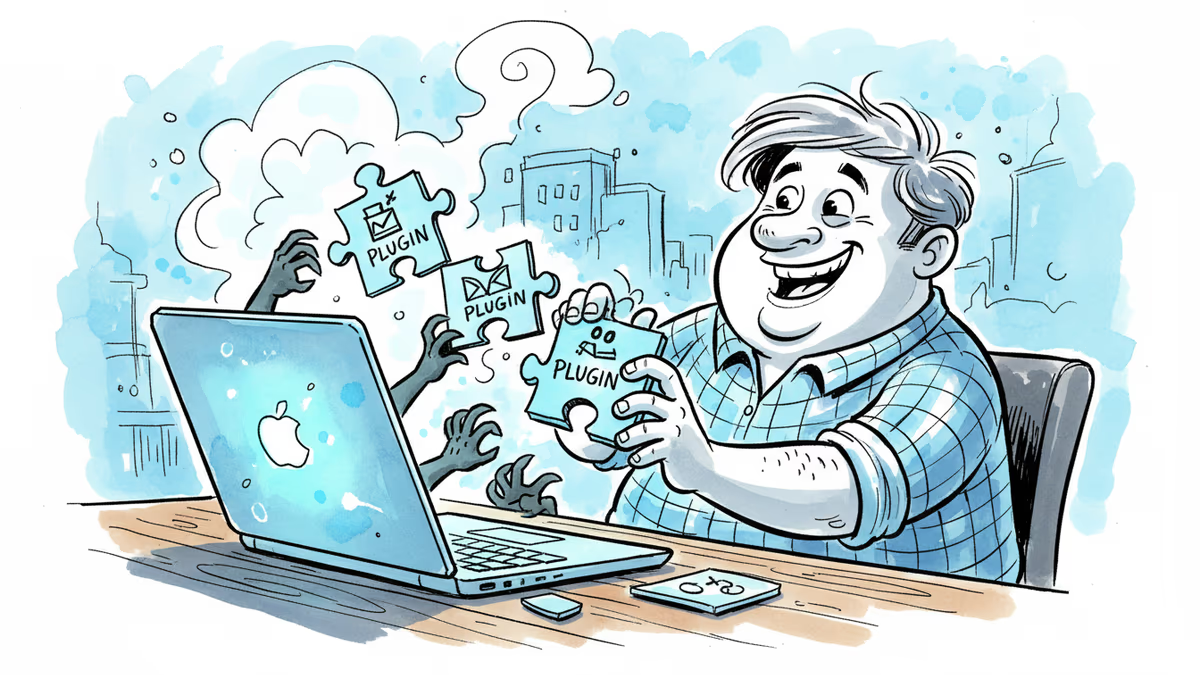
GitHub confirmed hackers stole data from 3,800 internal repositories via a poisoned VS Code extension. Here's why developer tools are now the most dangerous attack surface in tech.
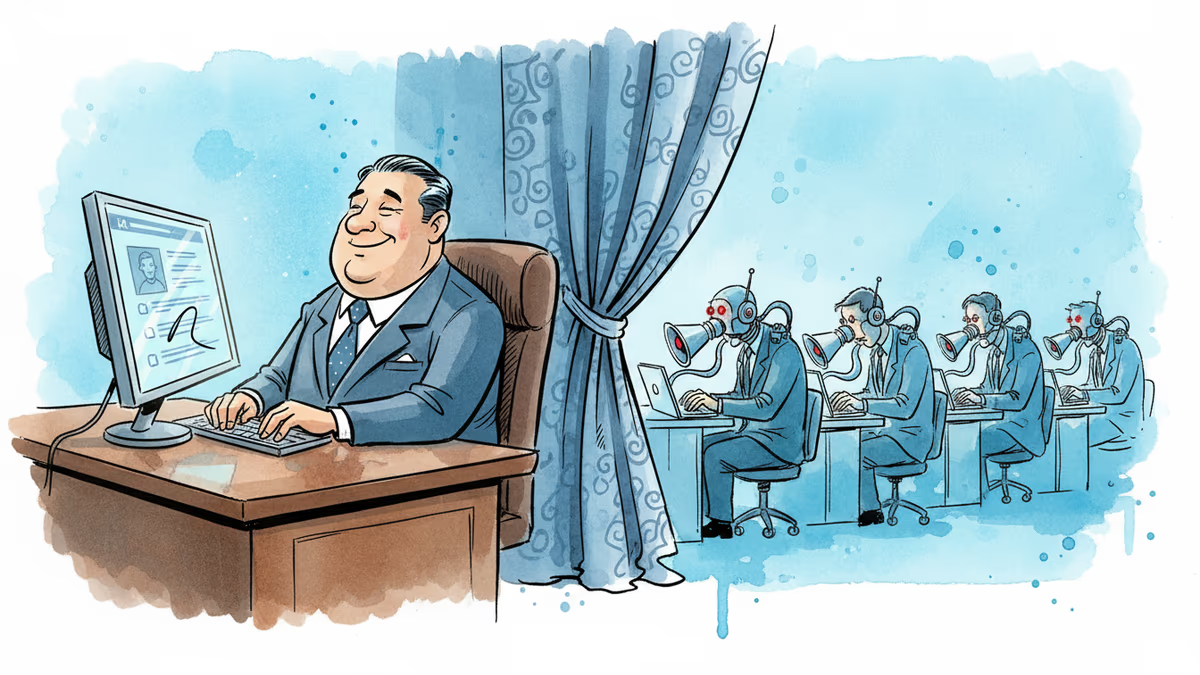
Filipino virtual assistants using AI to ghost-manage LinkedIn profiles for executives is now a structured industry. 30 comments a day, fake engagement rings, and a platform struggling to tell real from fabricated.
Samsung and SK unveiled a chip and AI investment package worth thousands of trillions of won on June 29. The headline number swings wildly by outlet, but the real contest isn't capital — it's water and power.
Viral videos show 2026 graduates jeering executives who praise AI at commencement ceremonies. It's not just rudeness — it's a signal about who pays for technological optimism.
GitHub confirmed hackers stole data from 3,800 internal repositories via a poisoned VS Code extension. Here's why developer tools are now the most dangerous attack surface in tech.
Filipino virtual assistants using AI to ghost-manage LinkedIn profiles for executives is now a structured industry. 30 comments a day, fake engagement rings, and a platform struggling to tell real from fabricated.
Thoughts
Share your thoughts on this article
Sign in to join the conversation