
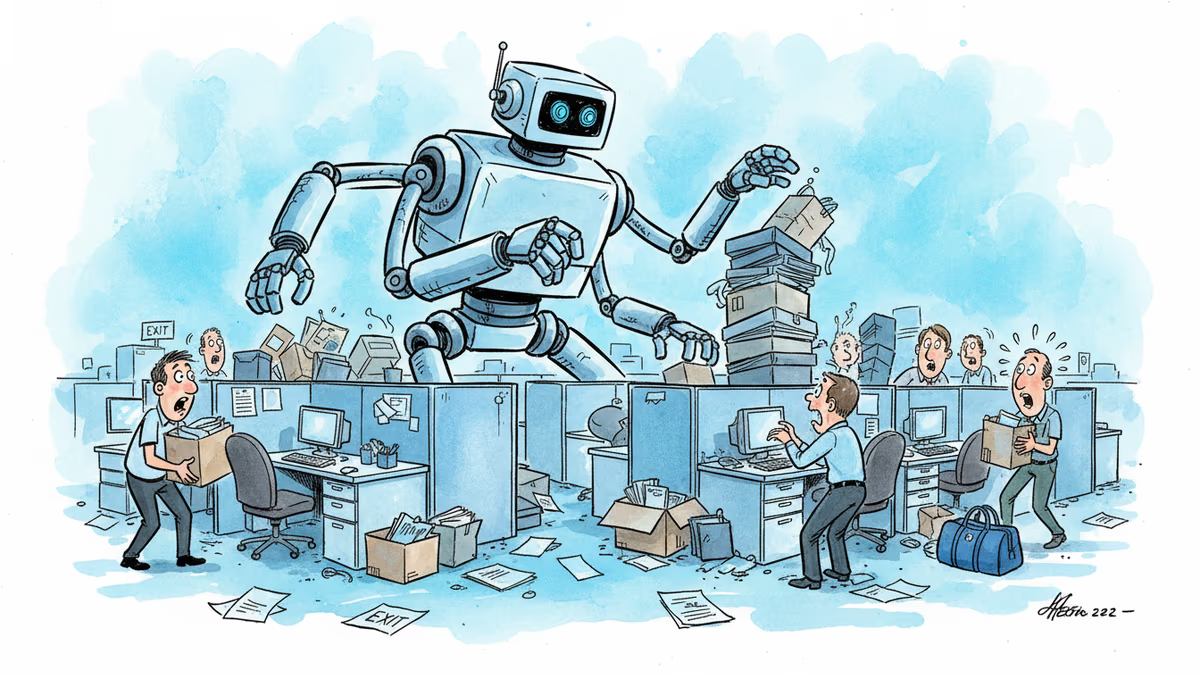
When AI Efficiency Meets Human Reality
Block cuts 4,000 jobs despite strong profits, citing AI efficiency. Jack Dorsey's move signals a new era where companies downsize not from weakness, but from technological strength.
4,000 people lost their jobs yesterday. Not because their company was failing, but because it was succeeding too well with AI.
Jack Dorsey'sBlock—the fintech giant behind Square and Cash App—just cut its workforce "nearly in half," shrinking from over 10,000 employees to fewer than 6,000. The reason? Artificial intelligence has made many of them redundant.
"We're not making this decision because we're in trouble," Dorsey posted on X. "Our business is strong. Gross profit continues to grow, we continue to serve more and more customers, and profitability is improving. But something has changed."
The New Math of Business
This isn't your typical corporate downsizing. Block isn't hemorrhaging money or losing market share. Instead, it's discovered that AI tools paired with "smaller and flatter teams" can maintain—or even improve—performance with half the headcount.
It's a sobering glimpse into what economists call "jobless growth"—where companies expand revenue and profits while simultaneously shedding workers. For decades, this seemed like a theoretical concern. Now it's happening in real-time at one of America's most prominent fintech companies.
The implications ripple far beyond Block's San Francisco headquarters. If a $10 billion company can operate efficiently with half its workforce, what does that mean for the broader economy?
Silicon Valley's Mixed Reactions

The tech industry's response has been tellingly divided. Venture capitalists praised Dorsey's "bold efficiency play," noting that leaner operations could boost Block's already impressive margins. Some startup founders see it as validation of their own AI-first strategies.
But longtime Silicon Valley observers are more cautious. "This feels like the beginning of something bigger," says one former Google executive who requested anonymity. "When profitable companies start cutting jobs because of AI, it changes the entire social contract of work."
Labor advocates are less diplomatic. "Corporations are privatizing the gains from AI while socializing the costs through unemployment," argues Sarah Chen, a researcher at the Economic Policy Institute. "Society invested in the research that made these AI breakthroughs possible. Shouldn't society share in the benefits?"
The Ripple Effect
Block's decision sends shockwaves through an industry already grappling with AI's disruptive potential. Other fintech companies are likely studying the move closely, calculating whether they too can achieve similar "efficiency gains."
PayPal, Stripe, and dozens of smaller players face the same fundamental question: If AI can handle customer service, fraud detection, and even some coding tasks, how many humans do you really need?
The timing is particularly striking. While the broader economy shows signs of resilience, with unemployment near historic lows, individual companies are discovering they can thrive with dramatically smaller workforces. It's creating a paradox: macro-level employment stability alongside micro-level job displacement.
Beyond the Numbers
For the 4,000 Block employees losing their jobs, the company's strong financial performance offers little comfort. Many are skilled professionals—engineers, analysts, customer service specialists—who never imagined their roles could be automated away.
This isn't the factory automation of previous decades, which primarily affected blue-collar workers. AI is now capable enough to replace knowledge workers, middle managers, and even some creative roles. The disruption is moving up the economic ladder.
Authors
Related Articles
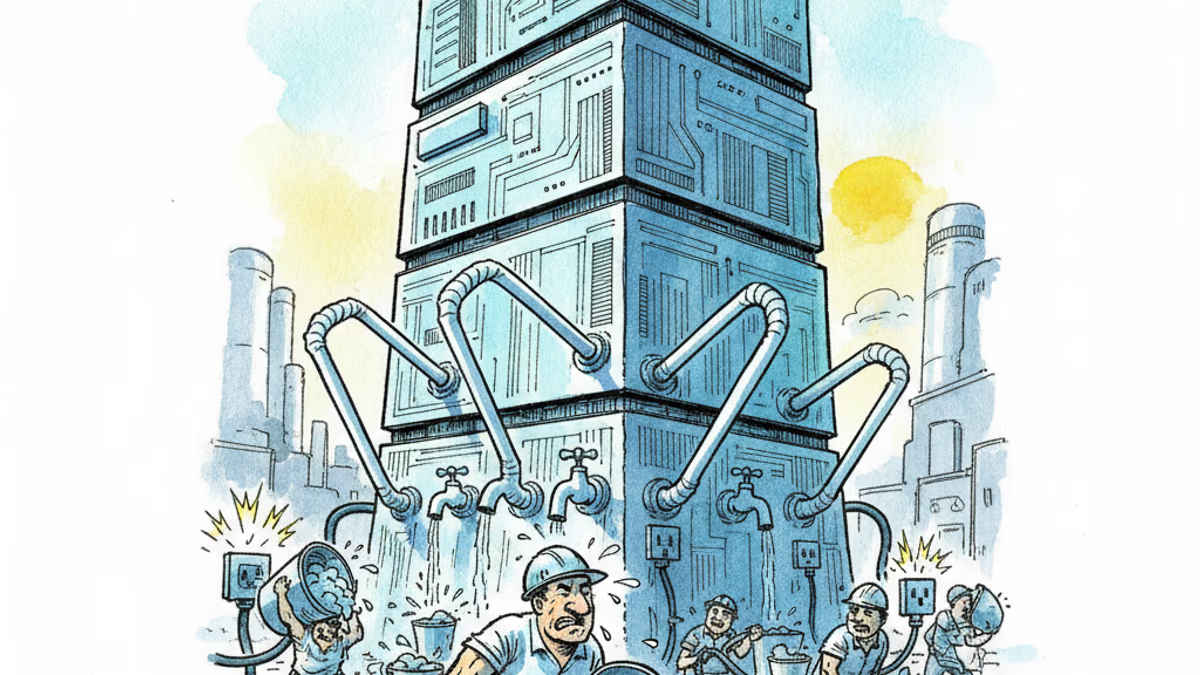
Samsung and SK unveiled a chip and AI investment package worth thousands of trillions of won on June 29. The headline number swings wildly by outlet, but the real contest isn't capital — it's water and power.
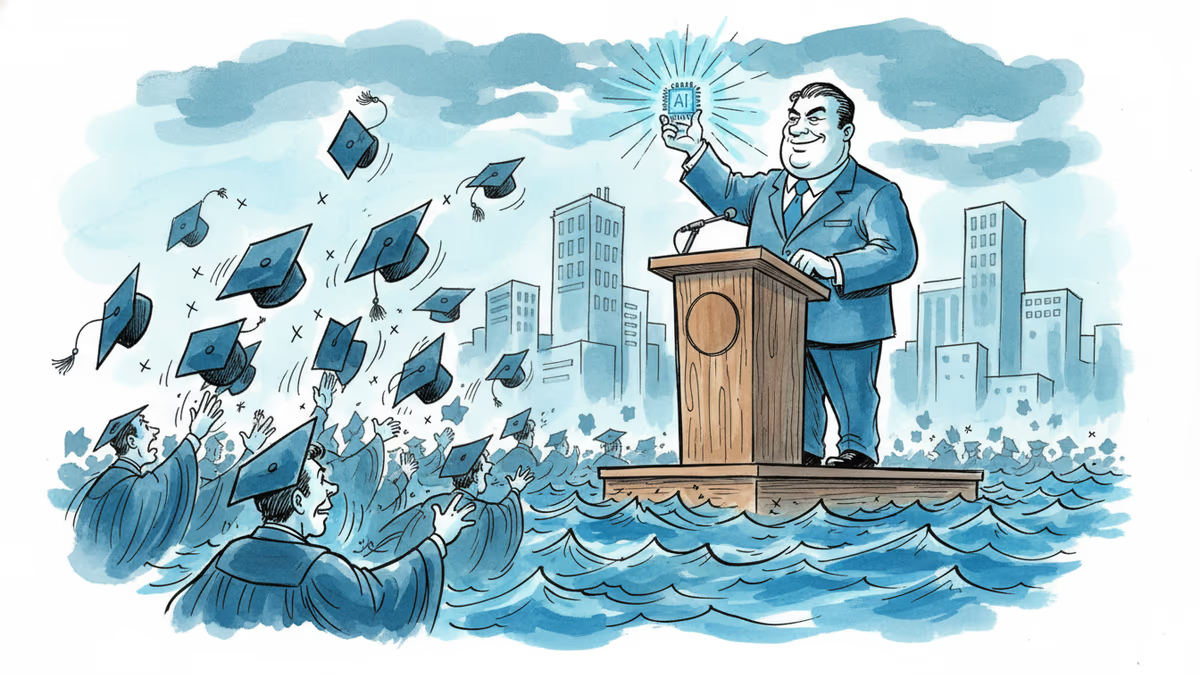
Viral videos show 2026 graduates jeering executives who praise AI at commencement ceremonies. It's not just rudeness — it's a signal about who pays for technological optimism.
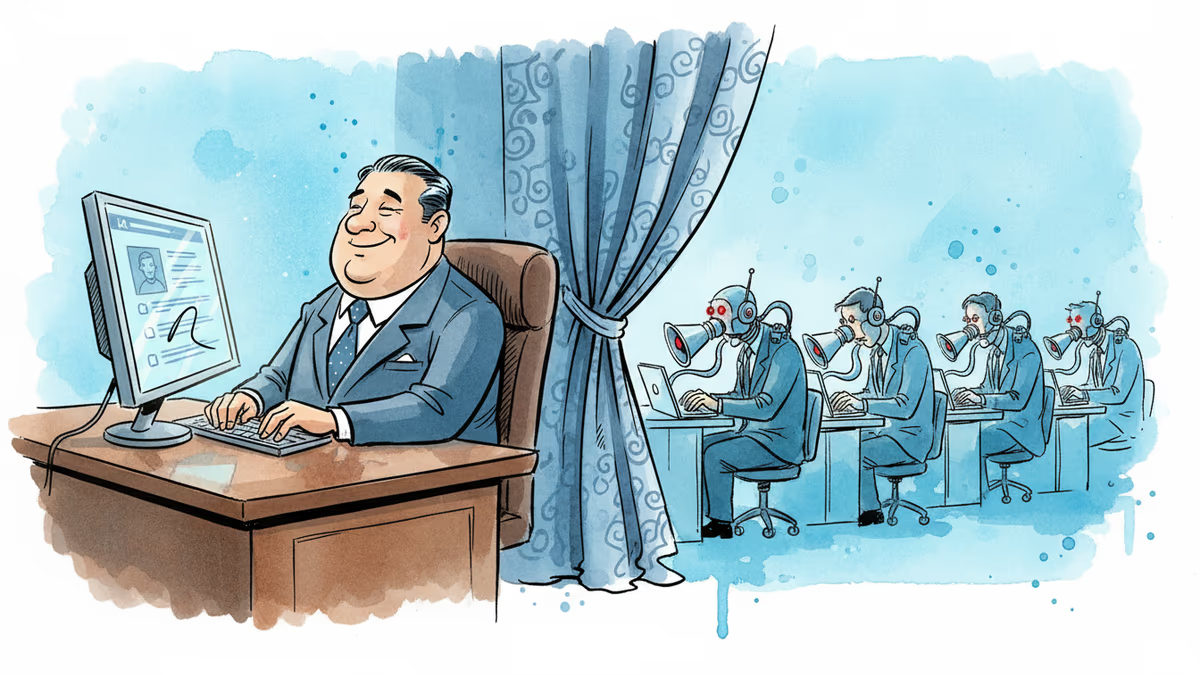
Filipino virtual assistants using AI to ghost-manage LinkedIn profiles for executives is now a structured industry. 30 comments a day, fake engagement rings, and a platform struggling to tell real from fabricated.
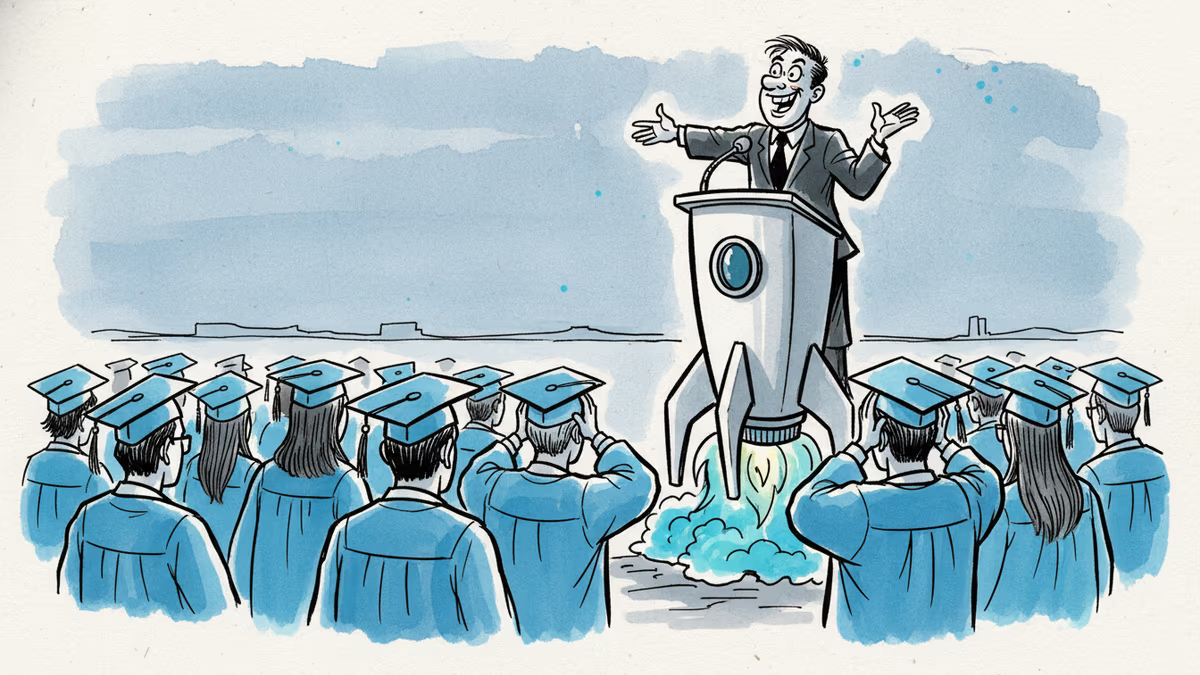
Two commencement speakers learned the hard way that AI enthusiasm doesn't land well with today's graduates. The backlash reveals a widening gap between tech optimism and Gen Z's economic reality.
Samsung and SK unveiled a chip and AI investment package worth thousands of trillions of won on June 29. The headline number swings wildly by outlet, but the real contest isn't capital — it's water and power.
Viral videos show 2026 graduates jeering executives who praise AI at commencement ceremonies. It's not just rudeness — it's a signal about who pays for technological optimism.
Filipino virtual assistants using AI to ghost-manage LinkedIn profiles for executives is now a structured industry. 30 comments a day, fake engagement rings, and a platform struggling to tell real from fabricated.
Two commencement speakers learned the hard way that AI enthusiasm doesn't land well with today's graduates. The backlash reveals a widening gap between tech optimism and Gen Z's economic reality.
Thoughts
Share your thoughts on this article
Sign in to join the conversation