
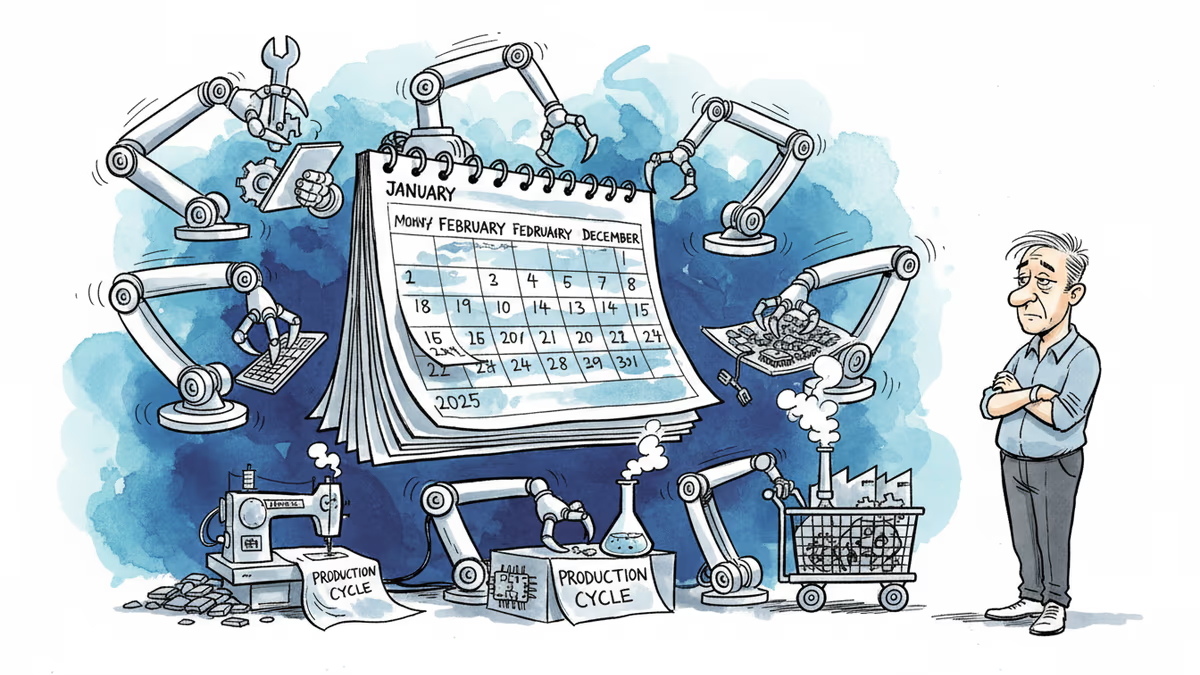
What If AI Worked Alone for Months?
Perplexity's Computer tool orchestrates AI agents to handle long-term projects autonomously. Is this the future of work automation or just clever marketing?
"Plan and execute a digital marketing campaign for my restaurant." What if you could say this once and have AI work on it for months without another word from you?
Perplexity's new "Computer" tool promises exactly that. It's not just another AI assistant—it's a system that breaks down complex goals into subtasks and assigns them to different AI agents, potentially running for hours or even months autonomously.
How It Actually Works
Computer operates on a "workflow orchestration" principle. Tell it to build an Android app, and it'll divide the project into planning, design, development, and testing phases. Each phase gets assigned to the AI model best suited for that specific task—GPT-4 for creative work, Claude for analysis, others for coding.
Currently available only to Perplexity Max subscribers, the company describes it as a system that "creates and executes entire workflows" without constant human intervention.
The Developer Divide
Silicon Valley's reaction has been polarized. Startup founders are excited about potentially 90% faster MVP development, while experienced developers remain skeptical.
"Can AI really manage complex projects for months without going off track?" questioned one developer on Hacker News. "Without checkpoints, you could end up with months of work in the wrong direction."

The concern isn't just technical—it's philosophical. Are we ready to surrender that much control to automated systems?
Enterprise Implications
For businesses, Computer represents a fundamental shift. Instead of managing AI tools, companies might soon be managing AI workflows. This could dramatically reduce project timelines but also raises questions about oversight and accountability.
Some enterprises are already experimenting. A mid-sized marketing agency reported testing similar multi-agent systems for campaign management, seeing 60% reduction in manual coordination time.
The Control Paradox
Here's the interesting tension: Computer promises more freedom by handling long-term tasks, but it also requires unprecedented trust in AI decision-making. Users must define outcomes clearly upfront, then step back for potentially months.
This challenges traditional project management approaches. Most businesses are used to iterative feedback loops, not "set it and forget it" automation.
What This Means for Workers
If Computer succeeds, certain roles will evolve rapidly. Project coordinators might become AI workflow architects. Middle managers could focus more on strategy than execution oversight.
But there's a flip side: as AI handles more autonomous work, human skills in long-term planning and quality assurance become more valuable, not less.
Authors
Related Articles
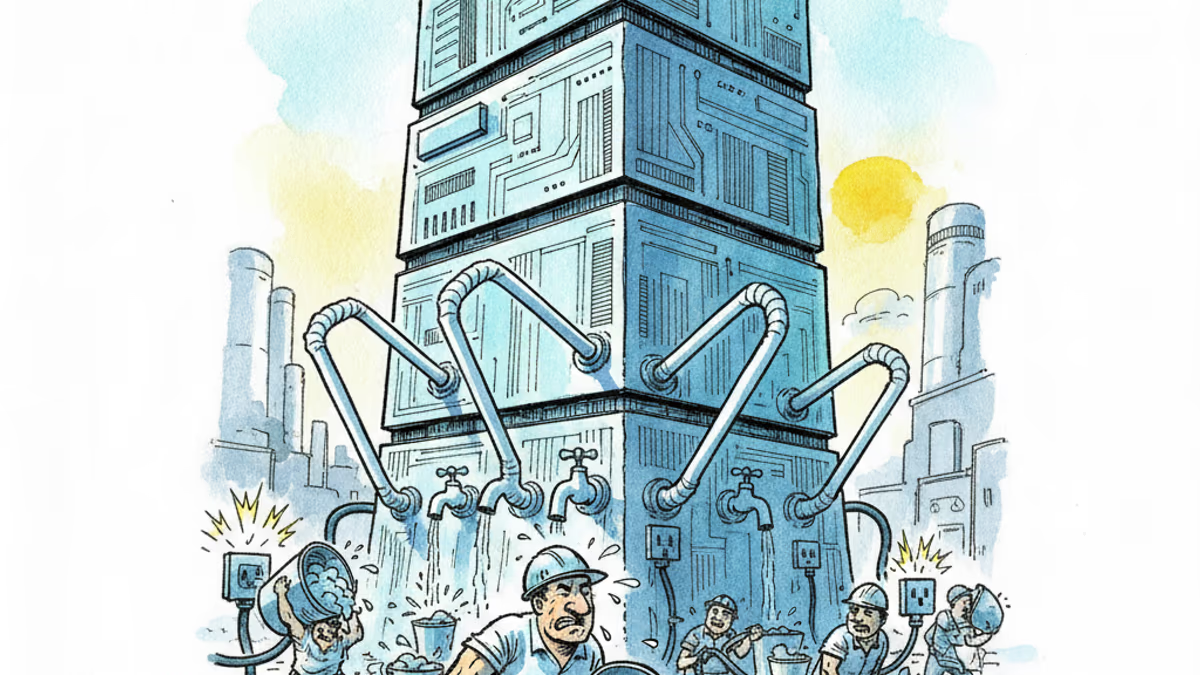
Samsung and SK unveiled a chip and AI investment package worth thousands of trillions of won on June 29. The headline number swings wildly by outlet, but the real contest isn't capital — it's water and power.
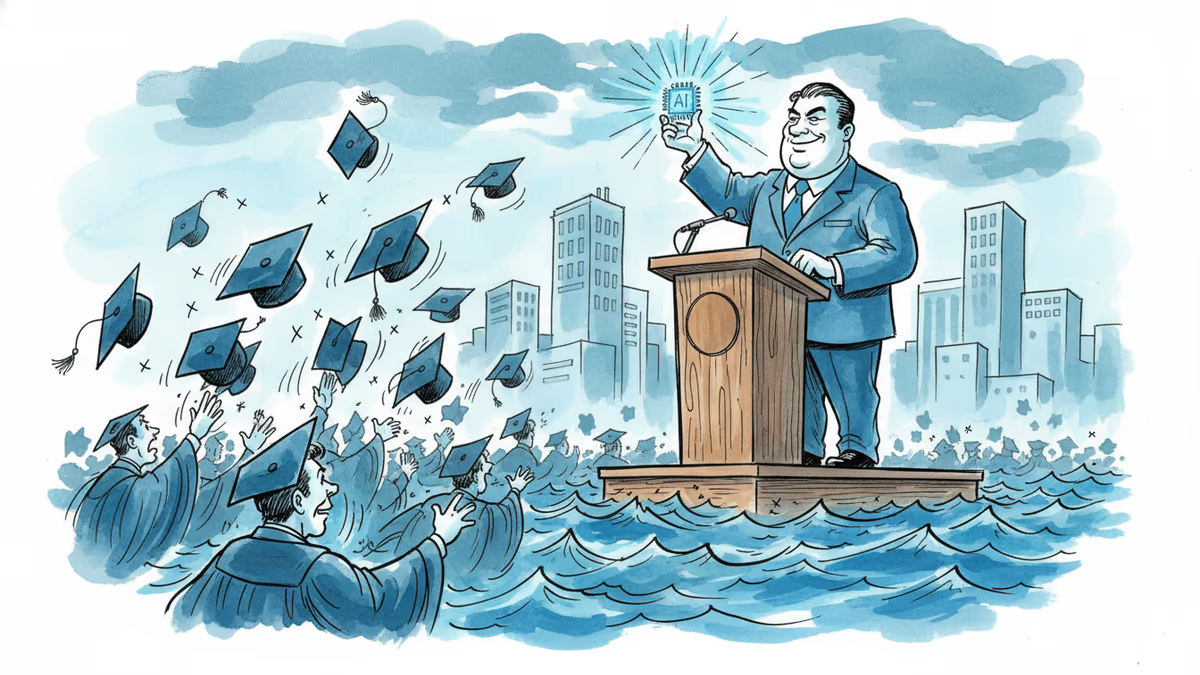
Viral videos show 2026 graduates jeering executives who praise AI at commencement ceremonies. It's not just rudeness — it's a signal about who pays for technological optimism.
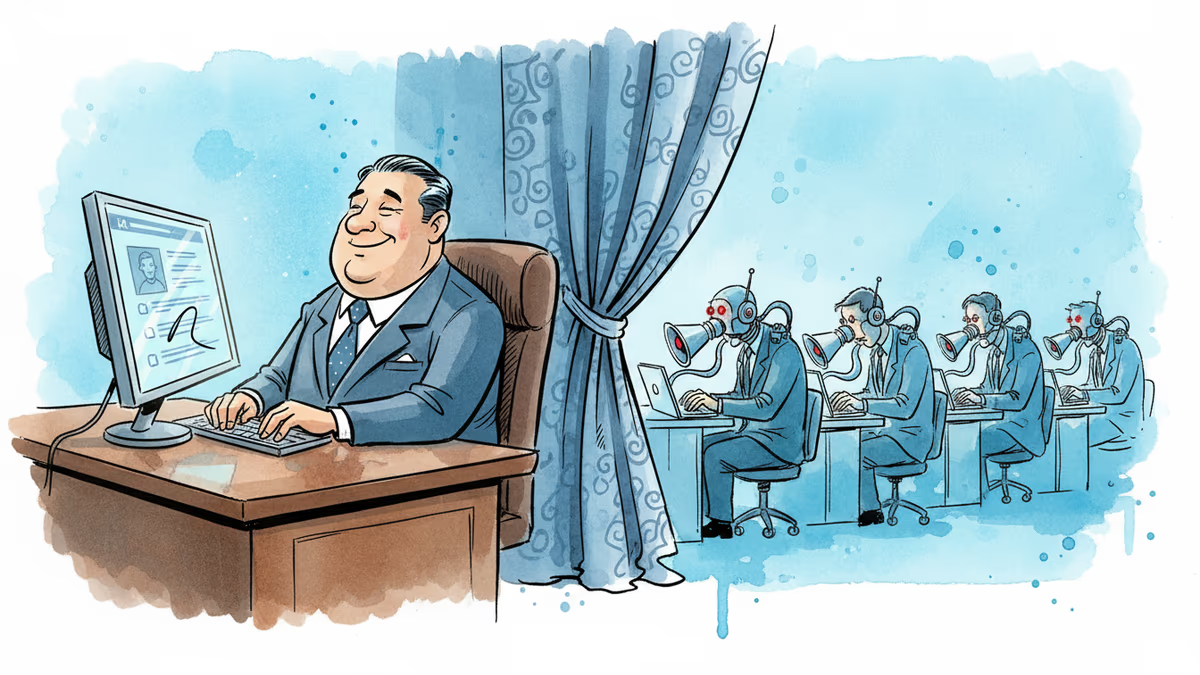
Filipino virtual assistants using AI to ghost-manage LinkedIn profiles for executives is now a structured industry. 30 comments a day, fake engagement rings, and a platform struggling to tell real from fabricated.
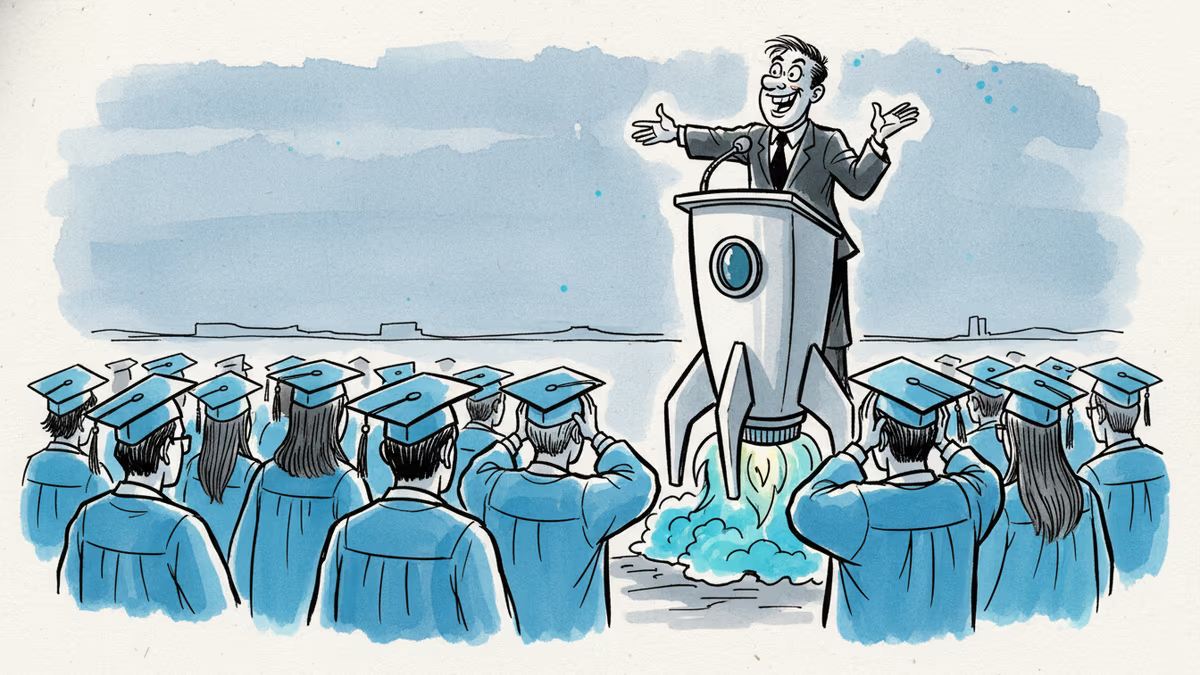
Two commencement speakers learned the hard way that AI enthusiasm doesn't land well with today's graduates. The backlash reveals a widening gap between tech optimism and Gen Z's economic reality.
Samsung and SK unveiled a chip and AI investment package worth thousands of trillions of won on June 29. The headline number swings wildly by outlet, but the real contest isn't capital — it's water and power.
Viral videos show 2026 graduates jeering executives who praise AI at commencement ceremonies. It's not just rudeness — it's a signal about who pays for technological optimism.
Filipino virtual assistants using AI to ghost-manage LinkedIn profiles for executives is now a structured industry. 30 comments a day, fake engagement rings, and a platform struggling to tell real from fabricated.
Two commencement speakers learned the hard way that AI enthusiasm doesn't land well with today's graduates. The backlash reveals a widening gap between tech optimism and Gen Z's economic reality.
Thoughts
Share your thoughts on this article
Sign in to join the conversation