

TSMC 2026 Capital Expenditure Hits $56B Amid AI Supply Chain Squeeze
TSMC plans a record $56B capital expenditure for 2026. Explore how AI demand is hitting supply chain bottlenecks in glass cloth and the rise of China's open-source AI.
$56 billion. That's the massive bet TSMC is making for 2026 to cement its lead in the AI era. While the demand for high-performance computing remains insatiable, the global tech industry is facing a reality check as bottlenecks in niche materials and shifting geopolitics create new hurdles.
TSMC 2026 Capital Expenditure and the Realities of AI Demand
According to Nikkei Asia, TSMC chairman C.C. Wei confirmed the company plans to spend up to $56 billion in capital expenditure for 2026. Despite being "very nervous" about the long-term sustainability of the AI boom, Wei noted that discussions with major customers have validated that the demand is "real." The chip giant expects its revenue to grow nearly 30% this year, significantly outperforming the industry average of 14%.
The Hidden Chokehold: Glass Cloth and Memory

It's not just about the chips themselves. A critical shortage of "glass cloth," a material essential for chip substrates, is worrying tech giants. Apple and Qualcomm have reportedly dispatched teams to Japan to secure supplies from Nitto Boseki, the dominant supplier of advanced glass cloth. Additionally, while AI server components saw 100% growth in previous years, some suppliers forecast a slowdown to around 20% for 2026 as the market matures.
Geopolitical Shifts and China's Open-Source Offensive
Geopolitics remains the industry's wild card. The U.S. recently gave NVIDIA the green light to sell its H200 chips in China, but Beijing is already drafting localization rules to counter this. Meanwhile, Chinese startup DeepSeek is winning the "open-source" war. Microsoft research shows DeepSeek holds an 18% market share in Ethiopia and 17% in Zimbabwe, outpacing American rivals through low-cost accessibility.
Authors
Related Articles
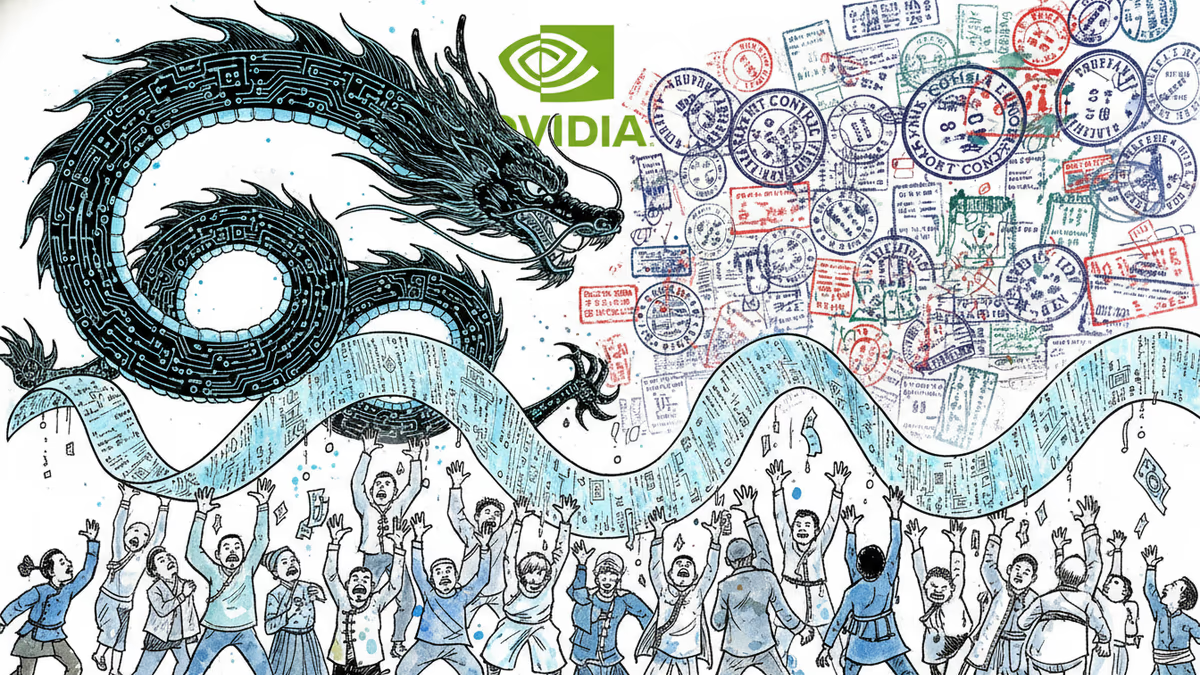
DeepSeek's V4 won't replicate the R1 shock—but it redraws the open-source AI map on pricing, long-context efficiency, and China's push to ditch Nvidia. Here's what's worth watching.

Stanford-Princeton study reveals systematic censorship in Chinese AI models. DeepSeek refuses 36% of sensitive questions while US models refuse less than 3%.
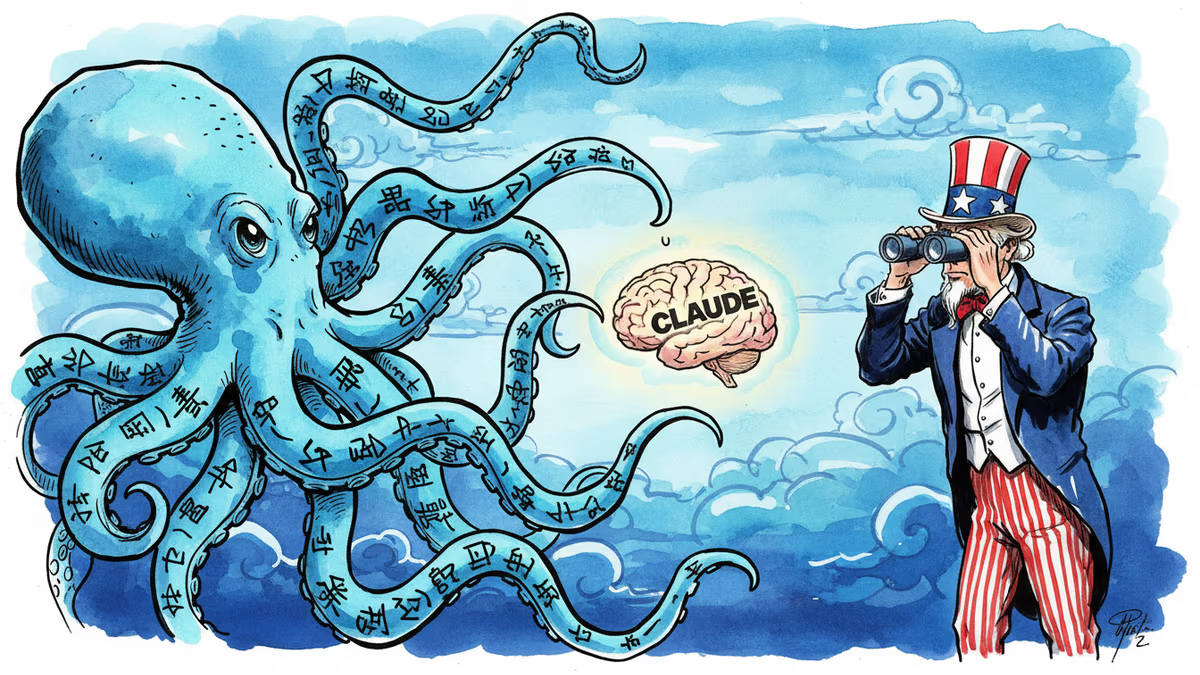
Anthropic exposes how DeepSeek, Moonshot AI, and MiniMax used 24,000+ fake accounts to steal Claude's capabilities through 16 million conversations. The scale and implications revealed.
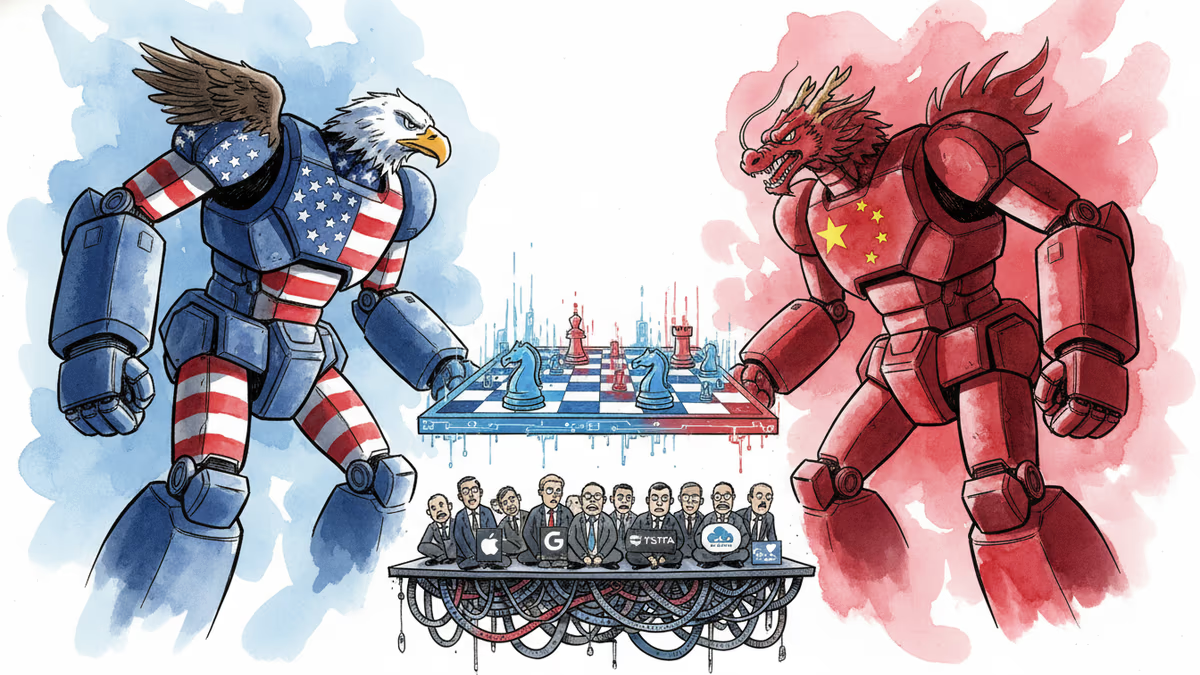
OpenAI accused DeepSeek of stealing AI capabilities before any new model launch. The real battle isn't about copying—it's about who controls AI's future.
DeepSeek's V4 won't replicate the R1 shock—but it redraws the open-source AI map on pricing, long-context efficiency, and China's push to ditch Nvidia. Here's what's worth watching.
Stanford-Princeton study reveals systematic censorship in Chinese AI models. DeepSeek refuses 36% of sensitive questions while US models refuse less than 3%.
Anthropic exposes how DeepSeek, Moonshot AI, and MiniMax used 24,000+ fake accounts to steal Claude's capabilities through 16 million conversations. The scale and implications revealed.
OpenAI accused DeepSeek of stealing AI capabilities before any new model launch. The real battle isn't about copying—it's about who controls AI's future.
Thoughts
Share your thoughts on this article
Sign in to join the conversation