
Suno's $300M Revenue Milestone: When AI Music Goes Mainstream
AI music generator Suno reaches 2M paid subscribers and $300M annual revenue, marking a pivotal moment in the democratization of music creation.
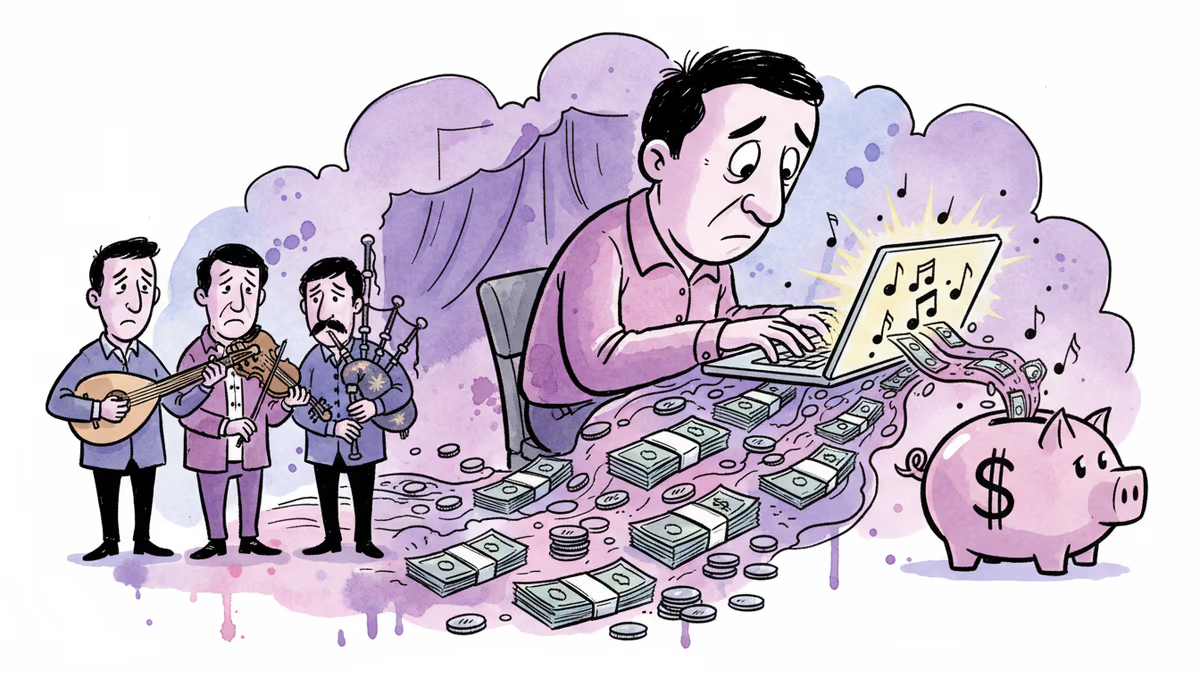
Two million people pay monthly to create music with AI. That's Suno's latest milestone, alongside $300 million in annual recurring revenue. Just three months ago, that number was $200 million. A 50% jump in a quarter.
But this isn't just another growth story. These numbers represent something far more profound: the complete democratization of music creation.
From Poetry to $3 Million Record Deal
Telisha Jones, a 31-year-old from Mississippi, had no music industry experience. She fed her poetry into Suno's AI engine. What emerged was "How Was I Supposed to Know," an R&B track that went viral, topped Spotify charts, and landed her a $3 million record deal with Hallwood Media.
A few text prompts. No instruments. No studio time. No years of training. Just an idea and an AI that could execute it.
This is the reality Suno has created—and it's terrifying traditional gatekeepers.
The Artist Backlash
Billie Eilish, Chappell Roan, and Katy Perry have all spoken out against AI music tools. Their concern? These systems were likely trained on existing copyrighted music without permission, essentially creating a sophisticated plagiarism machine.
The lawsuits followed. Record labels sued Suno for copyright infringement, arguing that the AI was stealing from their catalogs to generate new content.

Warner's Strategic Pivot
Then something unexpected happened. Warner Music Group dropped its lawsuit and struck a licensing deal instead. Now Suno can train models using Warner's catalog—legally.
Why did Warner flip from adversary to partner? The math is compelling. Suno's 2 million paid subscribers represent a new category of music consumers—people who don't just want to listen, but to create. For record labels, that's both a new revenue stream and a pipeline of potential talent.
Warner recognized a fundamental shift: instead of fighting the technology, they could monetize it.
The Disruption Playbook in Action
Suno's trajectory follows the classic disruption pattern. Start with a "toy" that professionals dismiss. Improve rapidly while incumbents debate. Suddenly, the toy becomes good enough to challenge the establishment.
Three months ago, Suno was generating $200 million annually. Today, it's $300 million. That's not just growth—it's acceleration in a market that's still figuring out the rules.
The company's $2.45 billion valuation now looks conservative. If current trends continue, Suno could be generating more revenue than many traditional record labels within two years.
The Bigger Question
But here's what the revenue numbers don't capture: the cultural shift. When anyone can create professional-sounding music in minutes, what happens to the concept of musical expertise? When AI can generate a hit song from a simple prompt, how do we value human creativity?
Telisha Jones's success story is inspiring—but it's also unsettling for the millions of musicians who spent years honing their craft.
Authors
Related Articles

Samsung and SK unveiled a chip and AI investment package worth thousands of trillions of won on June 29. The headline number swings wildly by outlet, but the real contest isn't capital — it's water and power.
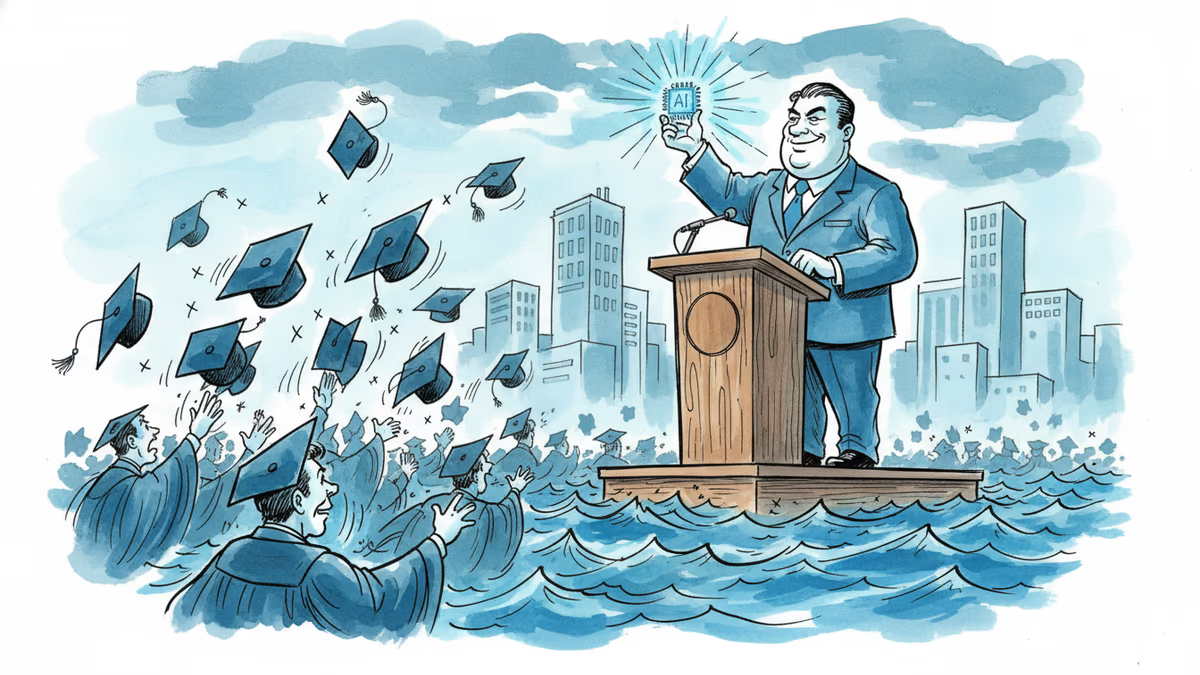
Viral videos show 2026 graduates jeering executives who praise AI at commencement ceremonies. It's not just rudeness — it's a signal about who pays for technological optimism.

Filipino virtual assistants using AI to ghost-manage LinkedIn profiles for executives is now a structured industry. 30 comments a day, fake engagement rings, and a platform struggling to tell real from fabricated.
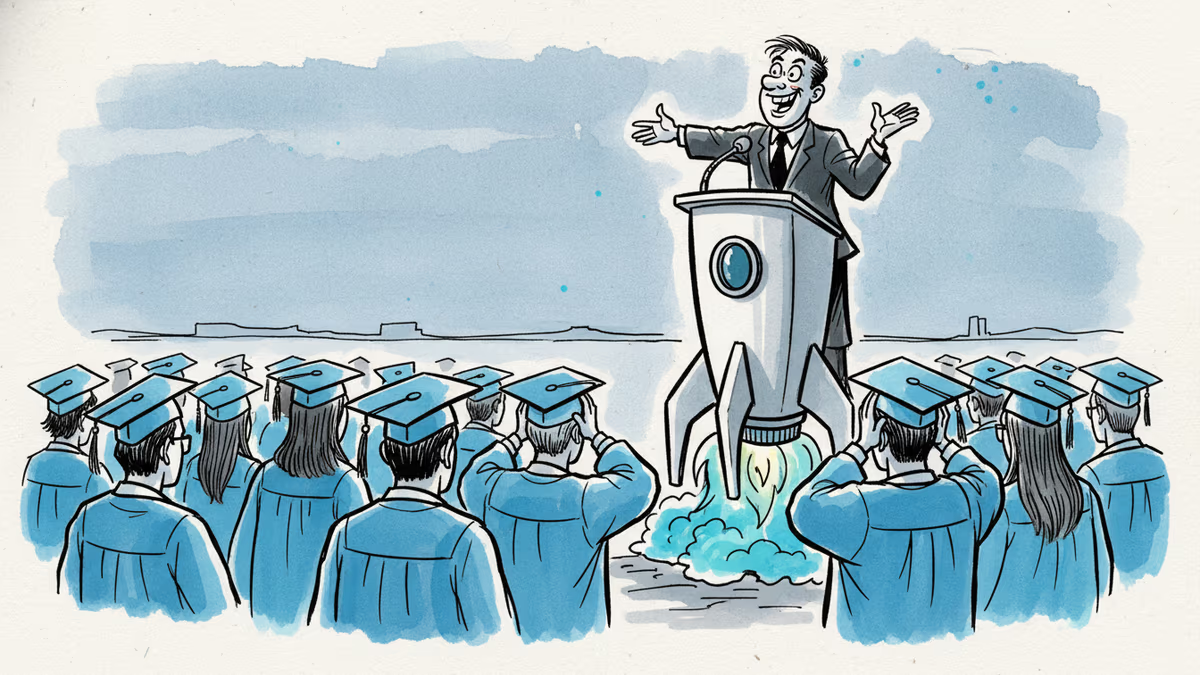
Two commencement speakers learned the hard way that AI enthusiasm doesn't land well with today's graduates. The backlash reveals a widening gap between tech optimism and Gen Z's economic reality.
Samsung and SK unveiled a chip and AI investment package worth thousands of trillions of won on June 29. The headline number swings wildly by outlet, but the real contest isn't capital — it's water and power.
Viral videos show 2026 graduates jeering executives who praise AI at commencement ceremonies. It's not just rudeness — it's a signal about who pays for technological optimism.
Filipino virtual assistants using AI to ghost-manage LinkedIn profiles for executives is now a structured industry. 30 comments a day, fake engagement rings, and a platform struggling to tell real from fabricated.
Two commencement speakers learned the hard way that AI enthusiasm doesn't land well with today's graduates. The backlash reveals a widening gap between tech optimism and Gen Z's economic reality.
Thoughts
Share your thoughts on this article
Sign in to join the conversation