
Your Personal AI Podcast Host Reads Your Emails Every Morning
Former Google NotebookLM team launches Huxe, an AI app that turns your emails and calendar into personalized audio briefings. Innovation or privacy nightmare?
What If Your Morning Routine Had Its Own Radio Show?
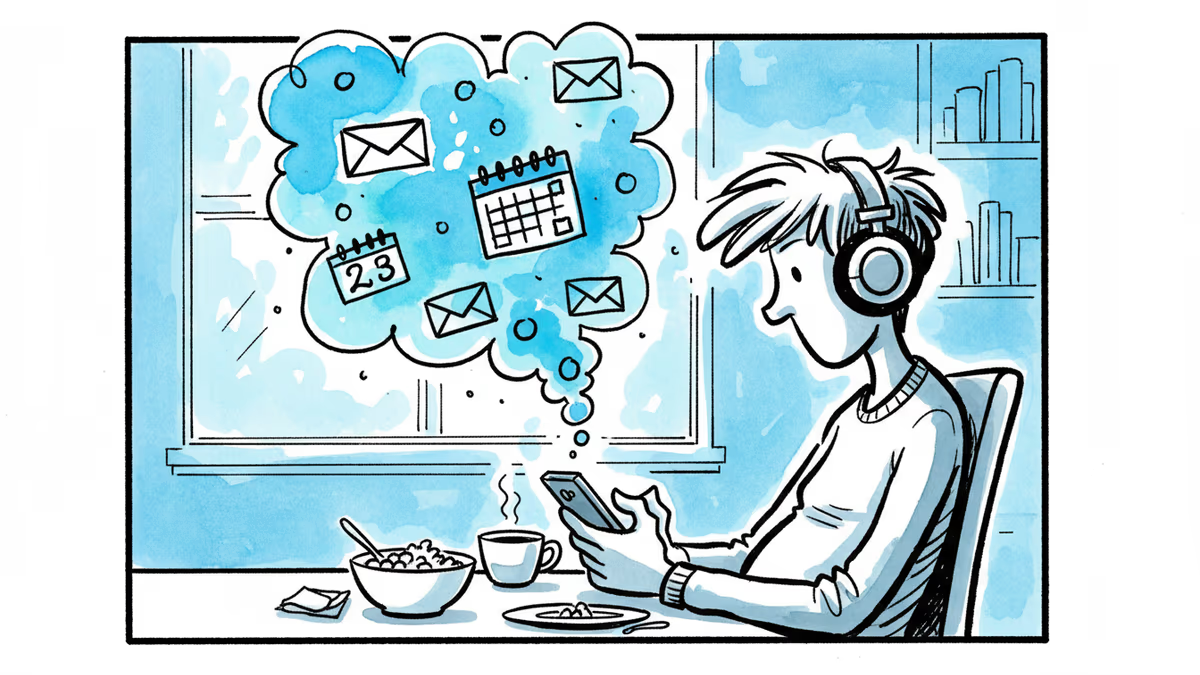
Every morning, 47 minutes. That's how long the average knowledge worker spends checking emails and reviewing their calendar. Huxe wants to cut that to 15 minutes—not by making you faster, but by having AI do the reading for you.
The app, built by former Google NotebookLM developers, creates personalized audio briefings from your inbox and schedule. Two AI hosts chat like morning radio DJs: "Looks like your boss moved up that deadline, and you've got three meetings back-to-back this afternoon."
It's not just email summaries. The app generates "livecasts"—think personalized radio stations for topics you care about. Want a 15-minute deep dive on R.E.M.'s discography? Huxe delivers it in seconds.
The NotebookLM DNA
The Google pedigree shows. NotebookLM's viral Audio Overviews feature—where AI hosts discuss uploaded documents—proved people love conversational AI content. But while NotebookLM handles research papers, Huxe tackles the mundane: your Tuesday meeting agenda and that expense report reminder.
The execution feels polished. Playback speeds up to 3X, interruptions for follow-up questions, and seamless switching between email summaries, news, and calendar items. It's what happens when experienced developers solve their own productivity pain points.

The Privacy Trade-Off Nobody's Talking About
Here's the uncomfortable truth: Huxe needs to read everything. Salary negotiations, medical appointments, personal drama—it's all fair game for AI analysis. The company promises not to use "personally identifiable" data for model training, but admits sharing some information with third-party AI partners.
For privacy advocates, this raises red flags. How do you audit what an AI actually "remembers"? What happens when Huxe gets acquired by a larger tech company with different data policies?
Meanwhile, productivity enthusiasts see this as inevitable. If AI can save 30 minutes daily, many users will accept the privacy trade-off. The question isn't whether this technology will spread—it's how quickly.
The Sustainability Question
Right now, Huxe is completely free. But AI voice generation isn't cheap, especially at scale. The app would need to process millions of emails daily to serve a meaningful user base. That's expensive.
Venture funding can subsidize early growth, but eventually, someone pays. Subscription models seem likely—perhaps $10-15 monthly. At that price point, Huxe competes with premium productivity tools like Notion AI or Grammarly Business.
The bigger threat might come from platform integration. Microsoft could build similar features into Outlook. Google could add this to Gmail. When tech giants control both the email platform and the AI, standalone apps face an uphill battle.
Authors
Related Articles

Samsung and SK unveiled a chip and AI investment package worth thousands of trillions of won on June 29. The headline number swings wildly by outlet, but the real contest isn't capital — it's water and power.

Viral videos show 2026 graduates jeering executives who praise AI at commencement ceremonies. It's not just rudeness — it's a signal about who pays for technological optimism.

Google's Gmail Live lets you ask your inbox questions out loud. Announced at I/O 2026, it's AI's pitch to skeptics — and a reminder of how much Google already knows about you.

Filipino virtual assistants using AI to ghost-manage LinkedIn profiles for executives is now a structured industry. 30 comments a day, fake engagement rings, and a platform struggling to tell real from fabricated.
Samsung and SK unveiled a chip and AI investment package worth thousands of trillions of won on June 29. The headline number swings wildly by outlet, but the real contest isn't capital — it's water and power.
Viral videos show 2026 graduates jeering executives who praise AI at commencement ceremonies. It's not just rudeness — it's a signal about who pays for technological optimism.
Google's Gmail Live lets you ask your inbox questions out loud. Announced at I/O 2026, it's AI's pitch to skeptics — and a reminder of how much Google already knows about you.
Filipino virtual assistants using AI to ghost-manage LinkedIn profiles for executives is now a structured industry. 30 comments a day, fake engagement rings, and a platform struggling to tell real from fabricated.
Thoughts
Share your thoughts on this article
Sign in to join the conversation