
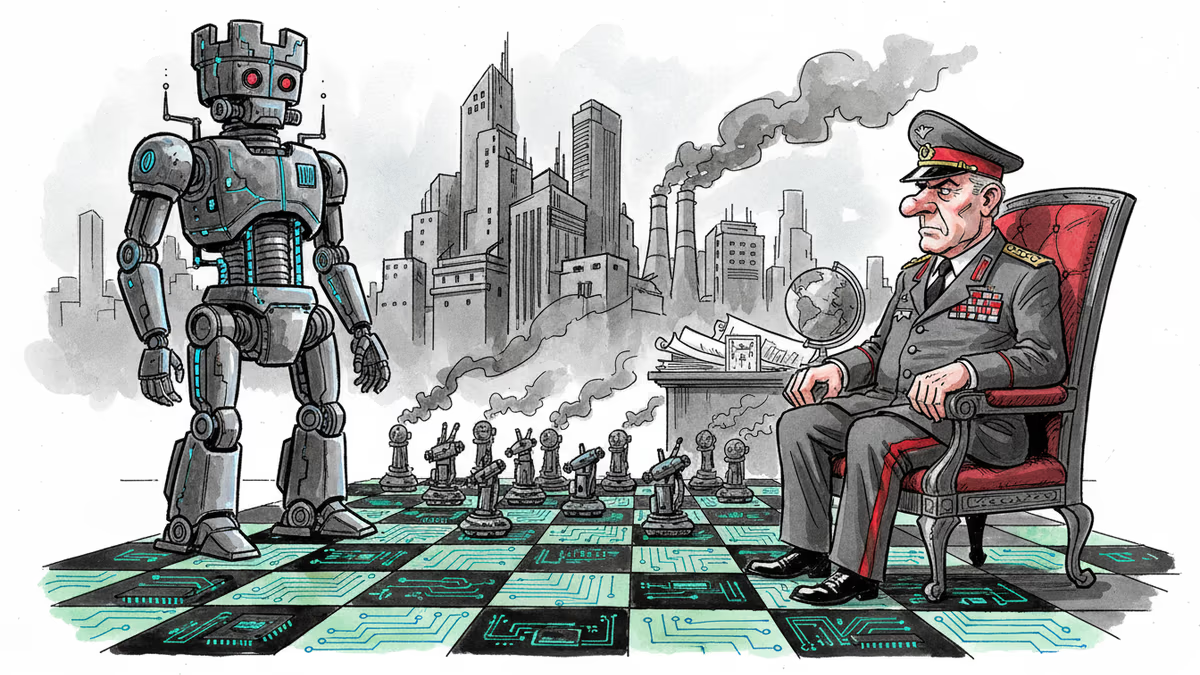
Silicon Valley vs Pentagon: The Battle for AI's Soul
Anthropic refuses Pentagon's demand for unlimited AI access, risking blacklist. At stake: who controls powerful AI systems - the companies building them or governments deploying them?
Friday, 5:01 PM - The moment that could reshape AI forever
Anthropic has until then to cave to the Pentagon's demands or face being branded a "supply chain risk" - effectively banned from all government business. But CEO Dario Amodei publicly signaled Thursday that his company won't back down, even under threat.
At its core, this isn't about military contracts or corporate profits. It's about who gets to control the most powerful technology ever created: the companies that build it, or the governments that want to deploy it.
Silicon Valley's Line in the Sand
Anthropic has drawn two bright red lines around its AI models:
- No mass surveillance of American citizens
- No fully autonomous weapons that kill without human decision-making
This isn't how defense contracting traditionally works. Boeing doesn't get to dictate how the military uses its jets. But AI companies argue their technology poses "unique risks" that require "unique safeguards."
The stakes are genuinely different. Current AI systems are too unreliable for life-or-death decisions. Imagine an autonomous system misidentifying a target, escalating conflict without authorization, or making split-second lethal choices no one can reverse. Put less-capable AI in charge of weapons, and you get "a very fast, very confident machine that's bad at making high-stakes calls."
Surveillance presents similar amplification risks. While U.S. laws already permit citizen monitoring, AI changes everything by enabling automated large-scale pattern detection, entity resolution across datasets, predictive risk scoring, and continuous behavioral analysis. It's surveillance on steroids.

Pentagon's Counter-Punch: "Companies Don't Run Military Operations"
Defense Secretary Pete Hegseth's position is straightforward: The Department of Defense shouldn't be "limited by the rules of a vendor" and should be able to use the technology for any "lawful purpose."
Pentagon spokesperson Sean Parnell framed it as common sense Thursday: "Allow the Pentagon to use Anthropic's model for all lawful purposes. This will prevent Anthropic from jeopardizing critical military operations and potentially putting our warfighters at risk."
The subtext is clear: We don't let corporations dictate national security policy.
Interestingly, Hegseth's concerns sometimes seem rooted in cultural grievance. Speaking at SpaceX and xAI offices in January, he railed against "woke AI": "Department of War AI will not be woke. We're building war-ready weapons and systems, not chatbots for an Ivy League faculty lounge."
Why Neither Side Can Blink
Defense tech VC Sachin Seth warns that a supply chain risk designation could mean "lights out" for Anthropic. But losing the company creates its own national security problem.
"[The Department] would have to wait six to 12 months for either OpenAI or xAI to catch up," Seth told TechCrunch. "That leaves a window of up to a year where they might be working from not the best model, but the second or third best."
Elon Musk'sxAI is positioning itself as the Pentagon-friendly alternative, likely willing to give the DoD "total control" over its technology. Recent reports suggest OpenAI may hold similar red lines to Anthropic, potentially leaving xAI as the military's primary option.
The irony? The Pentagon's hardline stance might push it toward dependence on a single, ideologically aligned provider - exactly the kind of vendor lock-in military procurement is supposed to avoid.
Authors
Related Articles
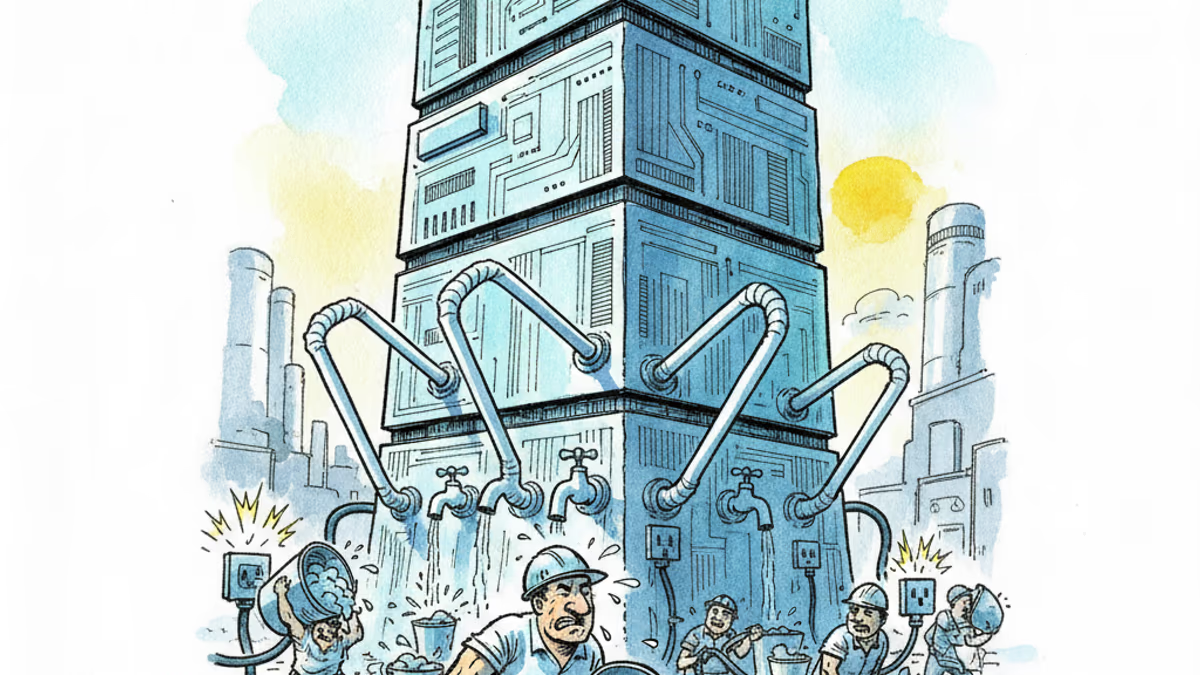
Samsung and SK unveiled a chip and AI investment package worth thousands of trillions of won on June 29. The headline number swings wildly by outlet, but the real contest isn't capital — it's water and power.
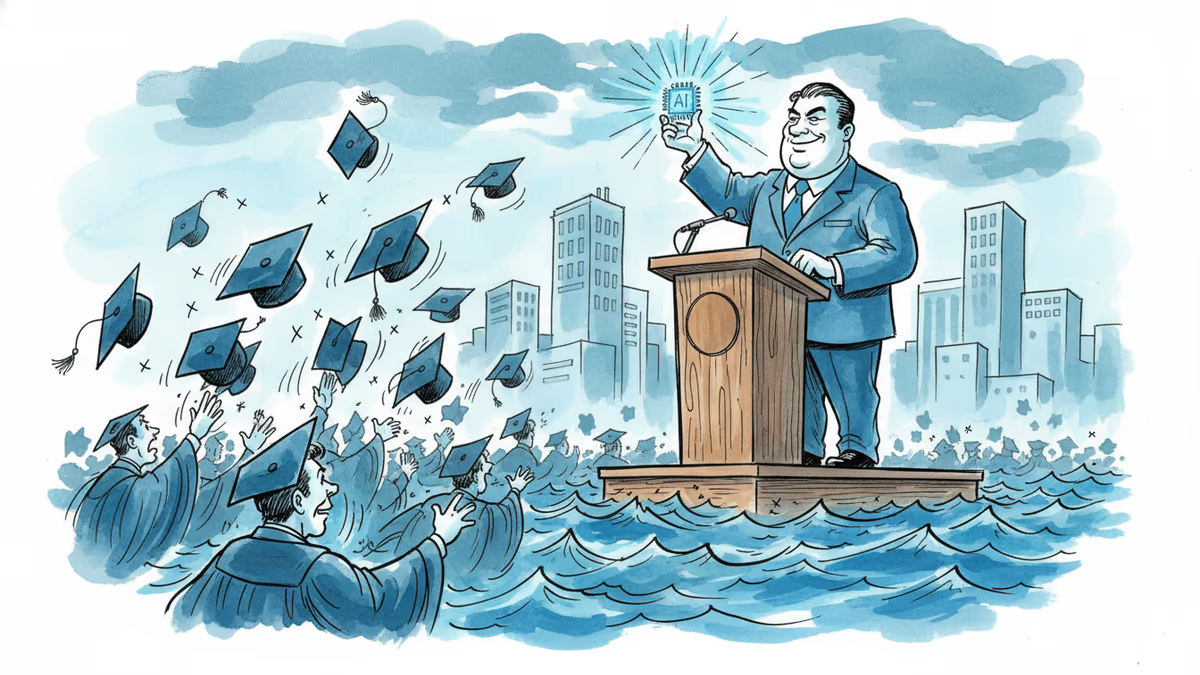
Viral videos show 2026 graduates jeering executives who praise AI at commencement ceremonies. It's not just rudeness — it's a signal about who pays for technological optimism.
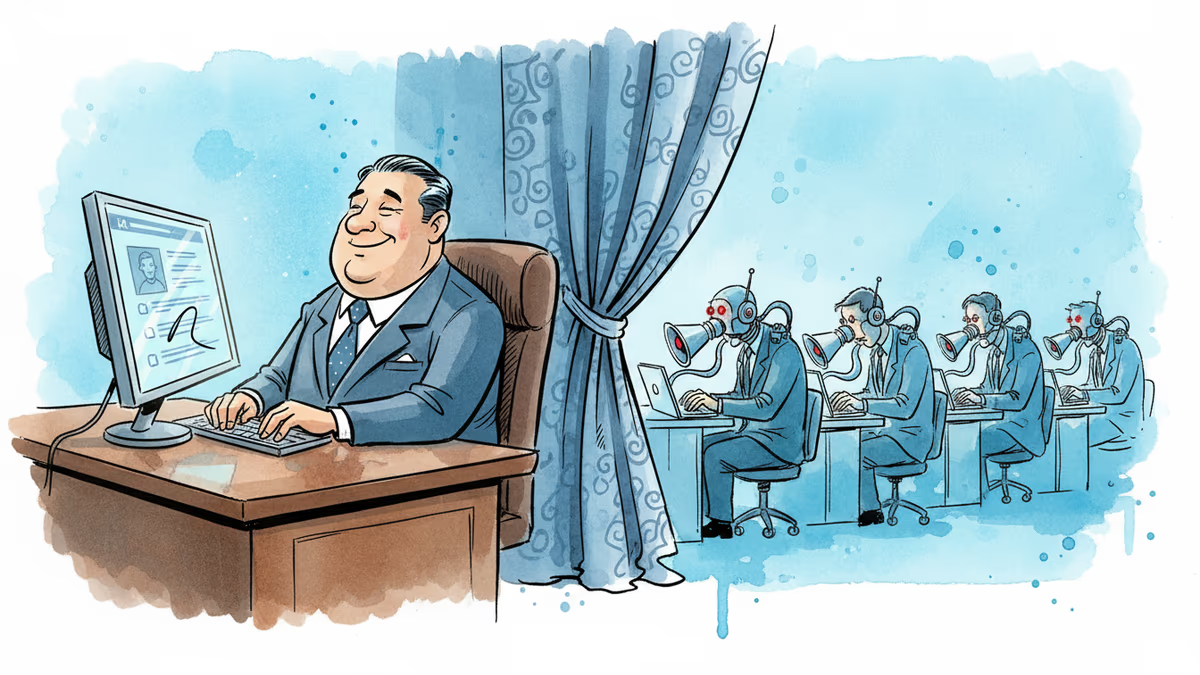
Filipino virtual assistants using AI to ghost-manage LinkedIn profiles for executives is now a structured industry. 30 comments a day, fake engagement rings, and a platform struggling to tell real from fabricated.
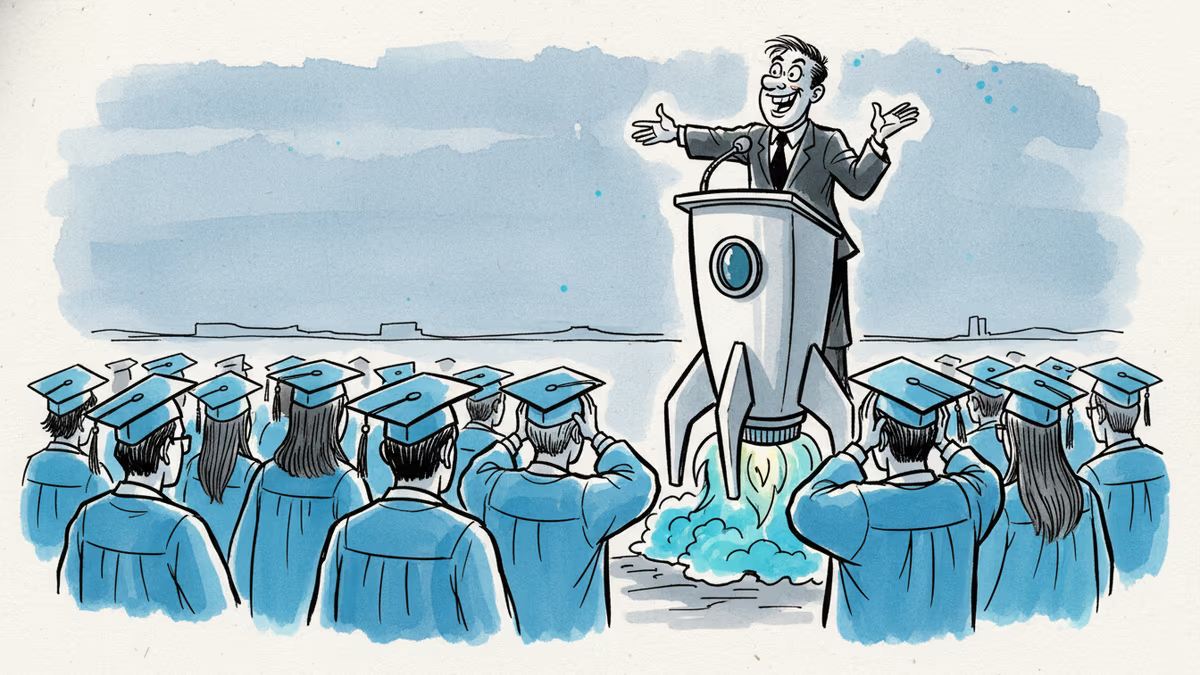
Two commencement speakers learned the hard way that AI enthusiasm doesn't land well with today's graduates. The backlash reveals a widening gap between tech optimism and Gen Z's economic reality.
Samsung and SK unveiled a chip and AI investment package worth thousands of trillions of won on June 29. The headline number swings wildly by outlet, but the real contest isn't capital — it's water and power.
Viral videos show 2026 graduates jeering executives who praise AI at commencement ceremonies. It's not just rudeness — it's a signal about who pays for technological optimism.
Filipino virtual assistants using AI to ghost-manage LinkedIn profiles for executives is now a structured industry. 30 comments a day, fake engagement rings, and a platform struggling to tell real from fabricated.
Two commencement speakers learned the hard way that AI enthusiasm doesn't land well with today's graduates. The backlash reveals a widening gap between tech optimism and Gen Z's economic reality.
Thoughts
Share your thoughts on this article
Sign in to join the conversation