

Suno v5.5 Lets You Train AI on Your Own Voice
Suno's v5.5 update introduces Voices, My Taste, and Custom Models — shifting AI music from novelty to personalized creative tool. Here's what it means.
Your voice. Your taste. Your AI music model. Suno just handed you the controls.
The company's v5.5 update — arguably its most significant release to date — doesn't chase better audio fidelity or smoother vocals. Instead, it does something more interesting: it gives users the tools to make the AI sound like them. Three new features define this shift: Voices, My Taste, and Custom Models.
What Actually Changed
Voices is the headliner. Suno says it's the single most-requested feature the company has ever received. The mechanic is straightforward: upload a clean acapella, a finished track with backing music, or just sing directly into your phone's microphone. The AI learns your vocal patterns and applies them to future generations. Higher-quality recordings mean less data required to get a convincing result.
My Taste works differently. Feed the system songs you love, and it maps the underlying patterns — tempo, texture, harmonic tendencies — to shape what the AI produces for you going forward. Think of it as a preference engine that learns what your ears want before your brain articulates it.
Custom Models goes furthest. Users can train a persistent model around a specific style, genre, or aesthetic — building something closer to a personal AI collaborator than a one-shot prompt tool.
The Road to Here

Suno arrived in late 2023 and moved fast. Early versions proved the concept: yes, AI can produce music that sounds like music. Subsequent updates — v3, v4, v5 — steadily improved fidelity and vocal naturalness. By v5, the output had become convincing enough that casual listeners struggled to identify it as AI-generated.
v5.5 represents a deliberate strategic pivot: from quality to personalization and control. That's not a subtle distinction. It signals that Suno believes the next competitive battleground isn't sound quality — it's how deeply the tool can embed itself into a creator's individual workflow and identity.
Who's Cheering, Who's Worried
For independent musicians and content creators, the upside is real. A singer-songwriter can now demo an entire album's worth of ideas in a weekend, in their own voice, without booking studio time. A YouTuber can generate background music that actually matches their vocal tone. The cost and time barriers compress significantly.
For session vocalists and recording studios, the picture is less comfortable. Voice training tools that produce professional-grade output from a smartphone recording don't just democratize creation — they also compress the market for human vocal work. The American Federation of Musicians (AFM) has already been pushing for regulatory frameworks around AI music tools, and updates like this will likely accelerate that pressure.
For Suno itself, this is a calculated bet. Deeper personalization creates stickier users. Once someone has trained the AI on their voice and taste, switching to a competitor means starting over. It's the same lock-in logic that made Spotify's algorithm so hard to leave — but applied to creative output rather than consumption.
The Copyright Question Nobody's Answered
The legal scaffolding around AI music is still being built in real time. Suno and Udio are currently defendants in copyright lawsuits brought by major record labels, with outcomes that could reshape the entire industry's legal foundation. The core dispute: whether training AI on copyrighted recordings constitutes infringement.
v5.5 adds new wrinkles. If you train a Custom Model on a specific artist's style, where does inspiration end and infringement begin? Suno maintains it has protective guardrails in place, but the specifics remain opaque. Courts haven't caught up. Regulators are still watching. And the technology keeps moving.
Authors
Related Articles

Google's Gmail Live lets you ask your inbox questions out loud. Announced at I/O 2026, it's AI's pitch to skeptics — and a reminder of how much Google already knows about you.
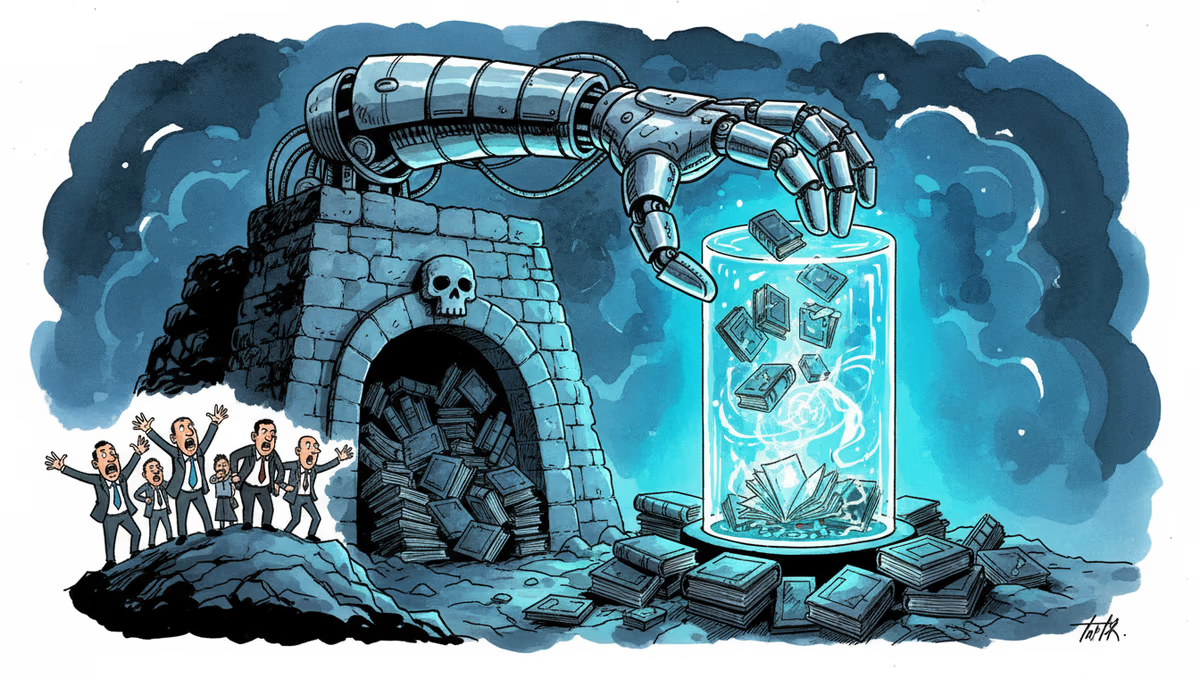
Five major publishers and author Scott Turow have filed a class action lawsuit against Meta, alleging the company used illegal pirate sites like LibGen to train its Llama AI models without permission.

Two ex-Apple engineers built an AI puck that only listens when you press it. At $179, Button is a deliberate bet that dedicated AI hardware beats the Swiss Army knife approach of smartphones.
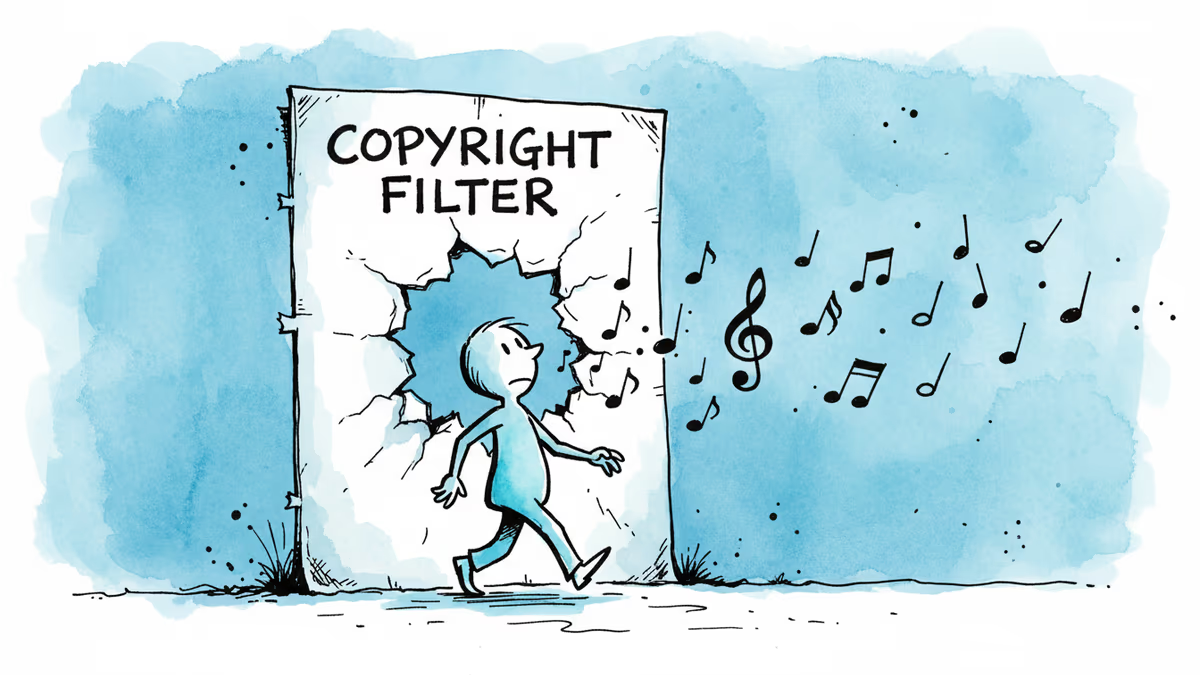
Suno's AI music platform claims to block copyrighted content, but researchers found its filters can be bypassed with minimal effort and free tools, generating near-identical imitations of Beyoncé, Black Sabbath, and more.
Google's Gmail Live lets you ask your inbox questions out loud. Announced at I/O 2026, it's AI's pitch to skeptics — and a reminder of how much Google already knows about you.
Five major publishers and author Scott Turow have filed a class action lawsuit against Meta, alleging the company used illegal pirate sites like LibGen to train its Llama AI models without permission.
Two ex-Apple engineers built an AI puck that only listens when you press it. At $179, Button is a deliberate bet that dedicated AI hardware beats the Swiss Army knife approach of smartphones.
Suno's AI music platform claims to block copyrighted content, but researchers found its filters can be bypassed with minimal effort and free tools, generating near-identical imitations of Beyoncé, Black Sabbath, and more.
Thoughts
Share your thoughts on this article
Sign in to join the conversation