

Summit Group Bangladesh Data Center 2026: A New Infrastructure Frontier
Summit Group enters the Bangladesh data center market. Chairman Muhammed Aziz Khan reveals plans for its first project within a year, leveraging existing fiber networks.
A massive new player is entering the AI infrastructure race in South Asia. Summit Group, one of Bangladesh's most influential conglomerates, is officially pivoting toward the data center market to capture the region's exploding digital demand.
The Strategy Behind Summit Group Bangladesh Data Center
According to Nikkei Asia, Chairman Muhammed Aziz Khan confirmed that the group plans to begin working with an external business partner within 1 year to develop its first data center. The company intends to leverage its existing fiber network unit, which provides a significant competitive edge in connectivity.

We're entering the data center market with the advantage of our established fiber infrastructure, aiming to meet the country's rapidly growing technological needs.
The Energy Conflict and Climate Goals
While the move signals progress, it's not without controversy. The group's reliance on gas-based power for its massive energy needs could potentially clash with Bangladesh's national climate goals. Balancing industrial expansion with environmental commitments remains a critical hurdle for Summit Group as it seeks to scale its digital infrastructure.
Authors
Related Articles

US Customs admits its decades-old system can't process billions in Trump tariff refunds despite Supreme Court ruling. What happens when analog government meets digital-age commerce?

Samsung Electronics' union branch revealed that 84% of survey respondents oppose the government's roughly $290 billion (₩400 trillion) semiconductor megaproject in Gwangju. Government, management, the union and shareholders are all reading the same national project in sharply different ways.
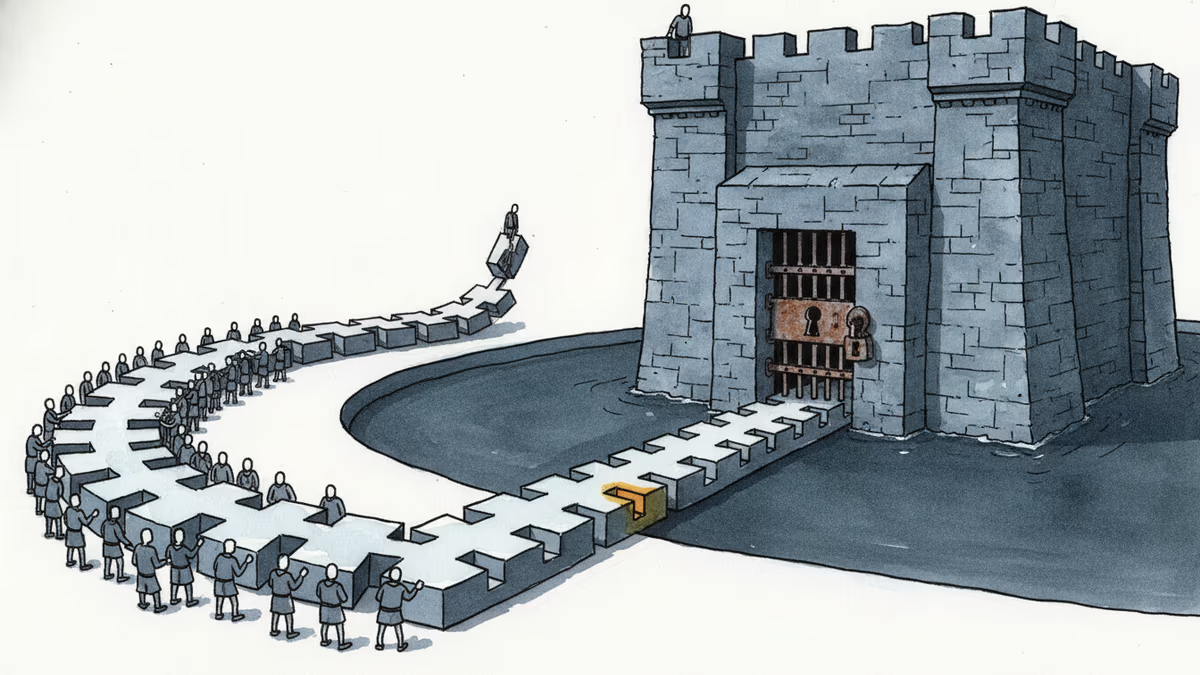
Nvidia shipped roughly a billion RISC-V cores in 2024, then announced it would run CUDA on the open standard. We break down how royalty-free instruction sets and open software stacks are trying to route around CUDA's lock-in. Part 2 of the Semiconductor Sovereignty series.
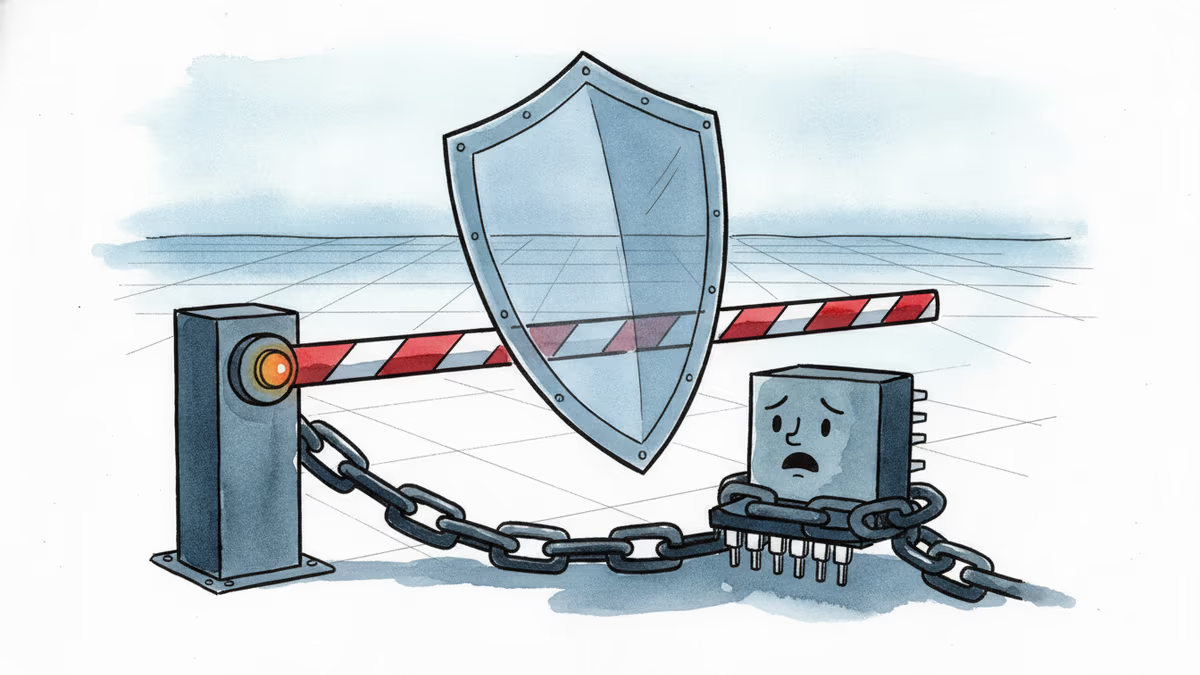
US AI-chip export controls split into three layers in the first half of 2026 — January easing, a May crackdown on circumvention, and a pending bill. Nvidia erased China from its guidance and still posted a record $81.6 billion quarter. A look at the export policy that both shields and cages it.
US Customs admits its decades-old system can't process billions in Trump tariff refunds despite Supreme Court ruling. What happens when analog government meets digital-age commerce?
Samsung Electronics' union branch revealed that 84% of survey respondents oppose the government's roughly $290 billion (₩400 trillion) semiconductor megaproject in Gwangju. Government, management, the union and shareholders are all reading the same national project in sharply different ways.
Nvidia shipped roughly a billion RISC-V cores in 2024, then announced it would run CUDA on the open standard. We break down how royalty-free instruction sets and open software stacks are trying to route around CUDA's lock-in. Part 2 of the Semiconductor Sovereignty series.
US AI-chip export controls split into three layers in the first half of 2026 — January easing, a May crackdown on circumvention, and a pending bill. Nvidia erased China from its guidance and still posted a record $81.6 billion quarter. A look at the export policy that both shields and cages it.
Thoughts
Share your thoughts on this article
Sign in to join the conversation