
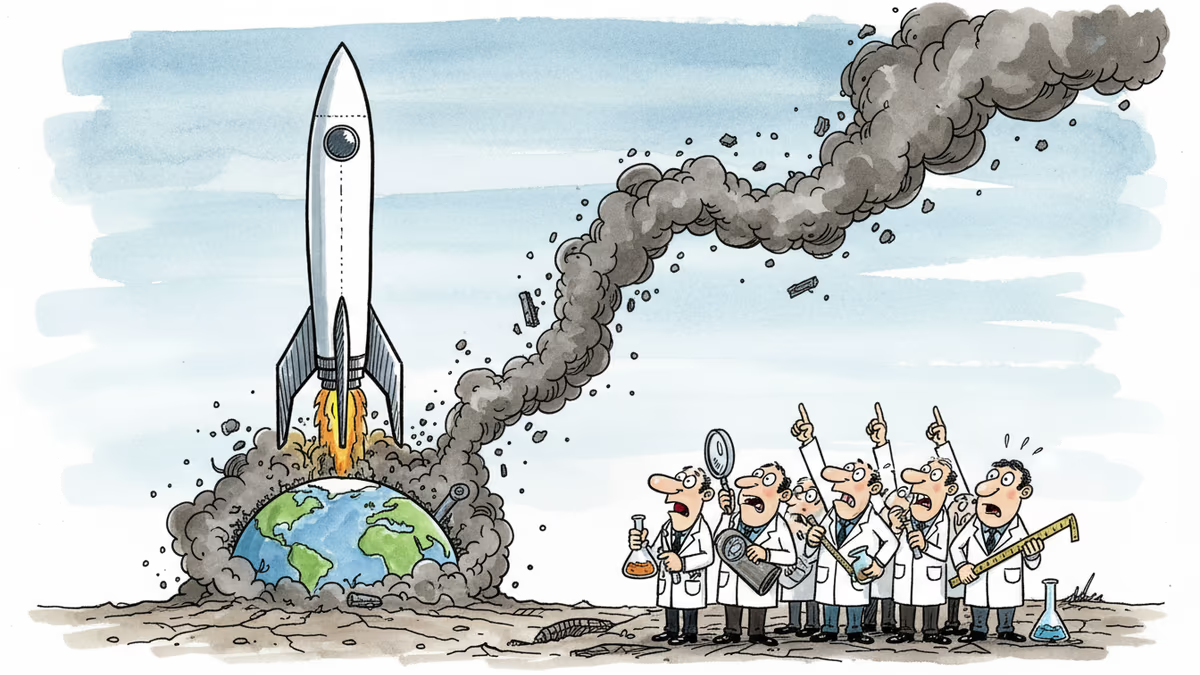
Space Junk Is Polluting Earth's Upper Atmosphere
New research reveals how SpaceX rocket debris is contaminating the near-space region, raising concerns about climate impacts and toxic pollution from commercial space flights.
The 80-Kilometer Problem Nobody Saw Coming
For the first time, scientists have tracked and measured pollution from a specific spacecraft disintegration in the near-space region 80 to 110 kilometers above Earth. The culprit? A SpaceX Falcon rocket that lost control during reentry on February 19, 2025, after launching 20 to 22 Starlink satellites.
This isn't just another space debris story. The research, published Thursday, marks the first documented case of spacecraft pollution being traced in a region that directly affects our stratosphere—where ozone and climate processes operate. Until recently, human activities barely touched this atmospheric layer.
When Private Profit Meets Public Air
The implications are staggering. A handful of companies are essentially using Earth's atmospheric commons as an industrial dumping ground. The study's authors warn that commercial space flights are releasing "potentially toxic and climate-altering industrial waste byproducts" with minimal oversight.

SpaceX alone has conducted dozens of launches this year, with other companies rapidly expanding their commercial space operations. Yet environmental regulations haven't kept pace with this space gold rush. Each launch leaves a chemical signature in our atmosphere, and we're only now beginning to understand the cumulative impact.
The Regulatory Vacuum
Governments worldwide are caught between competing priorities. They want to capture the economic benefits of the booming space industry while grappling with environmental concerns they barely understand. Current space regulations focus primarily on orbital debris and collision avoidance—not atmospheric pollution.
Environmentalists argue that space should be treated as a global commons, not a playground for wealthy corporations. "We're allowing a few companies to privatize the profits while socializing the environmental costs," says one climate researcher.
The space industry pushes back, claiming these are growing pains of technological progress. They point to investments in cleaner propulsion technologies and argue that space-based solutions could ultimately help solve Earth's climate crisis.
The bigger question: If we can't manage Earth's environment responsibly, what makes us think we'll do better in space?
Authors
Related Articles
American Airlines just signed Starlink for 500+ aircraft. It's not just about faster inflight internet — it's a calculated move in the run-up to what could be the largest IPO in history.
SpaceX's upgraded Starship V3 completed its first test flight, deploying 20 Starlink simulators but losing the Super Heavy booster. With an IPO weeks away, the stakes just got higher.
SpaceX's IPO filing puts AI at the center, claiming a $26.5 trillion market opportunity. But can Grok compete with OpenAI and Anthropic for enterprise customers?
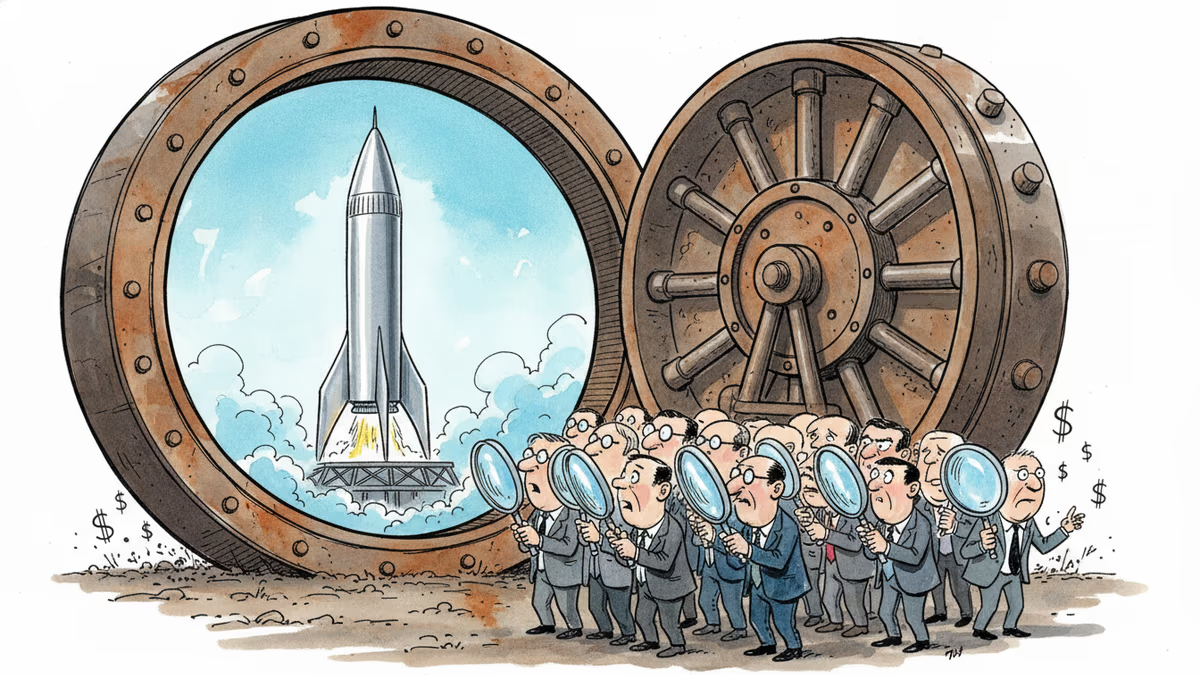
SpaceX filed a nearly 400-page S-1 with the SEC, targeting an IPO as early as June 12. Here's what the filing reveals—and what it doesn't.
American Airlines just signed Starlink for 500+ aircraft. It's not just about faster inflight internet — it's a calculated move in the run-up to what could be the largest IPO in history.
SpaceX's upgraded Starship V3 completed its first test flight, deploying 20 Starlink simulators but losing the Super Heavy booster. With an IPO weeks away, the stakes just got higher.
SpaceX's IPO filing puts AI at the center, claiming a $26.5 trillion market opportunity. But can Grok compete with OpenAI and Anthropic for enterprise customers?
SpaceX filed a nearly 400-page S-1 with the SEC, targeting an IPO as early as June 12. Here's what the filing reveals—and what it doesn't.
Thoughts
Share your thoughts on this article
Sign in to join the conversation