
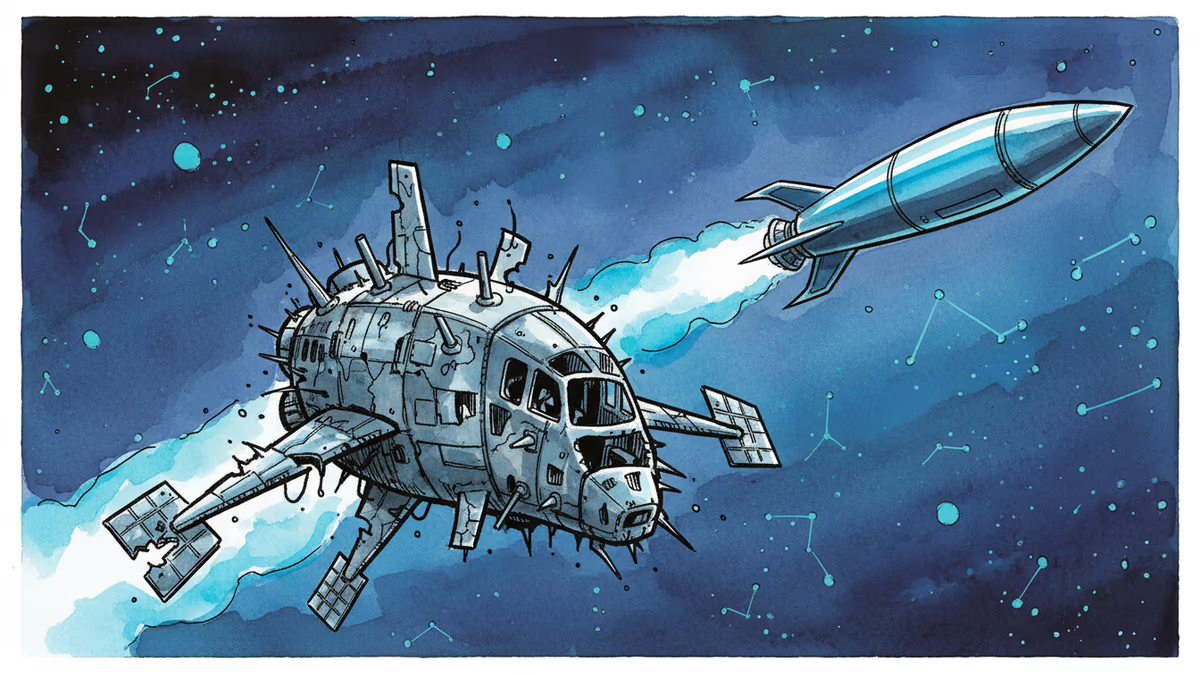
NASA Officially Calls Boeing Starliner a "Serious Failure
NASA classifies Boeing's 2024 Starliner crewed flight as Type A mishap, acknowledging both Boeing's failures and its own oversight shortcomings.
When $4.2 Billion Buys You a Ticket to Nowhere
NASA just did something it rarely does: admitted a major contractor's spacecraft was a serious failure. On Thursday, the agency officially classified Boeing's 2024 Starliner crewed test flight as a "Type A mishap" – the most severe failure category in NASA's book.
This isn't corporate speak for "room for improvement." Type A classification is reserved for incidents that pose direct threats to crew safety or cause major mission failures. The Starliner mission that was supposed to last 8 days stretched into 8 months, with astronauts stranded on the International Space Station until SpaceX could rescue them.
New NASA Administrator Jared Isaacman didn't mince words in his agency-wide letter: "We are taking ownership of our shortcomings." It's a rare moment of institutional humility from an agency that usually speaks in measured technical language.
Boeing's Defense vs NASA's Reality Check
Boeing has spent months downplaying the Starliner problems as "technical challenges" inherent in spaceflight testing. Company officials pointed to the spacecraft's safe return to Earth and emphasized the "valuable data" collected during the extended mission. Their narrative: this was learning, not failing.
NASA's Type A classification tells a different story. The helium leaks and thruster malfunctions weren't minor hiccups – they were mission-critical failures that endangered crew lives. While Boeing collected data, NASA's astronauts Butch Wilmore and Suni Williams remained stuck in orbit, dependent on SpaceX for eventual rescue.

The contrast with SpaceX couldn't be starker. Dragon capsules have completed 13 crewed missions with a 95% success rate under the same Commercial Crew Program. Same budget, same timeline, vastly different outcomes.
What This Means for the Space Economy
This failure reverberates far beyond Boeing's balance sheet. The Commercial Crew Program was NASA's bet on privatizing space transportation – letting companies compete rather than NASA building everything in-house. Starliner's struggles raise uncomfortable questions about that strategy.
For investors, the message is clear: space isn't just rocket science anymore, it's execution science. Boeing's aerospace heritage didn't prevent basic engineering failures. Meanwhile, SpaceX's startup mentality delivered reliability that traditional contractors couldn't match.
The ripple effects are already visible. Other space companies are scrambling to prove they're "more SpaceX than Boeing." Venture capital is flowing toward agile space startups rather than established aerospace giants. The $400 billion global space economy is rewarding speed over pedigree.
The Bigger Question: Can Old Space Learn New Tricks?
Boeing represents "Old Space" – the defense contractor model built on cost-plus contracts and methodical development cycles. SpaceX embodies "New Space" – rapid iteration, private funding, and tolerance for early failures in pursuit of long-term success.
The Starliner debacle suggests that institutional knowledge isn't enough anymore. Boeing's decades of experience building aircraft didn't translate to reliable spacecraft. NASA's own admission of "shortcomings" hints at deeper problems in how the agency oversees contractors.
For other industries watching this space race, there's a broader lesson: disruption doesn't respect legacy. Whether it's automotive, finance, or healthcare, established players can't assume their experience guarantees future success.
Authors
Related Articles

NASA's Artemis III has been redesigned as an Earth-orbit mission. SpaceX and Blue Origin say their landers won't be ready until late 2027. What does this mean for the future of lunar exploration?

Artemis II splashed down successfully in the Pacific, marking humanity's first crewed deep space mission in over 50 years. But the harder question isn't whether we can go back — it's why we should.
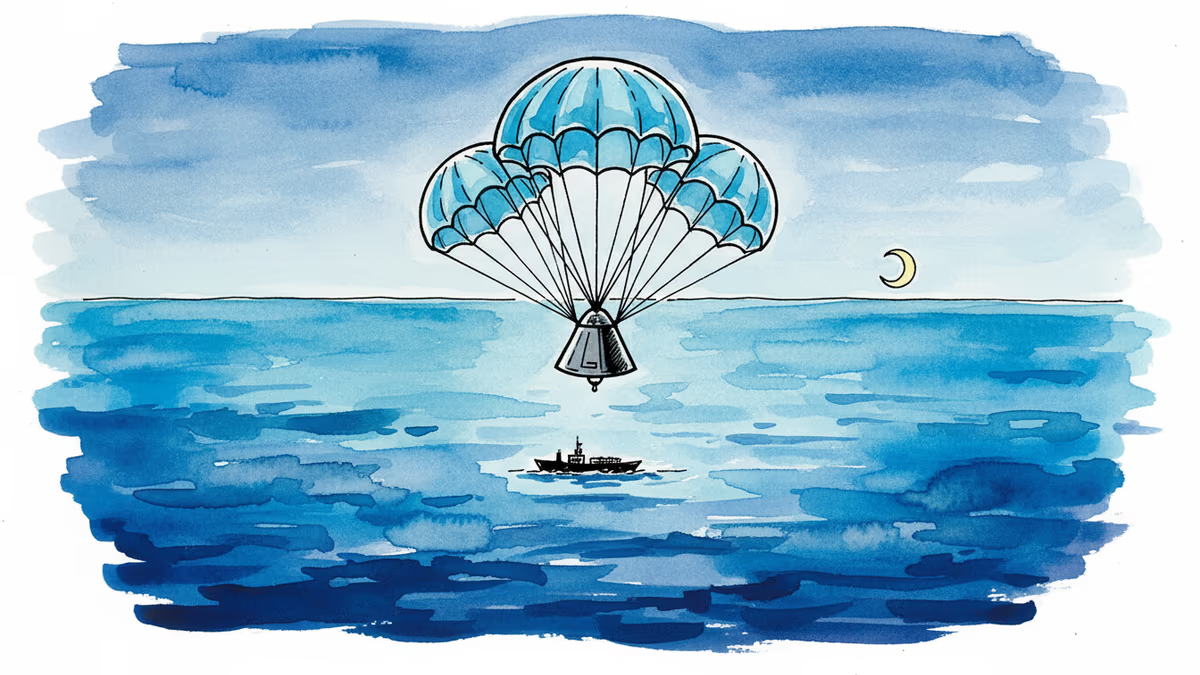
NASA's Orion capsule splashed down safely after humanity's first crewed lunar voyage in 54 years. The mission succeeded. Now the harder questions begin.
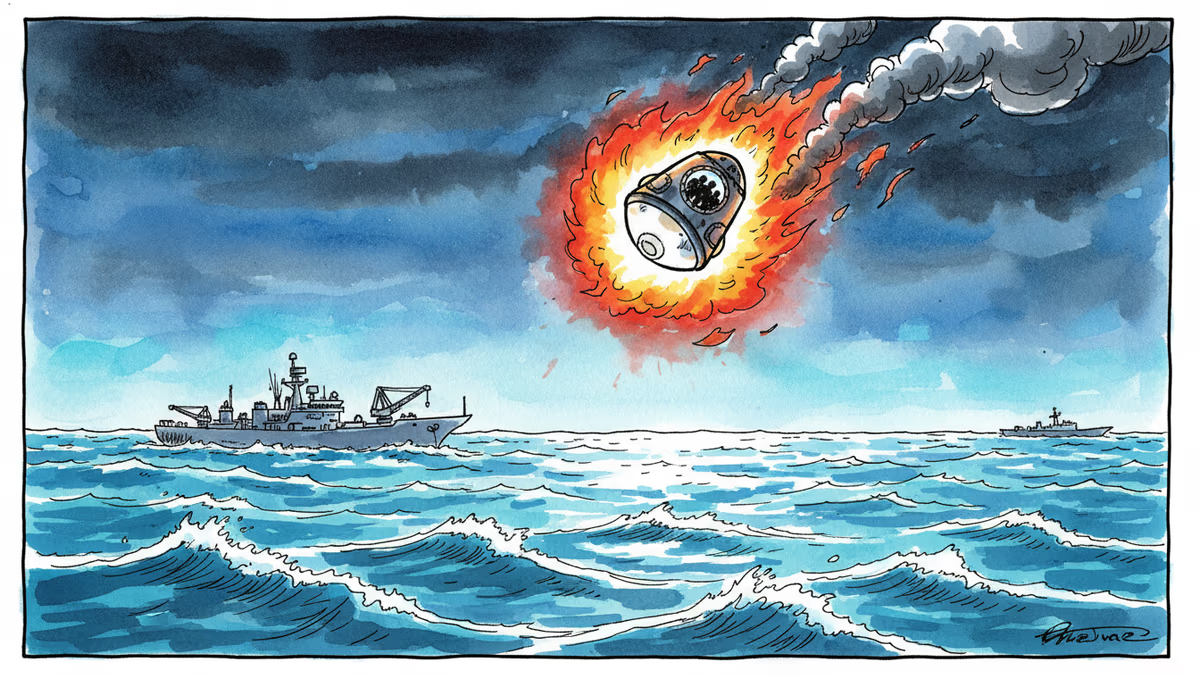
Artemis II's four astronauts are returning to Earth Friday night. The splashdown off Southern California isn't the anticlimax it sounds—it's the most technically perilous moment of the entire lunar journey.
NASA's Artemis III has been redesigned as an Earth-orbit mission. SpaceX and Blue Origin say their landers won't be ready until late 2027. What does this mean for the future of lunar exploration?
Artemis II splashed down successfully in the Pacific, marking humanity's first crewed deep space mission in over 50 years. But the harder question isn't whether we can go back — it's why we should.
NASA's Orion capsule splashed down safely after humanity's first crewed lunar voyage in 54 years. The mission succeeded. Now the harder questions begin.
Artemis II's four astronauts are returning to Earth Friday night. The splashdown off Southern California isn't the anticlimax it sounds—it's the most technically perilous moment of the entire lunar journey.
Thoughts
Share your thoughts on this article
Sign in to join the conversation