

Humanity's Farthest Journey in 56 Years Just Happened
The Artemis II crew broke Apollo 13's distance record from Earth, traveling over 248,655 miles into lunar orbit. Here's why this moment is more complicated than it looks.
The last time a human being was this far from Earth, the mission was failing.
A Record Born from Disaster, Broken by Design
On Monday, just before 2PM ET, the crew of Artemis II crossed 248,655 miles from Earth — surpassing the distance record set by the crew of Apollo 13 in April 1970. That record had stood for 56 years. The bitter irony: Apollo 13 never landed on the Moon. An oxygen tank explosion forced the crew to loop around the Moon and limp home. Their near-fatal detour became, accidentally, humanity's farthest reach into space.
Now, that record belongs to Artemis II — and unlike its predecessor, this mission is going exactly as planned.
The crew marked the moment not with a press release, but with an embrace. Floating in lunar orbit, the four astronauts held each other as NASA broadcast the scene live. They then announced a crater naming ceremony: one feature to honor the Orion spacecraft, named Integrity, and another for commander Reid Wiseman's late wife, Carroll. A national program, briefly, became something deeply personal.
Why This Moment Is Bigger Than the Number

The 248,655-mile figure is striking, but the real significance is what comes next. Artemis II is not a landing mission — it's a crewed test flight, validating the systems and trajectory that Artemis III will use to actually put boots on the Moon for the first time since 1972. Every kilometer logged by this crew is a data point that either greenlights or delays that next step.
The timing matters geopolitically, too. China's Chang'e program has been accelerating lunar exploration at a pace that has visibly influenced NASA's scheduling urgency. The US and China are both eyeing permanent lunar presence by the 2030s — and the Moon, it turns out, isn't just a scientific destination. It's a staging ground. Whoever establishes infrastructure there first shapes the rules of what comes after.
SpaceX's Starship — the designated Artemis landing vehicle — is also riding on this mission's success. A smooth Artemis II builds the case for Starship's crewed lunar debut. A problem would reopen every uncomfortable question about whether NASA's reliance on a single commercial provider was wise.
The View From Different Seats
For space advocates, this is exactly the narrative they've been waiting for: human beings pushing the frontier again, with tears and crater dedications and live-streamed embraces. The emotional texture of this mission has been carefully cultivated — and it's working.
For fiscal skeptics, the number that matters isn't 248,655 miles — it's the estimated $93 billion that the Artemis program has cost so far, according to NASA's Inspector General. That's a staggering sum for a program that, critics argue, has moved slower and cost more than originally projected. The question of whether crewed lunar exploration is the best use of that capital doesn't disappear because the mission is going well.
For the commercial space industry, Artemis II is a proof-of-concept that validates the public-private model NASA has been building toward. Lockheed Martin's Orion capsule and SpaceX's Starship lander represent a hybrid approach — government mission architecture, private hardware. If it works, it's a template. If it doesn't, it's a cautionary tale.
Authors
Related Articles

SpaceX's upgraded Starship V3 completed its first test flight, deploying 20 Starlink simulators but losing the Super Heavy booster. With an IPO weeks away, the stakes just got higher.
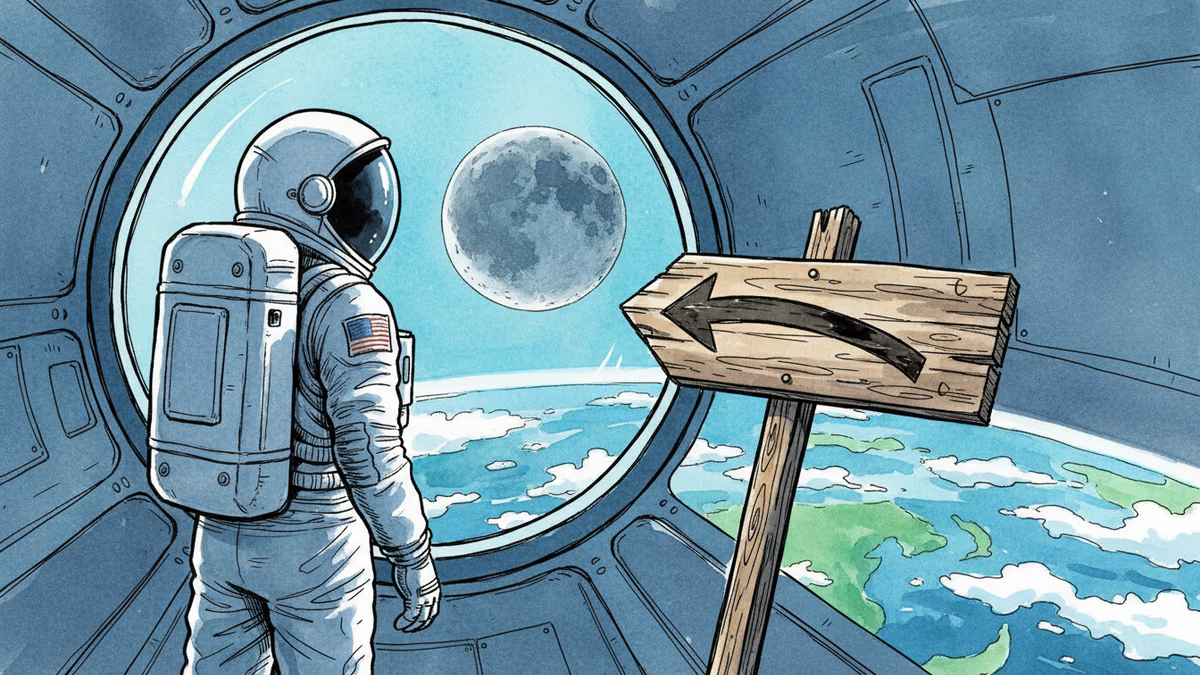
NASA's Artemis III has been redesigned as an Earth-orbit mission. SpaceX and Blue Origin say their landers won't be ready until late 2027. What does this mean for the future of lunar exploration?
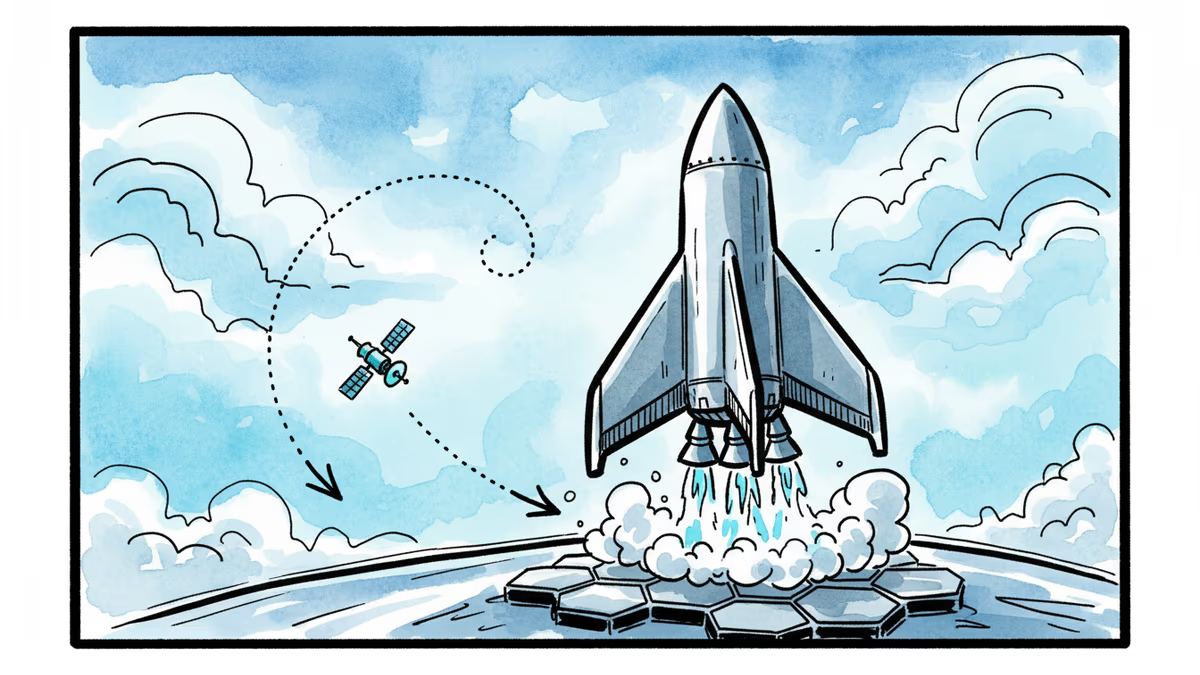
Blue Origin's New Glenn nailed its second booster landing, but AST SpaceMobile's BlueBird 7 satellite ended up in the wrong orbit—effectively useless. What this split outcome reveals about the space race.
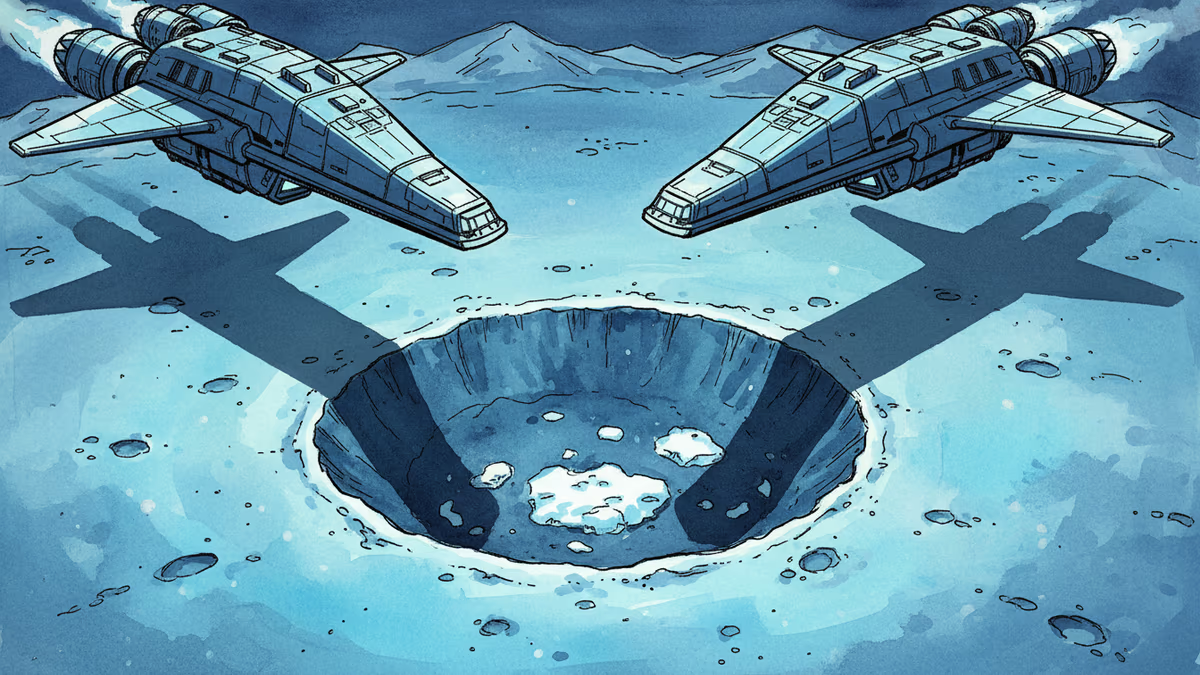
Blue Origin's Endurance and China's Chang'e 7 are both headed to the Moon's south pole this year. The race for lunar water ice is no longer theoretical.
SpaceX's upgraded Starship V3 completed its first test flight, deploying 20 Starlink simulators but losing the Super Heavy booster. With an IPO weeks away, the stakes just got higher.
NASA's Artemis III has been redesigned as an Earth-orbit mission. SpaceX and Blue Origin say their landers won't be ready until late 2027. What does this mean for the future of lunar exploration?
Blue Origin's New Glenn nailed its second booster landing, but AST SpaceMobile's BlueBird 7 satellite ended up in the wrong orbit—effectively useless. What this split outcome reveals about the space race.
Blue Origin's Endurance and China's Chang'e 7 are both headed to the Moon's south pole this year. The race for lunar water ice is no longer theoretical.
Thoughts
Share your thoughts on this article
Sign in to join the conversation