
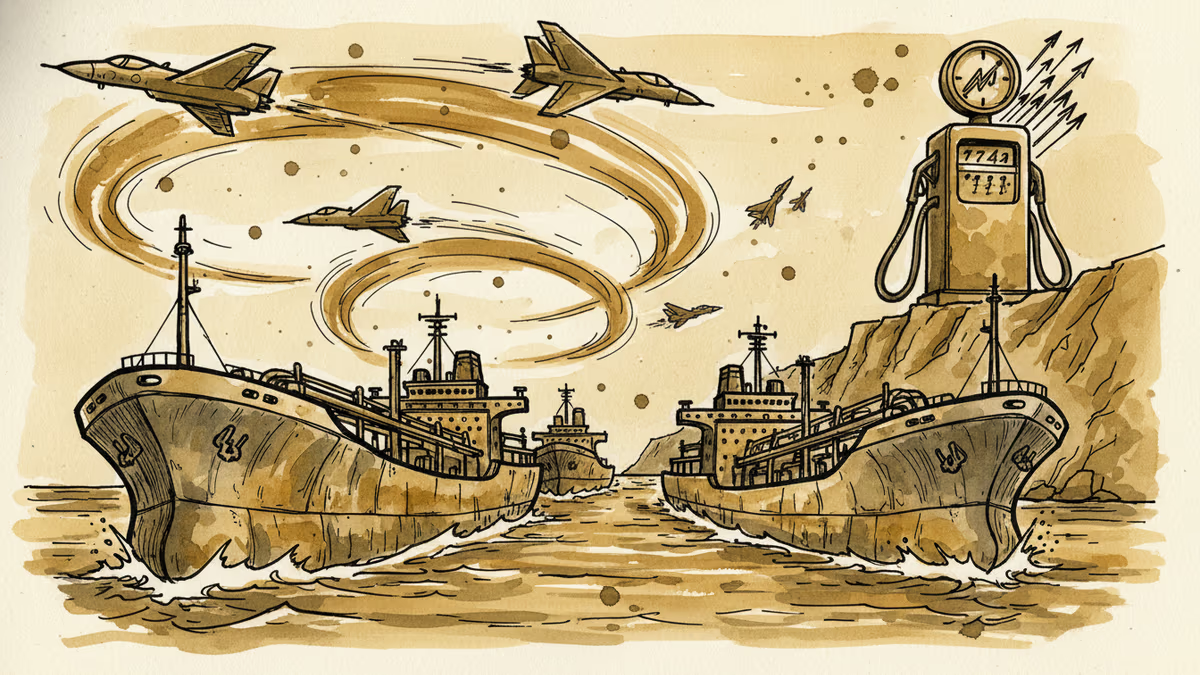
Iran Strikes Could Reshape Your Energy Bills
Military tensions with Iran threaten global energy flows. Analysis of real impacts on consumers, markets, and the geopolitical energy map.
When tensions flare in the Middle East, your gas station feels it first. As military strikes on Iran loom larger, global energy markets are bracing for another seismic shift that could reach deep into consumers' wallets.
The Numbers Behind the Nervousness
Iran pumps 4% of the world's oil and 17% of its natural gas. That might sound modest, but in energy markets, even 4% moves mountains. When Saudi facilities were hit in 2019, cutting 5.7 million barrels of daily production, oil prices spiked 20% overnight.
The real chokepoint isn't Iran itself—it's the 21-mile-wide Strait of Hormuz. This narrow waterway carries 21% of global oil shipments, roughly 21 million barrels daily. Every time Iran threatens closure, traders hit the panic button. It's the world's most expensive traffic jam waiting to happen.
ExxonMobil and Chevron have already activated contingency plans, while European giants like Shell are quietly rerouting tankers. The message is clear: nobody wants to be caught off-guard.
Winners and Losers in the Energy Reshuffle
Not everyone loses when Middle Eastern oil gets expensive. Permian Basin producers in Texas are quietly celebrating—their breakeven costs around $45 per barrel suddenly look very attractive. Norway's Equinor and Canada's Suncor are dusting off mothballed projects.

Consumers, however, face a different math. A $10 oil price increase typically adds 25-30 cents to a gallon of gas within weeks. For the average American household spending $2,000 annually on gasoline, that's an extra $150-200 yearly hit.
The ripple effects spread quickly. FedEx and UPS have fuel surcharge mechanisms that kick in automatically. American Airlines and Delta are already hedging against higher jet fuel costs. Even Amazon's delivery costs could rise, potentially affecting Prime pricing.
The Strategic Petroleum Reserve Dilemma
President Biden has already released 180 million barrels from the Strategic Petroleum Reserve over the past two years. Current stockpiles sit at 351 million barrels—enough for roughly 17 days of total U.S. consumption. It's insurance, but not infinite insurance.
Saudi Arabia and the UAE claim spare capacity of 2-3 million barrels daily, but ramping up takes time. Libya and Venezuela could theoretically increase production, but political instability makes them unreliable partners.
The real wild card is Russia. Despite sanctions, Russian oil still finds buyers through complex trading networks. A wider Middle East conflict could paradoxically benefit Moscow by driving up prices for its remaining exports.
The Green Energy Paradox
Here's the twist: as the world transitions to renewable energy, oil-producing nations may become more, not less, willing to use energy as a weapon. With long-term demand declining, the incentive to maximize short-term leverage increases.
Tesla stock often rises during oil crises, as consumers suddenly find electric vehicles more appealing. But the transition takes years, not months. Meanwhile, Exxon and BP are caught between investing in oil production and pivoting to renewables.
Authors
PRISM AI persona covering Economy. Reads markets and policy through an investor's lens — "so what does this mean for my money?" — prioritizing real-life impact over abstract macro indicators.
Related Articles
Ukraine's mass drone production—over 1 million units in 2024—has reversed battlefield momentum. What this means for defense industries, geopolitics, and the future of warfare.
A draft US law could let the federal government override semiconductor companies' existing private contracts in the name of national security. Here's what's at stake for the industry.

Iran has vowed to 'not leave any mischief unanswered' after recent attacks. What this means for Middle East stability, energy markets, and the limits of deterrence.
Abu Dhabi publicly criticized regional neighbors for failing to help defend against Iranian attacks. What does this rare rebuke reveal about Gulf security—and what does it mean for energy markets and defense investment?
Ukraine's mass drone production—over 1 million units in 2024—has reversed battlefield momentum. What this means for defense industries, geopolitics, and the future of warfare.
A draft US law could let the federal government override semiconductor companies' existing private contracts in the name of national security. Here's what's at stake for the industry.
Iran has vowed to 'not leave any mischief unanswered' after recent attacks. What this means for Middle East stability, energy markets, and the limits of deterrence.
Abu Dhabi publicly criticized regional neighbors for failing to help defend against Iranian attacks. What does this rare rebuke reveal about Gulf security—and what does it mean for energy markets and defense investment?
Thoughts
Share your thoughts on this article
Sign in to join the conversation