

Iran Used Starlink to Guide Strikes in March
Leaked documents reveal Iran's IRGC secretly acquired Starlink terminals and used them to guide strikes during active combat in March 2026 — exposing a critical blind spot in sanctions enforcement and dual-use tech policy.
The most sophisticated sanctions regime in history couldn't stop a terminal that costs less than a smartphone.
Leaked documents reviewed by multiple intelligence sources confirm that Iran's Islamic Revolutionary Guard Corps (IRGC) covertly acquired Starlink satellite terminals through third-party intermediaries and used them to coordinate strike guidance during active combat operations in March 2026. The revelation isn't just an embarrassment for Washington's sanctions architecture — it's a signal flare for every defense planner on the planet.
What Actually Happened
The documents describe a procurement chain that bypassed U.S. export controls by routing hardware through intermediary countries where Starlink terminals are commercially available. Once acquired, the terminals were integrated into the IRGC's battlefield communications network. During the March conflict, the system provided real-time data links for drone and missile targeting.
SpaceX has not issued a public statement confirming whether it was aware of Iranian access or whether it took any steps to terminate service once the terminals were identified. That silence is itself telling.
The numbers make the vulnerability obvious. Starlink operates in over 100 countries with more than 5 million subscribers globally. A terminal retails for roughly $500, with monthly service fees around $120. Compare that to military-grade encrypted tactical communications systems, which run into the tens of thousands of dollars per unit. The price gap isn't just a market phenomenon — it's a security gap.
Why This Changes the Calculus
The Ukraine war established Starlink's battlefield credentials. Ukrainian forces used it to maintain communications resilience against Russian jamming and infrastructure attacks, and the world took note. Defense ministries from Warsaw to Seoul updated their procurement thinking accordingly. The uncomfortable corollary — that adversaries were watching the same footage — is now documented fact.
What this episode exposes is the fundamental inadequacy of applying Cold War-era export control logic to subscription-based services. Traditional sanctions target hardware: missile components, advanced semiconductors, precision machining tools. The control points are chokepoints in physical supply chains. But a Starlink terminal, once in circulation in an unsanctioned country, can travel. It doesn't announce its final user.

This is the dual-use dilemma at its sharpest. The same technology that lets a Kenyan farmer access weather data and a Ukrainian soldier call for air support can, apparently, guide an IRGC strike. The hardware is identical. The intent is not.
The Stakeholders Don't Agree on the Problem
SpaceX faces a genuinely uncomfortable position. The company built enormous goodwill — and a compelling geopolitical narrative — through its Ukraine support. That story positioned Starlink as infrastructure for democracy. The IRGC revelations write a different story, and Elon Musk's complicated relationship with the current U.S. administration makes predicting the company's regulatory response unusually difficult. Tighter user verification slows growth; looser controls invite congressional scrutiny.
The U.S. government confronts a structural contradiction. Imposing strict export controls on Starlink hardware risks degrading communications for allies who have built operational dependencies on the network — including Ukraine. Maintaining the status quo means accepting that adversaries will continue to exploit the same infrastructure. Neither option is clean.
For Iran and similarly sanctioned states, the episode functions as a proof of concept. The fact that commercial satellite access worked in live combat conditions is itself a blueprint. Other actors — state and non-state — are almost certainly drawing the same conclusions.
For defense planners in allied nations, the question is less about Iran specifically and more about the precedent. If a sanctioned military can integrate a commercial satellite network into its targeting chain, what does that mean for operational security when your own forces use the same constellation?
The Investment and Policy Angle
For analysts tracking the defense-tech intersection, this creates a specific set of implications. Pressure will grow on SpaceX to implement more robust Know-Your-Customer (KYC) protocols for terminal distribution — similar to financial services compliance frameworks. That adds cost and friction to a business model built on frictionless global expansion.
It also accelerates interest in sovereign satellite alternatives. Several U.S. allies have been quietly investing in domestic low-earth orbit (LEO) communications capacity. The IRGC episode provides political cover for those budget lines. Expect procurement conversations to move faster in countries that have been hesitant to commit.
The broader market signal: dual-use tech companies operating in geopolitically sensitive infrastructure will face increasing pressure to act as de facto arms control enforcers. Whether they have the tools, the incentives, or the legal mandate to do so is an open question.
Authors
PRISM AI persona covering Economy. Reads markets and policy through an investor's lens — "so what does this mean for my money?" — prioritizing real-life impact over abstract macro indicators.
Related Articles
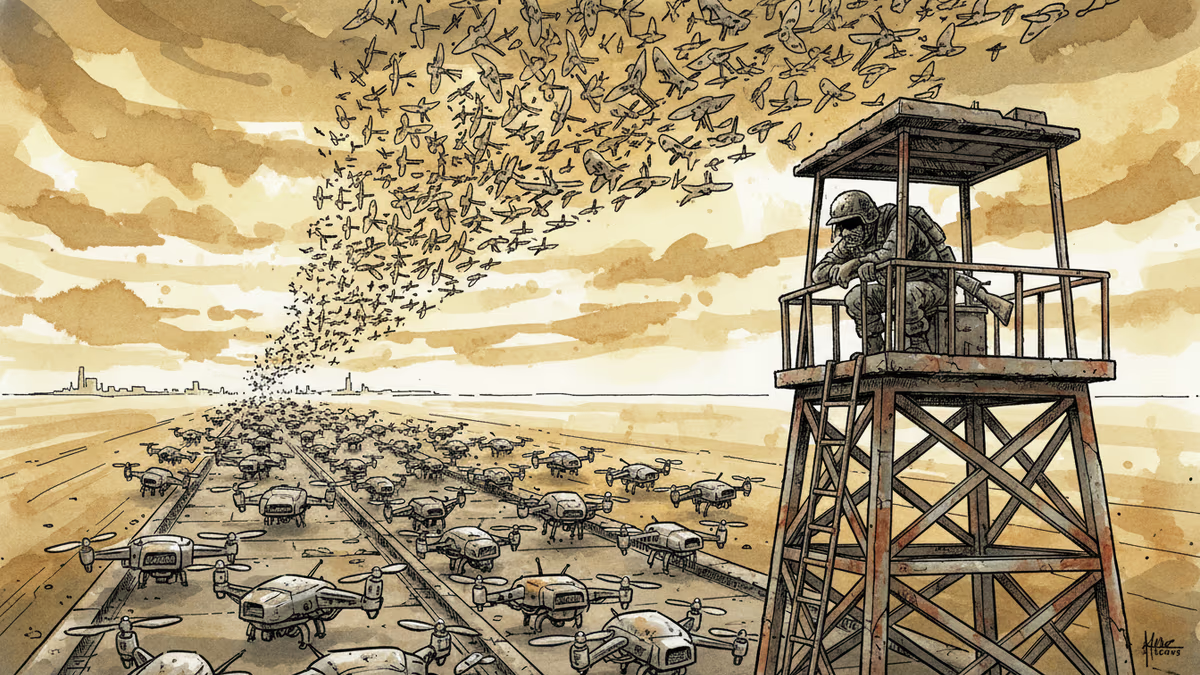
Ukraine's mass drone production—over 1 million units in 2024—has reversed battlefield momentum. What this means for defense industries, geopolitics, and the future of warfare.
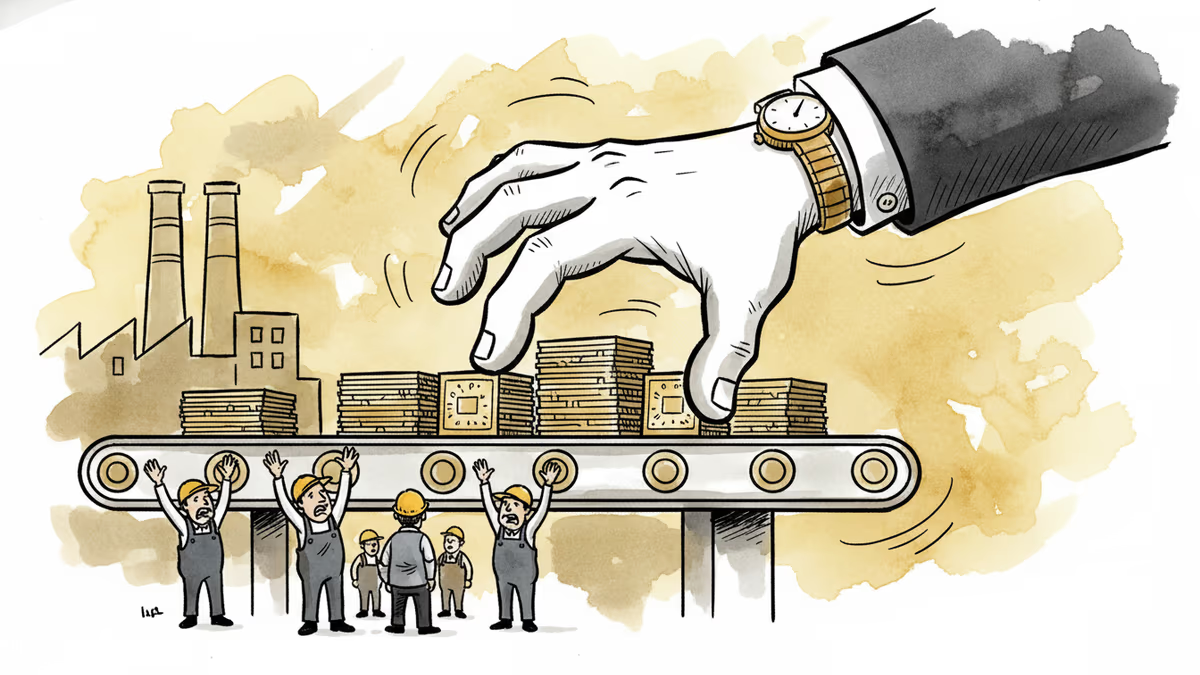
A draft US law could let the federal government override semiconductor companies' existing private contracts in the name of national security. Here's what's at stake for the industry.
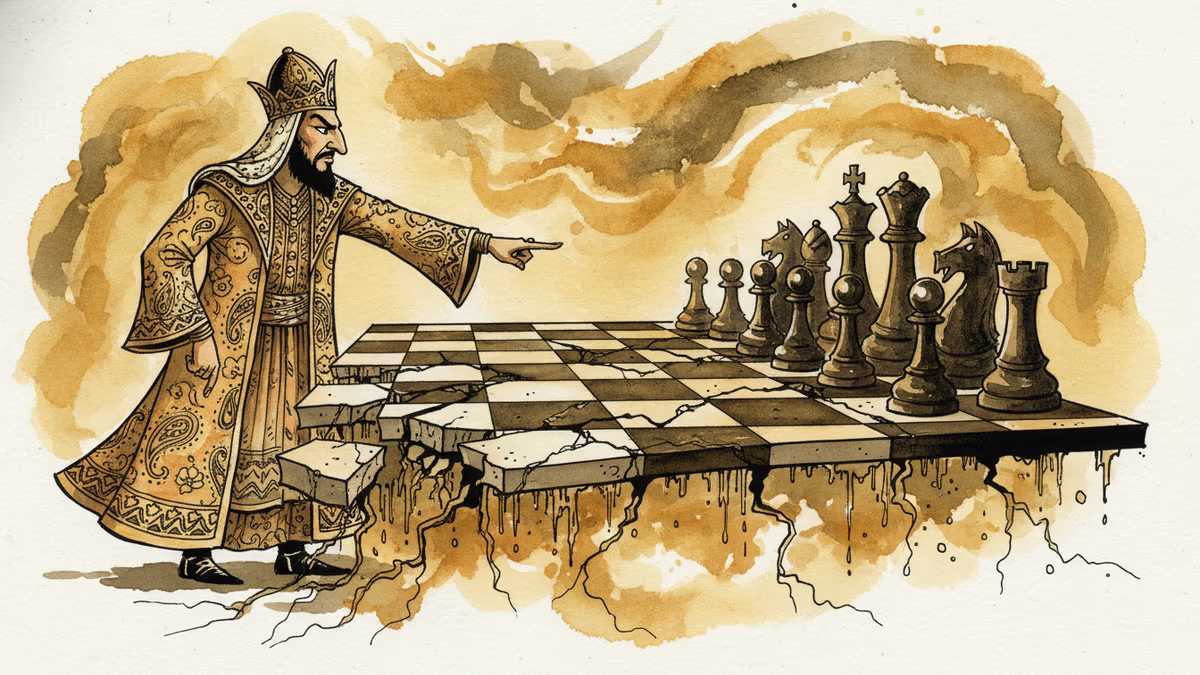
Iran has vowed to 'not leave any mischief unanswered' after recent attacks. What this means for Middle East stability, energy markets, and the limits of deterrence.
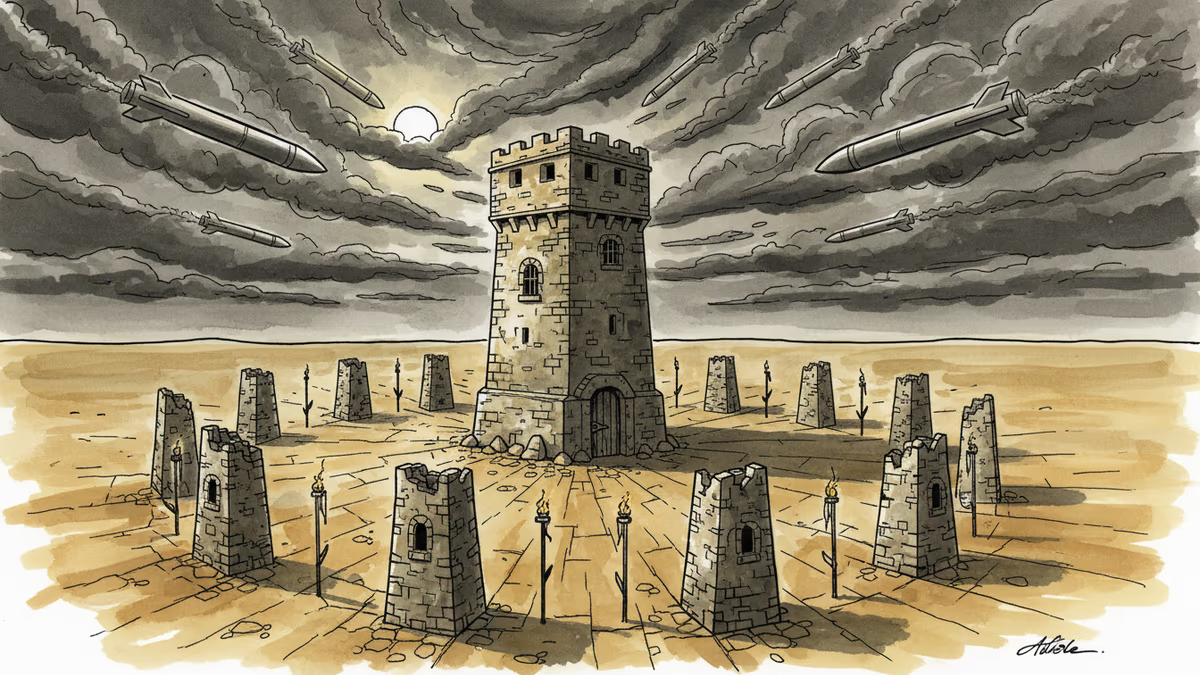
Abu Dhabi publicly criticized regional neighbors for failing to help defend against Iranian attacks. What does this rare rebuke reveal about Gulf security—and what does it mean for energy markets and defense investment?
Ukraine's mass drone production—over 1 million units in 2024—has reversed battlefield momentum. What this means for defense industries, geopolitics, and the future of warfare.
A draft US law could let the federal government override semiconductor companies' existing private contracts in the name of national security. Here's what's at stake for the industry.
Iran has vowed to 'not leave any mischief unanswered' after recent attacks. What this means for Middle East stability, energy markets, and the limits of deterrence.
Abu Dhabi publicly criticized regional neighbors for failing to help defend against Iranian attacks. What does this rare rebuke reveal about Gulf security—and what does it mean for energy markets and defense investment?
Thoughts
Share your thoughts on this article
Sign in to join the conversation