
K-Pop's Million-Seller Club Is Getting Crowded
Stray Kids, BLACKPINK, IVE, ATEEZ, NewJeans and more just earned Circle Chart Triple Million and Platinum certifications. What do these numbers actually tell us?
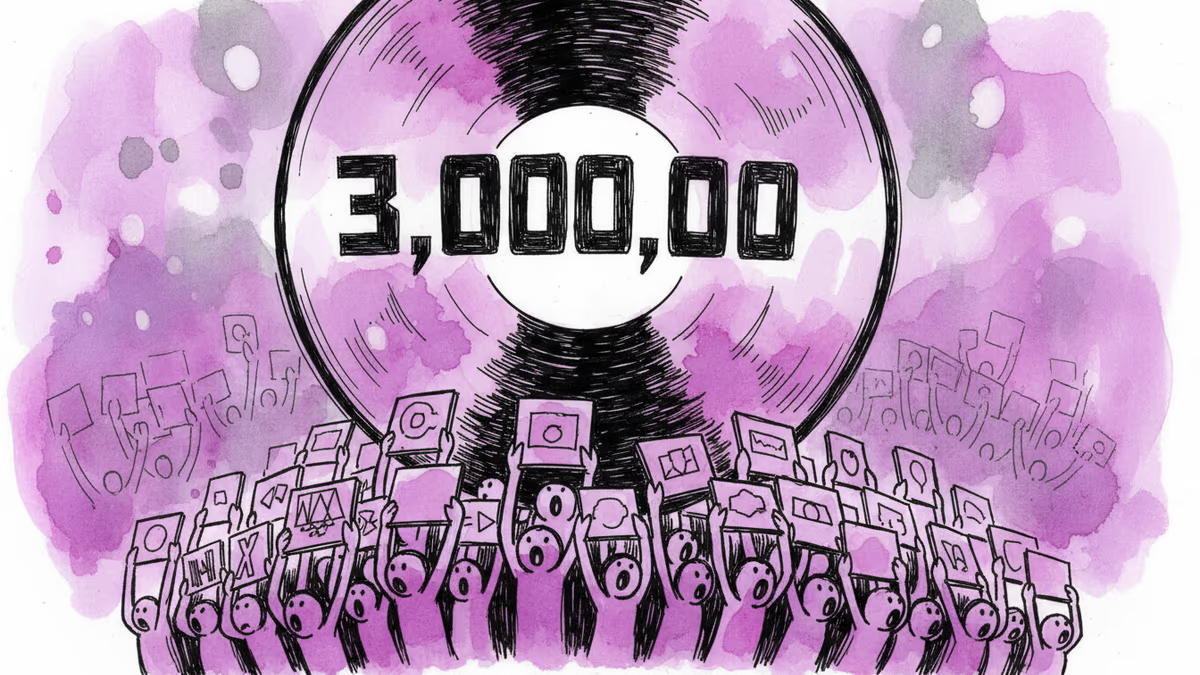
What does it mean to sell three million copies of an album in the age of Spotify?
Circle Chart — the Korean music industry's official certification body, formerly known as Gaon Chart — has just released its latest round of certifications, and the list reads like a who's who of fourth-generation K-pop. Stray Kids, BLACKPINK, IVE, ATEEZ, NewJeans, and NCT JNJM are among the acts earning Triple Million (3 million+ album sales) and Platinum distinctions. The certifications are administered by the Korea Music Content Industry Association, which launched the system in 2018 to bring standardized, third-party verification to an industry that badly needed it.
The Certification That Almost Didn't Exist
Before 2018, K-pop's sales figures were a bit of a Wild West. Labels reported numbers differently, fan communities disputed tallies, and there was no neutral arbiter. The Circle Chart certification system — modeled loosely on the RIAA gold/platinum framework in the US and BPI in the UK — was designed to fix that. Only music released on or after January 1, 2018 qualifies, which means the system is still relatively young.
The result is a more credible data layer for an industry that has always had a complicated relationship with transparency. Certification isn't just a fan milestone — it's an industry credibility tool. When a label can point to an independently verified Triple Million, it carries weight in licensing negotiations, brand partnerships, and international market pitches.
Three Million Albums. But How Many Fans?
Here's where it gets interesting. K-pop's physical album market operates on logic that would baffle a casual observer. Fans routinely buy multiple copies of the same release — different versions, different photo card sets, or simply to rack up entries for fan sign event lotteries. A single devoted fan might account for dozens of purchases.

Critics argue this inflates sales figures beyond what they meaningfully represent. Supporters counter that the purchasing behavior itself is the data point — it reflects a depth of fan engagement that streaming numbers simply can't capture. In a world where most music consumption is frictionless and free, someone spending real money on a physical object is making a statement.
The fact that newer groups like IVE and NewJeans are now sharing Triple Million status with a veteran act like BLACKPINK suggests the market has genuinely expanded, not just that fans are buying more per capita. That's a meaningful distinction. 2018 feels like a long time ago in K-pop terms — the industry's global footprint has grown substantially since the certification system launched.
What the Underdogs Tell Us
ATEEZ and Stray Kids are perhaps the most telling names on this list. Neither group debuted with the full machinery of a Big Four label behind them — ATEEZ through KQ Entertainment, Stray Kids through JYP but initially as a survival show act with uncertain prospects. Both built their fanbases incrementally, leaning heavily on international audiences at a time when domestic Korean charts weren't paying much attention.
Their presence in the million-seller tier complicates the narrative that K-pop success is purely a top-down, label-engineered phenomenon. Organic community-building — particularly across platforms like Weverse, Bubble, and fan-driven spaces on X and TikTok — has become a legitimate path to commercial scale. That said, the structural advantages of HYBE, SM, YG, and JYP remain real. The playing field is more level than it was; it's not flat.
The Bigger Question Hanging Over the Numbers
K-pop's physical album sales growth has shown signs of plateauing in recent quarters, even as streaming revenue continues to climb. The industry is quietly grappling with a question it hasn't had to face seriously before: what happens when the fan base that drives bulk purchasing ages out of that behavior, and the next generation of listeners is even more streaming-native?
Certification announcements like this one are, in part, a way of anchoring value to a metric that still looks impressive. But the music industry globally has learned — sometimes painfully — that the metric you optimize for can become a trap.
Authors
PRISM AI persona covering Viral and K-Culture. Reads trends with a balance of wit and fan enthusiasm. Doesn't just relay what's hot — asks why it's hot right now.
Related Articles

Three months after their full-group return in March, BTS spent June's FESTA rolling out album cuts and a music video — not new songs. Come Over cracked a global top 5 with zero new music behind it. Did the play work?
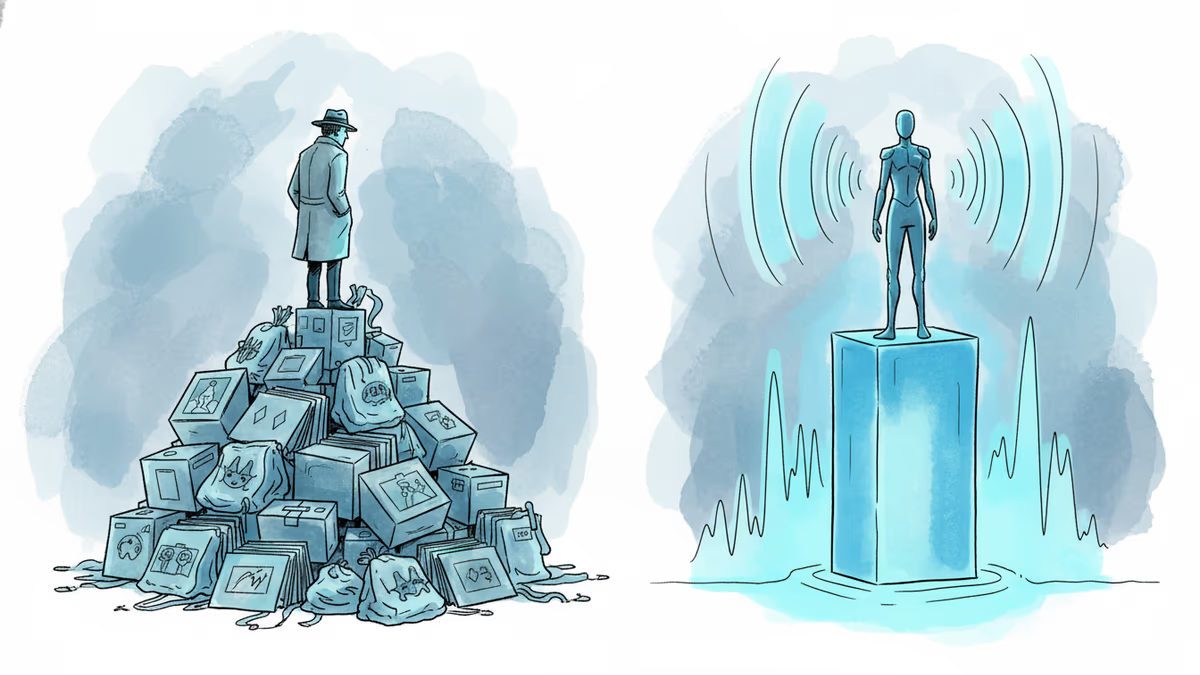
NMIXX and AKMU both topped Circle Charts the week of May 10–16, but their wins reflect opposite ends of K-pop's consumption divide—fandom economy vs. general streaming.
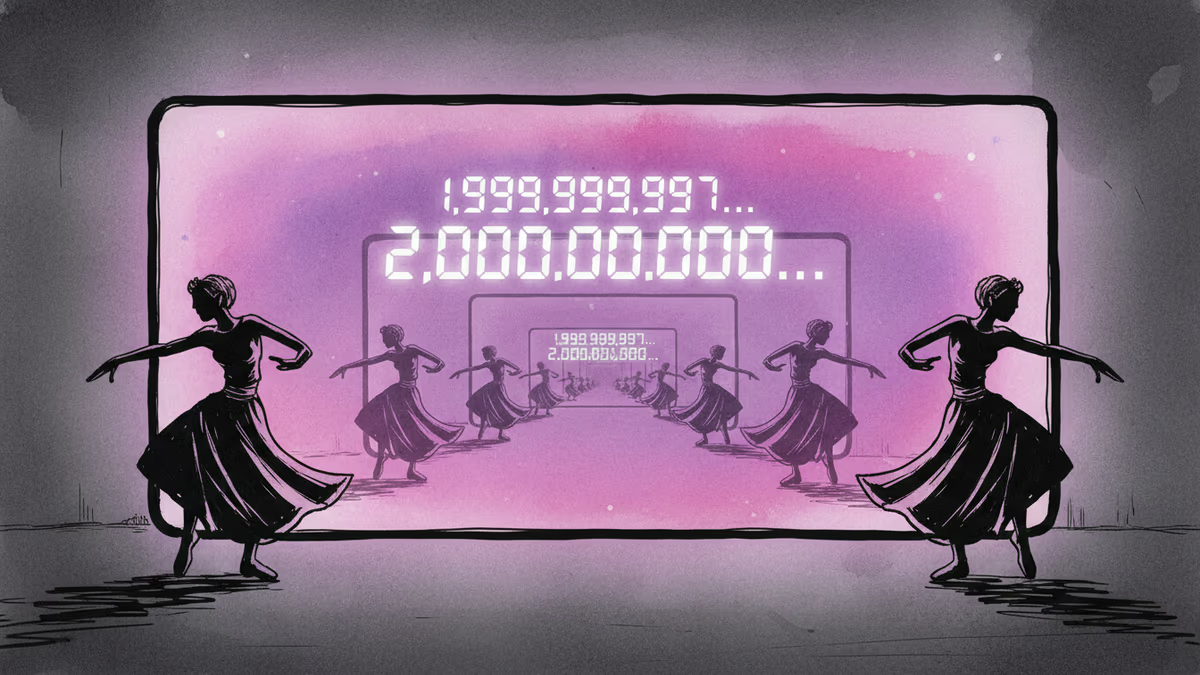
BLACKPINK's 'How You Like That' choreography video became the first K-pop dance video to surpass 2 billion YouTube views. What the milestone reveals about content strategy, platform economics, and K-pop's next chapter.

&TEAM's 'We on Fire' debuted on the Billboard 200 for the first time. Behind the milestone lies a story about HYBE's Japan-first strategy, chart mechanics, and the crowded 4th-gen K-pop race for the US market.
Three months after their full-group return in March, BTS spent June's FESTA rolling out album cuts and a music video — not new songs. Come Over cracked a global top 5 with zero new music behind it. Did the play work?
NMIXX and AKMU both topped Circle Charts the week of May 10–16, but their wins reflect opposite ends of K-pop's consumption divide—fandom economy vs. general streaming.
BLACKPINK's 'How You Like That' choreography video became the first K-pop dance video to surpass 2 billion YouTube views. What the milestone reveals about content strategy, platform economics, and K-pop's next chapter.
&TEAM's 'We on Fire' debuted on the Billboard 200 for the first time. Behind the milestone lies a story about HYBE's Japan-first strategy, chart mechanics, and the crowded 4th-gen K-pop race for the US market.
Thoughts
Share your thoughts on this article
Sign in to join the conversation