
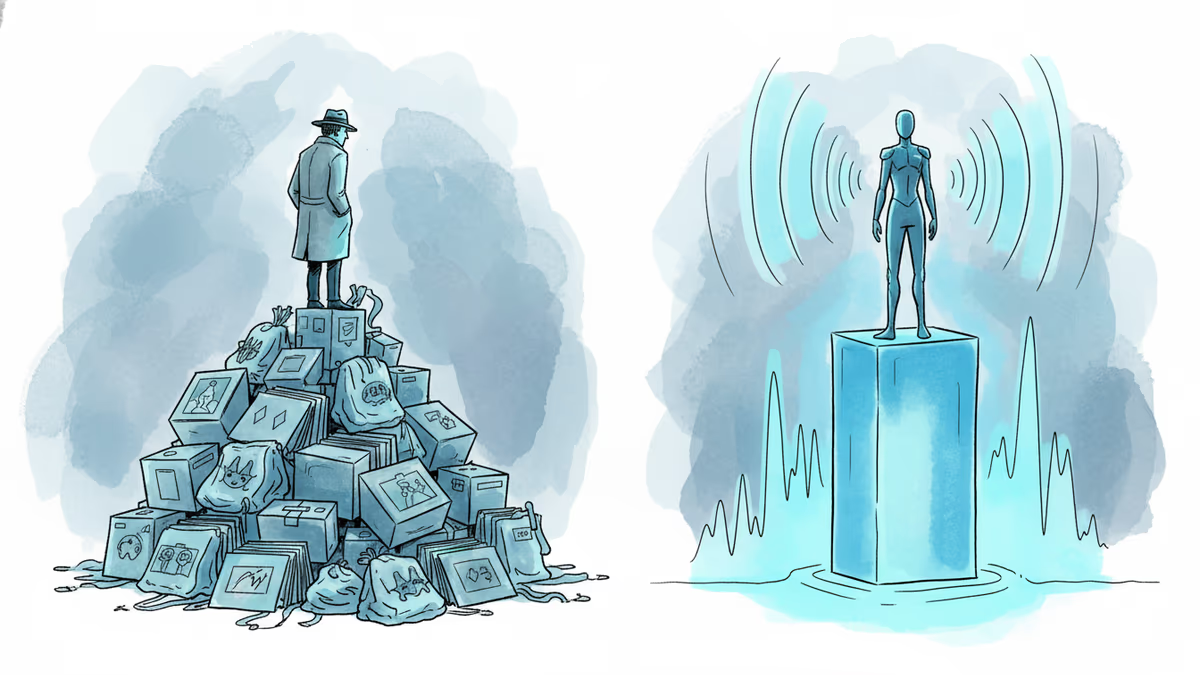
Two K-Pop Double Crowns, Two Completely Different Music Markets
NMIXX and AKMU both topped Circle Charts the week of May 10–16, but their wins reflect opposite ends of K-pop's consumption divide—fandom economy vs. general streaming.
The same chart week. The same leaderboard. Two number ones that have almost nothing in common.
Circle Chart's rankings for May 10–16 handed double crowns to two acts whose paths to the top couldn't be more structurally different. NMIXX swept the physical album chart and the digital download chart with their new EP "Heavy Serenade." AKMU held firm at No. 1 on both the overall digital chart and the streaming chart with "Paradise of Rumors." A simultaneous double crown from two acts in the same week is unusual enough. But what makes this week's snapshot genuinely worth reading is what each set of numbers actually measures—and what that gap says about where K-pop is heading.
Fandom Math vs. General Audience Pull
NMIXX's physical chart performance tells a familiar story. "Heavy Serenade" placed at No. 1 in its regular version and separately at No. 5 in its POCA (photocard-included) version. One EP, two SKUs, two chart positions. This is the version-splitting strategy that major K-pop labels have refined since roughly 2022: release the same music in multiple physical formats, each with different collectible inserts, to multiply purchase incentives within the same fanbase. It's less about music consumption and more about merchandise ownership dressed in album packaging. The chart result is real, but it's measuring fan loyalty converted into purchase frequency.
AKMU's double crown works on entirely different logic. The overall digital chart and streaming chart are driven by repeat plays from general listeners—people who are not tracking comeback schedules or buying multiple versions of anything. "Paradise of Rumors" topped both, and a second AKMU track, "Joy, Sorrow, A Beautiful Heart," held at No. 4 on both simultaneously. The sibling duo has spent over a decade building what is genuinely rare in the current K-pop landscape: a large audience that isn't organized as a fandom. Their streaming dominance is a product of that, and it's increasingly the exception rather than the rule.
The Wider Chart Picture

Zoom out to the full week and the industry's current pressure points come into focus.
On the Global K-Pop Chart, BTS's "SWIM" held No. 1, with HUNTR/X's "Golden"—from the KPop Demon Hunters film soundtrack—at No. 2. A soundtrack track from an animated K-pop film sitting at the second spot on a global chart isn't just a curiosity. It reflects a deliberate expansion of K-pop IP into film and animation, a strategy that labels have been watching Hybe and others develop. Music tied to narrative universes tends to have longer chart legs because it gets replayed in context, not just as a standalone single.
Debut act FLARE U entered both the physical album chart (No. 4) and the download chart (No. 4) simultaneously with their first release. Breaking into the top five on debut week—in both physical and digital formats—suggests pre-built fanbase infrastructure before the first note was publicly released. That's increasingly standard practice: labels now run pre-debut social media campaigns for months, sometimes over a year, specifically to ensure chart-ready fandom size at launch.
ILLIT continued their four-consecutive-week run at the top of the Social Chart 3.0, which aggregates YouTube views, TikTok engagement, and social mentions. The Social Chart often diverges from the streaming chart, and ILLIT is a clear example of why: their content strategy is calibrated for algorithmic virality—short-form video, choreography clips, challenge formats—rather than passive listening. NMIXX jumped 42 ranks to enter the Social Chart at No. 5 this week, the predictable spike that follows a major comeback as fan communities flood platforms with reaction content.
What Two Number Ones Actually Measure
The coexistence of NMIXX and AKMU at the top of different charts isn't a contradiction—it's a map of K-pop's bifurcated market. Physical and download charts increasingly measure the organizational capacity of fandoms. Streaming and overall digital charts measure something closer to cultural penetration with the general public. These two things used to be more correlated. They're not anymore.
For global fans, this matters because it affects how you read chart success. A No. 1 on the physical chart in 2026 tells you something about a label's merchandise and fan mobilization infrastructure. A No. 1 on the streaming chart tells you something about whether a song actually reached people who weren't already looking for it.
This content is AI-generated based on source articles. While we strive for accuracy, errors may occur. We recommend verifying with the original source.
Related Articles
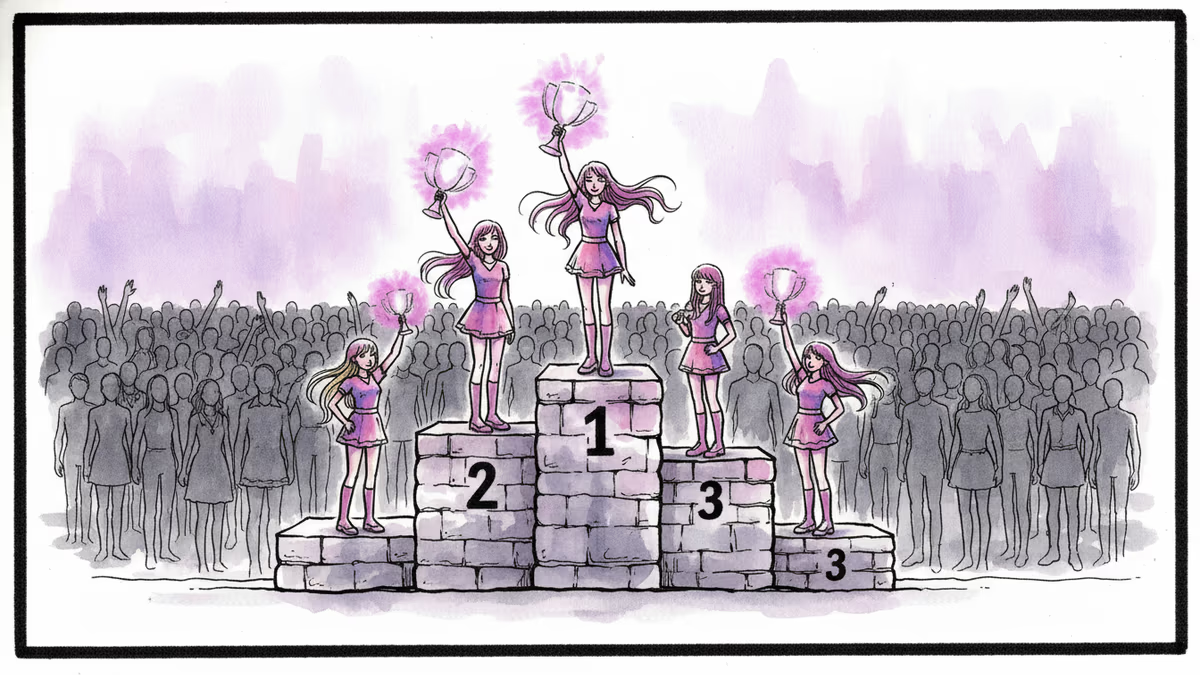
NMIXX claimed their 2nd win for 'Heavy Serenade' on Music Bank, beating ILLIT with 9,582 points. Here's what the win reveals about 4th-gen girl group competition.
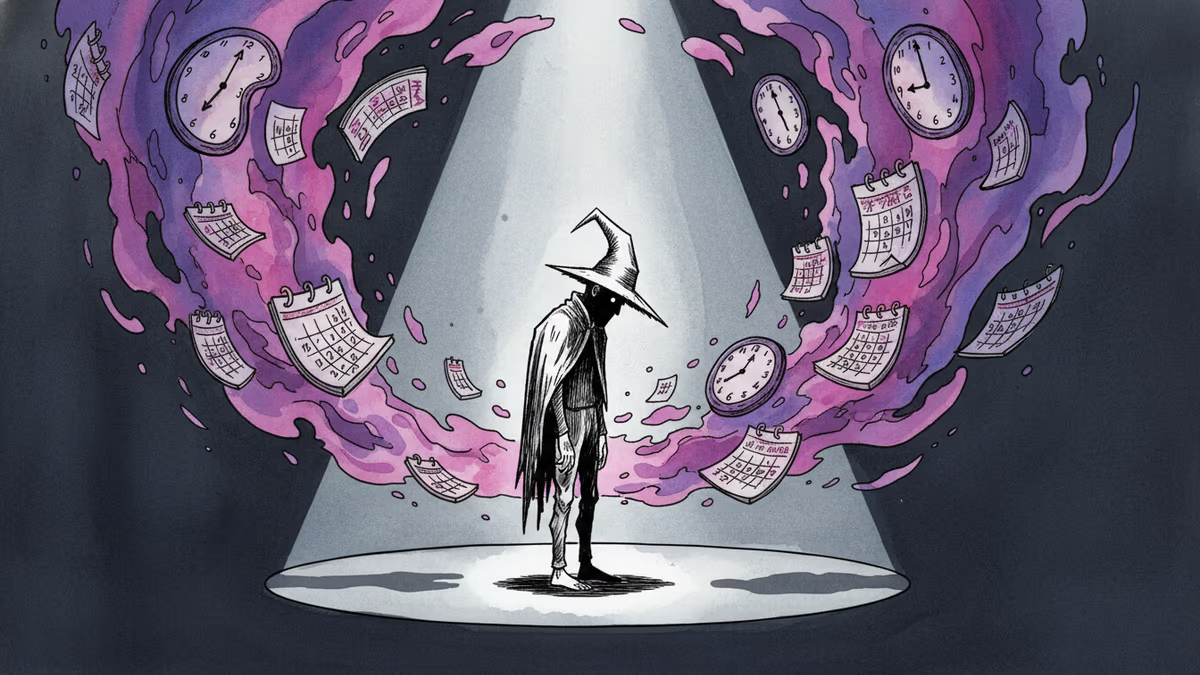
LE SSERAFIM's Kim Chaewon is taking a health break from scheduled activities. Behind SOURCE MUSIC's brief statement lies a pattern the K-pop industry rarely examines out loud.
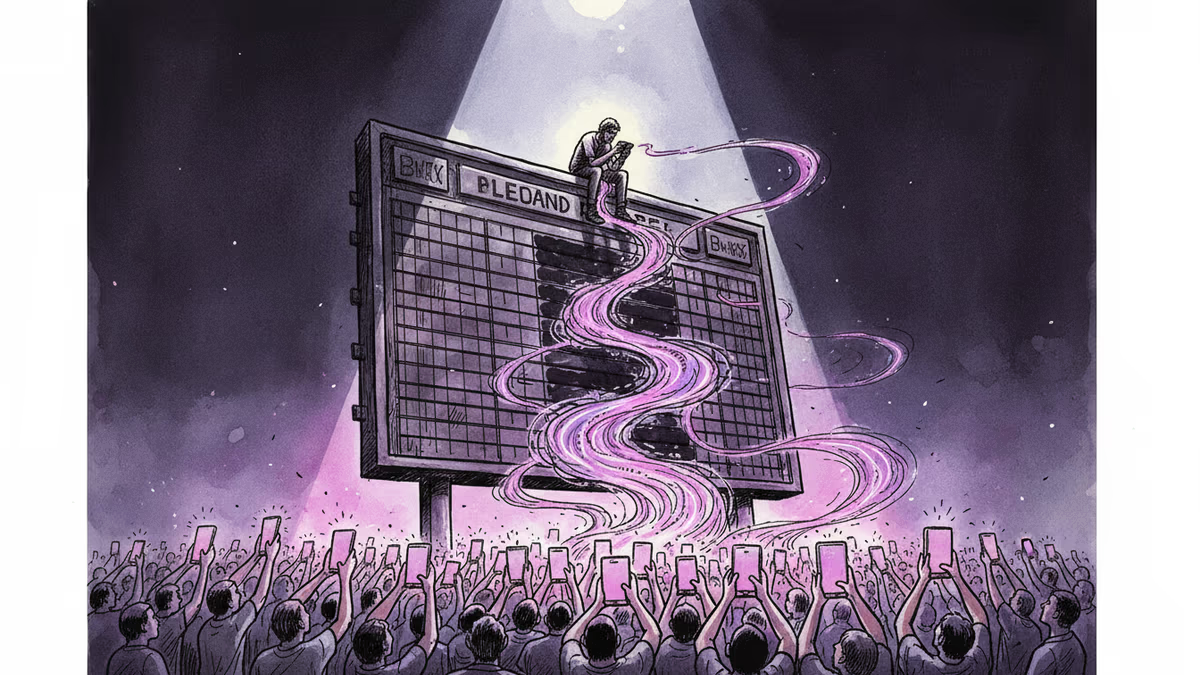
BTS's Jimin topped South Korea's May boy group member brand reputation rankings. But what does a big data score of 755 idols actually measure — and who benefits?

CORTIS claimed a 4th music show win and Triple Crown for "REDRED" on M Countdown, beating BABYMONSTER. Here's what the numbers reveal about K-pop's scoring architecture.
NMIXX claimed their 2nd win for 'Heavy Serenade' on Music Bank, beating ILLIT with 9,582 points. Here's what the win reveals about 4th-gen girl group competition.
LE SSERAFIM's Kim Chaewon is taking a health break from scheduled activities. Behind SOURCE MUSIC's brief statement lies a pattern the K-pop industry rarely examines out loud.
BTS's Jimin topped South Korea's May boy group member brand reputation rankings. But what does a big data score of 755 idols actually measure — and who benefits?
CORTIS claimed a 4th music show win and Triple Crown for "REDRED" on M Countdown, beating BABYMONSTER. Here's what the numbers reveal about K-pop's scoring architecture.
Thoughts
Share your thoughts on this article
Sign in to join the conversation