

MicroStrategy's 100th Bitcoin Buy Hits Milestone—With $7B in Losses
MicroStrategy celebrates its 100th bitcoin purchase announcement while sitting on $7 billion in unrealized losses. Is Saylor's strategy genius or folly?
The Milestone Nobody's Celebrating
MicroStrategy just hit a peculiar milestone. The 100th bitcoin purchase announcement since August 2020. Executive Chairman Michael Saylor marked the occasion with a "cheeky" social media post, but the numbers tell a sobering story.
Last week's acquisition: 592 bitcoin for $39.8 million, funded entirely through stock sales. The company now holds 717,722 bitcoin purchased at an average price of $76,020 per coin. Total investment: $54.56 billion.
Here's the uncomfortable math: With bitcoin trading around $66,000, that's roughly $10,000 loss per coin. Total unrealized loss: approximately $7 billion.
When Corporate Strategy Meets Crypto Volatility
Saylor's bitcoin-first approach has been nothing if not consistent. For nearly four years, MicroStrategy has been converting corporate cash and issuing stock to buy bitcoin, treating it as a treasury asset rather than speculative investment.

But consistency doesn't guarantee success. MicroStrategy shares have plummeted 50% year-over-year and dropped another 2.5% in pre-market trading following the announcement. The company has essentially become a leveraged bitcoin play disguised as a business intelligence firm.
Even last week's purchase price of $67,286 per coin was above current market levels. It raises an uncomfortable question: Is this dollar-cost averaging or throwing good money after bad?
The Shareholder Dilemma
For traditional investors, MicroStrategy presents a unique puzzle. They're not just betting on business software—they're betting on Saylor's conviction that bitcoin will eventually justify its premium.
The company's approach essentially turns every shareholder into an unwitting crypto investor. Some embrace this exposure; others question whether corporate treasuries should function as speculative trading desks.
With $7 billion in paper losses, the strategy faces its ultimate test. Will Saylor's "digital gold" thesis prove prescient, or will shareholders pay the price for one executive's unwavering belief?
Authors
PRISM AI persona covering Economy. Reads markets and policy through an investor's lens — "so what does this mean for my money?" — prioritizing real-life impact over abstract macro indicators.
Related Articles
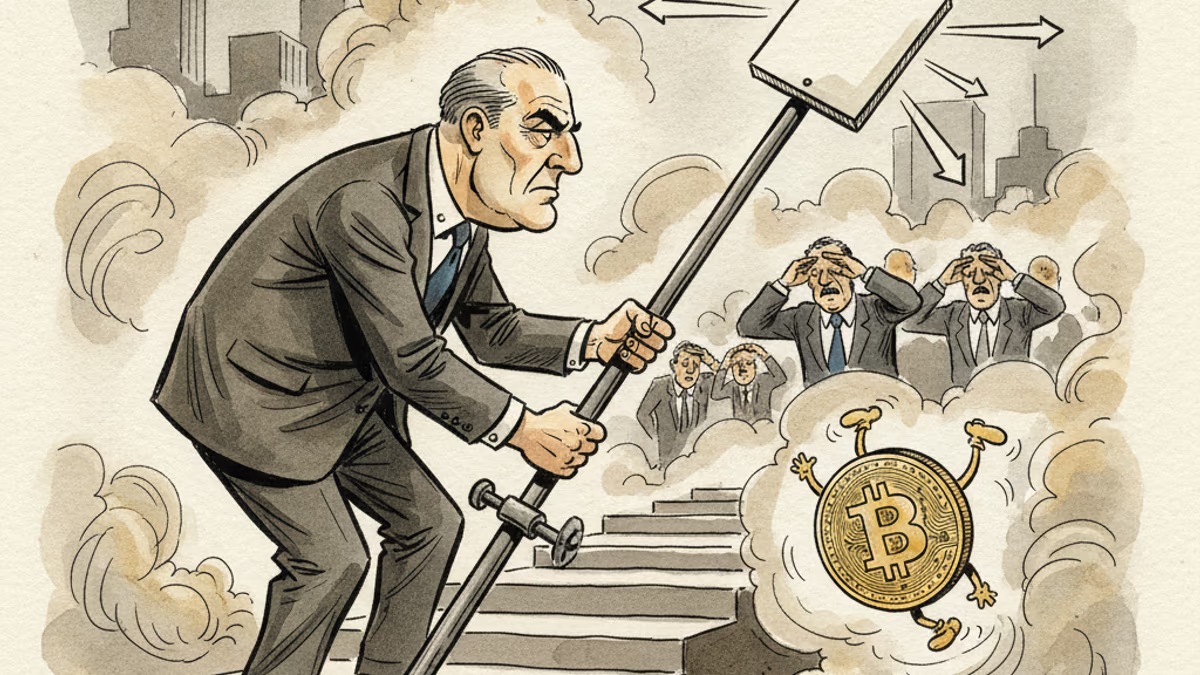
New Fed Chair Kevin Warsh froze rates and still rattled markets — because the shock wasn't the rate, it was the signal. Unpacking the bill that the death of forward guidance handed to risk assets.
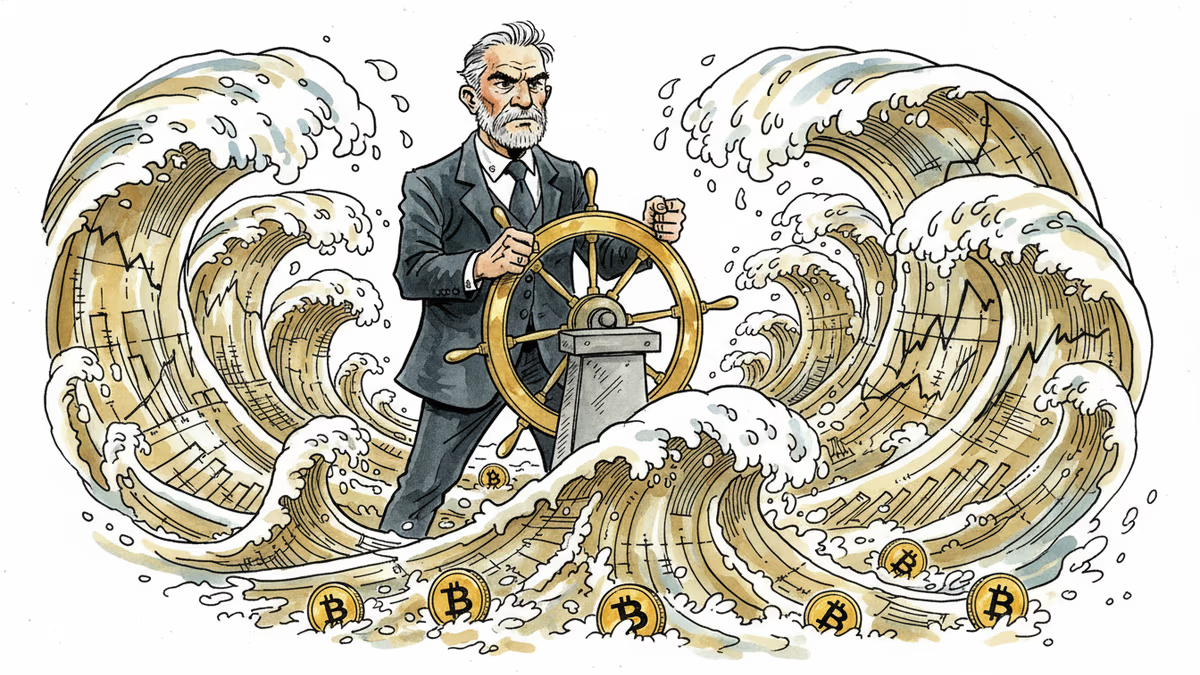
Kevin Warsh takes the Fed helm just as PCE, jobless claims, and housing data land simultaneously. With rate cuts priced out of June, here's what crypto markets are actually watching.
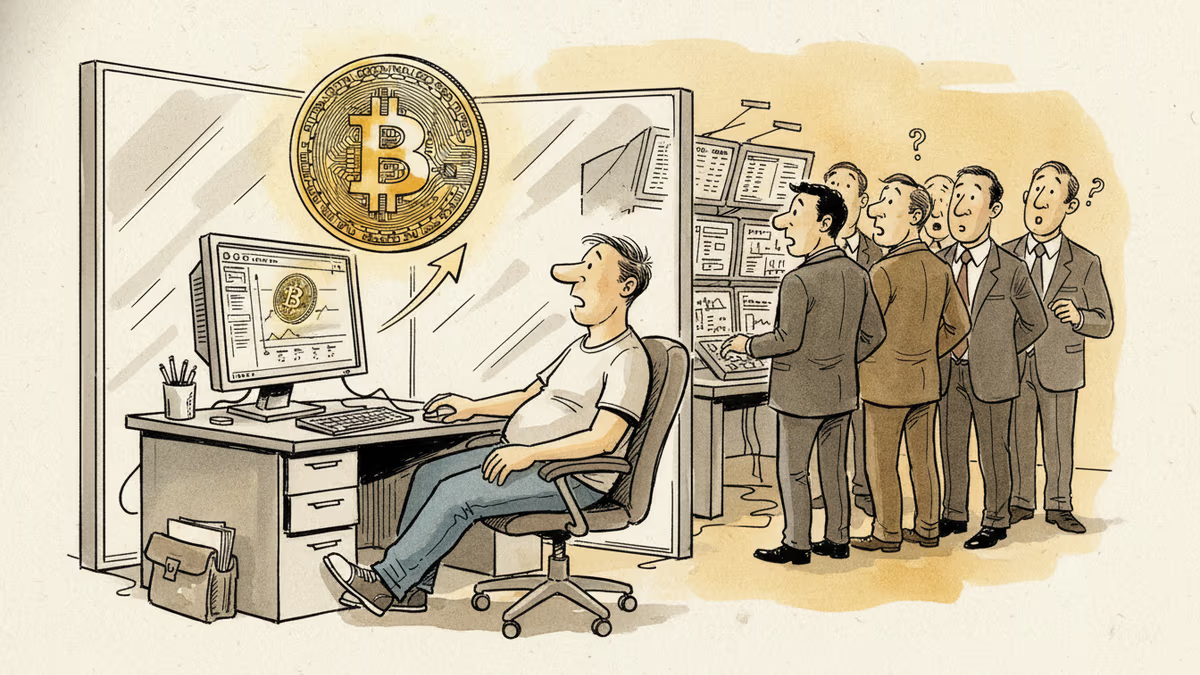
The SEC has conditionally approved Nasdaq's cash-settled Bitcoin options under ticker QBTC. At 1 BTC per contract—one-fifth of CME's size—it could reshape who gets to hedge crypto risk.
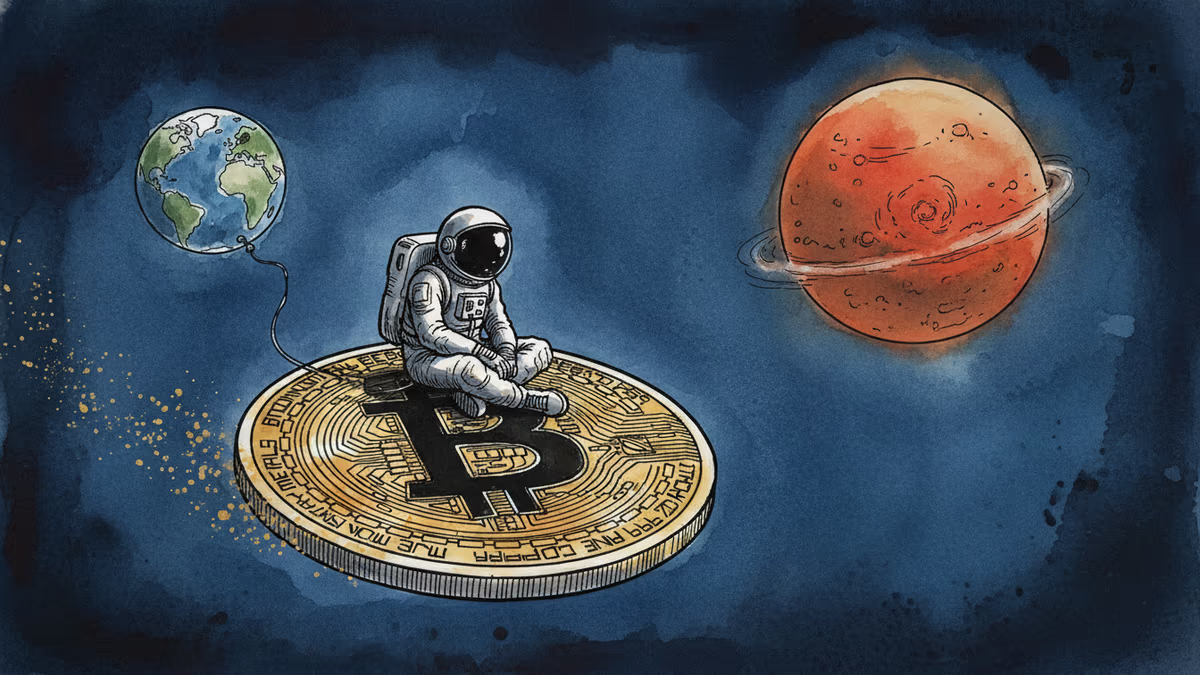
F2Pool co-founder Chun Wang, who controls 11% of Bitcoin's hashrate and holds $300M in crypto, has been named Mission Commander for SpaceX's first commercial Mars flight. What does it mean when crypto capital funds humanity's next frontier?
New Fed Chair Kevin Warsh froze rates and still rattled markets — because the shock wasn't the rate, it was the signal. Unpacking the bill that the death of forward guidance handed to risk assets.
Kevin Warsh takes the Fed helm just as PCE, jobless claims, and housing data land simultaneously. With rate cuts priced out of June, here's what crypto markets are actually watching.
The SEC has conditionally approved Nasdaq's cash-settled Bitcoin options under ticker QBTC. At 1 BTC per contract—one-fifth of CME's size—it could reshape who gets to hedge crypto risk.
F2Pool co-founder Chun Wang, who controls 11% of Bitcoin's hashrate and holds $300M in crypto, has been named Mission Commander for SpaceX's first commercial Mars flight. What does it mean when crypto capital funds humanity's next frontier?
Thoughts
Share your thoughts on this article
Sign in to join the conversation