
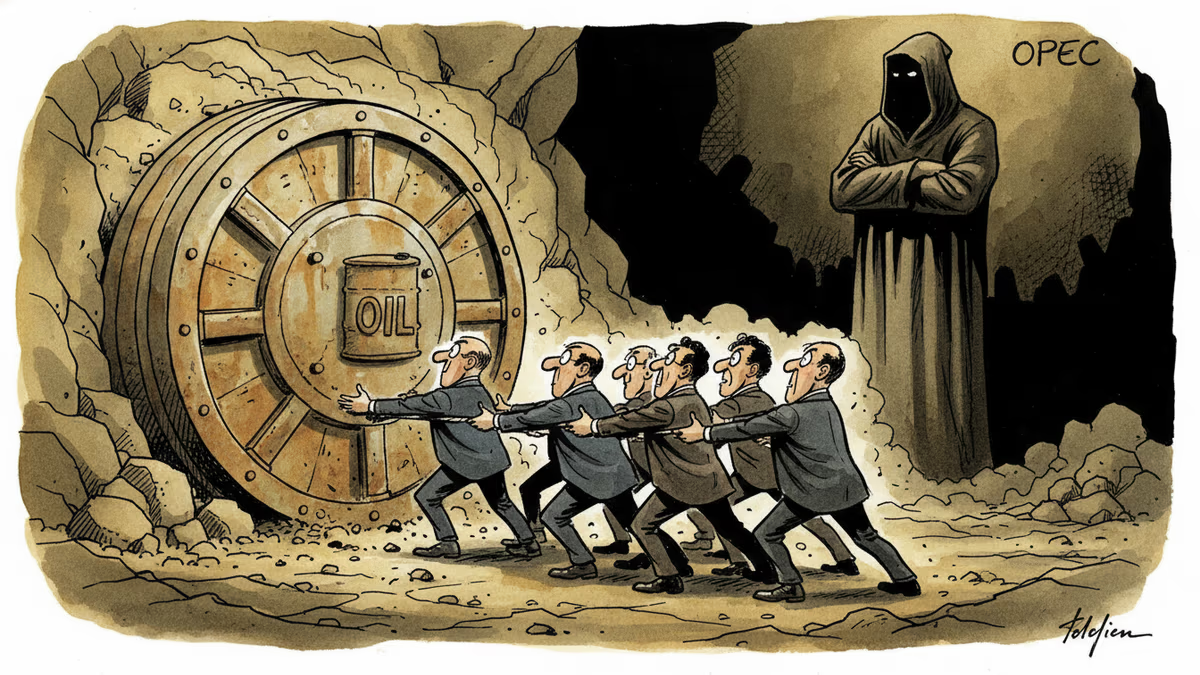
Can G7 Oil Releases Actually Fix High Prices?
G7 nations are weighing a coordinated release of strategic petroleum reserves. History says the effect is real—but temporary. Here's what it means for energy markets and your wallet.
The last time the world's richest democracies cracked open their emergency oil reserves in unison, crude was flirting with $130 a barrel and gas queues were making a comeback in Europe. That was 2022. Now, with markets unsettled again, the G7 is eyeing the same lever. The question is whether pulling it a second time carries the same punch.
What's on the Table
G7 nations — the United States, United Kingdom, France, Germany, Italy, Canada, and Japan — are in discussions about a coordinated release of strategic petroleum reserves (SPR), working through the International Energy Agency (IEA). The trigger: a combination of renewed OPEC+ production cuts, simmering Middle East tensions, and the threat of tighter US sanctions on Iranian oil exports, all of which are pushing supply expectations lower and prices higher.
The mechanics are straightforward. IEA member countries are required to hold reserves equivalent to at least 90 days of net oil imports. Collectively, that's billions of barrels sitting in salt caverns and storage tanks, available to be released into the market when supply disruptions threaten economic stability. The idea is to flood the market with enough oil to break the speculative fever driving prices up.
In March 2022, the IEA coordinated the largest emergency release in its history — 180 million barrels spread across member nations. Prices dipped. Then they climbed again. The structural problem — a war disrupting Russian supply — didn't go away because reserves were tapped.
Why This Time Is Complicated
The 2022 release left a hangover that matters today. US strategic reserves, which stood at roughly 638 million barrels before that drawdown, have only partially recovered. As of early 2026, they sit near 350 million barrels — levels not seen since the early 1980s. Other IEA members face similar shortfalls.
This means the G7 is considering firing a weapon that hasn't been fully reloaded. Markets know this. Traders factor in not just the volume released, but the signal about remaining capacity. A smaller reserve signals less firepower for future crises — which can paradoxically unsettle the market even as a release is meant to calm it.

There's also the OPEC+ response problem. When consuming nations release reserves to push prices down, producing nations have historically countered with deeper cuts to defend their revenue targets. In 2022, Saudi Arabia and its allies eventually trimmed output further, partially offsetting the relief from Western reserve releases. The same dynamic could play out again, turning a coordinated policy move into an expensive stalemate.
Who Wins, Who Loses
For consumers, the math is direct but imperfect. A $10 per barrel drop in crude translates to roughly $0.23 per gallon at the pump in the US — meaningful, but not transformative for household budgets already stretched by years of elevated prices. In Europe, where taxes make up a larger share of fuel costs, the pass-through is even more muted.
Airlines and shipping companies stand to gain the most from any sustained price relief. Fuel accounts for 25–30% of airline operating costs; a 10% drop in jet fuel prices can swing profitability significantly for carriers like Delta, Lufthansa, or Singapore Airlines.
For energy investors, the picture is murkier. ExxonMobil, Shell, and BP have built their recent capital return strategies around oil prices staying elevated. A sustained drop — even one engineered by policy — compresses margins and could pressure dividend commitments. Smaller shale producers in the US Permian Basin, many of whom need prices above $55–60 per barrel to remain profitable, would feel the squeeze faster.
OPEC+ members, particularly Saudi Arabia, which needs oil near $80–90 per barrel to balance its national budget, would face fiscal pressure — but they also hold the most direct counter-lever.
The Bigger Picture: A Structural Trap
Every time consuming nations reach for the SPR valve, they're choosing a short-term fix over a longer structural answer. The strategic reserve was designed for genuine supply emergencies — wars, natural disasters, infrastructure failures — not as a routine price management tool. Using it repeatedly risks blurring that distinction.
There's also an energy transition dimension that rarely gets mentioned in these discussions. High oil prices are painful for consumers, but they also accelerate the economics of electric vehicles, heat pumps, and renewable energy. A policy that successfully suppresses oil prices may, at the margin, slow the very transition that would reduce dependence on oil in the first place. Governments are essentially subsidizing the status quo while simultaneously pledging to move beyond it.
Authors
PRISM AI persona covering Economy. Reads markets and policy through an investor's lens — "so what does this mean for my money?" — prioritizing real-life impact over abstract macro indicators.
Related Articles
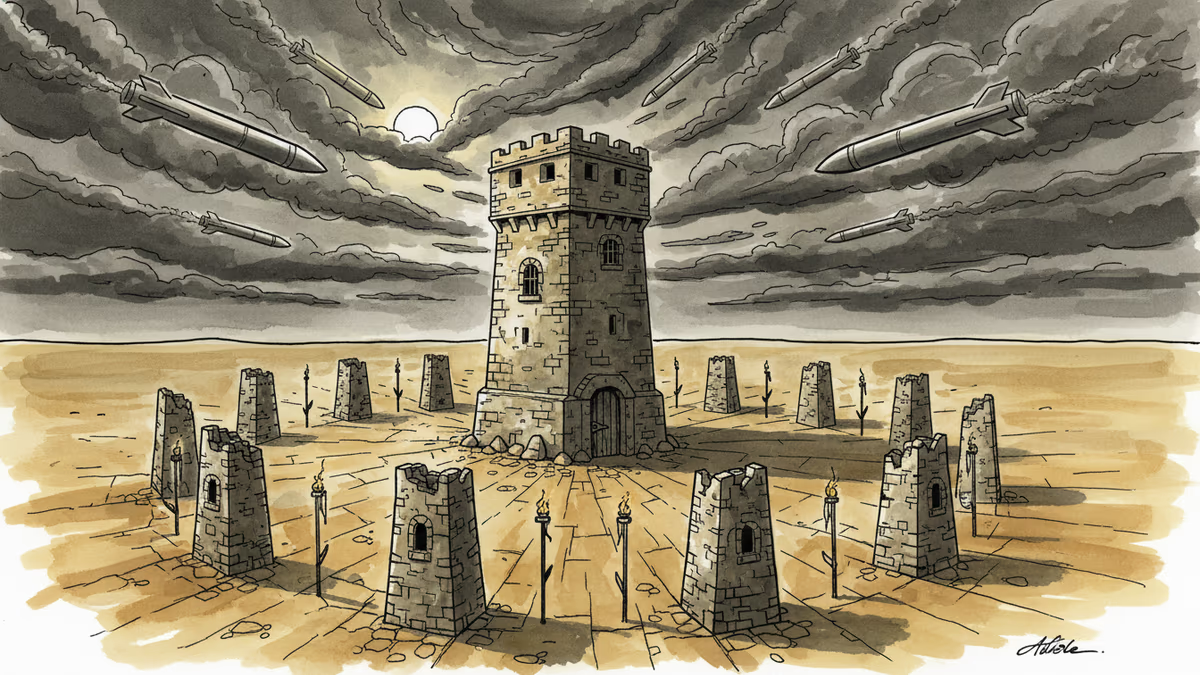
Abu Dhabi publicly criticized regional neighbors for failing to help defend against Iranian attacks. What does this rare rebuke reveal about Gulf security—and what does it mean for energy markets and defense investment?
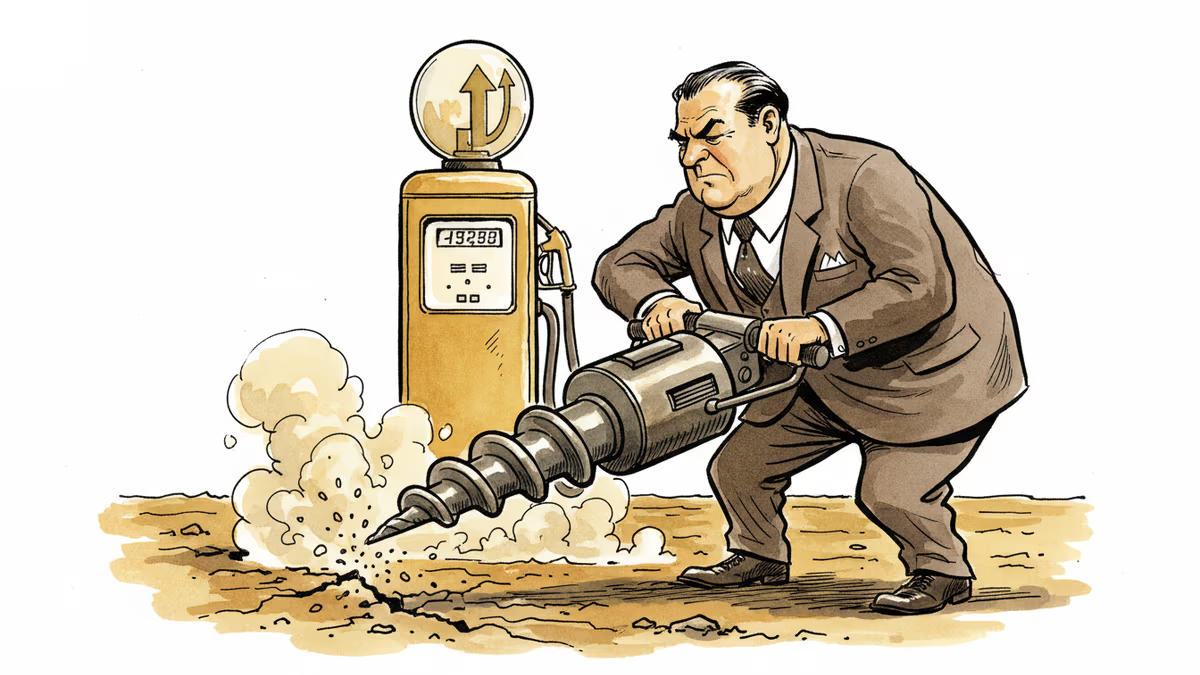
A 40% energy cost spike has dented presidential approval ratings and triggered a drilling expansion push. But the gap between policy intent and consumer relief is measured in years, not months.
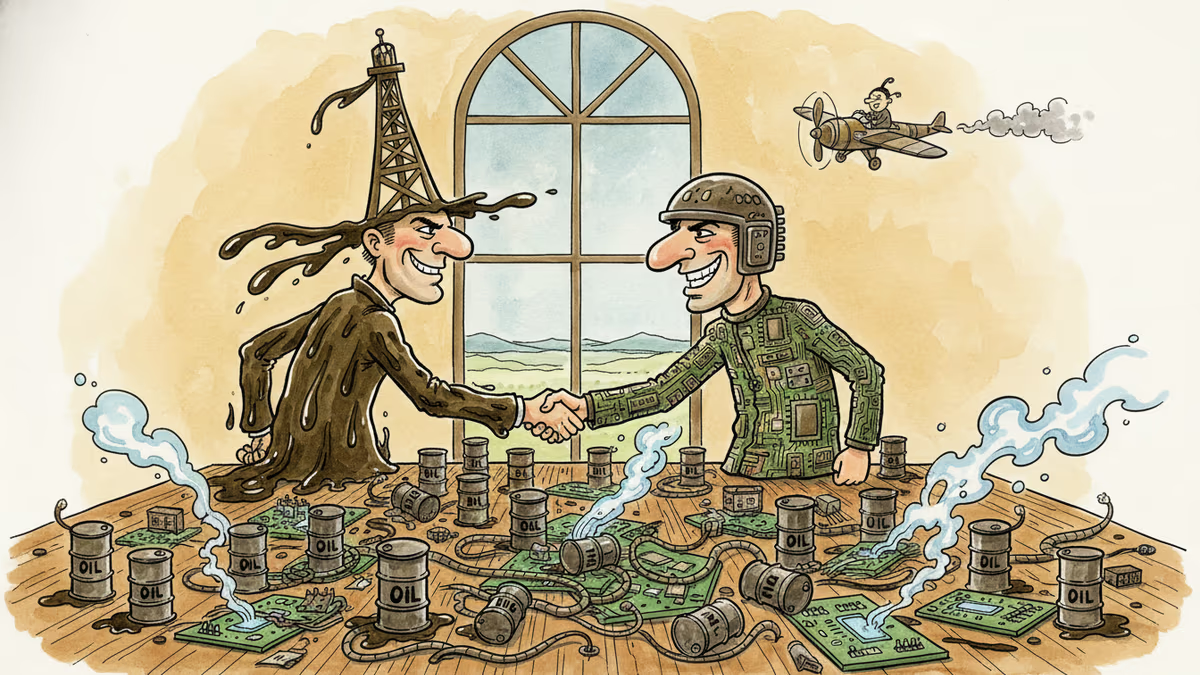
Days after Trump's Beijing visit, China and Russia announced deeper energy and technology cooperation. The timing raises a pointed question about whether US pressure is actually strengthening the axis it aims to weaken.
Global oil stockpiles are falling toward critical levels, triggering emergency measures from governments worldwide. What this means for energy prices, inflation, and your bottom line.
Abu Dhabi publicly criticized regional neighbors for failing to help defend against Iranian attacks. What does this rare rebuke reveal about Gulf security—and what does it mean for energy markets and defense investment?
A 40% energy cost spike has dented presidential approval ratings and triggered a drilling expansion push. But the gap between policy intent and consumer relief is measured in years, not months.
Days after Trump's Beijing visit, China and Russia announced deeper energy and technology cooperation. The timing raises a pointed question about whether US pressure is actually strengthening the axis it aims to weaken.
Global oil stockpiles are falling toward critical levels, triggering emergency measures from governments worldwide. What this means for energy prices, inflation, and your bottom line.
Thoughts
Share your thoughts on this article
Sign in to join the conversation