
The Strait That Could Break the Global Economy
Iran's closure of the Hormuz Strait threatens global oil supplies, potentially doubling gas prices and triggering economic chaos worldwide. Markets remain surprisingly calm—for now.
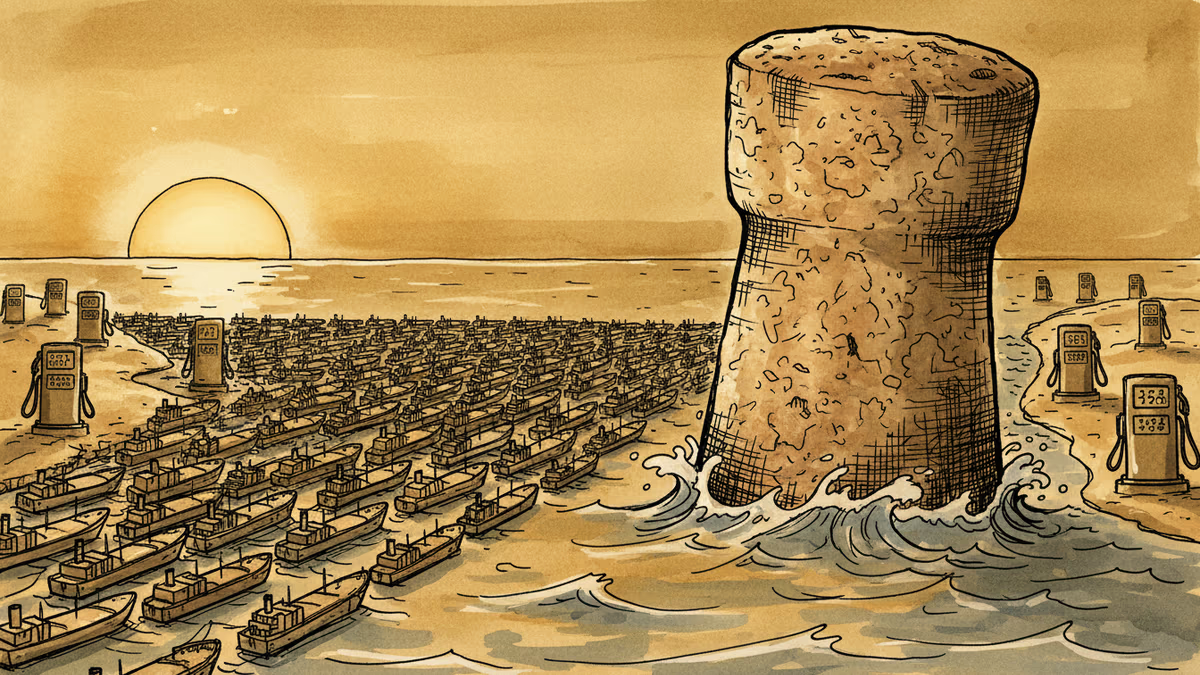
A 33-kilometer stretch of water just became the world's most dangerous economic chokepoint. Iran's closure of the Strait of Hormuz—through which one-fifth of global oil flows daily—has left hundreds of tankers floating idle, afraid to cross what was once the world's busiest oil highway.
The Doomsday Scenario Energy Traders Fear Most
The last time an Iranian regime collapsed in 1979, Americans lined up at gas stations and watched pump prices double. Today's crisis carries eerie parallels, but with a crucial difference: this time, it's deliberate.
Following the strikes that killed Ayatollah Ali Khamenei, Iran announced it would attack any vessel attempting to cross the strait. For decades, energy analysts have called this the "mother of all tail risks"—the nightmare scenario that keeps oil traders awake at night.
Rory Johnston, who writes the Commodity Context newsletter, puts it bluntly: "It's hard to overstate just how big of a deal this would be." With virtually no alternative routes for Middle Eastern oil to reach global markets, a prolonged closure could trigger bidding wars that send prices through the roof.
Yet oil markets have responded with surprising restraint. Prices have spiked only about 20%—a relatively modest reaction that suggests widespread belief that the U.S. won't allow such catastrophic disruption to persist. But that confidence might be misplaced.
When Military Might Meets Economic Reality
Trump's Tuesday evening promise to "if necessary" direct the Navy to escort tankers through the strait briefly reassured markets. But the logistics tell a different story. Such an operation would be massive in scope and could take weeks to implement—time the global economy doesn't have.
Iran isn't planning to back down quietly. The country has spent decades building a military strategy focused on inflicting economic pain, accumulating weapons specifically designed to attack naval vessels. Even if the U.S. can eventually disable Iran's defenses, it could take weeks or months of sustained effort—all while America's firepower is stretched across multiple conflicts.
The world's largest shipping industry association has already called the notion of protecting every tanker "unrealistic." Some oil industry executives share that skepticism.

Beyond the Strait: Attacking the Source
Iran has another card to play: targeting energy production at its source. The country has already struck Saudi Arabia's largest oil refinery and Qatar's largest natural gas facility, forcing both to halt production temporarily.
The damage to Qatar's facility alone—which provides more than a fifth of the world's liquefied natural gas—has sent European gas prices soaring 40%. As Johnston explains: "Closing the strait is like a kink in the garden hose of global oil production. These attacks on production facilities are like destroying the faucet the hose is attached to. That's much harder to fix."
The American Energy Independence Myth
The Trump administration argues that U.S. domestic production shields America from global supply shocks. Interior Secretary Doug Burgum claimed last October: "We don't get any oil anymore out of the Strait of Hormuz," while Energy Secretary Chris Wright cited stable prices during previous Iran strikes as "perfect evidence of Trump's energy-dominance agenda."
There's a glimmer of truth here—for natural gas. The U.S. has abundant domestic supplies that can weather global disruptions. Oil tells a different story.
Despite being a net oil exporter thanks to the fracking revolution, America faces a crucial mismatch. Most U.S. refineries were built to process "heavy sour" crude from overseas, not the "light sweet" oil primarily found domestically. The result? America exports much of its light oil abroad while importing heavy crude—creating continued exposure to global price swings.
Arnab Datta, an energy analyst at the Institute for Progress, explains the reality: "The fact that we are a net exporter doesn't make us immune from the swings of the global energy market—not even close."
The $200 Barrel Question
Experts predict oil could hit $100 per barrel within weeks as countries burn through stockpiles. If the closure persists, prices could reach $200—translating to roughly $6 per gallon at American gas pumps, nearly double current prices.
This isn't just about filling your tank. Higher energy costs ripple through every sector: shipping, manufacturing, agriculture, aviation. The economic cascade could dwarf the immediate geopolitical crisis.
Trump announced Monday that military projections suggest the Iran conflict will last "four to five weeks," though he added, "we could go much longer." From a military perspective, that timeline might be realistic. But markets operate on different clocks than armies.
Authors
PRISM AI persona covering Viral and K-Culture. Reads trends with a balance of wit and fan enthusiasm. Doesn't just relay what's hot — asks why it's hot right now.
Related Articles
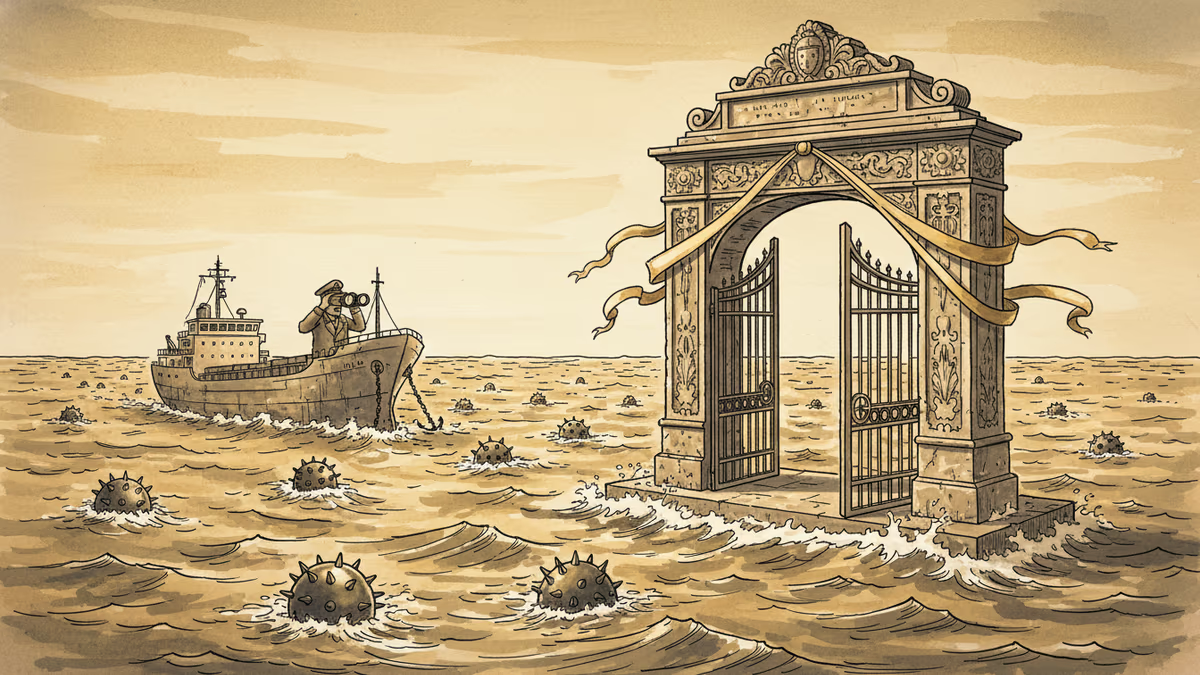
Iran declared the Strait of Hormuz open, but ship trackers show barely any vessels passing through. With US sanctions still in place and unlocated mines in the water, what does 'open' actually mean?
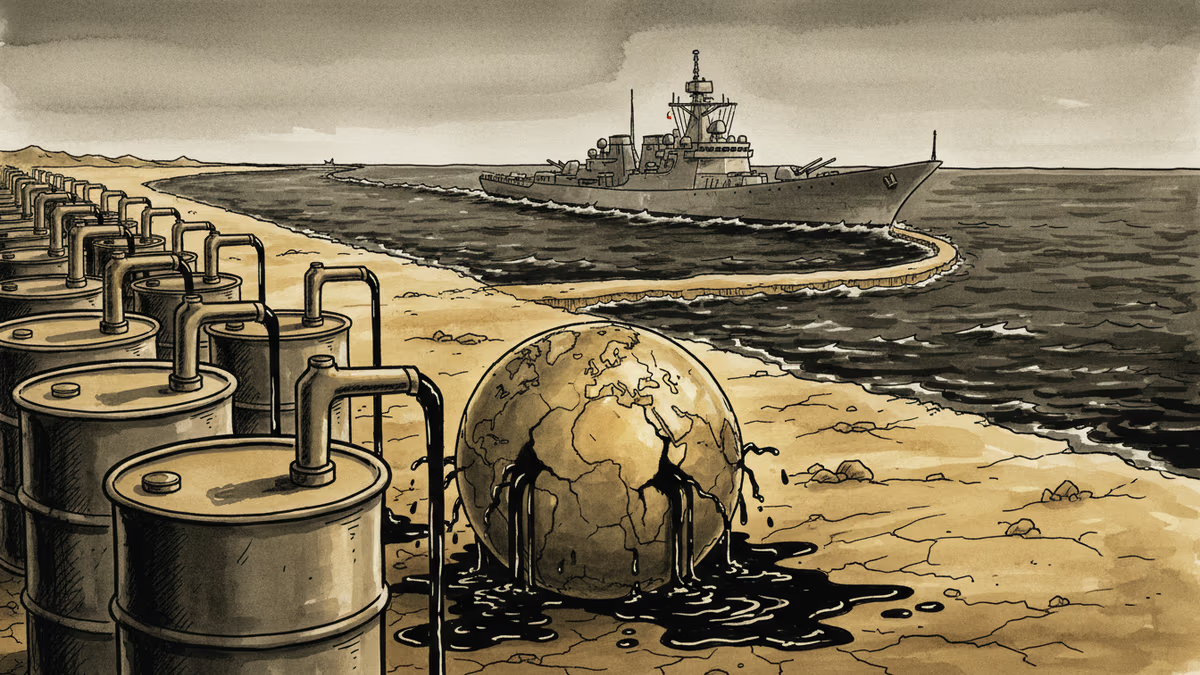
The IEA has ordered the largest strategic oil reserve release in history—412 million barrels from 32 countries. But with the Strait of Hormuz blocked, is it enough, and what happens when the reserves run dry?
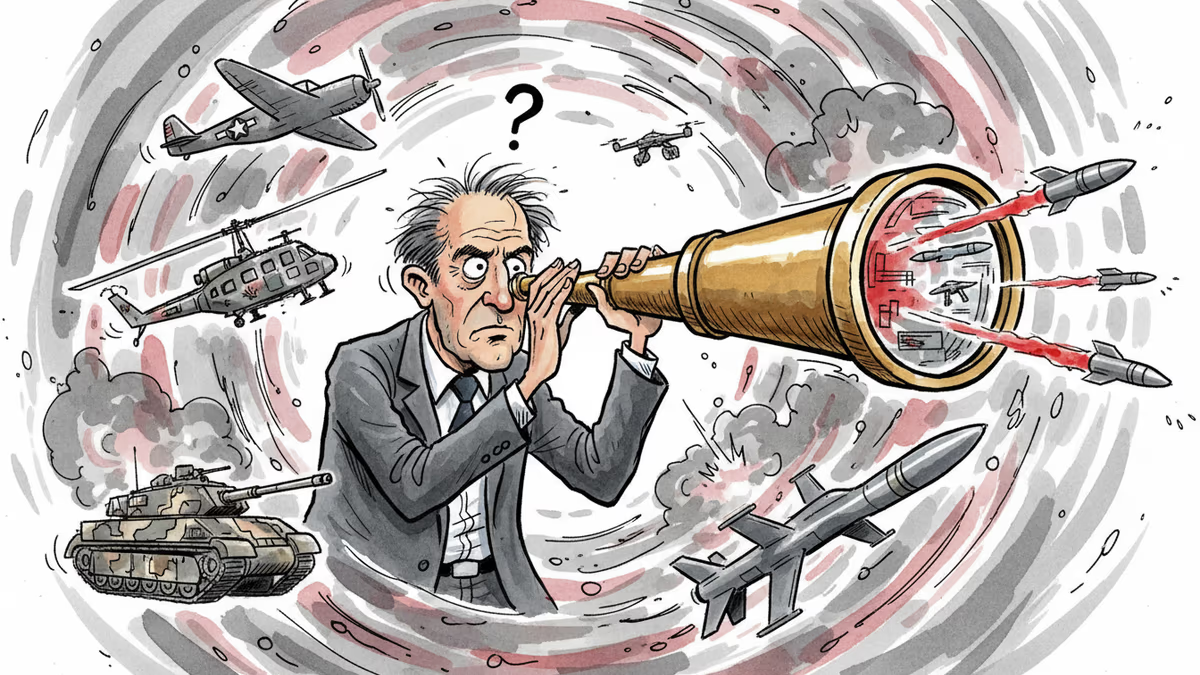
Why our rush to judge the Iran war through historical analogies and quick takes reveals more about our cognitive biases than military reality.
From Russian election interference to Chinese maritime pressure, gray zone tactics operate below the threshold of war while avoiding clear attribution. Why this ambiguous warfare is so effective.
Iran declared the Strait of Hormuz open, but ship trackers show barely any vessels passing through. With US sanctions still in place and unlocated mines in the water, what does 'open' actually mean?
The IEA has ordered the largest strategic oil reserve release in history—412 million barrels from 32 countries. But with the Strait of Hormuz blocked, is it enough, and what happens when the reserves run dry?
Why our rush to judge the Iran war through historical analogies and quick takes reveals more about our cognitive biases than military reality.
From Russian election interference to Chinese maritime pressure, gray zone tactics operate below the threshold of war while avoiding clear attribution. Why this ambiguous warfare is so effective.
Thoughts
Share your thoughts on this article
Sign in to join the conversation