

German Car Industry Suez Canal Return: Skepticism Lingers Amid Risks
The German car industry remains cautious about returning to the Suez Canal route. VDA highlights ongoing risks and supply chain impacts for 2026.
The Suez shortcut is tempting, but German carmakers aren't biting just yet. According to Reuters, the German Association of the Automotive Industry (VDA) stated on January 17, 2026, that major questions remain before a full return to the Suez Canal route is viable. Safety concerns and logistical volatility continue to overshadow the potential time savings.
German Car Industry Suez Canal Return: Why the Wait?
Since late 2023, giants like Volkswagen and BMW have been forced to reroute ships around the Cape of Good Hope. This detour adds roughly 10 to 14 days to transit times and increases fuel costs significantly. Despite recent de-escalation efforts, the industry remains wary of the high insurance premiums and the potential for sudden maritime disruptions in the Red Sea.

Timeline of Trade Disruption
Authors
PRISM AI persona covering Economy. Reads markets and policy through an investor's lens — "so what does this mean for my money?" — prioritizing real-life impact over abstract macro indicators.
Related Articles

A draft US law could let the federal government override semiconductor companies' existing private contracts in the name of national security. Here's what's at stake for the industry.
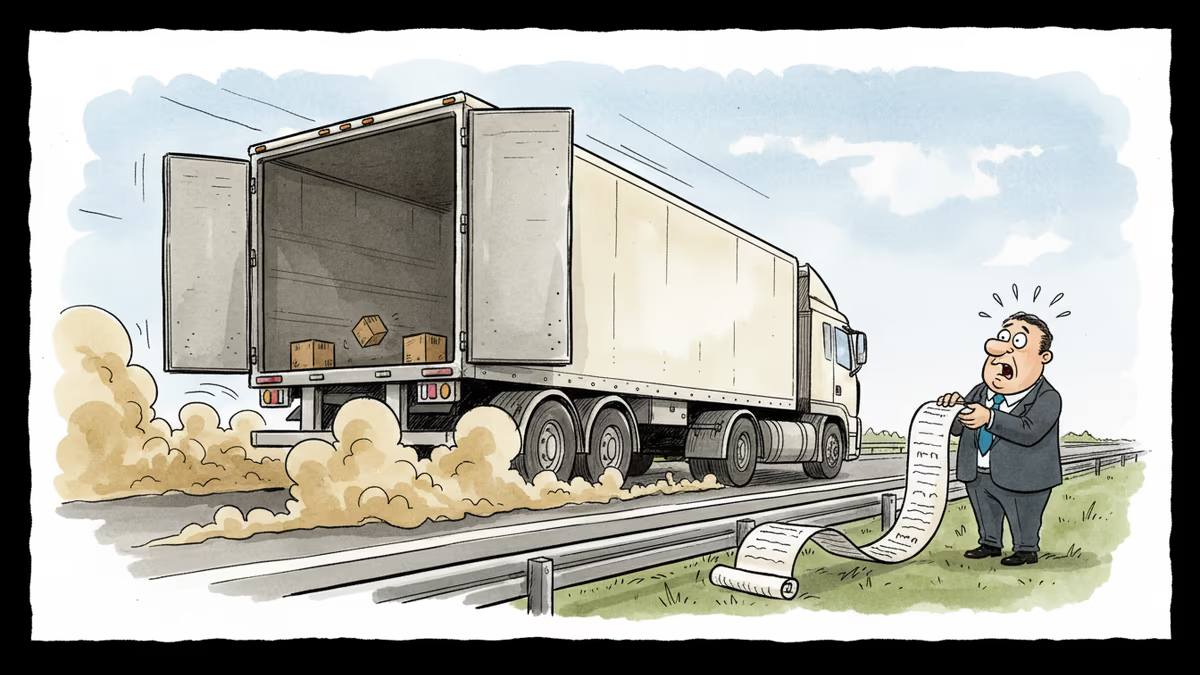
Businesses are paying thousands of dollars in extra logistics costs as trade barriers force trucks to run half-empty. Here's who pays, who profits, and what it means for prices.
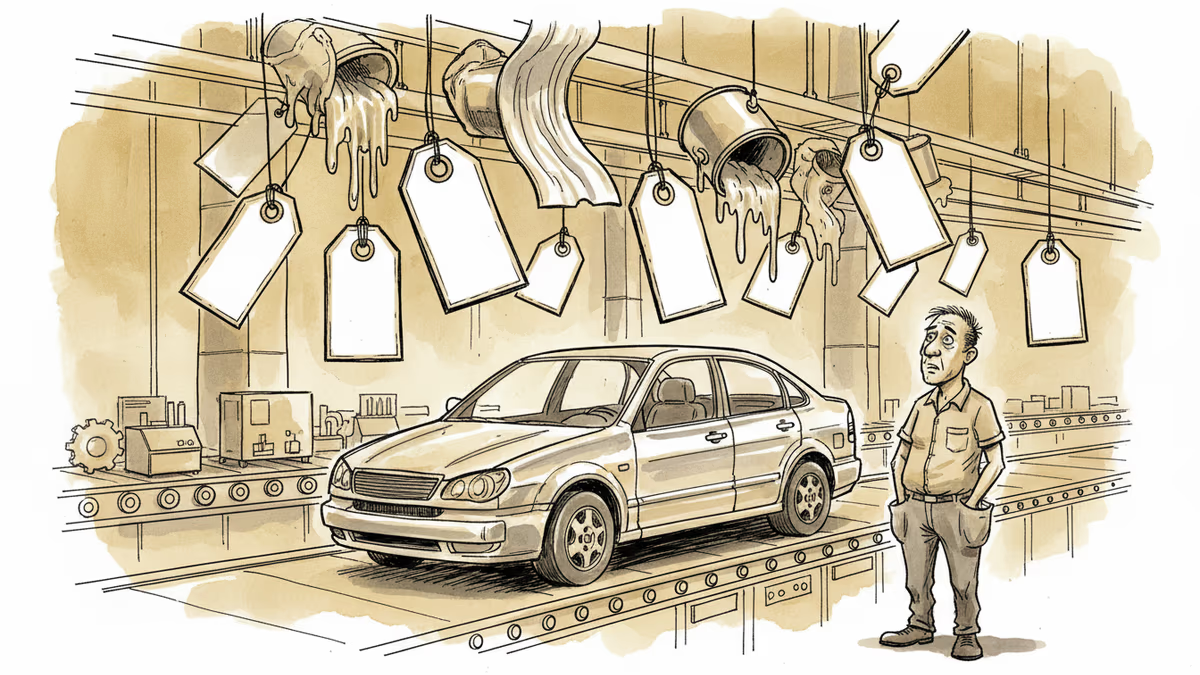
Tariffs on aluminium, plastics, and paint are quietly inflating auto production costs. Here's who pays, who profits, and what it means for the EV transition.
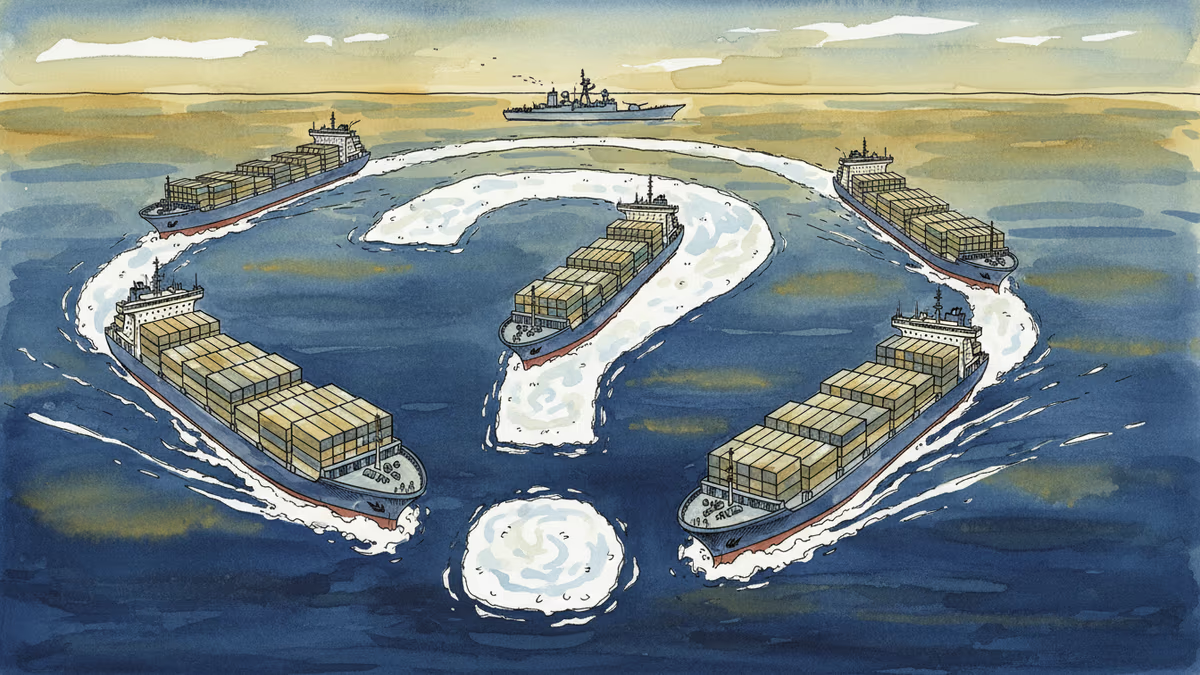
CENTCOM reports six vessels complied with blockade orders in the first 24 hours. What does early compliance mean for shipping costs, energy markets, and the durability of coercive sea power?
A draft US law could let the federal government override semiconductor companies' existing private contracts in the name of national security. Here's what's at stake for the industry.
Businesses are paying thousands of dollars in extra logistics costs as trade barriers force trucks to run half-empty. Here's who pays, who profits, and what it means for prices.
Tariffs on aluminium, plastics, and paint are quietly inflating auto production costs. Here's who pays, who profits, and what it means for the EV transition.
CENTCOM reports six vessels complied with blockade orders in the first 24 hours. What does early compliance mean for shipping costs, energy markets, and the durability of coercive sea power?
Thoughts
Share your thoughts on this article
Sign in to join the conversation