
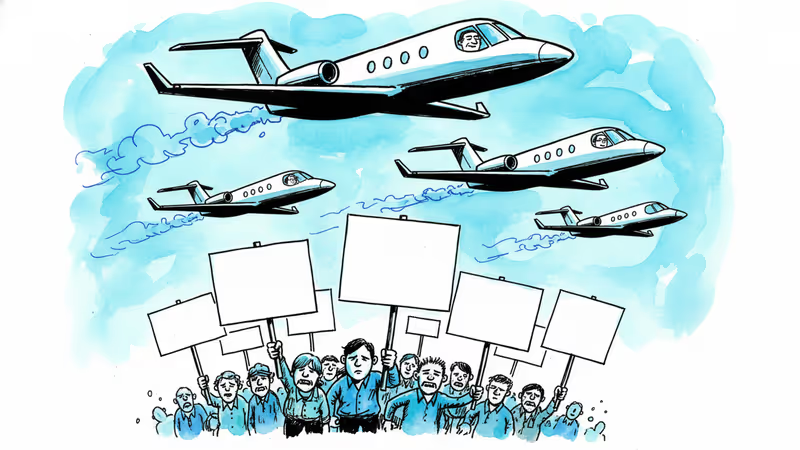
A March for Billionaires (Without Any Billionaires)
An AI startup founder organizes a 'March for Billionaires' in San Francisco to protest California's wealth tax. The irony? No actual billionaires plan to attend.
What do you call a march for billionaires with no billionaires? Apparently, just another Saturday in San Francisco.
Derik Kaufmann, founder of AI startup RunRL, is organizing what he's calling a "March for Billionaires" this weekend to protest California's proposed wealth tax. The tagline? "Vilifying billionaires is popular. Losing them is expensive." The twist? Kaufmann admits he's not aware of any actual billionaires planning to attend.
The Paper Wealth Problem
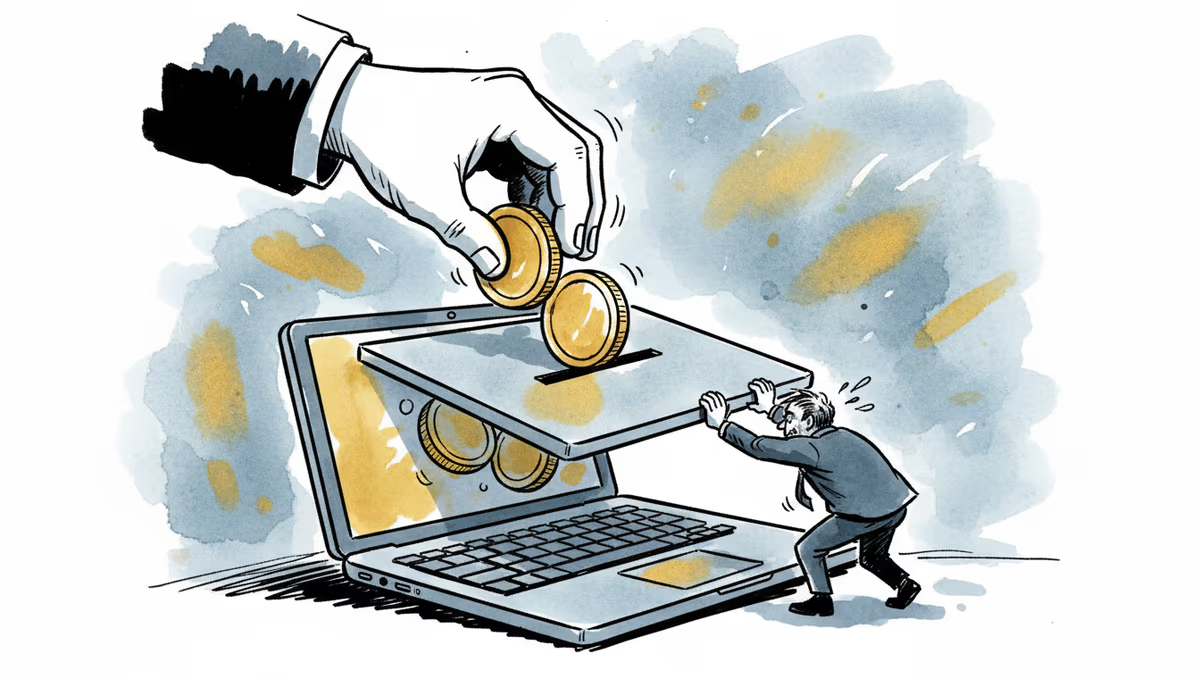
The target of Kaufmann's ire is California's Billionaire Tax Act, introduced last year. The legislation would require state residents worth over $1 billion to pay a one-time 5% tax on their total wealth. Sounds straightforward, but Kaufmann argues it's "fatally flawed."
His concern isn't about protecting the ultra-rich—it's about startup founders caught in a peculiar bind. "This tax hits startup founders whose wealth is only on paper," Kaufmann explains. "They would be forced to liquidate shares on potentially unfavorable terms, incurring capital gains taxes and giving up control."
The scenario he paints is stark: a founder whose company is valued at billions but who has little liquid cash suddenly facing a massive tax bill. To pay it, they'd have to sell shares, potentially losing control of their company while also triggering additional capital gains taxes.
A Battle Already Won

Here's where the story gets interesting: this entire controversy might be much ado about nothing. California Governor Gavin Newsom has already stated he would veto the bill if it passes. Yet the tech industry continues its fierce lobbying campaign, and prominent figures like Elon Musk have either threatened to leave California or already departed.
The disconnect between the bill's actual prospects and the intensity of opposition reveals something deeper about Silicon Valley's relationship with taxation and regulation.
The Swedish Example
Kaufmann points to international precedent: "Sweden eliminated their wealth tax 20 years ago to avert capital flight and promote entrepreneurship. Now they have 50% more billionaires per capita than the US."
But supporters of California's bill, including the Service Employees International Union (SEIU), argue the tax could fund essential public services and help offset recent federal funding cuts. The debate reflects a fundamental tension between encouraging innovation and ensuring equitable contribution to public goods.
The Optics Problem
The "March for Billionaires" has generated mostly mockery online, with many assuming it was satire. "I can't imagine billionaires marching in the street," one social media user noted—and they'd probably be right. Kaufmann expects "a few dozen attendees" but admits uncertainty about actual turnout.
The event highlights a broader challenge for the tech industry: how to advocate for policies that benefit innovation without appearing tone-deaf to broader economic inequality concerns.
Authors
Related Articles
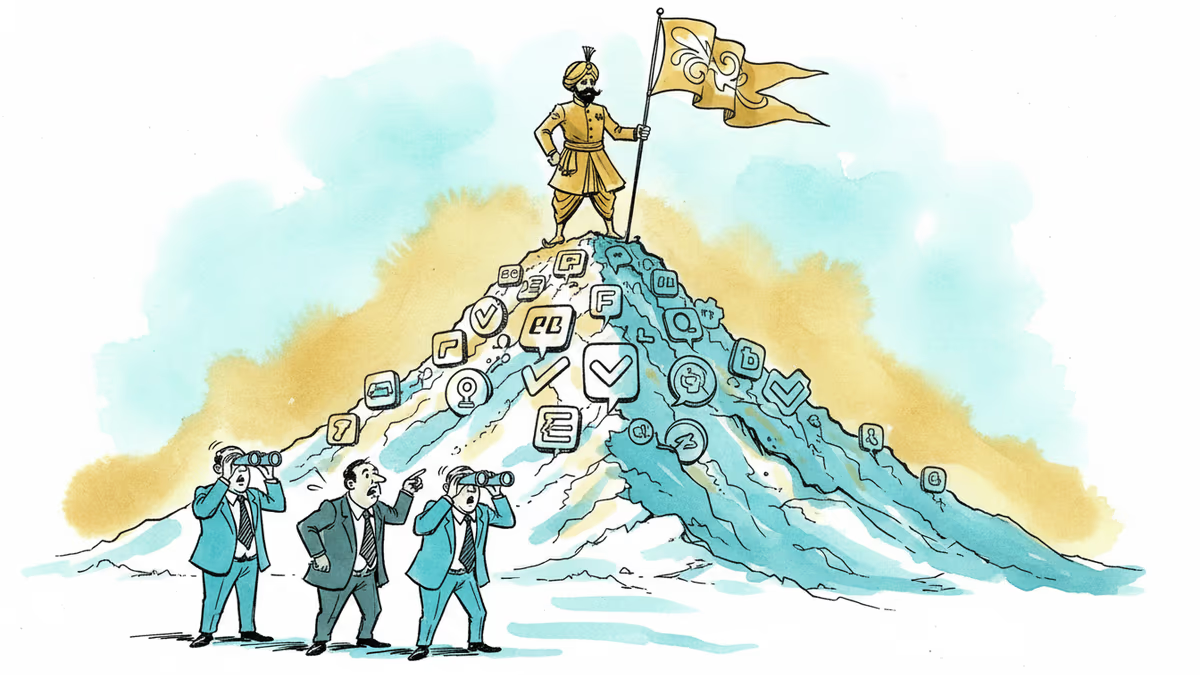
Indian venture capital has quietly displaced Silicon Valley in its own backyard. Only one American VC made India's top 10 investor list last year. Here's why that matters beyond India.
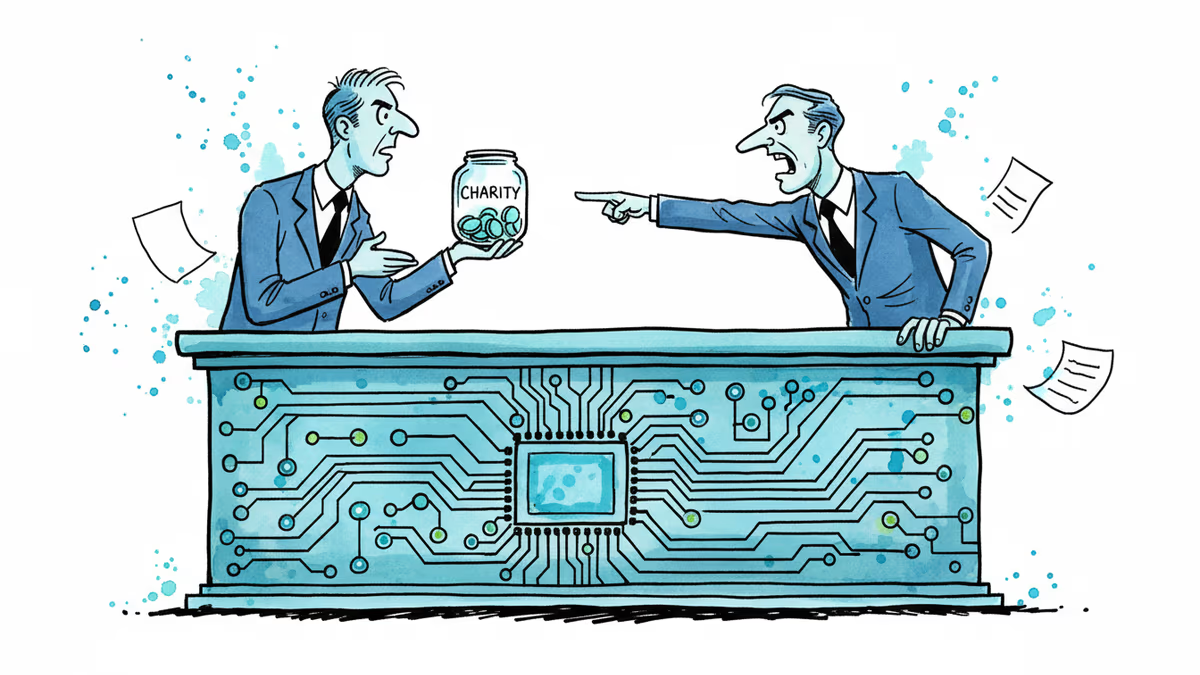
After two weeks of witnesses calling him a liar, OpenAI CEO Sam Altman testified in his own defense, claiming Elon Musk tried to kill the company twice.
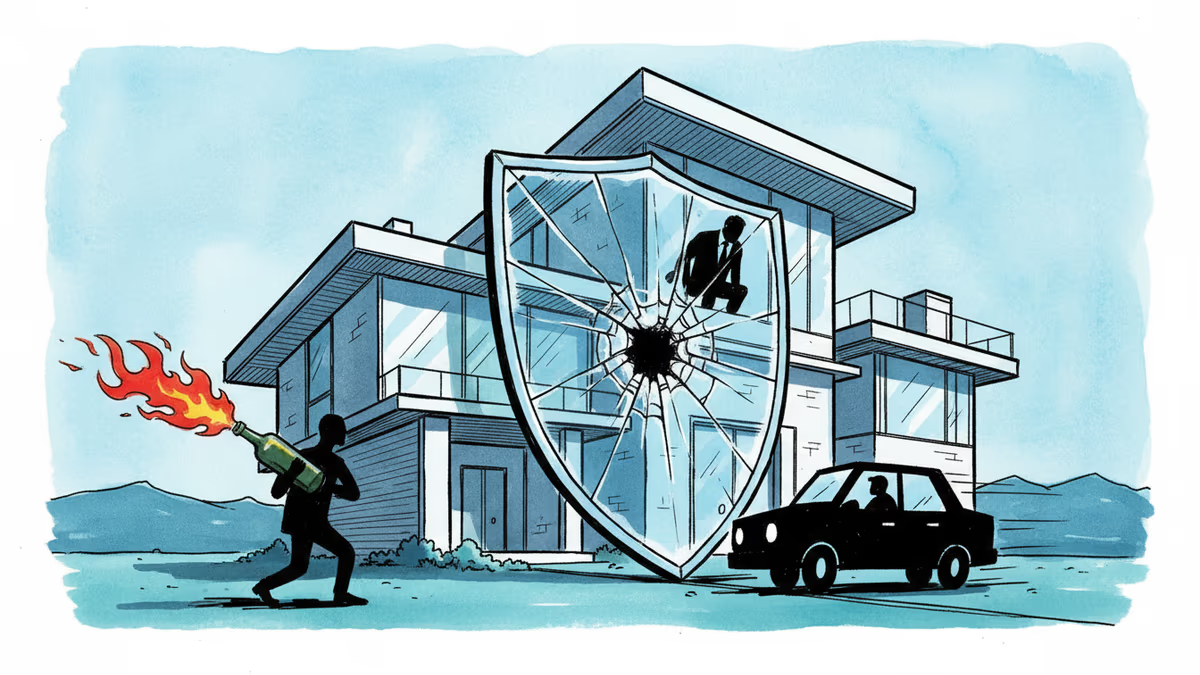
OpenAI CEO Sam Altman's San Francisco residence was attacked twice in three days — first a Molotov cocktail, then a shooting. What does this say about tech power, public anger, and the real-world risks facing AI leaders?
In CA-17, tech founder Ethan Agarwal is challenging five-term incumbent Ro Khanna — backed by billionaires opposed to a wealth tax. It's already getting dirty.
Indian venture capital has quietly displaced Silicon Valley in its own backyard. Only one American VC made India's top 10 investor list last year. Here's why that matters beyond India.
After two weeks of witnesses calling him a liar, OpenAI CEO Sam Altman testified in his own defense, claiming Elon Musk tried to kill the company twice.
OpenAI CEO Sam Altman's San Francisco residence was attacked twice in three days — first a Molotov cocktail, then a shooting. What does this say about tech power, public anger, and the real-world risks facing AI leaders?
In CA-17, tech founder Ethan Agarwal is challenging five-term incumbent Ro Khanna — backed by billionaires opposed to a wealth tax. It's already getting dirty.
Thoughts
Share your thoughts on this article
Sign in to join the conversation