
The Age of Personal Conglomerates Has Arrived
Elon Musk's merger of SpaceX and xAI signals a new Silicon Valley power structure where tech titans build everything businesses worth hundreds of billions.
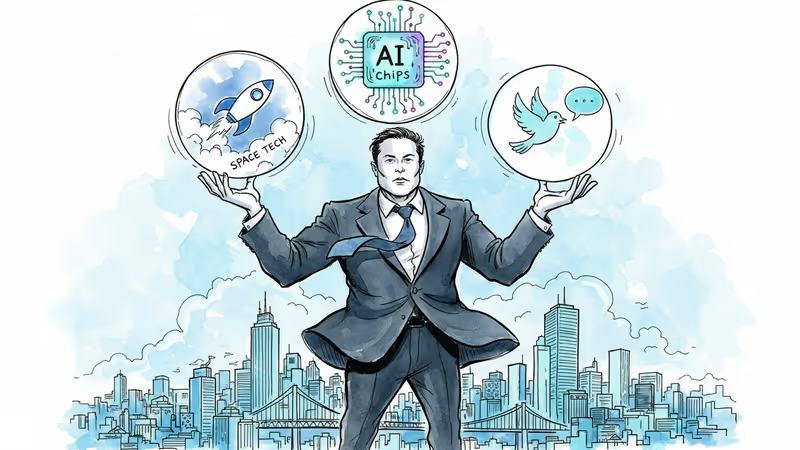
Elon Musk just did something that would make the robber barons of the early 1900s jealous. He's merged SpaceX and xAI, creating what might be the first true personal conglomerate of the digital age. With his $800 billion net worth already rivaling General Electric's historic peak market cap, Musk isn't just building companies anymore—he's building an empire.
The merger represents more than just corporate restructuring. It's a signal that we've entered an era where individual tech titans can amass the kind of diversified power that once required entire corporate dynasties to build over decades.
When One Person Becomes a Fortune 500 Company
Musk's philosophy is simple: "Tech victory is decided by velocity of innovation." By combining SpaceX's aerospace dominance with xAI's artificial intelligence capabilities, he's creating synergies that traditional corporate structures struggle to match. The space company's satellite infrastructure could power xAI's computing needs, while AI advances could optimize rocket launches and Mars mission planning.
This isn't just about efficiency—it's about speed. While traditional conglomerates like GE took generations to build their empires across multiple industries, Musk has done it in roughly two decades. He already controls significant positions in electric vehicles (Tesla), social media (X), space exploration (SpaceX), neural interfaces (Neuralink), and now artificial intelligence (xAI).
The numbers tell the story. Musk's combined ventures touch everything from automotive manufacturing to satellite internet, brain-computer interfaces to social media platforms. That's a level of industrial diversification that would make even the most ambitious traditional conglomerate executives envious.
The Blueprint Others Will Follow

Sam Altman and other Silicon Valley leaders are watching closely. Altman already has his hands in OpenAI, Worldcoin, and various other ventures. The question isn't whether others will follow Musk's model—it's how quickly they'll move to build their own everything businesses.
This trend reflects a fundamental shift in how wealth and power accumulate in the digital age. Traditional conglomerates grew through acquisitions and market expansion over decades. Today's tech titans can achieve similar scale through rapid innovation cycles and network effects that compound exponentially.
Consider the advantages: When you control the entire stack from hardware to software to distribution, you can move faster than any competitor. You don't need to negotiate partnerships or wait for other companies to align with your vision. You simply build it yourself.
The New Rules of Corporate Power
What we're witnessing is the emergence of a new corporate structure that doesn't fit traditional categories. These aren't just holding companies or traditional conglomerates. They're integrated innovation ecosystems where advances in one area immediately benefit all others.
The implications extend far beyond Silicon Valley. If personal conglomerates become the dominant business model, we might see fundamental changes in how markets operate, how innovation happens, and how economic power concentrates. Traditional antitrust frameworks, designed for an era of separate industries, may struggle to address entities that span everything from space travel to artificial intelligence.
For investors, this creates both opportunities and risks. Betting on a Musk or Altman means betting on their entire ecosystem, not just individual companies. For competitors, it means facing adversaries with resources and integration capabilities that traditional corporate structures can't match.
Authors
Related Articles
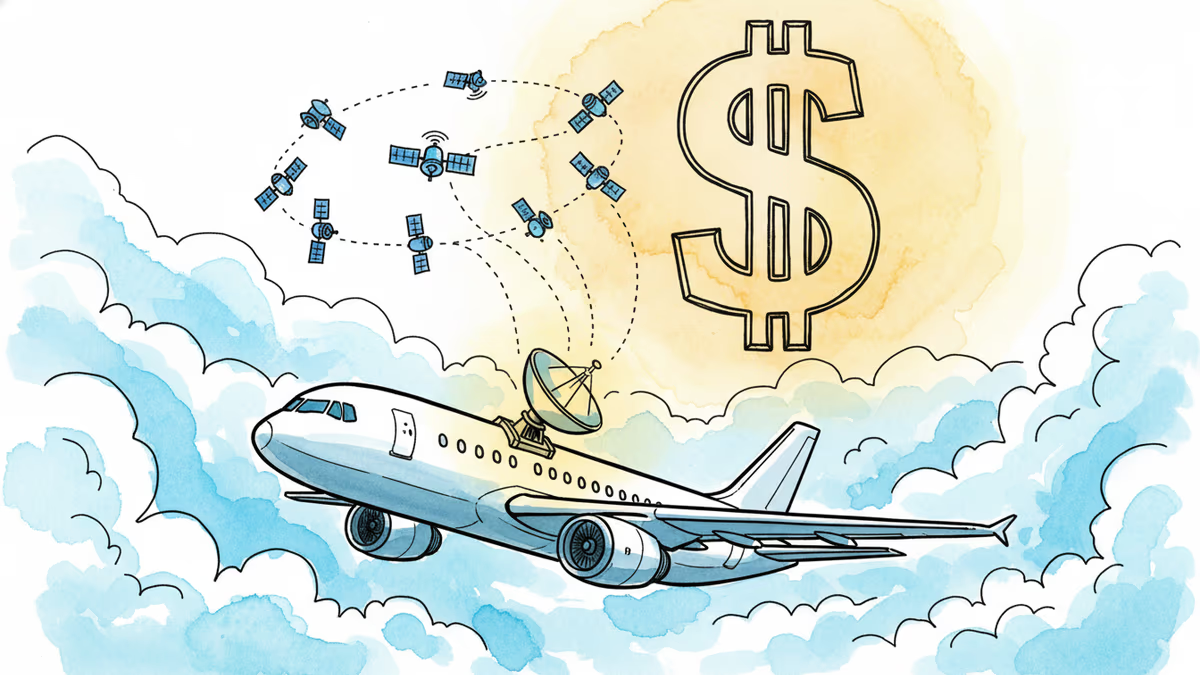
American Airlines just signed Starlink for 500+ aircraft. It's not just about faster inflight internet — it's a calculated move in the run-up to what could be the largest IPO in history.
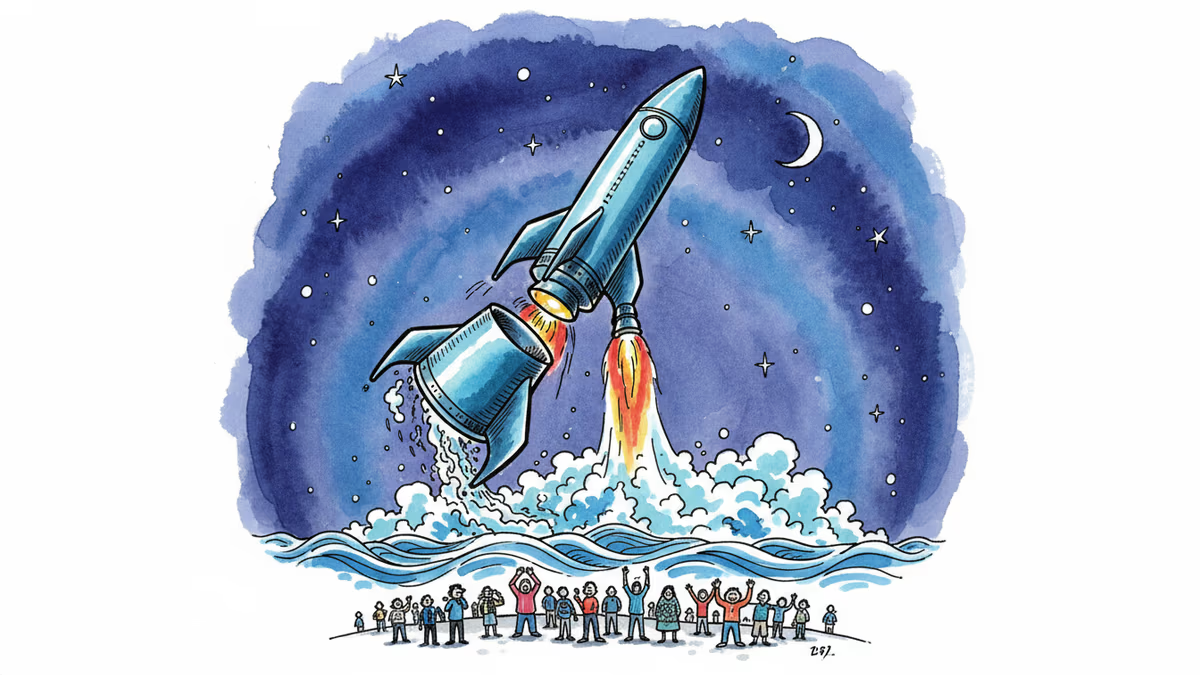
SpaceX's upgraded Starship V3 completed its first test flight, deploying 20 Starlink simulators but losing the Super Heavy booster. With an IPO weeks away, the stakes just got higher.
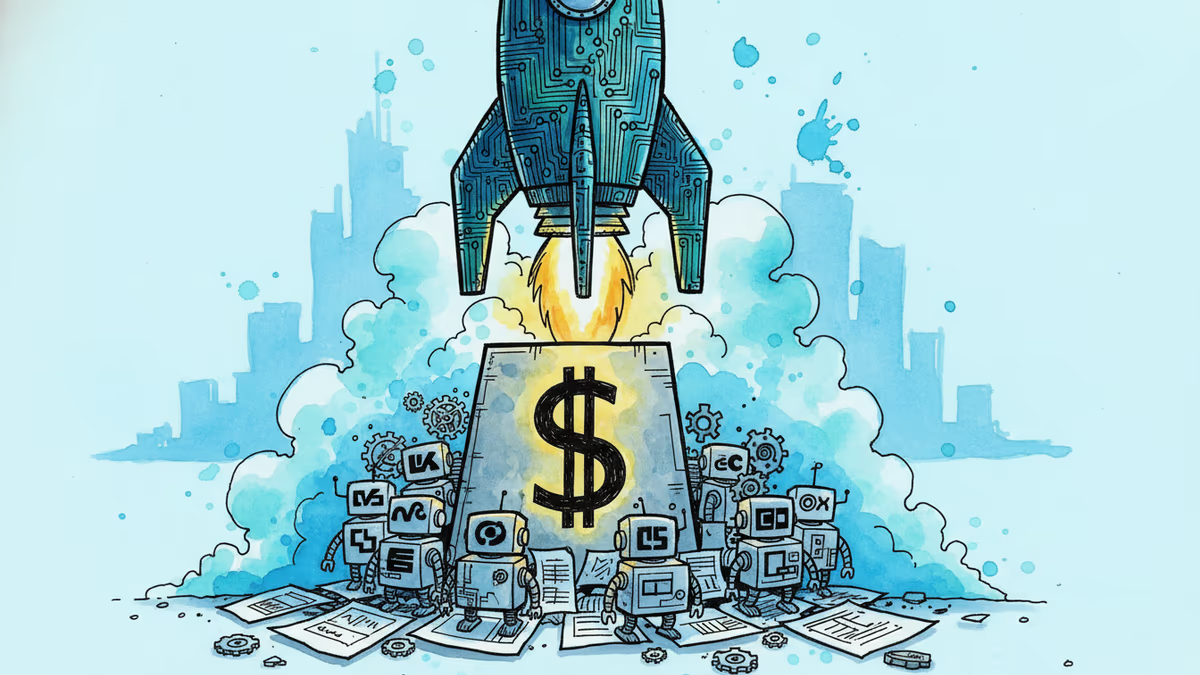
SpaceX's IPO filing puts AI at the center, claiming a $26.5 trillion market opportunity. But can Grok compete with OpenAI and Anthropic for enterprise customers?
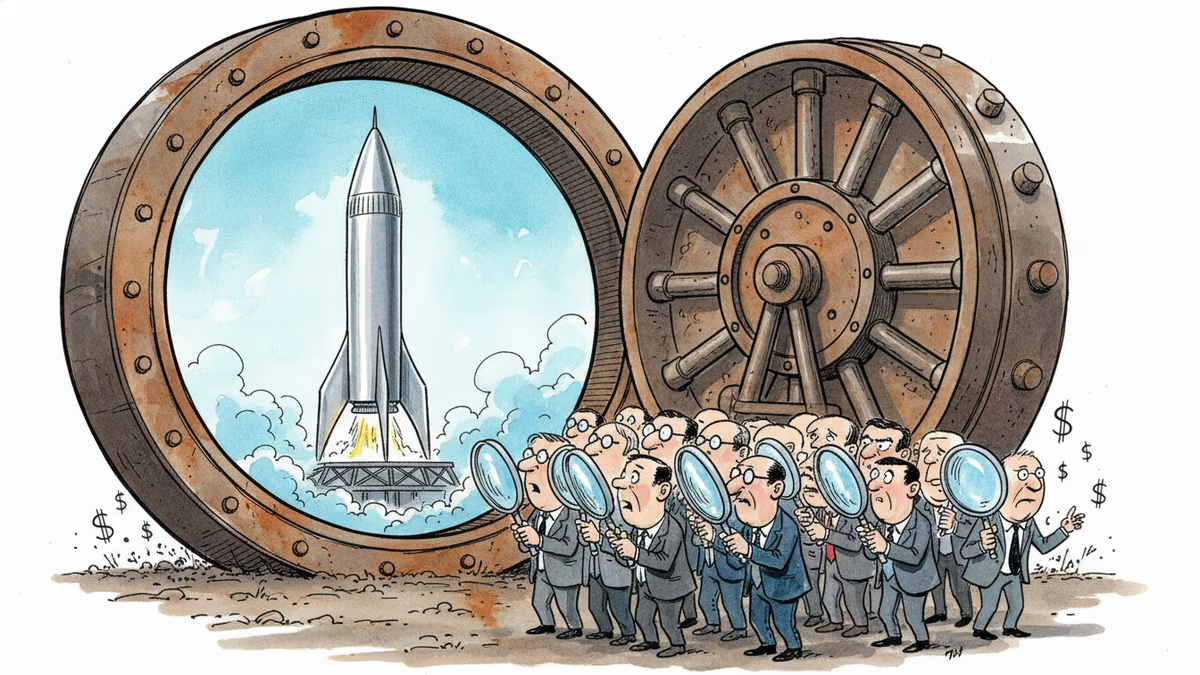
SpaceX filed a nearly 400-page S-1 with the SEC, targeting an IPO as early as June 12. Here's what the filing reveals—and what it doesn't.
American Airlines just signed Starlink for 500+ aircraft. It's not just about faster inflight internet — it's a calculated move in the run-up to what could be the largest IPO in history.
SpaceX's upgraded Starship V3 completed its first test flight, deploying 20 Starlink simulators but losing the Super Heavy booster. With an IPO weeks away, the stakes just got higher.
SpaceX's IPO filing puts AI at the center, claiming a $26.5 trillion market opportunity. But can Grok compete with OpenAI and Anthropic for enterprise customers?
SpaceX filed a nearly 400-page S-1 with the SEC, targeting an IPO as early as June 12. Here's what the filing reveals—and what it doesn't.
Thoughts
Share your thoughts on this article
Sign in to join the conversation