
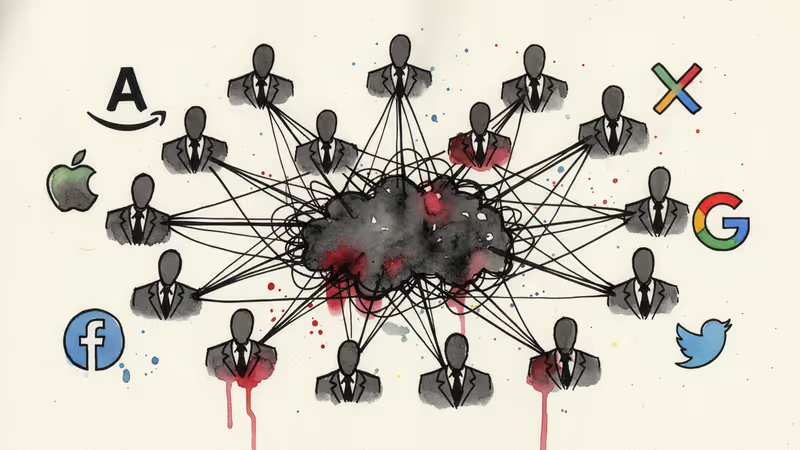
When Tech Titans Meet Jeffrey Epstein
The Epstein files reveal extensive connections with tech leaders from Musk to Zuckerberg. What does this say about power networks in Silicon Valley?
The recently released Jeffrey Epstein files read like a Silicon Valley who's who directory. Elon Musk, Bill Gates, Sergey Brin, Eric Schmidt, Larry Page, Reid Hoffman, Peter Thiel, Jeff Bezos, Mark Zuckerberg — name after name of tech's most powerful figures appear throughout the documents.
These connections vary dramatically in nature and depth. Some had minimal contact, others maintained ongoing relationships. The specifics matter enormously when assessing individual culpability. But step back from the details, and a broader pattern emerges that's worth examining: the interconnected world of extreme wealth and power that these men inhabit.
The Network Effect of Elite Circles
What the files reveal isn't necessarily criminal conspiracy, but something perhaps more mundane yet equally troubling: how the ultra-wealthy move in surprisingly small, overlapping circles. Epstein positioned himself as a connector, a facilitator who could open doors and arrange meetings between influential people.
For tech leaders building global empires, such connections weren't just social — they were potentially strategic. Access to other billionaires, politicians, academics, and influencers could mean the difference between regulatory roadblocks and smooth sailing for their companies.
This isn't unique to tech, of course. Every industry has its power brokers and networking hubs. But Silicon Valley's particular combination of immense wealth, global influence, and relative youth created a generation of leaders who accumulated unprecedented power quickly, often without the institutional guardrails that might have guided previous generations of business titans.
The Accountability Question

The tech industry has spent years grappling with questions about the responsibility that comes with its platforms' massive reach. Now, these files force a different kind of accountability question: what responsibility do tech leaders have for their personal associations, and how might those relationships influence their business decisions?
Consider the irony: companies that built algorithms to map our social connections and predict our behavior based on our associations now find their own networks under scrutiny. The same "guilt by association" logic that their platforms sometimes enable is being applied to them.
Some of these leaders have addressed their Epstein connections publicly. Bill Gates has acknowledged meetings he now regrets. Others have remained silent or offered minimal comment. But the broader question remains: in an era when tech companies wield unprecedented influence over information flow, commerce, and social interaction, do their leaders' personal networks matter more than they used to?
The Institutional Response
What's perhaps most striking about these revelations is how little institutional response they've generated. No major tech company has faced serious shareholder revolts over their leaders' Epstein connections. No regulatory body has launched investigations into whether these relationships influenced business decisions or policy positions.
This relative quiet suggests either that investors and regulators don't see these connections as material to business operations, or that the tech industry's power has grown so entrenched that even scandals of this magnitude struggle to create meaningful consequences.
The contrast with other industries is notable. A pharmaceutical CEO or banking executive with similar associations might face more immediate corporate governance challenges. But tech leaders seem to operate with different rules — or perhaps no rules at all.
Authors
Related Articles
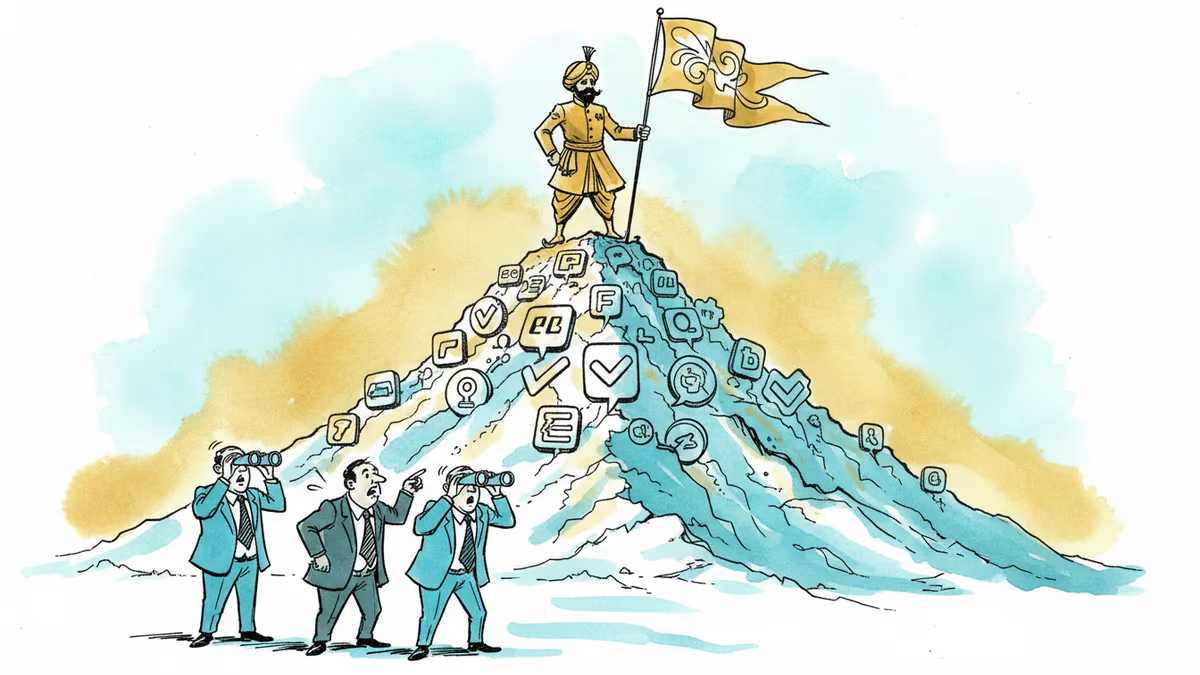
Indian venture capital has quietly displaced Silicon Valley in its own backyard. Only one American VC made India's top 10 investor list last year. Here's why that matters beyond India.
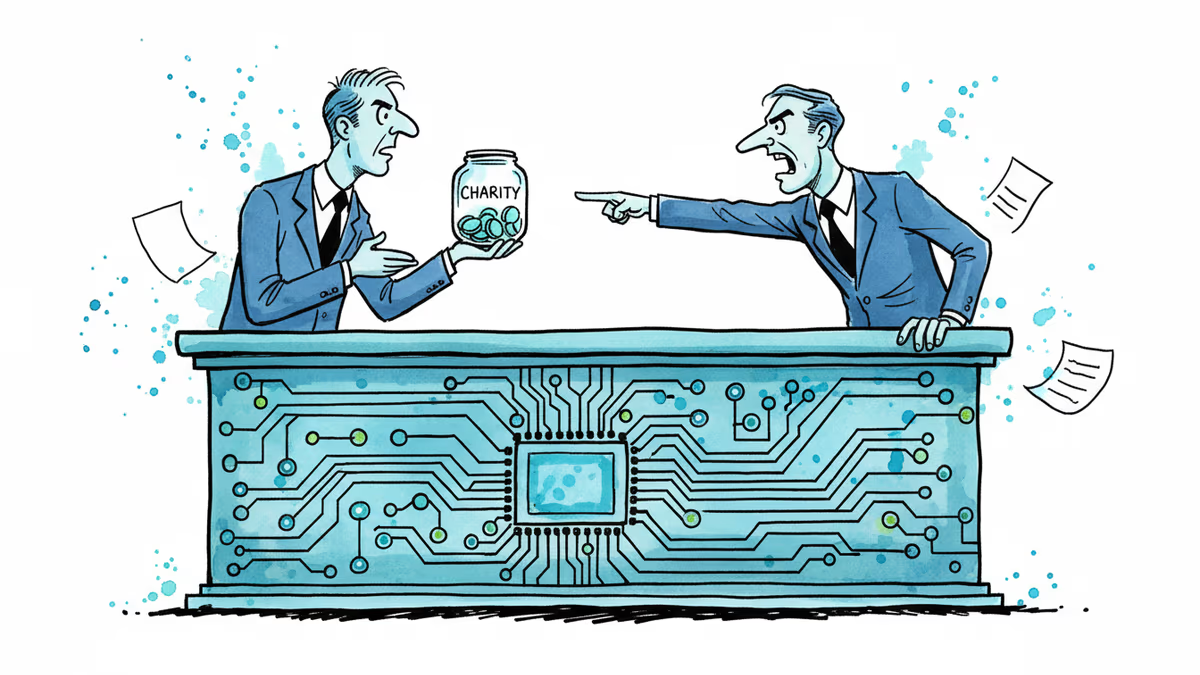
After two weeks of witnesses calling him a liar, OpenAI CEO Sam Altman testified in his own defense, claiming Elon Musk tried to kill the company twice.
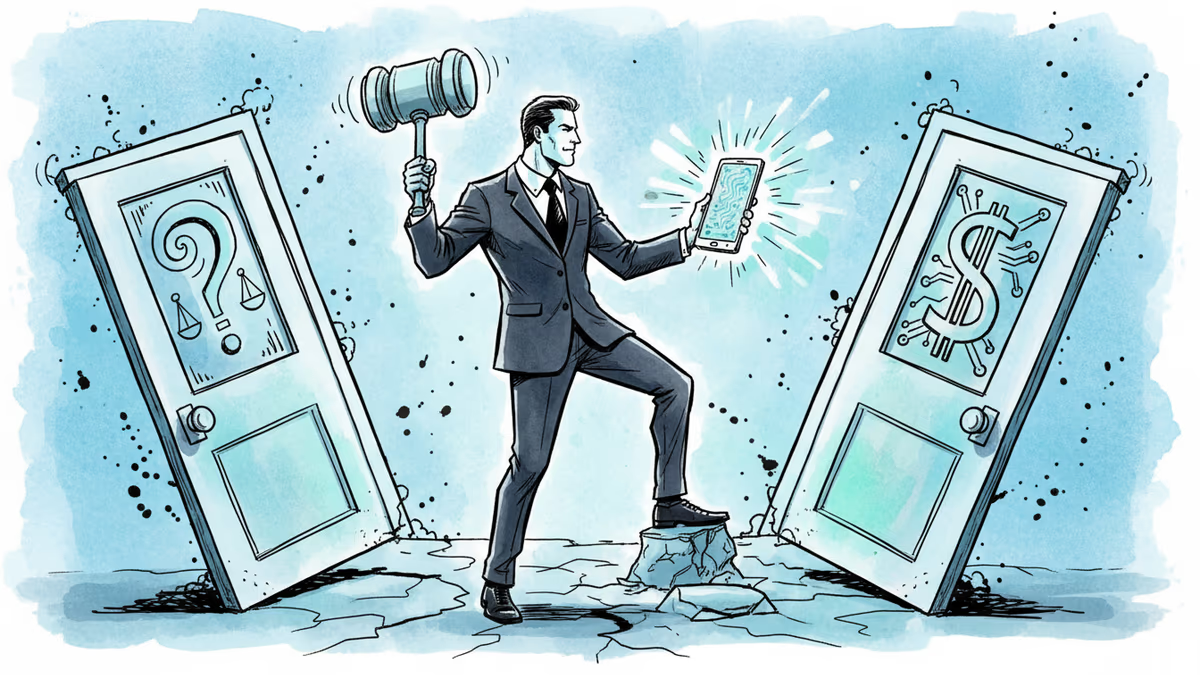
Two days before trial, Elon Musk texted OpenAI's Greg Brockman warning he and Sam Altman would become "the most hated men in America." The judge ruled it inadmissible — but the damage to Musk's narrative may already be done.
OpenAI CEO Sam Altman's San Francisco residence was attacked twice in three days — first a Molotov cocktail, then a shooting. What does this say about tech power, public anger, and the real-world risks facing AI leaders?
Indian venture capital has quietly displaced Silicon Valley in its own backyard. Only one American VC made India's top 10 investor list last year. Here's why that matters beyond India.
After two weeks of witnesses calling him a liar, OpenAI CEO Sam Altman testified in his own defense, claiming Elon Musk tried to kill the company twice.
Two days before trial, Elon Musk texted OpenAI's Greg Brockman warning he and Sam Altman would become "the most hated men in America." The judge ruled it inadmissible — but the damage to Musk's narrative may already be done.
OpenAI CEO Sam Altman's San Francisco residence was attacked twice in three days — first a Molotov cocktail, then a shooting. What does this say about tech power, public anger, and the real-world risks facing AI leaders?
Thoughts
Share your thoughts on this article
Sign in to join the conversation