
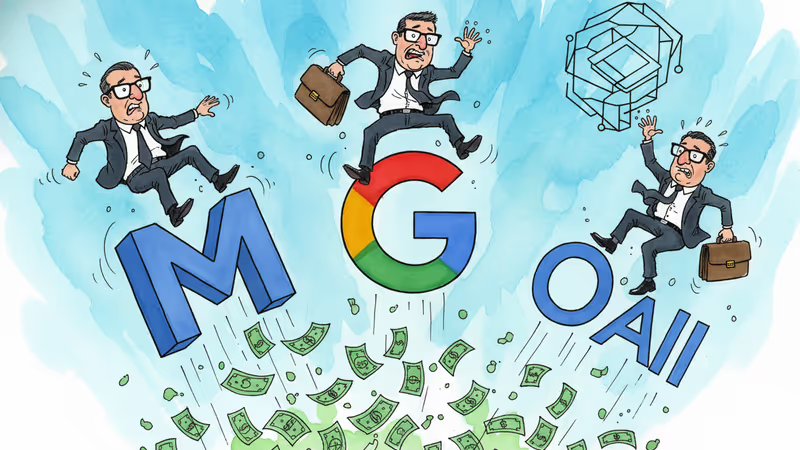
The $36 Billion Musical Chairs Game Reshaping AI Talent
Major AI acqui-hires worth billions signal the end of startup loyalty as talent bounces between companies at unprecedented speed. What's driving this shift?
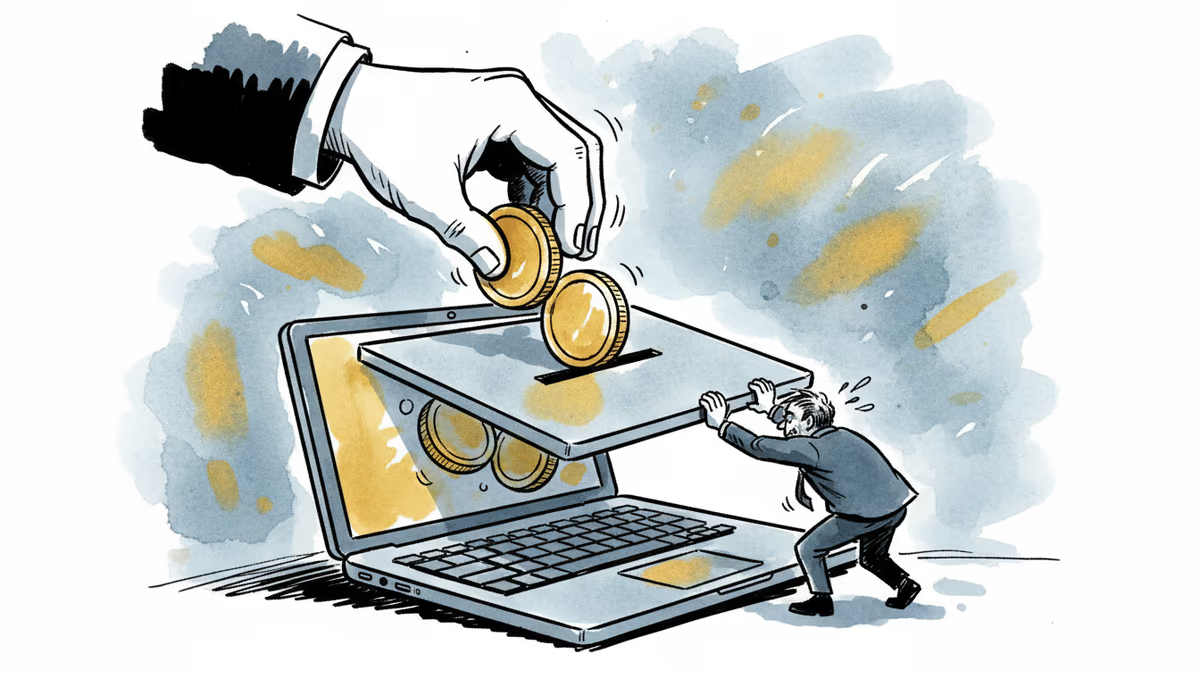
In the span of 18 months, Silicon Valley witnessed $36.4 billion worth of AI talent deals that would have been unthinkable just a few years ago. Meta paid $14 billion for Scale AI and its CEO Alexandr Wang. Google dropped $2.4 billion to absorb Windsurf's team into DeepMind. Nvidia wagered $20 billion on Groq's inference technology and key personnel.
This isn't just about money changing hands—it's about the fundamental breakdown of Silicon Valley's traditional loyalty model.
The Great Startup Unbundling
The musical chairs game extends far beyond mega-deals. Three weeks ago, OpenAI rehired researchers who had left less than two years earlier to join Mira Murati's startup, Thinking Machines. Meanwhile, Anthropic—itself founded by former OpenAI staffers—continues poaching talent from its former parent company. The cycle completes when OpenAI hires an Anthropic safety researcher as its new "head of preparedness."
Dave Munichiello from GV calls this the "great unbundling" of tech startups. Unlike previous eras where founders and early employees typically stayed until either failure or major liquidity events, today's investors now "invest in a startup knowing it could be broken up."
The shift represents more than opportunistic job-hopping. Sayash Kapoor, a computer science researcher at Princeton University, explains that "people understand the limitations of the institutions they're working in, and founders are more pragmatic." The idealistic commitment to company missions that characterized the 2000s and 2010s has given way to calculated career moves.
The Acceleration Effect
The speed of AI development has compressed traditional career timelines. As veteran tech journalist Steven Levy observes, "Working for an AI startup for one year is equivalent to working for a startup for five years in a different era of tech." Teams can now launch products reaching millions of users within months, creating a sense of accelerated professional development that makes workers feel ready for bigger challenges sooner.

This acceleration creates unique pressures. PhD researchers are leaving doctoral programs mid-stream for industry positions, recognizing the high opportunity costs of staying in one place while AI innovation rapidly advances. The traditional four-year vesting schedule that once anchored talent to companies now seems quaint in an industry where breakthrough discoveries can happen quarterly.
Lew Tucker, an early employee at the original Thinking Machines Corporation in 1986, remembers a different era. His company grew from 50 to 500 people over a decade, with "very few people" leaving voluntarily. "There were no job boards back then," he recalls. "People just talked their way in."
The New Talent Economics
Money certainly drives some movement. Meta reportedly offered top AI researchers compensation packages worth tens or hundreds of millions of dollars—not just access to cutting-edge computing resources, but generational wealth. Yet financial incentives alone don't explain the broader cultural shift.
Investors are adapting to this new reality with protective measures. Max Gazor from Striker Venture Partners says his team now vets founding teams "for chemistry and cohesion more than ever." Deal structures increasingly include "protective provisions that require board consent for material IP licensing or similar scenarios."
The irony is that some of the biggest recent acqui-hire targets, like Scale AI, were founded in 2016—long before the current generative AI boom when such deals would have been "unfathomable." Now these potential outcomes are factored into early term sheets and "constructively managed" from the start.
The End of Startup Romance
The tech industry's halo has dimmed considerably since the glory days when founders wore rejection of acquisition offers as badges of honor. Companies like Google, Facebook, Airbnb, and Stripe built their legends on founders and early employees who stuck around for years, accumulating both wealth and reputation through loyalty.
Today's AI talent operates in a fundamentally different environment. The combination of abundant capital, rapid technological progress, and broader cultural skepticism about institutional commitments has created a generation of workers who view career moves as strategic optimization rather than betrayal.
The academic world faces similar disruption. Computer science PhD programs that once reliably produced long-term researchers now compete with industry offers that promise immediate impact and substantial compensation. The traditional pathway of academic research followed by industry application has collapsed into simultaneous, parallel tracks.
Authors
Related Articles
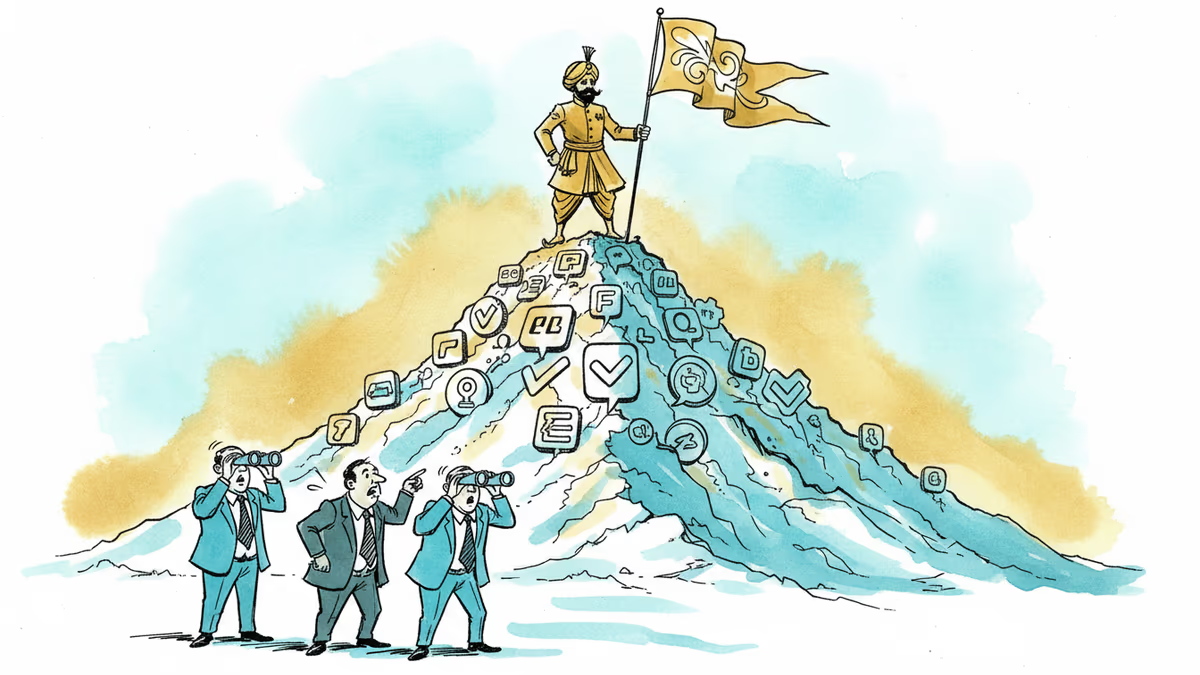
Indian venture capital has quietly displaced Silicon Valley in its own backyard. Only one American VC made India's top 10 investor list last year. Here's why that matters beyond India.
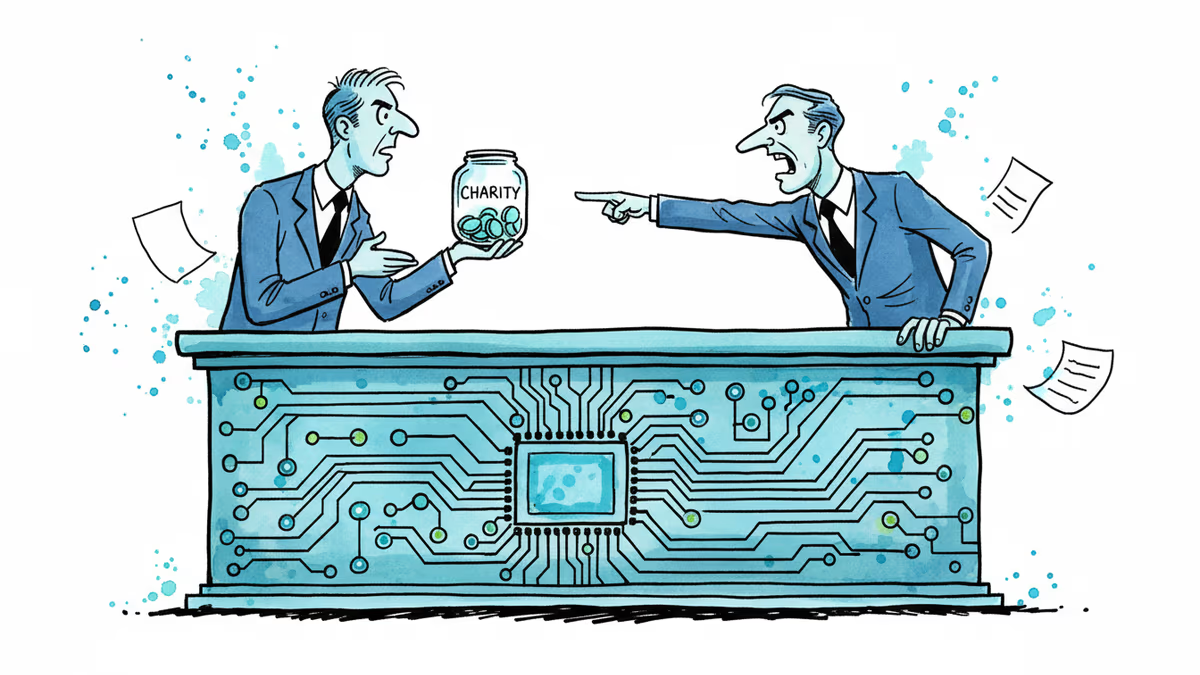
After two weeks of witnesses calling him a liar, OpenAI CEO Sam Altman testified in his own defense, claiming Elon Musk tried to kill the company twice.
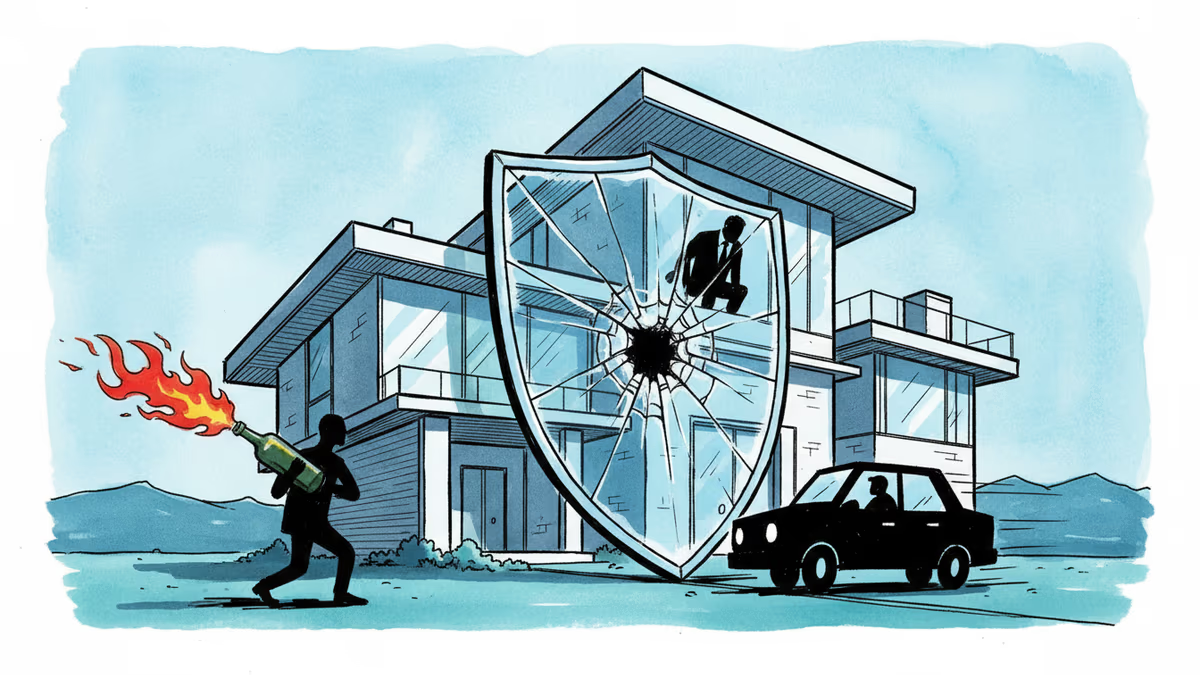
OpenAI CEO Sam Altman's San Francisco residence was attacked twice in three days — first a Molotov cocktail, then a shooting. What does this say about tech power, public anger, and the real-world risks facing AI leaders?
In CA-17, tech founder Ethan Agarwal is challenging five-term incumbent Ro Khanna — backed by billionaires opposed to a wealth tax. It's already getting dirty.
Indian venture capital has quietly displaced Silicon Valley in its own backyard. Only one American VC made India's top 10 investor list last year. Here's why that matters beyond India.
After two weeks of witnesses calling him a liar, OpenAI CEO Sam Altman testified in his own defense, claiming Elon Musk tried to kill the company twice.
OpenAI CEO Sam Altman's San Francisco residence was attacked twice in three days — first a Molotov cocktail, then a shooting. What does this say about tech power, public anger, and the real-world risks facing AI leaders?
In CA-17, tech founder Ethan Agarwal is challenging five-term incumbent Ro Khanna — backed by billionaires opposed to a wealth tax. It's already getting dirty.
Thoughts
Share your thoughts on this article
Sign in to join the conversation