

When One Valve Controls Millions in Profit
Industrial AI startup CVector raises $5M seed funding, helping manufacturers discover how small operational tweaks translate to massive cost savings through AI-powered optimization.
When you turn on a faucet at home, you probably don't think twice about the water bill. Now imagine a single valve adjustment in a factory could mean the difference of millions in company profits. That's exactly the kind of "invisible money" that New York-based startup CVector is helping industrial giants discover.
The Small Actions, Big Savings Problem
CVector founders Richard Zhang and Tyler Ruggles uncovered something remarkable: their customers "really lack the tool to translate a small action, like turning on and off a valve, [into] did that just save me money?" Their AI-powered system acts like a brain and nervous system for big industry, connecting these micro-optimizations to real bottom-line impact.
This insight has paid off. CVector just closed a $5 million seed round led by Powerhouse Ventures, with participation from Fusion Fund, Myriad Venture Partners, and Hitachi's corporate venture arm. The funding validates their approach of bridging the gap between industrial operations and financial outcomes.
Their customer base spans public utilities, advanced manufacturing facilities, and chemical producers. Take ATEK Metal Technologies, an Iowa-based metals processor that makes aluminum castings for Harley-Davidson motorcycles. CVector helps them spot potential equipment downtime, monitor plant-wide energy efficiency, and track commodity prices that impact raw material costs.
Old Plants, New Startups, Same Problems
What's fascinating is that CVector's technology works equally well for legacy industrial facilities and cutting-edge startups. San Francisco materials science company Ammobia, which is working to lower ammonia production costs, uses surprisingly similar optimization strategies to the decades-old ATEK facility.

"The joy of the last six to eight months has been going to the industrial heartland, to all of these places that are just in the middle of nowhere, but have massive production plants that are either reinventing themselves or really transforming how they make decisions," Zhang explained.
This is what CVector calls "operational economics" – positioning their technology to sit between plant operations and actual financial margins.
The AI Adoption Shift
The timing couldn't be better. Just a year ago, AI was still somewhat taboo in industrial settings. "When we first started the company almost exactly a year ago, there was a 50/50 chance if the customer would embrace AI or just kind of discredit you," Zhang recalled.
Now? "Over the especially last six months, everyone is asking for more AI-native solutions, even when sometimes the ROI calculation might not be clear. This kind of adoption craze is real."
Ruggles attributes this shift to economic uncertainty. "We're at this time when companies are really intimately worried about their supply chain and the costs and variability there, and being able to kind of layer AI on top [to make] economic model of a facility, it's really resonated with a lot of customers."
The company has grown to 12 people and secured its first physical office in Manhattan's financial district. Interestingly, Zhang is recruiting talent from fintech and hedge funds – people already focused on using data to gain financial edges.
Authors
Related Articles

QuTwo, the Finnish AI lab led by former AMD Silo AI CEO Peter Sarlin, raised a $29M angel round at a $380M valuation — deliberately avoiding VC money. Here's the logic behind that bet.
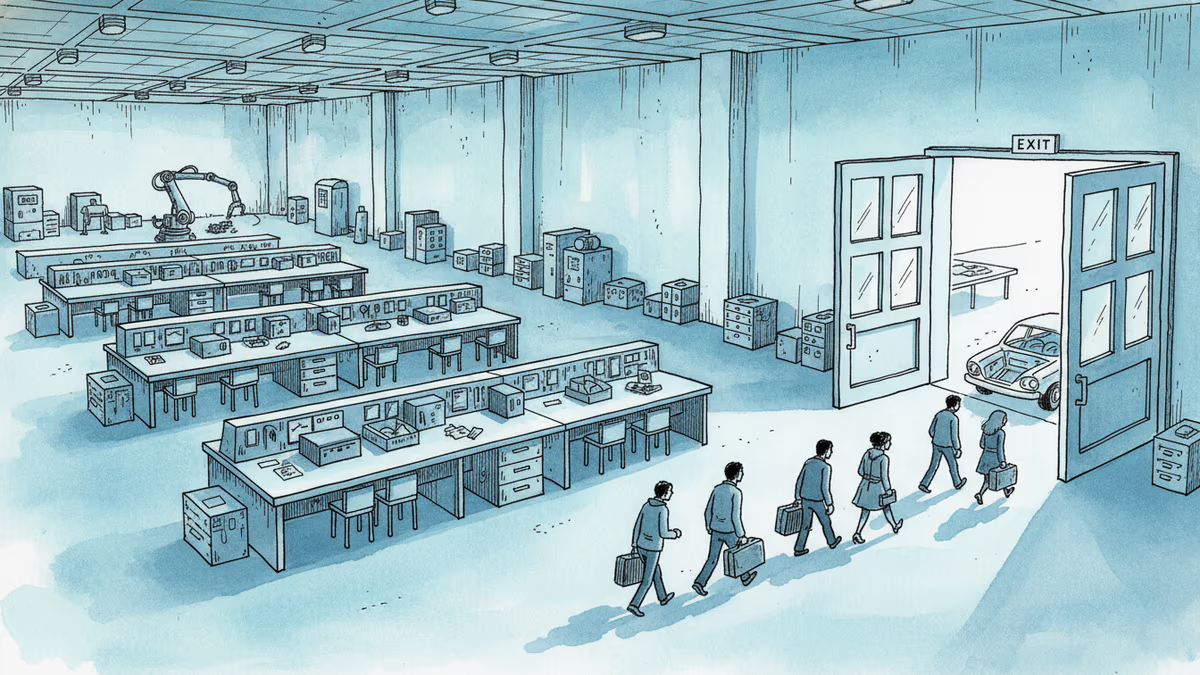
Tesla's Austin gigafactory shed 4,685 workers in 2025—a 22% drop—even as its global headcount grew. What does this tell us about the future of EV manufacturing?
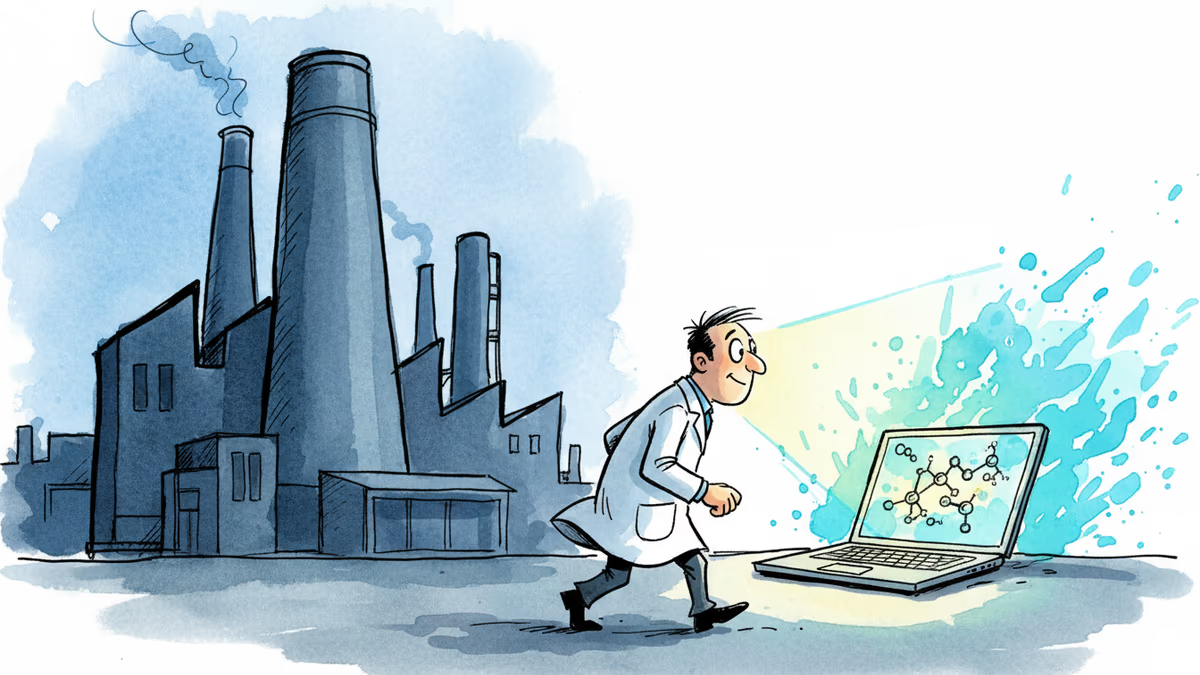
SES AI once partnered with GM, Hyundai, and Honda to build next-gen EV batteries. Now it's pivoting to AI-powered materials discovery. What does this tell us about the future of Western energy manufacturing?
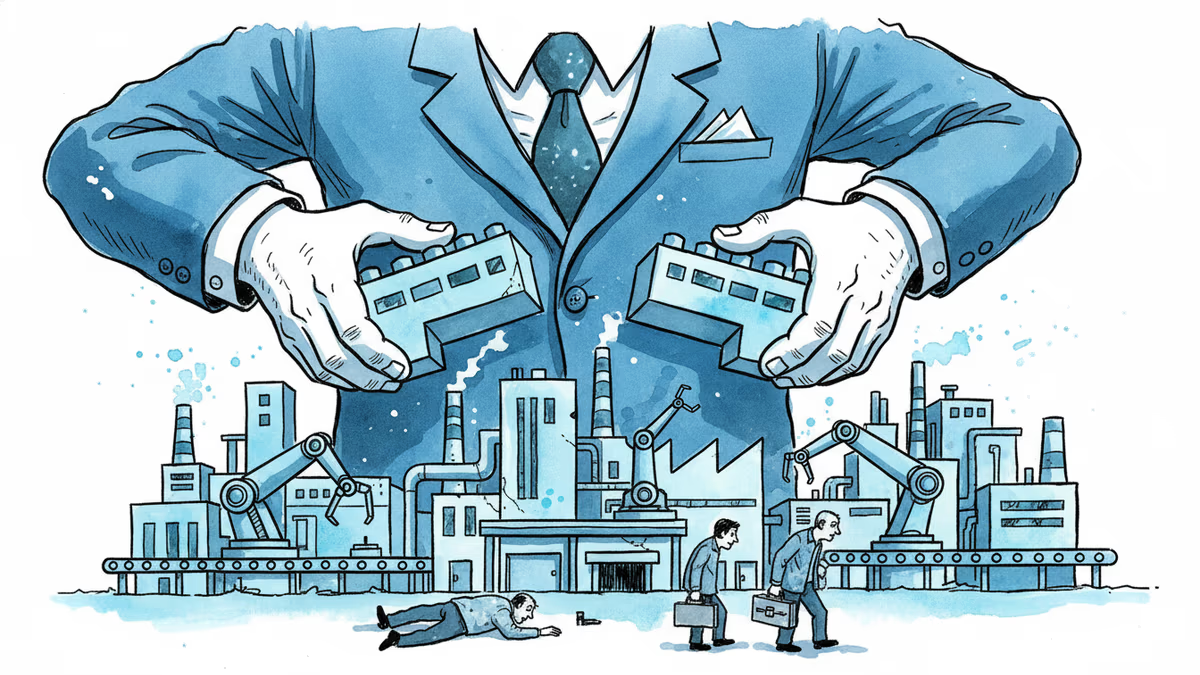
Jeff Bezos is raising a $100 billion fund to acquire aerospace, chipmaking, and defense firms—then rebuild them with AI from his startup Project Prometheus. What it means for manufacturing, labor, and the AI race.
QuTwo, the Finnish AI lab led by former AMD Silo AI CEO Peter Sarlin, raised a $29M angel round at a $380M valuation — deliberately avoiding VC money. Here's the logic behind that bet.
Tesla's Austin gigafactory shed 4,685 workers in 2025—a 22% drop—even as its global headcount grew. What does this tell us about the future of EV manufacturing?
SES AI once partnered with GM, Hyundai, and Honda to build next-gen EV batteries. Now it's pivoting to AI-powered materials discovery. What does this tell us about the future of Western energy manufacturing?
Jeff Bezos is raising a $100 billion fund to acquire aerospace, chipmaking, and defense firms—then rebuild them with AI from his startup Project Prometheus. What it means for manufacturing, labor, and the AI race.
Thoughts
Share your thoughts on this article
Sign in to join the conversation