
Apple's Texas Move: Why the Mac Mini Matters More Than You Think
Apple announces Mac Mini production shift to Texas amid Trump administration pressure. Analysis of selective reshoring strategy and its broader implications for global manufacturing.
A $3.4 Trillion Company Starts Small
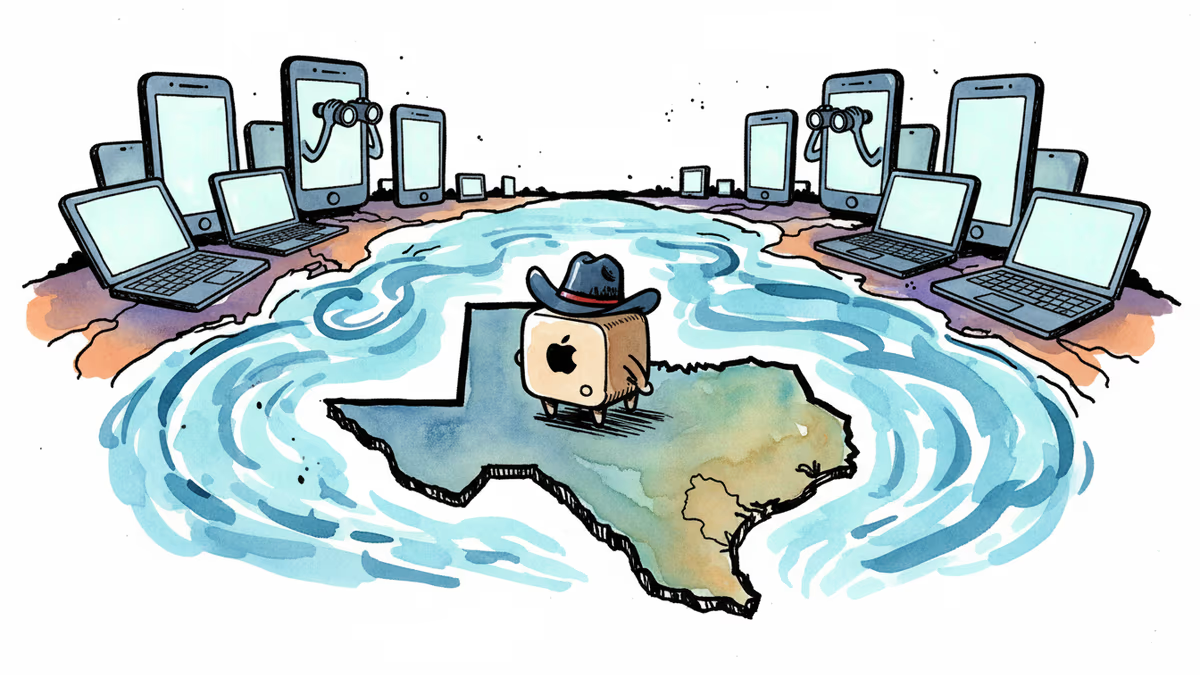
Apple's moving Mac Mini production to Texas later this year, but it's keeping everything else in Asia. The announcement came as Tim Cook tries to appease Trump's "America First" manufacturing push without breaking the bank. But why start with their smallest computer?
The move targets a Foxconn facility in north Houston that already assembles Apple's AI servers. "We're proud to significantly expand our footprint in Houston," Cook said, though he didn't mention the political pressure behind the decision.
The Art of Strategic Compromise
This isn't about patriotism—it's about math. Apple chose the Mac Mini for three calculated reasons.
First, it's financially manageable. Mac Mini represents less than 2% of Apple's total revenue. Moving iPhone production would cost billions and disrupt supply chains serving 200+ countries. The Mini? It's Apple's manufacturing training wheels.
Second, it's technically feasible. No complex displays, no intricate battery systems, no advanced cameras. The Mac Mini is essentially a logic board in a metal box—perfect for testing American manufacturing capabilities without risking core products.
Third, it targets the right audience. Mac Mini buyers are typically creative professionals and developers—exactly the demographic that values "Made in USA" labels and can afford the premium that'll inevitably come with domestic production.
What Wall Street Isn't Saying

Investors are calling this a "smart political move," but they're missing the bigger picture. Apple's selective reshoring strategy reveals something crucial about the future of global manufacturing.
The company isn't abandoning Asia—it's creating a two-tier production system. High-volume, cost-sensitive products stay in China and Vietnam. Low-volume, high-margin products that benefit from "domestic" branding come home.
Intel tried something similar with its "assembled in USA" chips, though the actual manufacturing remained overseas. The difference? Apple has the brand power to make consumers pay for the privilege.
The Foxconn Factor
Here's what makes this move particularly interesting: Foxconn's Houston facility is already producing Apple's AI servers. This isn't starting from scratch—it's expanding an existing operation.
Foxconn has been quietly building manufacturing capabilities across multiple US states, partly due to Chinese government tensions and partly due to American incentives. The company received $3 billion in Wisconsin tax breaks (though that project largely fizzled), and now it's betting on Texas.
The question isn't whether Foxconn can build Mac Minis in America—it's whether they can do it profitably. American manufacturing wages are 4-5x higher than China's, but automation could level the playing field.
The Automation Angle
Don't expect this to create many jobs. Modern electronics manufacturing is increasingly automated, and Apple's Texas operation will likely be no exception. The "American manufacturing" narrative plays well politically, but the reality is probably more robots than workers.
This aligns with Apple's broader automation strategy. The company has been investing heavily in manufacturing robots—from their Daisy iPhone disassembly robot to automated final assembly systems. Texas might be less about bringing jobs home and more about testing lights-out manufacturing.
Authors
Related Articles
After 15 years of fragmented mobile messaging, Apple and Google are rolling out end-to-end encrypted RCS messaging between iPhones and Android devices. Here's what changed, why it took so long, and what it means for your privacy.
Apple agreed to pay $250 million to settle claims it misled iPhone 16 buyers about Apple Intelligence features. What this means for consumers, Big Tech marketing, and the AI industry.
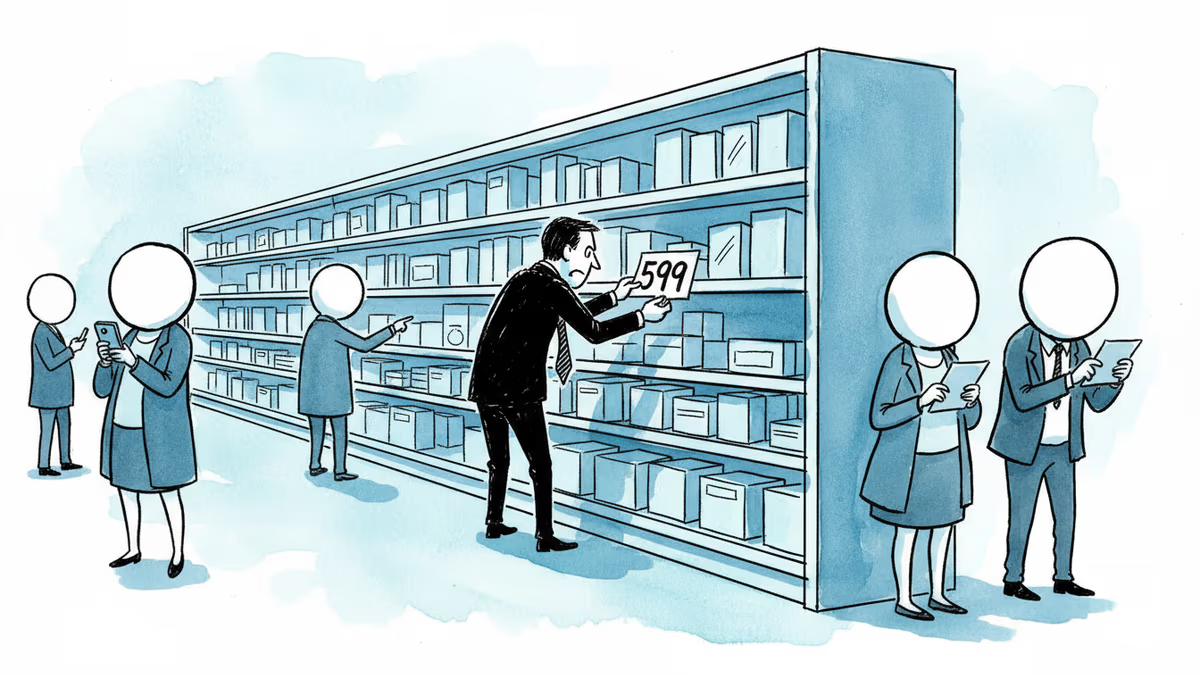
Apple quietly removed the entry-level $599 Mac Mini, raising the starting price to $799 — just one day after Tim Cook warned of chip supply constraints on the earnings call.

Apple names John Ternus, its hardware engineering chief, as the next CEO. The shift from operator to product person signals where Apple thinks its next decade of growth will come from — and raises real questions about what comes next.
After 15 years of fragmented mobile messaging, Apple and Google are rolling out end-to-end encrypted RCS messaging between iPhones and Android devices. Here's what changed, why it took so long, and what it means for your privacy.
Apple agreed to pay $250 million to settle claims it misled iPhone 16 buyers about Apple Intelligence features. What this means for consumers, Big Tech marketing, and the AI industry.
Apple quietly removed the entry-level $599 Mac Mini, raising the starting price to $799 — just one day after Tim Cook warned of chip supply constraints on the earnings call.
Apple names John Ternus, its hardware engineering chief, as the next CEO. The shift from operator to product person signals where Apple thinks its next decade of growth will come from — and raises real questions about what comes next.
Thoughts
Share your thoughts on this article
Sign in to join the conversation