
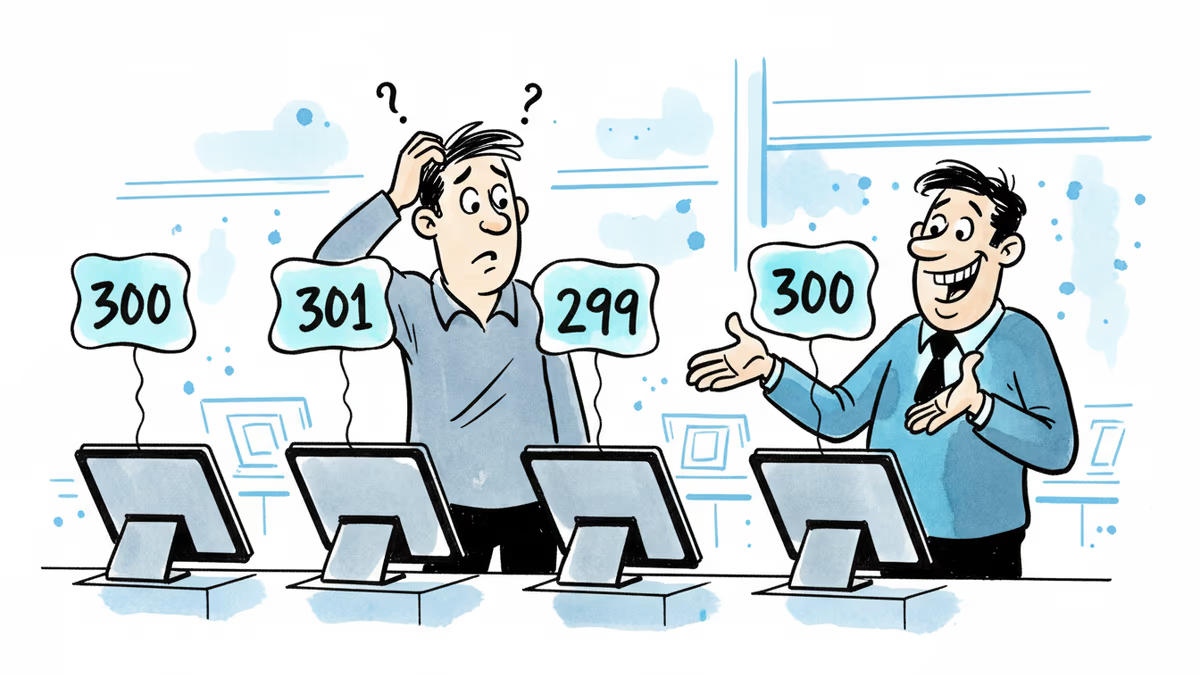
Four iPads, One Confusion: Apple's Intentional Complexity
Apple now sells four different iPad models with overlapping prices and features. The tablet-laptop boundary is blurring, but is this helping or confusing consumers?
$999 iPad vs $999 MacBook: Apple's Pricing Puzzle
Walk into an Apple Store today and you'll encounter a peculiar sight: an iPad Pro ($999) sitting next to a MacBook Air ($999). Both pack the same M4 chip. Both can handle serious work. Yet customers leave scratching their heads, asking: "Which one should I actually buy?"
This isn't accidental confusion—it's strategic complexity. Apple has deliberately blurred the lines between tablets and laptops, creating what industry insiders call "choice architecture." The goal? Get you to consider more expensive options by making cheaper ones seem insufficient.
The Four-iPad Ecosystem: Each Fighting for Identity
Apple currently sells four distinct iPad models, each supposedly serving different needs. But those distinctions are becoming harder to justify.
The base iPad ($329) seems like a bargain until you realize it can't run Apple Intelligence. Its A16 chip lacks sufficient RAM for AI features, making it feel outdated before you even unbox it. Great for students and casual users, but it's essentially a dead-end purchase.
iPad Air ($599) bridges the gap with an M3 chip that supports AI features. It's the "Goldilocks" option—not too basic, not too premium. But at just $400 less than the Pro model, many buyers question whether they're getting enough value.
iPad Mini ($489) occupies its own niche with an A17 Pro chip in a compact form. It's become the favorite among readers, note-takers, and mobile gamers who prioritize portability over screen real estate.
Then there's the iPad Pro ($999), Apple's "overkill tablet" with an M5 chip and OLED display. Add the Magic Keyboard, and you're looking at $1,300+—more than many laptops.
The Laptop Boundary War
Here's where things get interesting: price inversion. An iPad Pro with Magic Keyboard ($1,300) costs more than a MacBook Air ($999). Both use the same M4 chip. Both can run professional software.

So why choose the more expensive option? Form factor flexibility. The iPad Pro transforms from tablet to laptop as needed. It offers 5G connectivity that no MacBook has ever provided. For frequent travelers, this versatility justifies the premium.
The MacBook Air counters with familiarity and practicality. Better keyboard and trackpad experience. More ports. A mature operating system that doesn't require workarounds. For home or office use, it's the sensible choice.
iPadOS 26: The Game Changer
Apple's September 2025 release of iPadOS 26 shifted the conversation entirely. iPads now support windowed apps—you can resize windows, manage multiple floating apps, and work more like a traditional computer.
This isn't just a feature update; it's a philosophical shift. iPads are evolving from "big iPhones" to "small Macs." Background processing means you can render video while browsing social media. The experience feels genuinely computer-like for the first time.
But limitations remain. Professional development tools, specialized software, and certain workflows still require macOS. No matter how capable iPads become, they can't fully replace "real computers" for every use case.
The Upgrade Trap
Apple's complexity serves another purpose: the upgrade cycle. With four models refreshing at different times, there's always a "new" iPad to consider. The company has shortened upgrade cycles to six months in some cases, creating perpetual FOMO.
This strategy works. iPad revenue has remained steady despite smartphone market saturation. But it's creating decision paralysis among consumers who just want a simple tablet for basic tasks.
The Real Competition: Simplicity
While Apple complicates its lineup, competitors are simplifying. Samsung Galaxy Tab offers fewer models with clearer distinctions. Microsoft Surface positions itself firmly as a laptop replacement. Even Amazon Fire tablets stick to their budget-friendly lane.
The irony? Apple's strength—ecosystem integration—becomes a weakness when the ecosystem itself is confusing. Customers who might happily buy "the iPad" now face analysis paralysis choosing between four options.
The tablet market's future might depend less on technical specifications and more on who can offer the clearest path to purchase. Sometimes, the best choice is having fewer choices.
Authors
Related Articles
After 15 years of fragmented mobile messaging, Apple and Google are rolling out end-to-end encrypted RCS messaging between iPhones and Android devices. Here's what changed, why it took so long, and what it means for your privacy.
Apple agreed to pay $250 million to settle claims it misled iPhone 16 buyers about Apple Intelligence features. What this means for consumers, Big Tech marketing, and the AI industry.
Apple quietly removed the entry-level $599 Mac Mini, raising the starting price to $799 — just one day after Tim Cook warned of chip supply constraints on the earnings call.

Apple names John Ternus, its hardware engineering chief, as the next CEO. The shift from operator to product person signals where Apple thinks its next decade of growth will come from — and raises real questions about what comes next.
After 15 years of fragmented mobile messaging, Apple and Google are rolling out end-to-end encrypted RCS messaging between iPhones and Android devices. Here's what changed, why it took so long, and what it means for your privacy.
Apple agreed to pay $250 million to settle claims it misled iPhone 16 buyers about Apple Intelligence features. What this means for consumers, Big Tech marketing, and the AI industry.
Apple quietly removed the entry-level $599 Mac Mini, raising the starting price to $799 — just one day after Tim Cook warned of chip supply constraints on the earnings call.
Apple names John Ternus, its hardware engineering chief, as the next CEO. The shift from operator to product person signals where Apple thinks its next decade of growth will come from — and raises real questions about what comes next.
Thoughts
Share your thoughts on this article
Sign in to join the conversation