
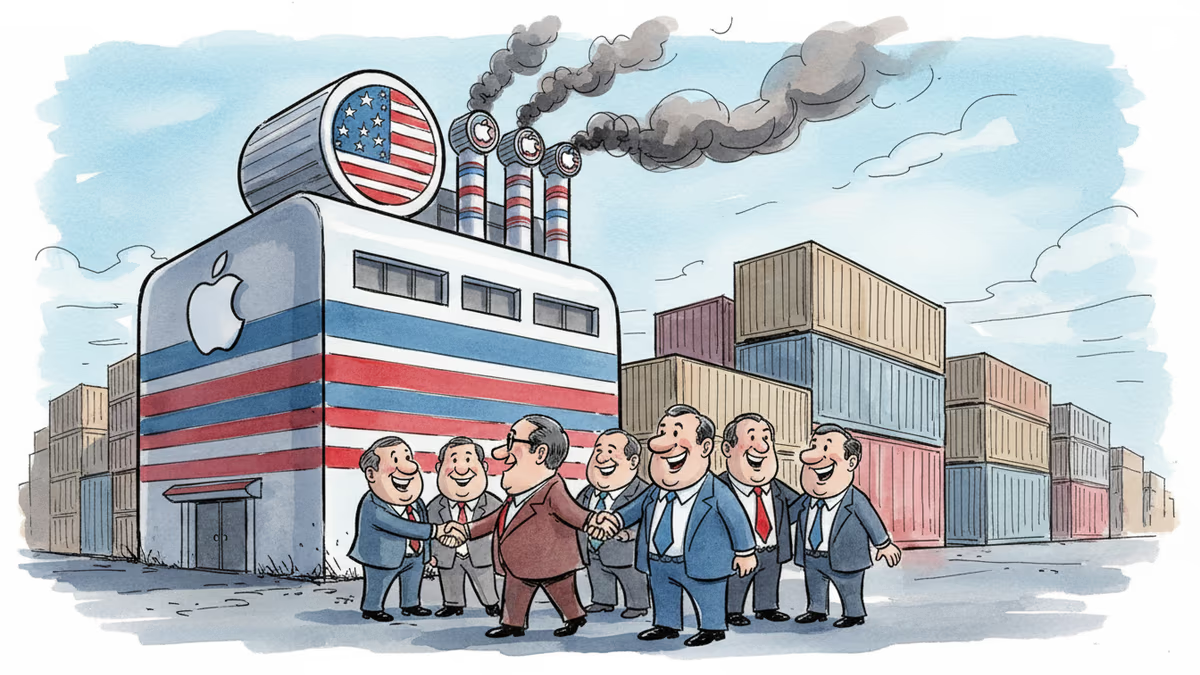
Apple's Mac Mini Manufacturing Move: Political Theater or Strategic Shift?
Apple announces US manufacturing for Mac mini in Houston facility, part of $600B domestic expansion amid Trump tariff threats. Analysis of the political and economic implications.
When $600 Billion Meets Political Reality
Apple's announcement to manufacture Mac minis in Houston starting later this year sounds like business as usual. It's part of their $600 billion commitment to expand domestic manufacturing. But the timing tells a different story.
This isn't just about supply chain optimization. It's about survival in an era where Trump's administration wields tariffs like a diplomatic weapon, and tech companies scramble to stay in the good graces of a president who's never shy about threatening American businesses.
The Houston Gambit
The Houston facility isn't new—Apple's already using it for "advanced AI server manufacturing," which Tim Cook says is shipping "ahead of schedule." Adding Mac mini production is strategically smart: it's a relatively simple product compared to iPhones or MacBooks, making it an ideal candidate for domestic manufacturing experiments.
But there's more. The facility will provide "hands-on training in advanced manufacturing techniques" for students, Apple employees, and "American businesses of all sizes." It's job creation, education, and political goodwill wrapped into one neat package.
Beyond the Gold Statue Diplomacy

Remember when Tim Cook presented Trump with a signed gold statue? This Mac mini announcement is more subtle but serves the same purpose: keeping Apple off the tariff hit list. Other US tech companies are making similar moves, each trying to demonstrate their commitment to American manufacturing.
The question isn't whether this is political theater—it obviously is. The question is whether it's effective theater that also makes business sense.
The Economics Don't Add Up (Yet)
Here's the uncomfortable truth: manufacturing in America is expensive. What costs $10 to make in China might cost $30 in Houston. Labor, infrastructure, supply chain proximity—every factor favors overseas production.
Apple can absorb these costs for now, especially for lower-volume products like the Mac mini. But scaling this to iPhones? That's a different calculation entirely. Unless, of course, tariffs make Chinese manufacturing prohibitively expensive anyway.
The Broader Tech Dilemma
Apple's move reflects a broader challenge facing American tech companies: navigating an increasingly politicized business environment. Companies that spent decades optimizing for efficiency now must optimize for political resilience.
Microsoft, Google, and others face similar pressures. The companies that adapt fastest to this new reality—where political considerations carry as much weight as economic ones—will likely emerge stronger.
Authors
Related Articles
After 15 years of fragmented mobile messaging, Apple and Google are rolling out end-to-end encrypted RCS messaging between iPhones and Android devices. Here's what changed, why it took so long, and what it means for your privacy.
Apple agreed to pay $250 million to settle claims it misled iPhone 16 buyers about Apple Intelligence features. What this means for consumers, Big Tech marketing, and the AI industry.
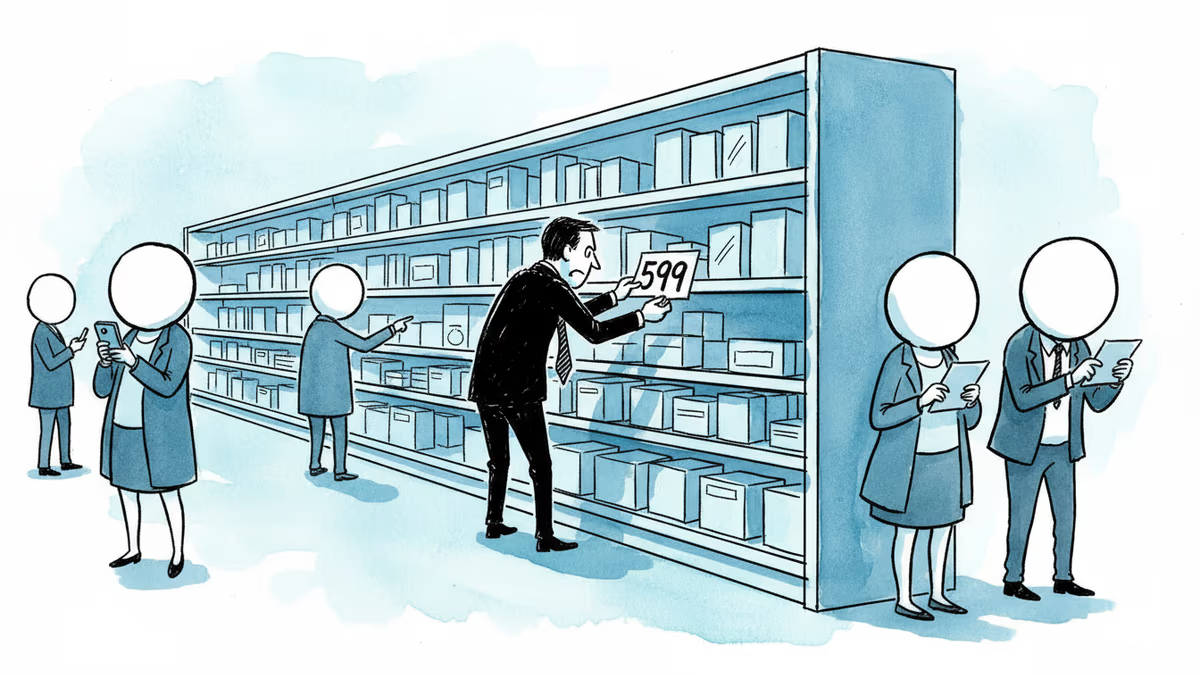
Apple quietly removed the entry-level $599 Mac Mini, raising the starting price to $799 — just one day after Tim Cook warned of chip supply constraints on the earnings call.
Apple names John Ternus, its hardware engineering chief, as the next CEO. The shift from operator to product person signals where Apple thinks its next decade of growth will come from — and raises real questions about what comes next.
After 15 years of fragmented mobile messaging, Apple and Google are rolling out end-to-end encrypted RCS messaging between iPhones and Android devices. Here's what changed, why it took so long, and what it means for your privacy.
Apple agreed to pay $250 million to settle claims it misled iPhone 16 buyers about Apple Intelligence features. What this means for consumers, Big Tech marketing, and the AI industry.
Apple quietly removed the entry-level $599 Mac Mini, raising the starting price to $799 — just one day after Tim Cook warned of chip supply constraints on the earnings call.
Apple names John Ternus, its hardware engineering chief, as the next CEO. The shift from operator to product person signals where Apple thinks its next decade of growth will come from — and raises real questions about what comes next.
Thoughts
Share your thoughts on this article
Sign in to join the conversation