
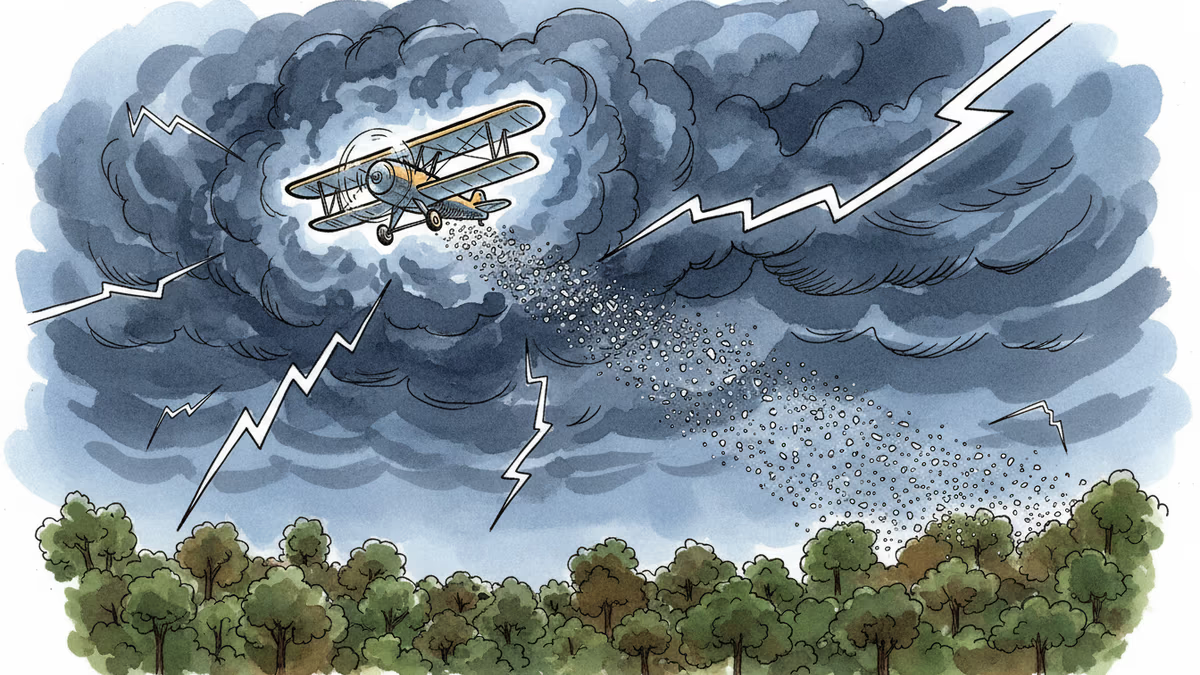
This Startup Claims It Can Stop Lightning to Prevent Wildfires
Vancouver-based Skyward Wildfire raised millions to deploy cloud seeding technology that could prevent lightning strikes. But scientists remain skeptical about the decades-old approach.
7,000 Fires, One Culprit
Canada's 2023 fire season was a climate nightmare. Nearly 7,000 wildfires scorched tens of millions of acres, forcing hundreds of thousands to evacuate. The shocking detail? Lightning sparked 60% of these fires—and those lightning-ignited blazes accounted for 93% of the total burned area.
Now a Vancouver startup thinks it has the solution: stop the lightning before it strikes.
Skyward Wildfire just raised $7.9 million CAD to scale technology that claims to prevent lightning strikes through cloud seeding. Until last week, the company boldly stated it could prevent "up to 100% of lightning strikes." That claim disappeared after MIT Technology Review started asking questions.
"While the statement reflected an observed result under specific conditions, it was not intended to suggest uniform outcomes," company representative Nicholas Harterre explained. The website now more modestly claims it can prevent "the majority" of strikes.
The 60-Year-Old Solution
Skyward's approach isn't revolutionary—it's a revival. The company appears to be using metallic chaff, aluminum-coated glass fibers originally developed for military radar jamming. Fighter jets deploy this material during dogfights to confuse missile guidance systems.
The idea of using chaff for lightning suppression dates back to the early 1960s. Project Skyfire, a multi-agency research program, seeded clouds over Arizona and Montana throughout the 1950s and 60s. Later, NASA and NOAA ran Project Thunderbolt in the 1970s, motivated by lightning strikes that nearly derailed Apollo 12's moon mission.
Those early experiments showed "generally promising results"—more than 50% reduction in cloud-to-ground lightning. But concerns about radio interference killed the programs.
The Science: Promising or Problematic?
The theory makes sense. Chaff acts as a conductor in electrical fields, redistributing charges within storm clouds before they build up enough to create lightning. MIT's Phillip Stepanian, who studies atmospheric electricity, says it's "unambiguously true" the technique can reduce lightning strikes—with major caveats.

But recent research complicates the picture. A new study by Stepanian and MIT's Earle Williams examined 35 storms with detectable chaff versus 35 without. The surprising result? Storms with chaff actually produced more total lightning: 62,250 flashes versus 24,492.
"It's hard to draw any conclusion about lightning suppression using chaff," the researchers concluded.
Williams suggests large concentrations of chaff might be needed for suppression—but the material quickly dilutes in turbulent storm clouds. That's a significant deployment challenge.
Environmental Questions Linger
Military studies generally find chaff "nontoxic" and biodegradable. But commercial-scale deployment raises new questions. A 1998 Government Accountability Office report noted chaff could affect civilian radar and weather forecasts, plus create "potential but remote" risks to water reservoirs.
Keith Brooks from Environmental Defence Canada wants more transparency: "We should be doing this cautiously and really transparently, with robust scientific methodology open to scrutiny." He's particularly concerned about pilots conducting weather modification without public notice.
Skyward's Harterre says the company follows all regulations and releases materials "at lower volumes and concentrations than defense use." But the company hasn't published peer-reviewed data or disclosed testing methodologies.
Climate Stakes Keep Rising
The urgency is real. Climate change is likely increasing lightning frequency as warmer air holds more moisture and adds convective energy to the atmosphere. Arctic regions show the clearest trend—lightning-ignited fires have substantially increased in boreal forests.
Canada's 2023 fire emissions exceeded the country's fossil fuel emissions by 4x. "Preventing lightning on high-risk days saves lives, billions in wildfire costs," Skyward CEO Sam Goldman claims.
Brendan Rogers from Woodwell Climate Research Center sees potential: "If you're able to go after fires before they've even ignited, you remove a lot of risk from the equation." Prevention is far cheaper than suppression and avoids risks to firefighters and communities.
The Investment Bet
Climate Innovation Capital, Active Impact Investments, and Diagram Ventures backed Skyward's latest funding round. "Mitigating exponentially increasing wildfire risk can only happen if we shift from reactive suppression to proactive prevention," investor Kevin Kimsa stated.
But questions remain about scalability, environmental impact, and effectiveness across different weather conditions. Skyward promises to release more technical details "as programs mature."
Authors
Related Articles

The Doomsday Clock reaches 85 seconds to midnight, the closest to global catastrophe in its 80-year history. Nuclear threats, AI risks, and rising nationalism accelerate existential dangers.
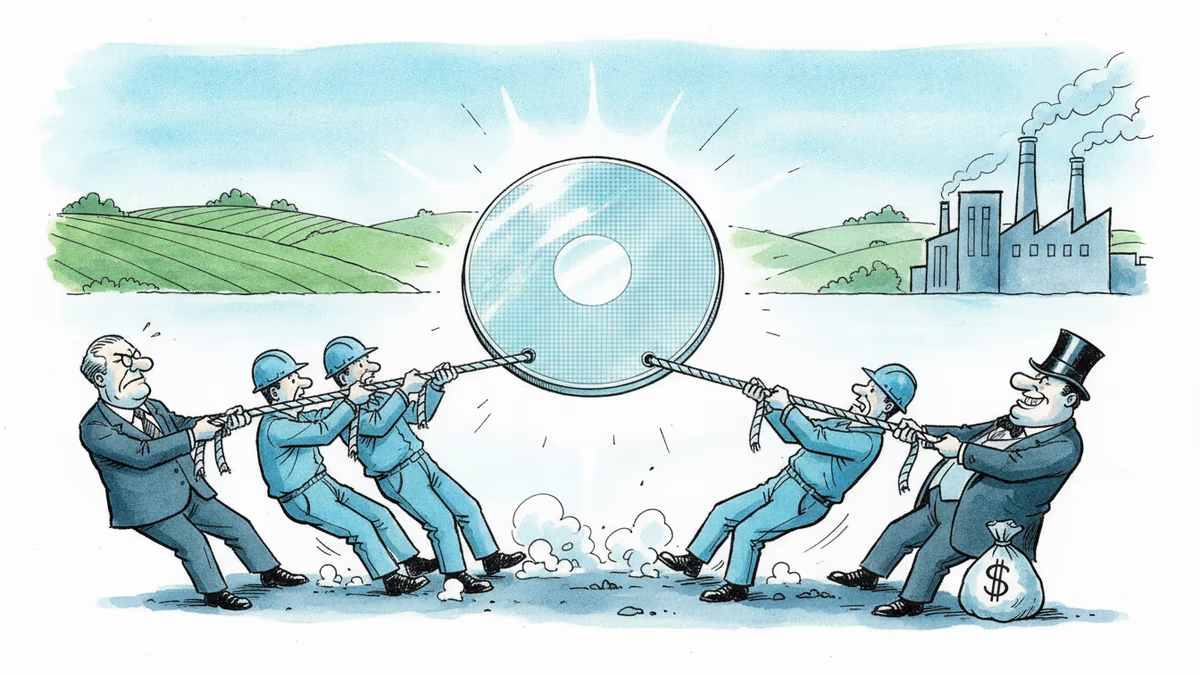
Samsung Electronics' union branch revealed that 84% of survey respondents oppose the government's roughly $290 billion (₩400 trillion) semiconductor megaproject in Gwangju. Government, management, the union and shareholders are all reading the same national project in sharply different ways.
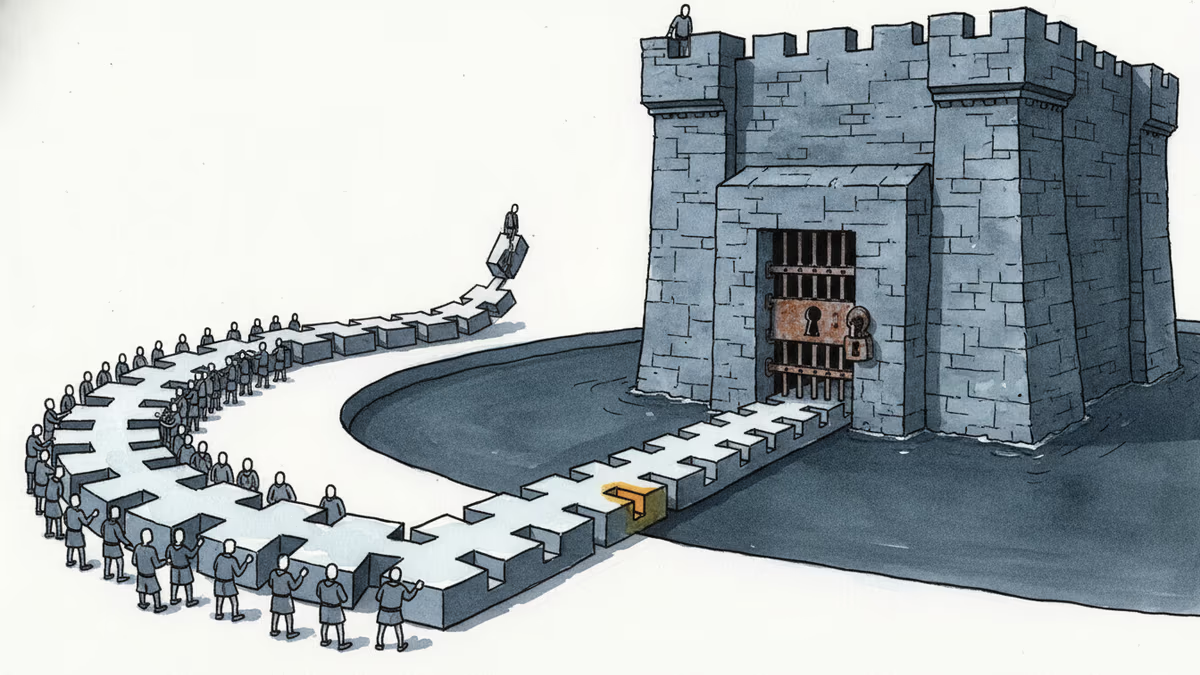
Nvidia shipped roughly a billion RISC-V cores in 2024, then announced it would run CUDA on the open standard. We break down how royalty-free instruction sets and open software stacks are trying to route around CUDA's lock-in. Part 2 of the Semiconductor Sovereignty series.
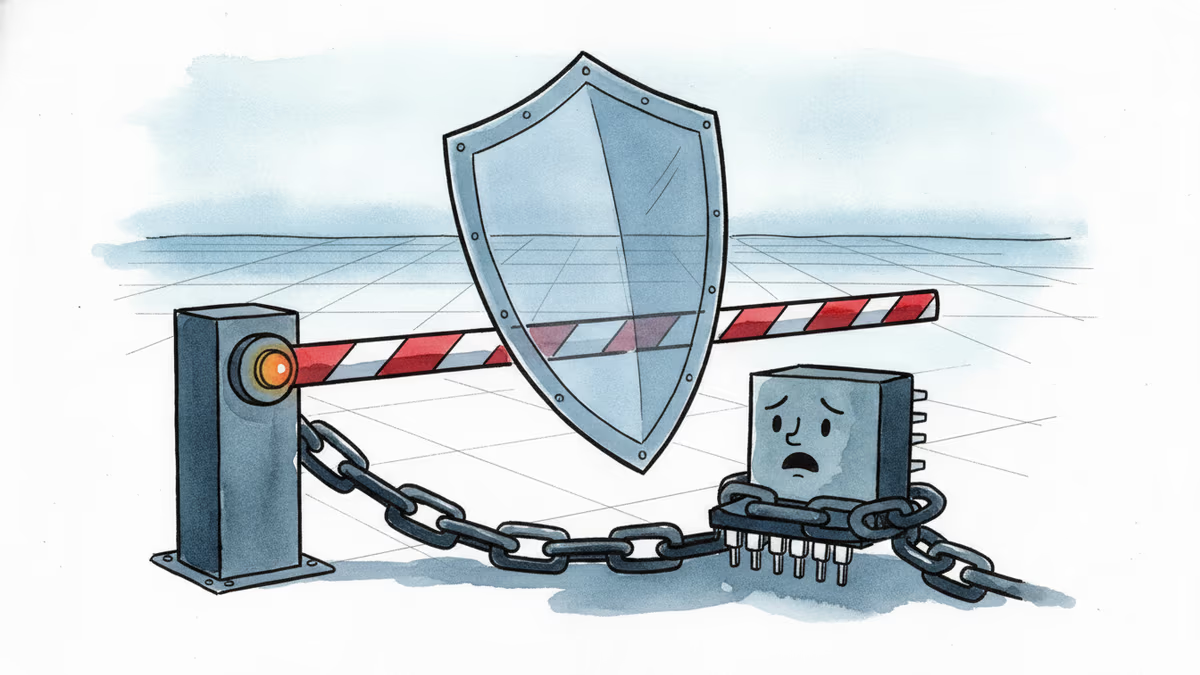
US AI-chip export controls split into three layers in the first half of 2026 — January easing, a May crackdown on circumvention, and a pending bill. Nvidia erased China from its guidance and still posted a record $81.6 billion quarter. A look at the export policy that both shields and cages it.
The Doomsday Clock reaches 85 seconds to midnight, the closest to global catastrophe in its 80-year history. Nuclear threats, AI risks, and rising nationalism accelerate existential dangers.
Samsung Electronics' union branch revealed that 84% of survey respondents oppose the government's roughly $290 billion (₩400 trillion) semiconductor megaproject in Gwangju. Government, management, the union and shareholders are all reading the same national project in sharply different ways.
Nvidia shipped roughly a billion RISC-V cores in 2024, then announced it would run CUDA on the open standard. We break down how royalty-free instruction sets and open software stacks are trying to route around CUDA's lock-in. Part 2 of the Semiconductor Sovereignty series.
US AI-chip export controls split into three layers in the first half of 2026 — January easing, a May crackdown on circumvention, and a pending bill. Nvidia erased China from its guidance and still posted a record $81.6 billion quarter. A look at the export policy that both shields and cages it.
Thoughts
Share your thoughts on this article
Sign in to join the conversation