
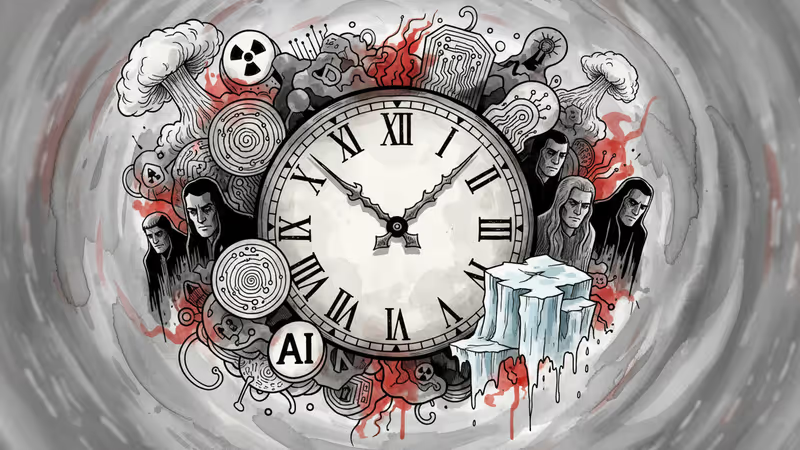
Humanity Now 85 Seconds From Doomsday—Closest Ever
The Doomsday Clock reaches 85 seconds to midnight, the closest to global catastrophe in its 80-year history. Nuclear threats, AI risks, and rising nationalism accelerate existential dangers.
85 seconds. That's how close humanity now stands to rendering Earth uninhabitable, according to the latest Doomsday Clock reading—the closest we've ever been to midnight since the clock's creation in 1947.
The Bulletin of the Atomic Scientists' Science and Security Board (SABS) moved the clock forward by 4 seconds from last year's 89 seconds, citing escalating nuclear threats, disruptive technologies like artificial intelligence, mounting biosecurity concerns, and the relentless climate crisis.
This isn't just another symbolic gesture. It's a stark reflection of how global leaders have responded to previous warnings—not with cooperation, but with increased aggression and nationalism.
When Warnings Fall on Deaf Ears
The Doomsday Clock emerged during the Cold War as humanity grappled with its newfound ability to destroy itself. Midnight represents the moment when we've made Earth uninhabitable. Last year's move from 90 seconds to 89 seconds already highlighted insufficient progress on nuclear risk, climate crisis, biological threats, disruptive technologies, and disinformation.
"Every second of delay in reversing course increases the likelihood of a global disaster," SABS members warned then.
Yet instead of heeding this alarm, the United States, Russia, China, and other major powers have doubled down on confrontation. The world's response to existential threats has been more nationalism, not more cooperation.
The Rise of 'Us vs. Them'
"The dangerous trends in nuclear risk, climate change, disruptive technologies like AI, and biosecurity are accompanied by another frightening development: the rise of nationalistic autocracies in countries around the world," explained SABS president Daniel Holz.

This matters because our greatest challenges don't respect borders. Nuclear fallout, climate change, and AI-enabled bioweapons can't be stopped by walls or tariffs. Yet as these threats intensify, the international cooperation needed to address them is crumbling.
"Hard-won global understandings are collapsing, accelerating a winner-takes-all great power competition and undermining the international cooperation critical to reducing the risks," the organization noted. Too many leaders have grown "complacent and indifferent," adopting rhetoric that accelerates rather than mitigates existential risks.
What 85 Seconds Really Means
This isn't just about nuclear weapons anymore. Today's threats are interconnected and amplifying each other. AI could accelerate the development of biological weapons. Climate change could trigger resource wars that escalate to nuclear conflict. Disinformation campaigns could undermine the trust needed for international agreements.
Consider the implications: OpenAI and other tech companies are racing to develop increasingly powerful AI systems while governments struggle to establish guardrails. Meanwhile, nuclear arsenals are being modernized rather than reduced, and climate targets remain woefully inadequate.
For investors and business leaders, this represents unprecedented uncertainty. How do you plan for growth when the fundamental stability of civilization is in question? For policymakers, it's a reminder that short-term political gains pale in comparison to long-term survival.
The Path Back from the Brink
Yet the clock's creators emphasize that 85 seconds still leaves room for action. The United States and Russia could resume nuclear arms limitation talks. Multilateral agreements could prevent AI from being weaponized for biological threats. Congress could provide incentives for rapid fossil fuel reduction.
Most crucially, the US, Russia, and China could begin developing guidelines for integrating AI into military systems, particularly nuclear command and control—before it's too late.
"National leaders, particularly those of the United States, Russia, and China, must take the lead in finding a way out of the abyss," the experts concluded. "Citizens must insist that they do so."
Authors
Related Articles
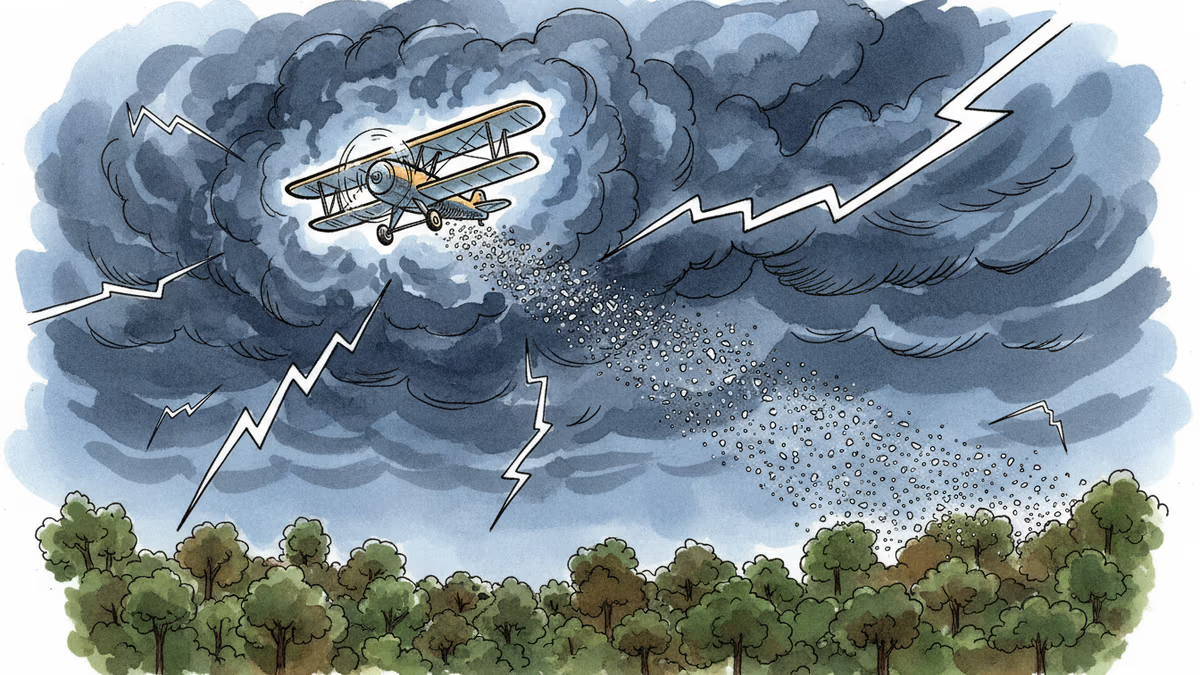
Vancouver-based Skyward Wildfire raised millions to deploy cloud seeding technology that could prevent lightning strikes. But scientists remain skeptical about the decades-old approach.
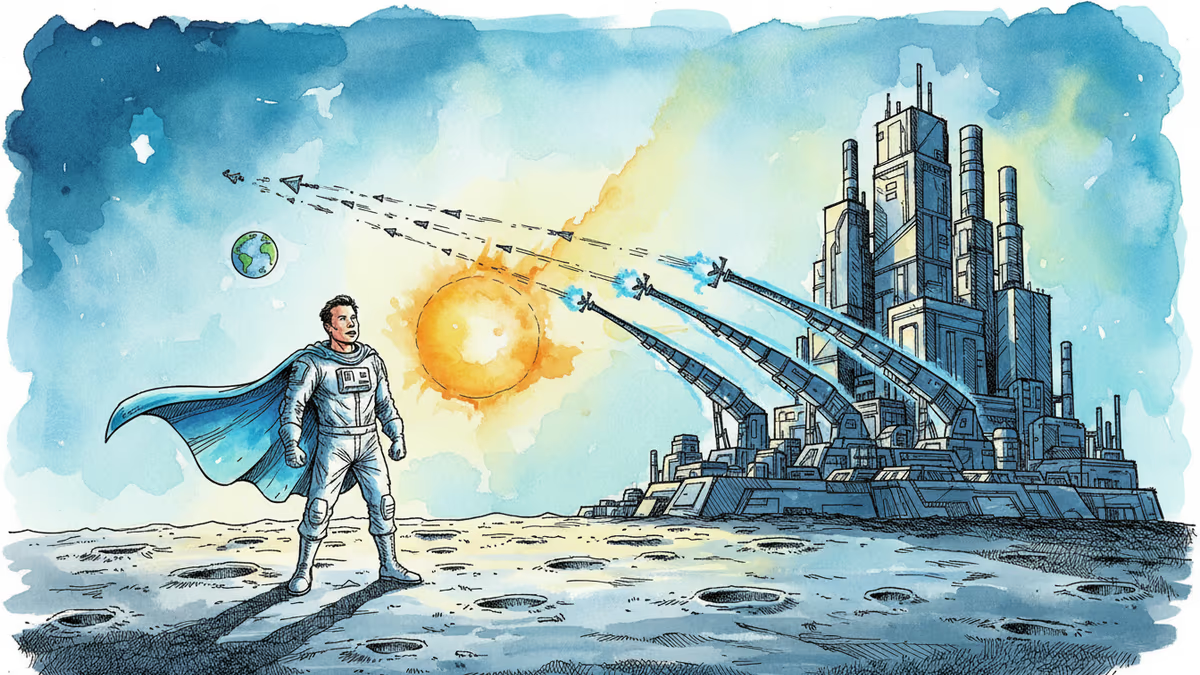
xAI's 45-minute all-hands video reveals $1B X revenue, 50M daily AI videos, massive layoffs, and Musk's audacious space-based AI vision including lunar factories
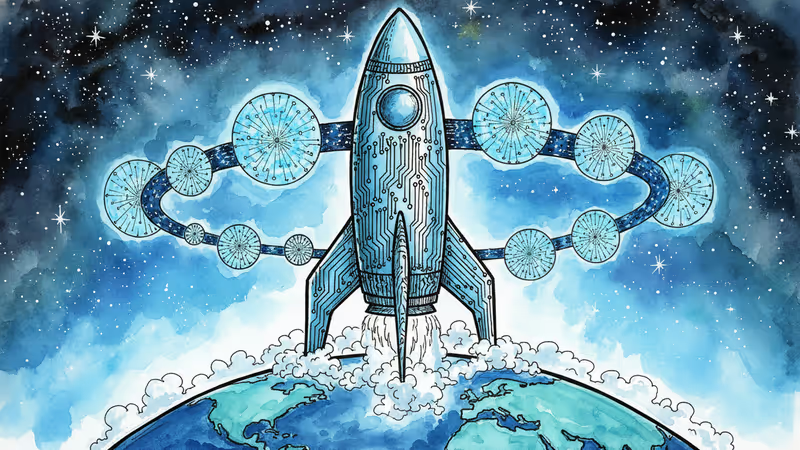
Elon Musk combines SpaceX and xAI to create an integrated tech giant spanning rockets, AI, and satellite internet. What this mega-merger means for the future of technology.

Five stories from late September, traced to where the paper trail stops: Korea's export record, Nvidia's Hugging Face 8-K, a US-China AI channel, the UN on AI, and rising births.
Vancouver-based Skyward Wildfire raised millions to deploy cloud seeding technology that could prevent lightning strikes. But scientists remain skeptical about the decades-old approach.
xAI's 45-minute all-hands video reveals $1B X revenue, 50M daily AI videos, massive layoffs, and Musk's audacious space-based AI vision including lunar factories
Elon Musk combines SpaceX and xAI to create an integrated tech giant spanning rockets, AI, and satellite internet. What this mega-merger means for the future of technology.
Five stories from late September, traced to where the paper trail stops: Korea's export record, Nvidia's Hugging Face 8-K, a US-China AI channel, the UN on AI, and rising births.
Thoughts
Share your thoughts on this article
Sign in to join the conversation