
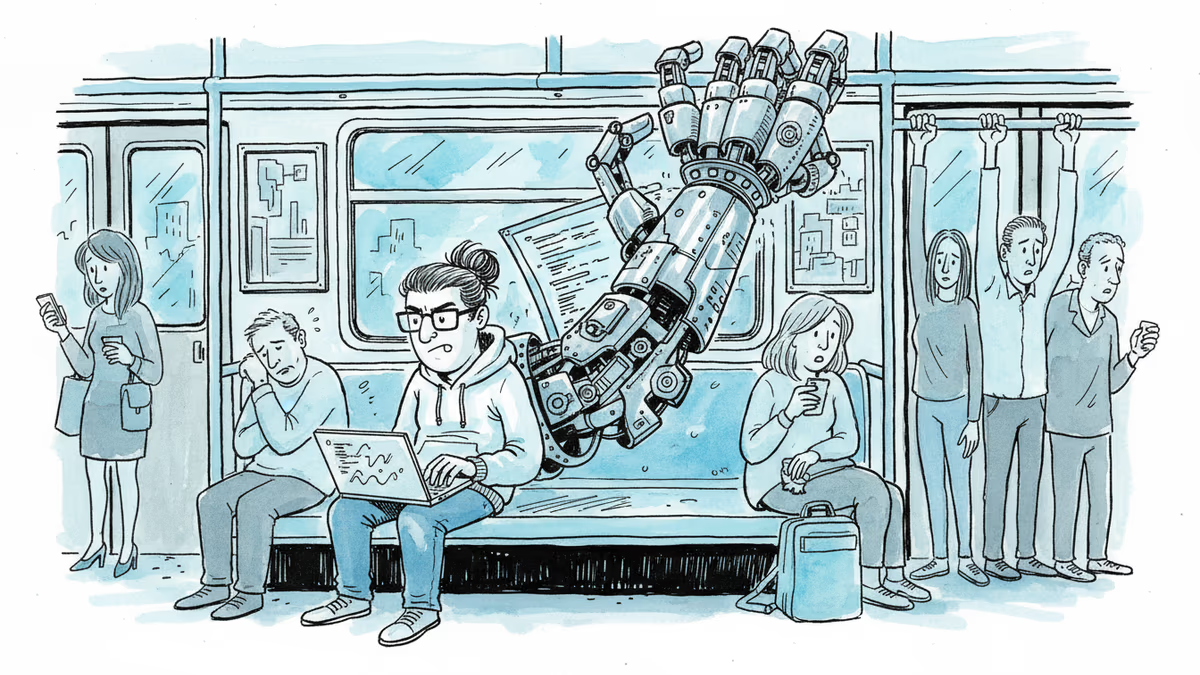
Spotify's Top Developers Haven't Written Code Since December
Spotify's best engineers ship 50+ features using only AI coding tools. They fix bugs from their phones during morning commutes.
The Morning Commute That Ships Features
Zero lines of code written since December. That's what Spotify co-CEO Gustav Söderström said about the company's best developers during this week's earnings call. Not because they're slacking off – because they don't need to.
Instead, they're working with Claude Code through Spotify's internal system called "Honk." Picture this: an engineer on their morning commute sends a Slack message saying "fix this iOS bug." By the time they reach the office, a patched version of the app is waiting on their phone, ready for review and deployment.
The results speak volumes. Spotify shipped more than 50 new features throughout 2025, including AI-powered Prompted Playlists, Page Match for audiobooks, and About This Song – all launched within recent weeks.
The Great Developer Divide
The developer community is split on what this means. Some see liberation from repetitive tasks, while others worry about obsolescence. The reality might be more nuanced.
Spotify's Honk system goes beyond simple code generation – it enables remote, real-time deployment using generative AI. Developers have evolved from code writers to problem definers and solution architects.
But there's a catch. This level of AI integration requires massive infrastructure investment and sophisticated prompt engineering. Not every company can build what Spotify has built. The gap between AI-enabled and traditional development shops is widening rapidly.

The Moat That Can't Be Copied
Spotify's confidence stems from something Wikipedia can't provide: subjective, cultural data about music preferences.
Ask "what's workout music?" and you'll get wildly different answers. Americans lean toward hip-hop, though millions prefer death metal. Europeans favor EDM, but Scandinavians choose heavy metal. These preferences vary by geography, age, and countless other factors.
"This is a dataset we are building right now that no one else is really building," Söderström noted. Unlike factual information that any LLM can scrape, musical taste data requires years of user interaction and cultural understanding.
This raises questions for other platforms. Can Apple Music or Amazon Music build similar datasets? What about emerging markets where streaming is just taking off?
The Productivity Paradox
Here's the twist: while Spotify's developers aren't writing code, they're shipping more features than ever. This challenges the traditional metrics of developer productivity.
If AI can handle implementation, what becomes valuable? The ability to understand user needs, define problems clearly, and orchestrate complex systems. In other words, the human skills that complement rather than compete with AI.
But this shift isn't uniform across the industry. Startups might struggle to access advanced AI coding tools, while established tech giants race to build their own systems. The democratization of AI coding tools could determine which companies thrive in the next decade.
The answer might determine whether the next generation of developers thrives or gets left behind.
Authors
Related Articles

Samsung and SK unveiled a chip and AI investment package worth thousands of trillions of won on June 29. The headline number swings wildly by outlet, but the real contest isn't capital — it's water and power.

Viral videos show 2026 graduates jeering executives who praise AI at commencement ceremonies. It's not just rudeness — it's a signal about who pays for technological optimism.
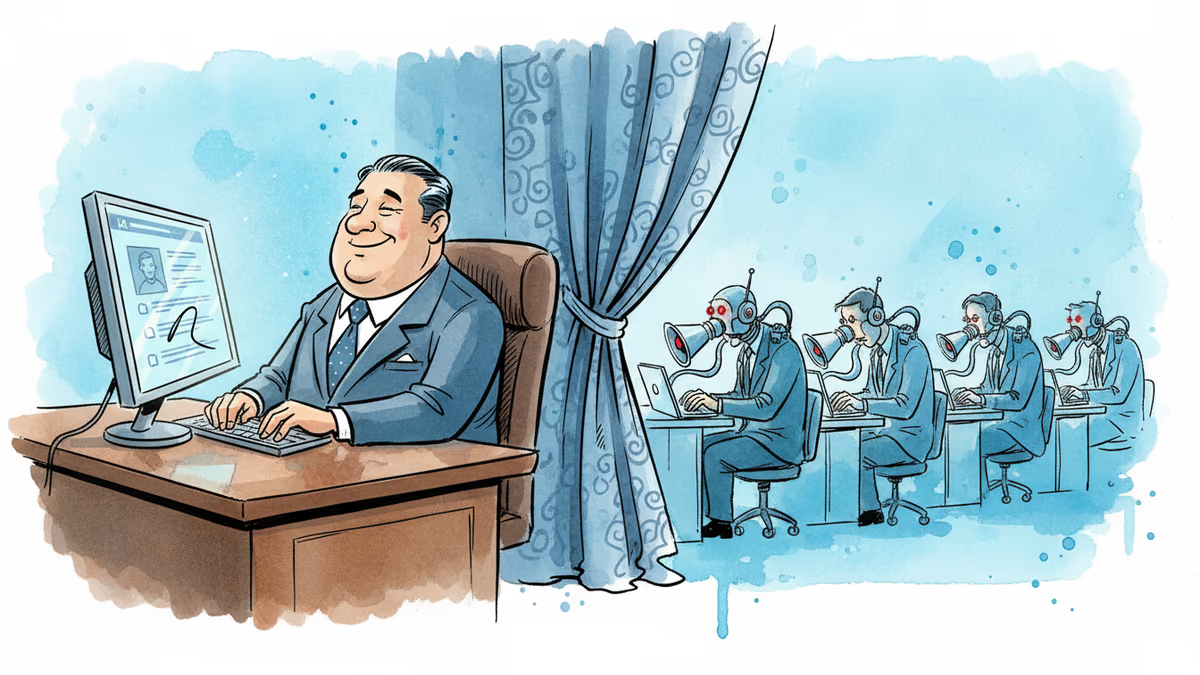
Filipino virtual assistants using AI to ghost-manage LinkedIn profiles for executives is now a structured industry. 30 comments a day, fake engagement rings, and a platform struggling to tell real from fabricated.
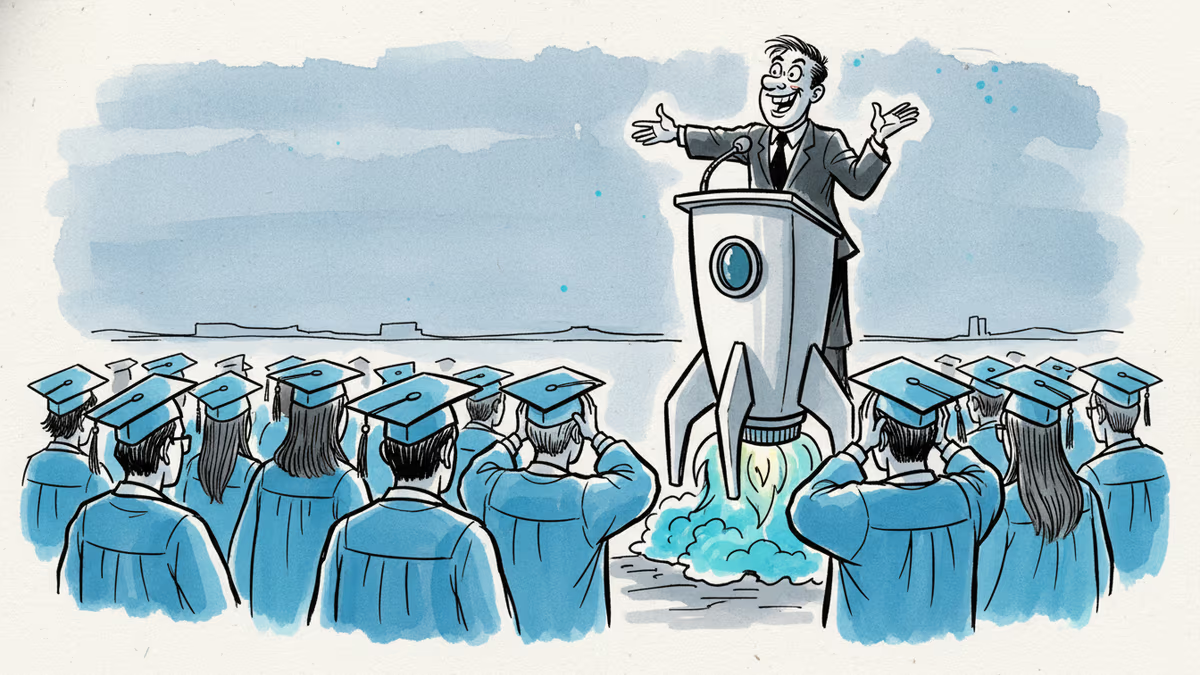
Two commencement speakers learned the hard way that AI enthusiasm doesn't land well with today's graduates. The backlash reveals a widening gap between tech optimism and Gen Z's economic reality.
Samsung and SK unveiled a chip and AI investment package worth thousands of trillions of won on June 29. The headline number swings wildly by outlet, but the real contest isn't capital — it's water and power.
Viral videos show 2026 graduates jeering executives who praise AI at commencement ceremonies. It's not just rudeness — it's a signal about who pays for technological optimism.
Filipino virtual assistants using AI to ghost-manage LinkedIn profiles for executives is now a structured industry. 30 comments a day, fake engagement rings, and a platform struggling to tell real from fabricated.
Two commencement speakers learned the hard way that AI enthusiasm doesn't land well with today's graduates. The backlash reveals a widening gap between tech optimism and Gen Z's economic reality.
Thoughts
Share your thoughts on this article
Sign in to join the conversation