
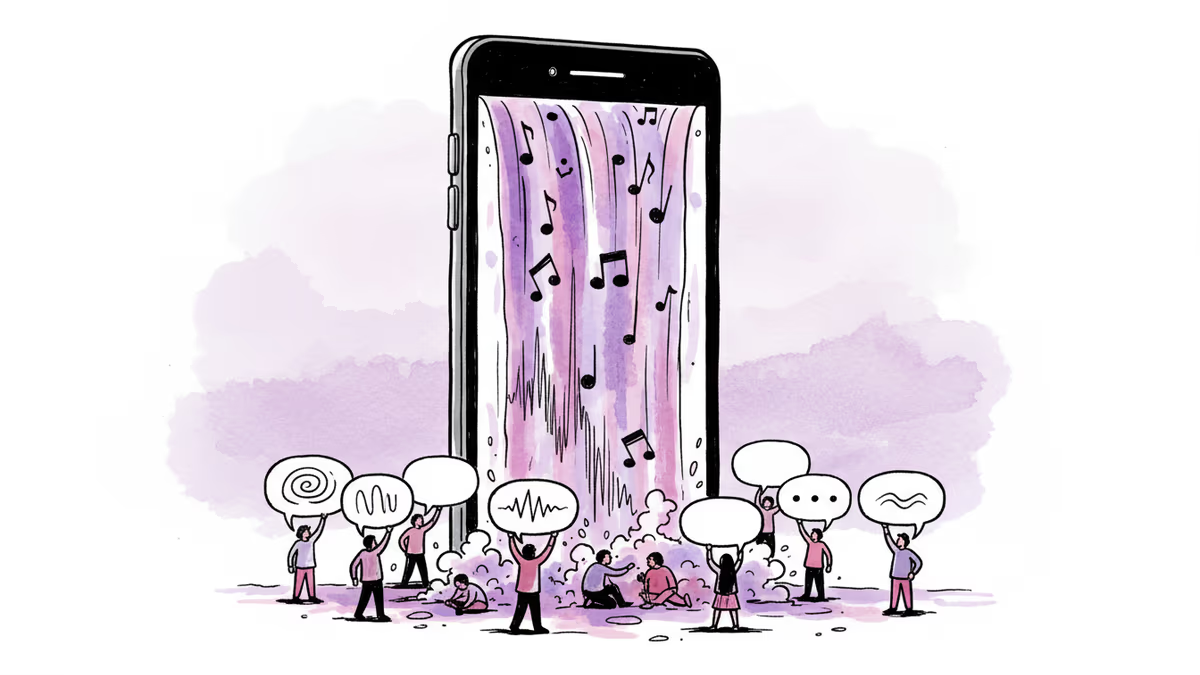
Tell Me What You Want to Hear: Spotify's AI Gets Personal
Spotify's AI-powered Prompted Playlists expand globally, letting users create custom playlists with natural language. What happens when algorithms know us better than we know ourselves?
"Play Something That Feels Like a Rainy Tuesday in 2003"
That oddly specific request? Spotify's AI can now handle it. The streaming giant's Prompted Playlists feature, which lets Premium subscribers create custom playlists using natural language, just expanded to the U.K., Ireland, Australia, and Sweden. After testing in New Zealand and launching in North America, Spotify is betting that the future of music discovery isn't about searching—it's about describing.
The concept is deceptively simple: tell Spotify what you want to feel, remember, or experience, and its AI will craft a playlist to match. Users can request anything from "songs that sound like driving through a neon-lit city" to "music my college roommate would have played" to "instrumentals for coding at 2 AM." Each generated song comes with an AI explanation for why it made the cut.
But here's where it gets interesting: the AI doesn't just pull from Spotify's 70 million track library randomly. It analyzes your listening history, current cultural trends, and even incorporates whether you want familiar favorites or fresh discoveries. The system can automatically refresh playlists daily or weekly, adapting to your evolving taste.
The Psychology of Musical Desire
What Spotify has stumbled onto—perhaps intentionally—is something deeper than playlist generation. They're mapping the gap between what we think we want to hear and what we actually want to feel.
Traditional music discovery relies on explicit choices: genres, artists, decades. But human musical desire is messier. We want "something energetic but not aggressive," or "nostalgic without being depressing." These emotional nuances have always existed in our heads but never had a direct interface with our music libraries.

Premium subscribers are essentially teaching Spotify's AI to decode emotional states into sonic experiences. Every prompt—whether it's "music for a first date" or "songs that feel like autumn"—becomes training data for understanding how humans connect feelings to sound.
The Limits of Algorithmic Intimacy
Yet beta users are already hitting walls. Spotify has implemented usage limits—roughly 20-30 prompts before the system cuts you off. Why? Processing natural language and generating personalized playlists isn't cheap, and the company is still figuring out the economics.
There's also the question of creative boundaries. Can AI truly understand the difference between "melancholy" and "wistful"? Between "road trip energy" and "workout intensity"? Early users report mixed results—sometimes the AI nails the vibe perfectly, other times it misses by miles.
More fundamentally, there's something unsettling about an algorithm that might know our emotional patterns better than we do. When Spotify's AI suggests that your "Monday morning motivation" playlist should include more minor keys because that's what actually energizes you historically, are we discovering our true preferences or being shaped by them?
Beyond Playlists: The Bigger Play
This isn't just about music curation—it's about Spotify positioning itself as the definitive interface between human emotion and audio content. The company is simultaneously expanding into audiobooks, implementing AI across its development workflows (their best developers haven't written code since December, according to co-CEO Gustav Söderström), and even venturing into physical book sales.
The pattern is clear: Spotify wants to own the entire journey from "I want to feel something" to "here's exactly what will make you feel that way." Prompted Playlists is just the beginning.
Authors
Related Articles

Samsung and SK unveiled a chip and AI investment package worth thousands of trillions of won on June 29. The headline number swings wildly by outlet, but the real contest isn't capital — it's water and power.
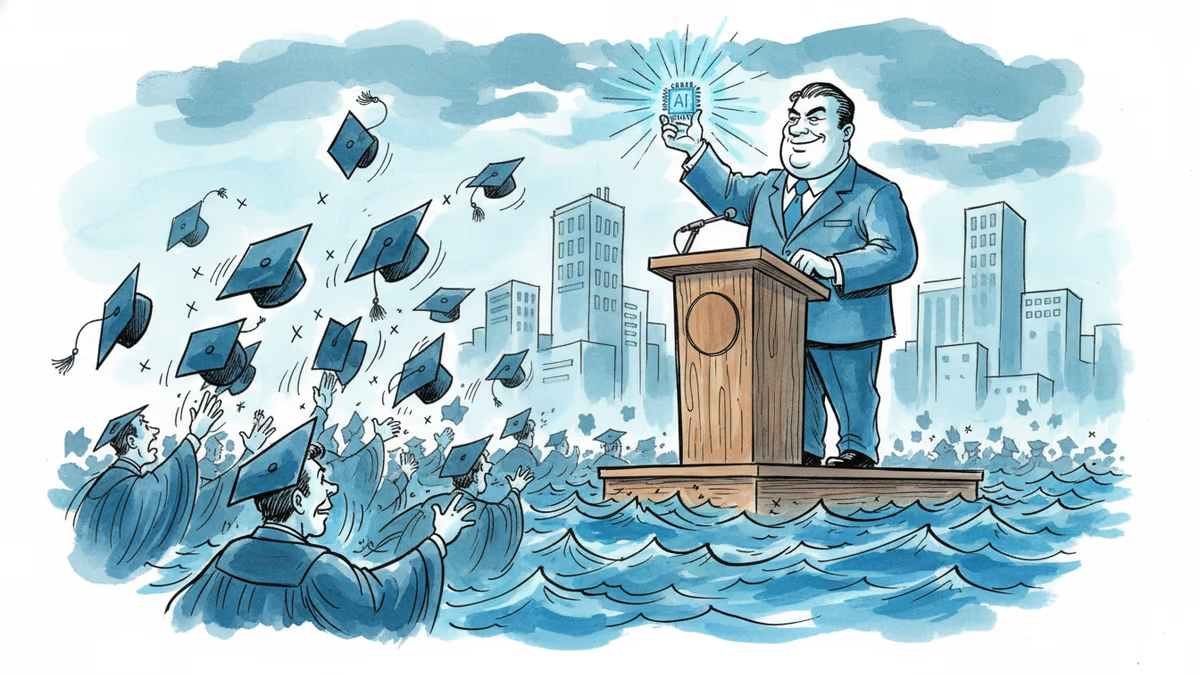
Viral videos show 2026 graduates jeering executives who praise AI at commencement ceremonies. It's not just rudeness — it's a signal about who pays for technological optimism.
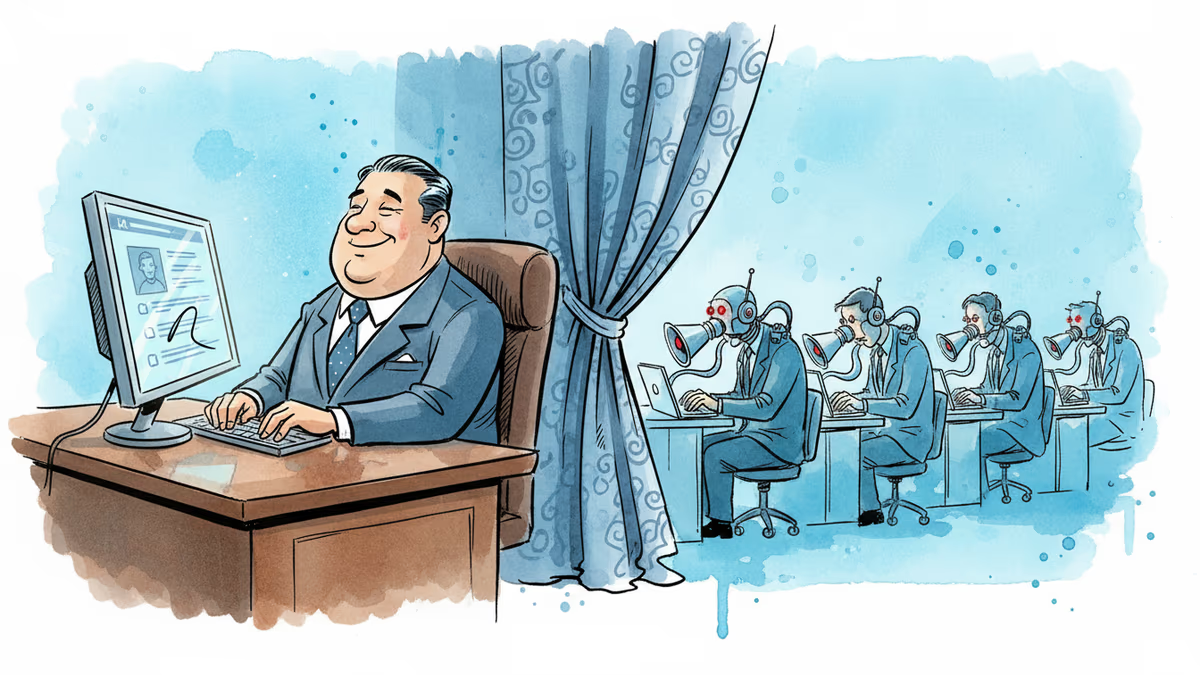
Filipino virtual assistants using AI to ghost-manage LinkedIn profiles for executives is now a structured industry. 30 comments a day, fake engagement rings, and a platform struggling to tell real from fabricated.
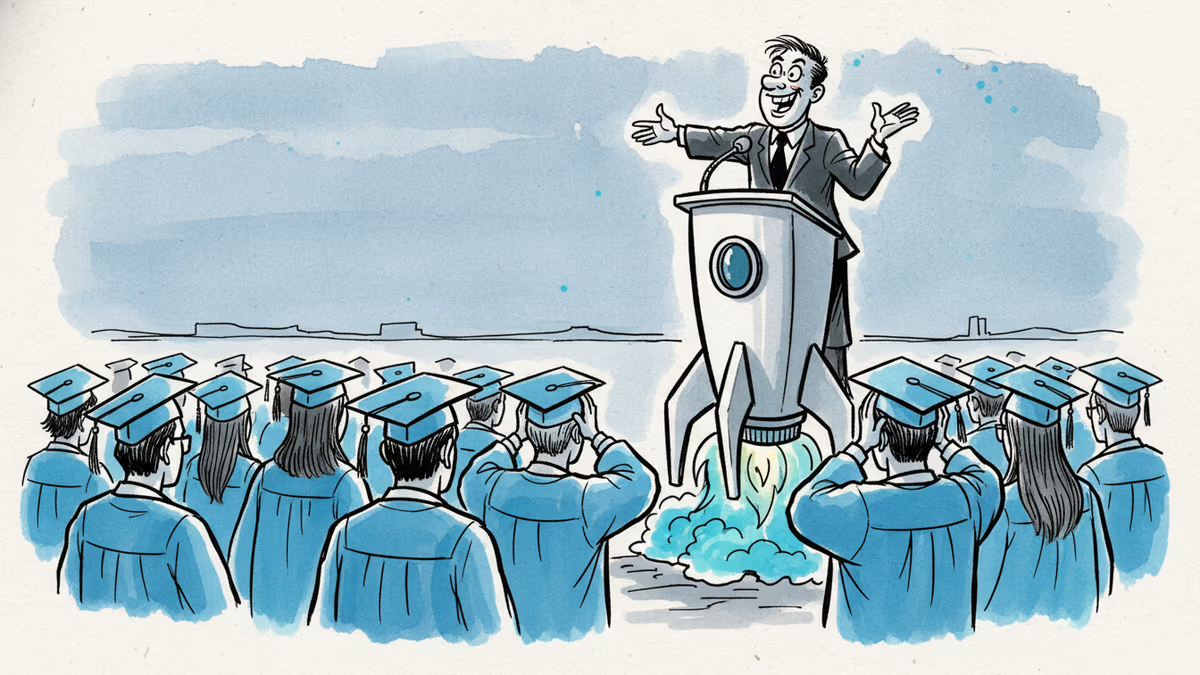
Two commencement speakers learned the hard way that AI enthusiasm doesn't land well with today's graduates. The backlash reveals a widening gap between tech optimism and Gen Z's economic reality.
Samsung and SK unveiled a chip and AI investment package worth thousands of trillions of won on June 29. The headline number swings wildly by outlet, but the real contest isn't capital — it's water and power.
Viral videos show 2026 graduates jeering executives who praise AI at commencement ceremonies. It's not just rudeness — it's a signal about who pays for technological optimism.
Filipino virtual assistants using AI to ghost-manage LinkedIn profiles for executives is now a structured industry. 30 comments a day, fake engagement rings, and a platform struggling to tell real from fabricated.
Two commencement speakers learned the hard way that AI enthusiasm doesn't land well with today's graduates. The backlash reveals a widening gap between tech optimism and Gen Z's economic reality.
Thoughts
Share your thoughts on this article
Sign in to join the conversation