
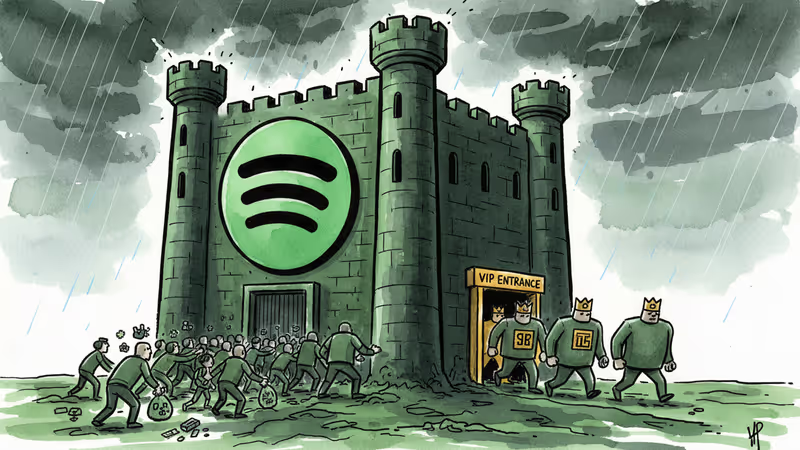
Spotify Slashes Developer Access as Platform Wars Heat Up
Spotify dramatically restricts its Developer Mode API, requiring Premium subscriptions and cutting test users from 25 to 5. Is this the end of the open platform era?
The message from Spotify to developers couldn't be clearer: the era of free experimentation on our platform is over. The music streaming giant has dramatically tightened access to its Developer Mode APIs, leaving thousands of developers scrambling to adapt—or abandon their projects entirely.
What Changed Overnight
Spotify slashed the number of test users allowed in Developer Mode from 25 to just 5, while simultaneously making a Premium subscription mandatory for API access. That's a $10.99 monthly barrier to entry where none existed before.
But the restrictions go deeper. The company deprecated key API endpoints that developers relied on, including access to new album releases, artist top tracks, and market availability data. Gone too are the abilities to add or remove tracks, pull album label information, or access artist follower counts and popularity metrics.
The company's rationale? "Advances in automation and AI have fundamentally altered the usage patterns and risk profile of developer access," Spotify explained. Translation: too many people were using our APIs in ways we didn't anticipate, and we need to regain control.
The Developer Backlash
The developer community's response has been swift and harsh. Many are accusing Spotify of "stifling innovation" and "supporting only larger companies rather than individual developers." For hobbyist developers and small startups, the combination of subscription fees and reduced functionality feels like a door slamming shut.

Yet Spotify's concerns aren't entirely unfounded. The company has been steadily tightening API access since 2024, when it blocked endpoints that could reveal user listening patterns—likely to prevent AI training data harvesting. In March 2025, it raised the bar for extended quotas, requiring 250,000 monthly active users and legally registered businesses.
The Bigger Platform Shift
This isn't just about Spotify. We're witnessing a fundamental shift in how major platforms view their APIs. Twitter (now X) monetized its API access, Reddit dramatically raised prices, and now Spotify is building walls around its data garden.
The culprit? AI's insatiable appetite for training data has made every API endpoint a potential goldmine—or liability. Platforms that once encouraged open access are now treating their data as crown jewels that need protection.
For developers, this represents a seismic shift in the digital economy. The "build on our platform" promise that fueled countless startups and side projects is being replaced by "pay to play" models that favor established companies with deep pockets.
What This Means for Innovation
The real question isn't whether Spotify has the right to restrict its APIs—it absolutely does. The question is whether this trend toward platform consolidation will ultimately hurt the innovation ecosystem that made these platforms valuable in the first place.
Consider the music discovery apps, playlist generators, and analytics tools that emerged from Spotify's previously open ecosystem. Many of these innovations came from individual developers and small teams who couldn't afford enterprise-level API access. By raising barriers to entry, platforms risk cutting off the very innovation pipeline that could drive their future growth.
Authors
Related Articles
iOS 26.4 brings AI-generated playlists to Apple Music. It's convenient, but it raises real questions about taste, discovery, and who controls what you hear.
Spotify's AI-powered Prompted Playlists expand globally, letting users create custom playlists with natural language. What happens when algorithms know us better than we know ourselves?
Spotify partners with SeatGeek for seamless ticket buying. Can this challenge Ticketmaster's venue monopoly or just create new platform dependencies?
Apple's spring video podcast launch isn't just a feature update. It's a strategic play for the **$51 billion** podcasting market that could reshape how creators monetize content.
iOS 26.4 brings AI-generated playlists to Apple Music. It's convenient, but it raises real questions about taste, discovery, and who controls what you hear.
Spotify's AI-powered Prompted Playlists expand globally, letting users create custom playlists with natural language. What happens when algorithms know us better than we know ourselves?
Spotify partners with SeatGeek for seamless ticket buying. Can this challenge Ticketmaster's venue monopoly or just create new platform dependencies?
Apple's spring video podcast launch isn't just a feature update. It's a strategic play for the **$51 billion** podcasting market that could reshape how creators monetize content.
Thoughts
Share your thoughts on this article
Sign in to join the conversation