
SpaceX Wants 1 Million Satellites. Amazon Is Not Happy.
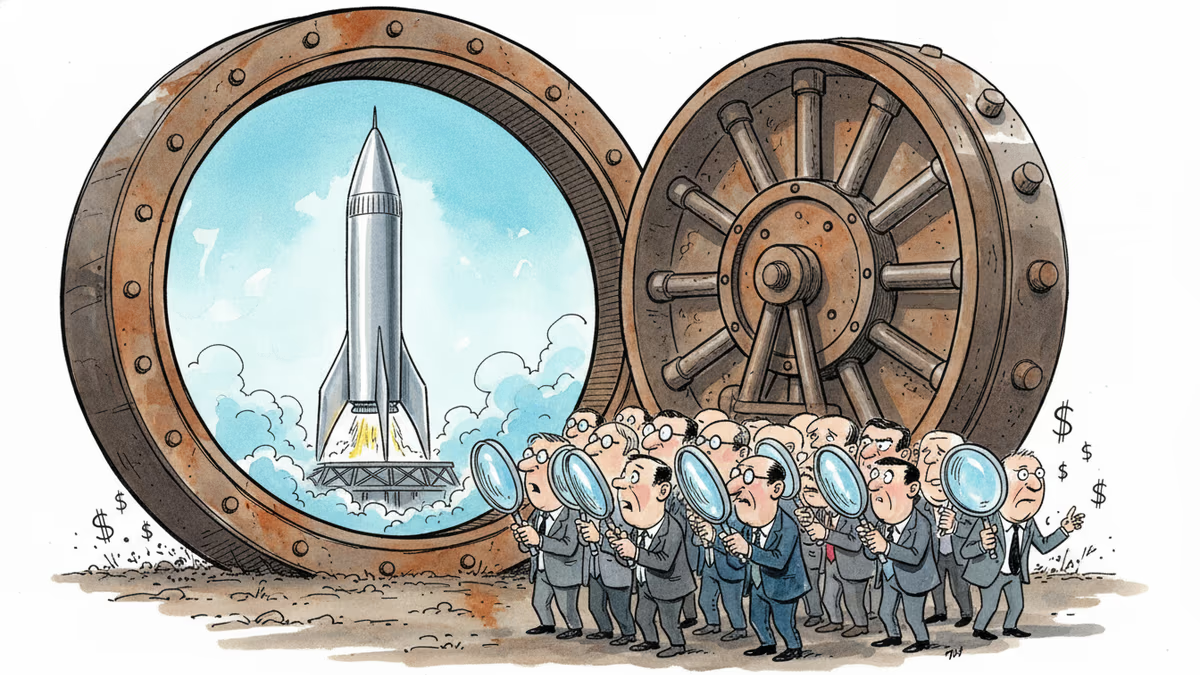
SpaceX has filed to launch up to 1 million satellites for space-based data centers. As its feud with Amazon intensifies, the FCC chairman has publicly sided against Amazon. What's really at stake.
There are roughly 10,000 active satellites orbiting Earth right now. SpaceX just asked the FCC for permission to launch 100 times that number — on its own.
That's not a typo. One million satellites. And the regulator's chairman is already picking sides.
What's Actually Being Proposed
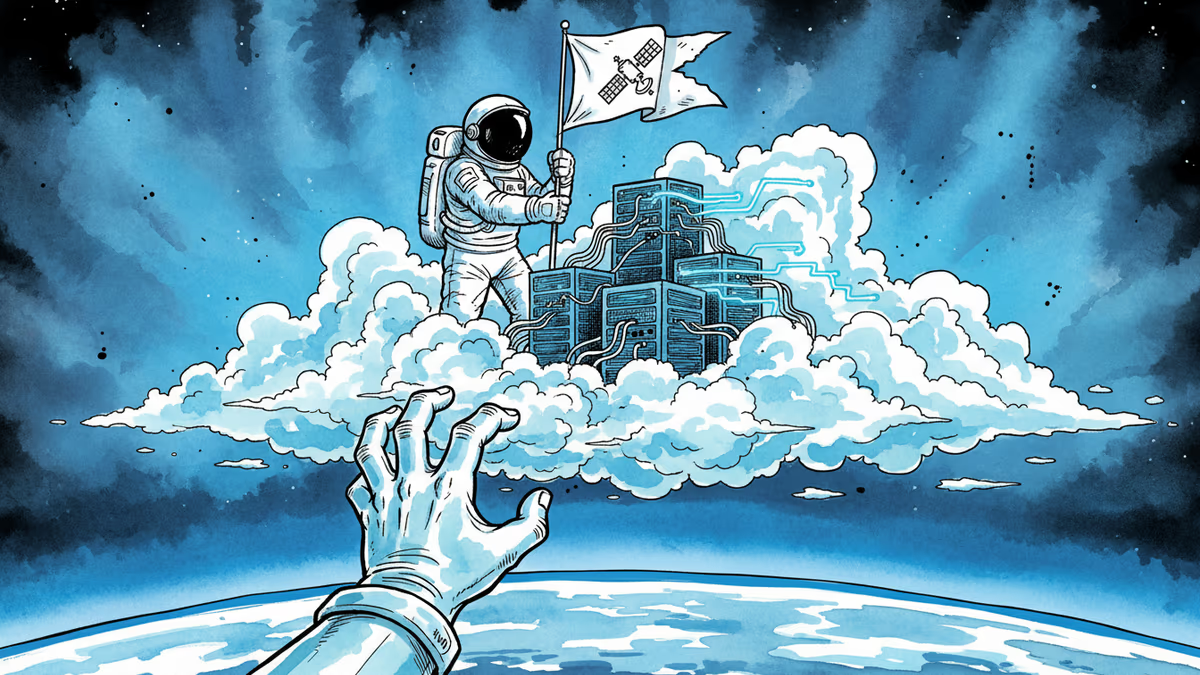
This isn't an incremental expansion of Starlink's broadband service. SpaceX's new FCC application is for something more ambitious: space-based data centers. The idea is to move computing infrastructure off the ground and into orbit, with a megaconstellation of up to 1 million satellites forming the backbone.
Satellite companies fighting over orbital slots and radio spectrum is nothing new — it's practically a contact sport at the FCC. SpaceX and Amazon have been trading regulatory jabs for years, as their respective constellations — Starlink and Project Kuiper — compete for overlapping orbits and frequencies.
But this week, the tone shifted. The back-and-forth between the two companies turned noticeably sharper, and the FCC chairman stepped in — publicly, against Amazon. For a regulatory body whose job is to referee, that's a notable move.
The Number Is the Strategy

A filing for 1 million satellites isn't just engineering ambition. It's a land grab — and the land is orbit.
FCC licensing operates, in part, on a first-come, first-served logic. Secure the spectrum and orbital slots early, and latecomers have to work around you. With Amazon's Kuiper constellation still in early deployment, a SpaceX megaconstellation approval could structurally limit the room Kuiper has to grow. The timing is not coincidental.
There's also a macro tailwind at play. Demand for AI computing infrastructure is outpacing what ground-based data centers can supply — constrained by power grids and cooling costs. Space-based data centers, theoretically, can tap direct solar power and radiate heat into the void. The concept is early-stage, but the direction has serious money behind it. Microsoft, Google, and others are all watching.
Three Very Different Reactions
For SpaceX, this is a pivot from connectivity provider to infrastructure layer. If approved, it positions the company not just as an ISP, but as a potential rival to AWS and Azure in the cloud computing market. The synergies with Elon Musk's AI ventures are obvious.
For Amazon, the stakes are high and the optics are worse. Project Kuiper represents a reported $10 billion+ investment. If SpaceX locks up orbital real estate before Kuiper reaches full deployment, Amazon's satellite ambitions could be permanently constrained. An FCC chairman who appears to favor the competition makes an already difficult situation harder.
For everyone else — smaller satellite operators, international space agencies, and emerging market telecoms — a single company controlling a million-satellite constellation raises a structural concern: what happens to the commons? Low Earth orbit is a shared resource under international treaty, but treaties weren't written with megaconstellations in mind.
For consumers, the competitive dynamic could actually be a net positive in the near term. More competition typically means lower prices and better service, particularly for underserved rural and remote areas where satellite internet is the only viable option.
Authors
Related Articles
American Airlines just signed Starlink for 500+ aircraft. It's not just about faster inflight internet — it's a calculated move in the run-up to what could be the largest IPO in history.
SpaceX's upgraded Starship V3 completed its first test flight, deploying 20 Starlink simulators but losing the Super Heavy booster. With an IPO weeks away, the stakes just got higher.
SpaceX's IPO filing puts AI at the center, claiming a $26.5 trillion market opportunity. But can Grok compete with OpenAI and Anthropic for enterprise customers?
SpaceX filed a nearly 400-page S-1 with the SEC, targeting an IPO as early as June 12. Here's what the filing reveals—and what it doesn't.
American Airlines just signed Starlink for 500+ aircraft. It's not just about faster inflight internet — it's a calculated move in the run-up to what could be the largest IPO in history.
SpaceX's upgraded Starship V3 completed its first test flight, deploying 20 Starlink simulators but losing the Super Heavy booster. With an IPO weeks away, the stakes just got higher.
SpaceX's IPO filing puts AI at the center, claiming a $26.5 trillion market opportunity. But can Grok compete with OpenAI and Anthropic for enterprise customers?
SpaceX filed a nearly 400-page S-1 with the SEC, targeting an IPO as early as June 12. Here's what the filing reveals—and what it doesn't.
Thoughts
Share your thoughts on this article
Sign in to join the conversation